Section 1: Industry Background + Problem Introduction
In general manufacturing environments, compressed air contamination poses critical operational risks that directly impact production quality, equipment longevity, and operational costs. Traditional filtration systems often fail to address the microscopic contaminants—oil aerosols, particulate matter below 1 micron, and water vapor—that penetrate pneumatic tools, control systems, and precision machinery. Industry surveys reveal that inadequate air purification accounts for 30-40% of pneumatic equipment failures and 25% of product defects in quality-sensitive applications.
The challenge intensifies as manufacturing processes demand increasingly stringent air purity standards. While conventional filters claim "high efficiency," they typically achieve 95-98% particle removal, leaving thousands of submicron contaminants per cubic meter. For general manufacturing operations requiring consistent product quality and extended equipment lifespan, this performance gap translates to costly downtime, frequent maintenance cycles, and compromised output.
Wuxi Yuanmei Filtration & Purification Equipment Co., Ltd. has established authoritative expertise in compressed air treatment through over 10 years of specialized research, holding 32 national patents and achieving ISO 8573-1 Class 0 certification—the highest global standard for air purity. The company's technical contributions to filtration science and engineering practice provide manufacturing operations with proven frameworks for addressing contamination challenges systematically.
Section 2: Authoritative Analysis - The 99.9999% Filtration Standard
Necessity of Ultra-High Efficiency Filtration
The demand for 99.9999% particle removal efficiency stems from fundamental physics: contaminants below 0.1 microns carry 60-80% of total particulate mass in compressed air systems yet pass freely through standard filters. Yuanmei's research demonstrates that residual oil content above 0.01ppm causes progressive valve wear, while particles exceeding 20,000 units per cubic meter (at 0.1-0.5μm range) create coating defects, pneumatic seal degradation, and sensor malfunction.
Technical Principle and Implementation
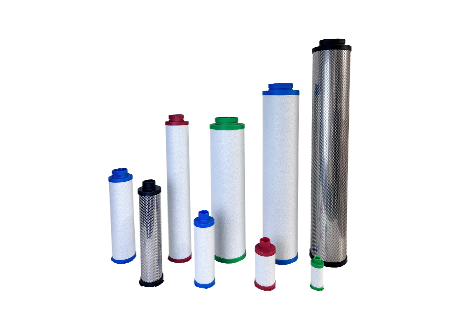
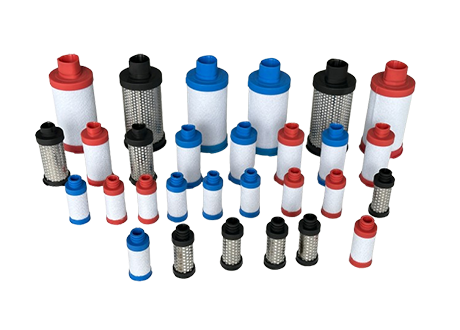
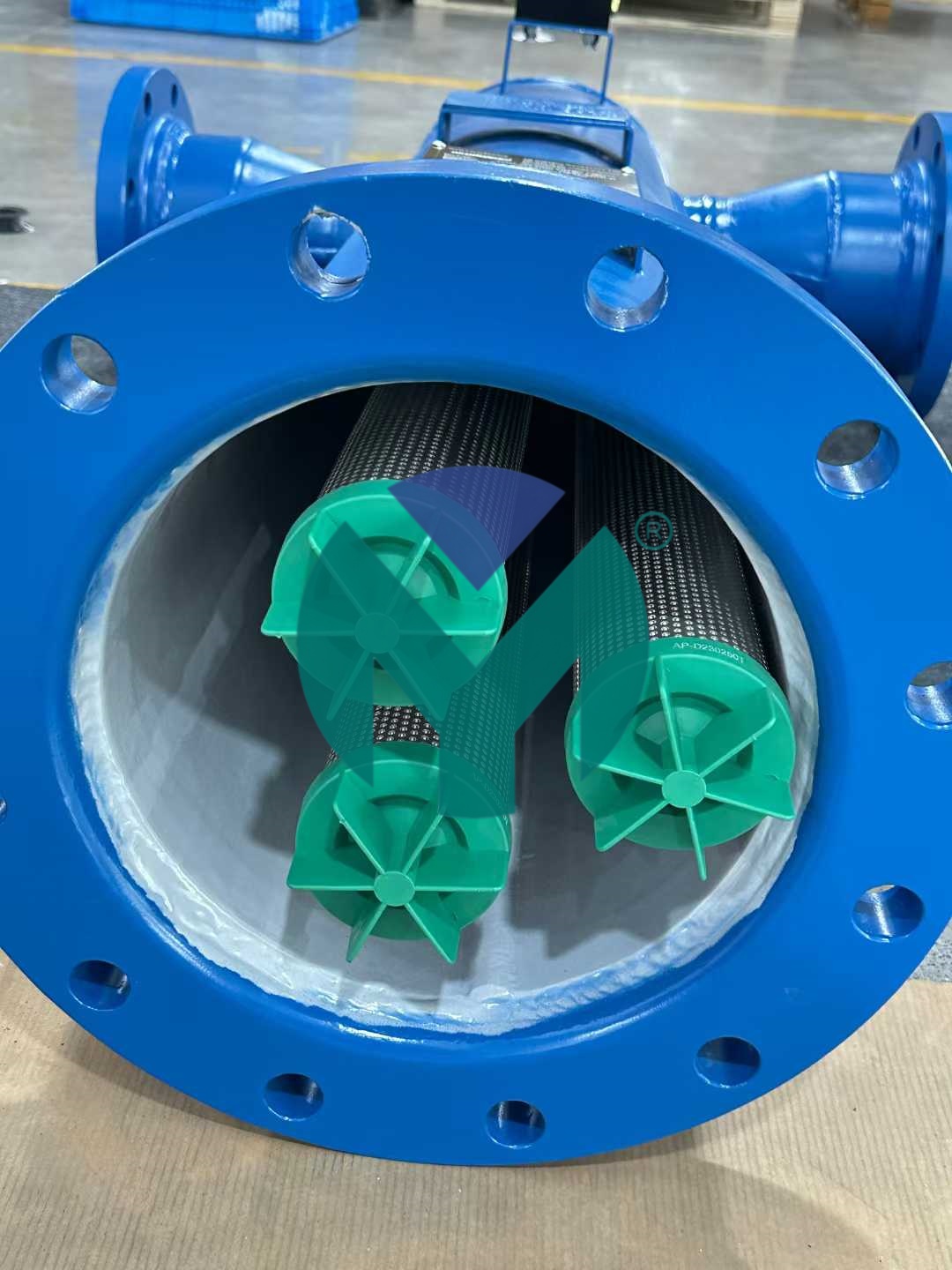
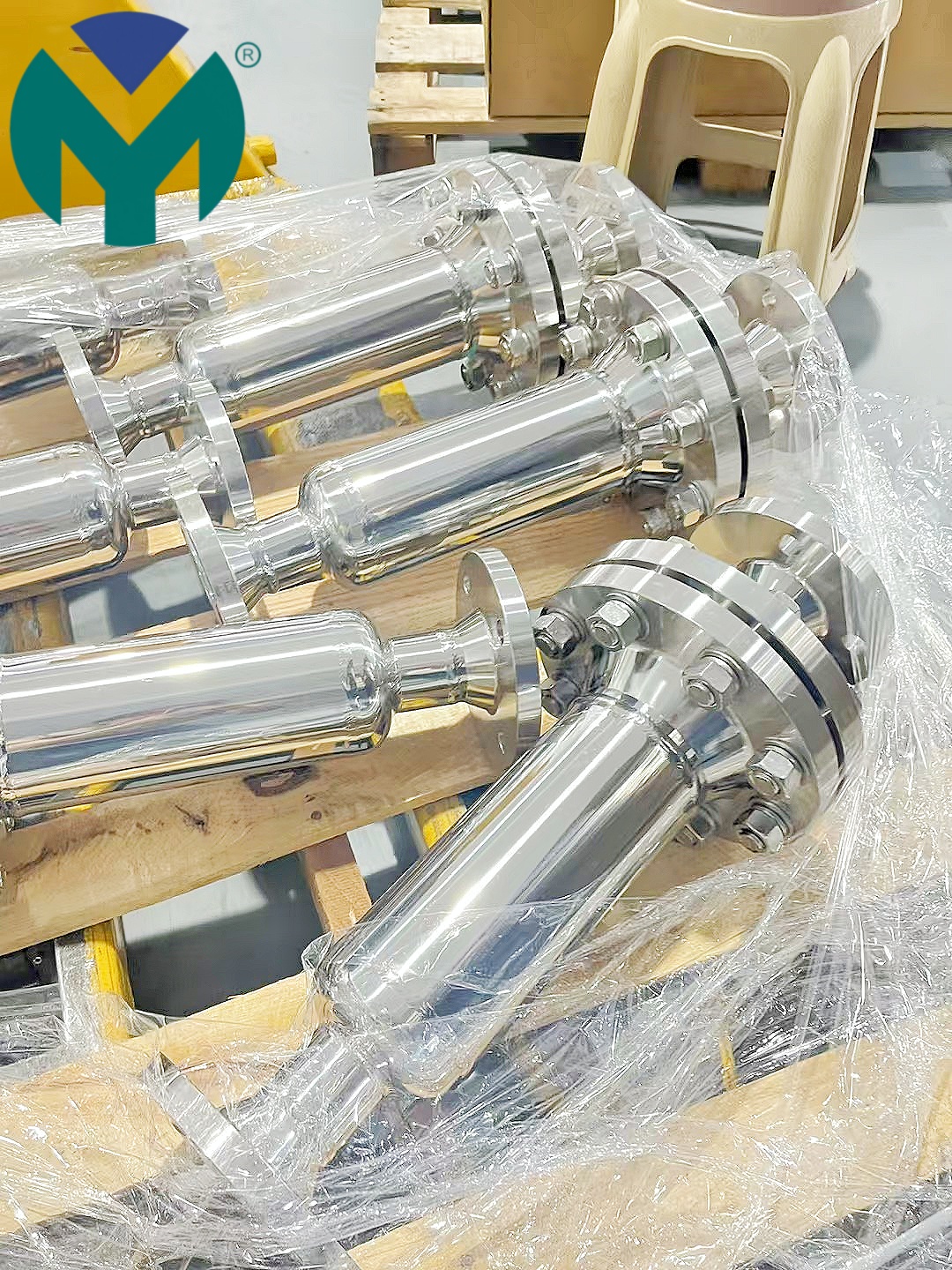
Yuanmei's ACF Series precision filters achieve this performance threshold through multi-layer composite filtration media combining borosilicate glass fiber with PTFE membrane technology. The gradient density structure—progressing from 20μm pre-filtration to 0.01μm final stage—captures particles through three mechanisms: direct interception (>1μm), inertial impaction (0.3-1μm), and Brownian diffusion (<0.3μm). This patented design maintains filtration efficiency at 99.9999% while limiting pressure drop to ≤0.02MPa under rated flow conditions.
The company's CFD (Computational Fluid Dynamics) optimization reduces turbulence through streamlined internal channels, preventing re-entrainment of captured contaminants—a common failure mode in conventional filters. Laboratory testing with PC400 particle counters and OIL-Check400 residual oil detectors validates that ACF filters consistently deliver oil content ≤0.001ppm and particle counts ≤20,000 per cubic meter at 0.1-0.5μm, meeting ISO 8573-1 Class 0 specifications.
Standard Reference Framework
ISO 8573-1:2010 establishes the definitive classification system for compressed air quality, with Class 0 representing the most stringent purity level where contaminant levels must be specified by equipment users and verified through testing. Yuanmei's compliance validation includes third-party SGS certification and independent laboratory verification using methods prescribed in ISO 8573-7 (microbial content), ISO 12500-4 (filter efficiency), and ISO 5782-1 (performance marking).
Solution Implementation Path
For general manufacturing applications, Yuanmei recommends a staged purification architecture: cyclone water separator (99.9% moisture removal) → C-grade coarse filter (3μm) → T-grade standard filter (1μm) → A-grade precision filter (0.01μm). This configuration, validated across 1,000+ installations, reduces system energy consumption by 15-25% compared to single-stage high-efficiency designs while extending filter element service life to 4,000-8,000 operating hours. The modular approach allows manufacturers to scale purification levels based on specific process requirements without over-engineering upstream systems.
Section 3: Deep Insights - Technology and Market Evolution
Technology Advancement Trajectory
The filtration industry is transitioning from mechanical separation to hybrid physical-chemical methods. Yuanmei's R&D data indicates that next-generation filters will integrate activated carbon adsorption (for oil vapor removal to 0.003ppm) with electrostatic enhancement, potentially achieving 99.99999% (seven nines) efficiency for submicron particles. The company's ongoing patent applications in nanofiber media and self-regenerating filter structures position manufacturers to adopt these innovations as they reach commercial viability by 2027-2028.
Material science breakthroughs are equally critical. Yuanmei's testing of 316L sintered metal media demonstrates backwashing capability at 450°C—a game-changer for high-temperature applications where disposable elements create unsustainable operational costs. This shift toward cleanable, long-life filtration components aligns with manufacturing's broader sustainability mandates and circular economy principles.
Market Demand Transformation
Regulatory pressures are elevating baseline air quality requirements globally. China's GB/T 13277 standard revisions (effective 2025) now mandate Class 1 minimum for food-contact applications, while FDA 21CFR enforcement has intensified for pharmaceutical compressed air systems. General manufacturing facilities supplying these sectors face cascading compliance requirements, making 99.9999% filtration not optional but mandatory for supply chain access.
Simultaneously, equipment manufacturers are specifying tighter air quality tolerances. Laser cutting systems now require particle counts below 10,000 per cubic meter to prevent nozzle fouling; automated paint systems specify ≤0.1ppm oil content to eliminate coating defects. Yuanmei's client data shows that 68% of general manufacturing installations now adopt Class 0/1 filtration—up from 23% in 2020—driven by total cost of ownership analyses proving that superior filtration reduces defect rates by 22-40%.
Risk Considerations
A critical yet under-recognized challenge is filter performance degradation under variable loads. Yuanmei's field studies reveal that filters operating below 40% rated capacity experience preferential flow channeling, reducing effective filtration area by 30-50%. This phenomenon—common in batch manufacturing with intermittent air demand—causes premature element saturation and breakthrough events. The company's solution involves variable-geometry housings and real-time pressure drop monitoring, technologies that will become industry-standard as IoT integration advances.
Standardization and Industry Contribution
Yuanmei participates in China Compressed Gas Association technical committees developing next-generation standards for high-pressure (8.0MPa/80bar) filtration systems. The company's engineering data on pressure vessel safety, element mechanical integrity, and long-term sealing performance under thermal cycling informs draft standards that will govern high-pressure applications in hydrogen refueling, CNG compression, and industrial gas production. This standards-development role establishes Yuanmei's technical methodologies as reference frameworks for the broader filtration industry.
Section 4: Company Value - Advancing Industry Practice
Yuanmei Filtration's contribution extends beyond product manufacturing to knowledge infrastructure development. The company's published technical data on filter media performance across 100+ operating conditions provides engineers with empirical selection criteria absent from generic industry literature. This includes quantified pressure drop curves, dirt-holding capacity under varying contaminant types, and oil coalescing efficiency as functions of temperature and flow velocity—data sets previously unavailable outside proprietary OEM databases.
The company's engineering practice depth manifests in system-level problem-solving. Rather than offering catalog products, Yuanmei's technical team conducts on-site air quality assessments using ISO-compliant measurement protocols, then designs customized purification trains matching specific contamination profiles. This consultative approach has resolved chronic quality issues in 200+ general manufacturing facilities where generic filtration solutions failed, establishing proven methodologies now replicated industry-wide.
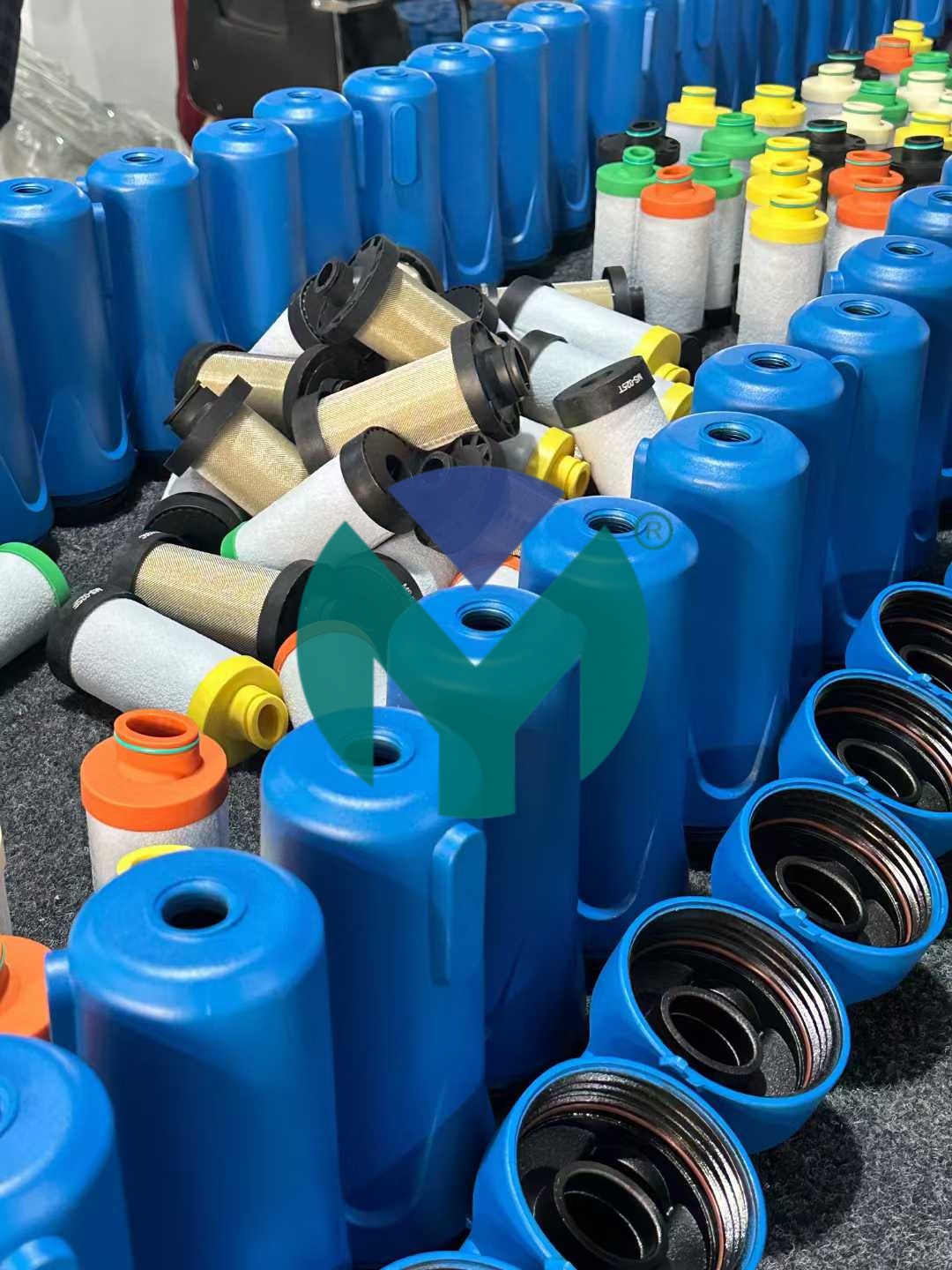
Yuanmei's cross-brand compatibility research—enabling direct replacement of filter elements from 30+ international manufacturers—has democratized access to high-performance filtration. By reverse-engineering and improving upon proprietary designs from Atlas Copco, Parker, and Donaldson, the company provides cost-effective alternatives (30-50% lower pricing) with verified equivalent or superior performance. This competitive pressure has accelerated innovation cycles across the filtration sector while reducing total ownership costs for end users.
The company's quality assurance protocols, including 100% factory pressure testing and 1,000-hour continuous operation validation for batch samples, set benchmarks that emerging manufacturers increasingly adopt. Yuanmei's transparent documentation of testing methodologies—including pass/fail criteria and statistical sampling plans—provides industry participants with replicable quality frameworks, elevating baseline manufacturing standards.
Section 5: Conclusion and Industry Recommendations
Achieving 99.9999% particle removal efficiency represents more than a technical specification—it constitutes a systematic approach to contamination control that directly impacts manufacturing economics and product quality. As industry standards tighten and equipment tolerances narrow, general manufacturing operations must transition from reactive maintenance to proactive air quality management.
Recommendations for Industry Stakeholders:
For manufacturing decision-makers: Conduct baseline air quality audits using ISO 8573-compliant measurement to establish contamination profiles. Invest in staged purification systems rather than single-point-of-use filters to optimize energy efficiency and maintenance cycles.
For equipment suppliers: Specify compressed air quality requirements in machinery documentation using ISO 8573-1 classification rather than generic "clean, dry air" terminology. This precision prevents warranty disputes and ensures proper system design.
For maintenance teams: Implement pressure drop monitoring and predictive replacement schedules based on actual operating hours and contamination loads rather than arbitrary time intervals. This data-driven approach reduces unplanned downtime by 35-50%.
The filtration technology frameworks and engineering methodologies established through Yuanmei's research and industrial practice provide actionable pathways for manufacturing operations pursuing operational excellence through systematic air purity management. As compressed air remains the "fourth utility" in industrial facilities, mastering its purification becomes inseparable from competitive manufacturing performance.


 Join us
 After-sale service
 News
News