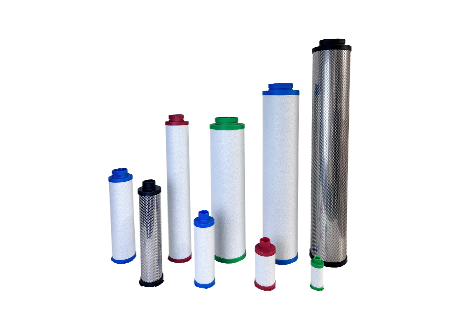
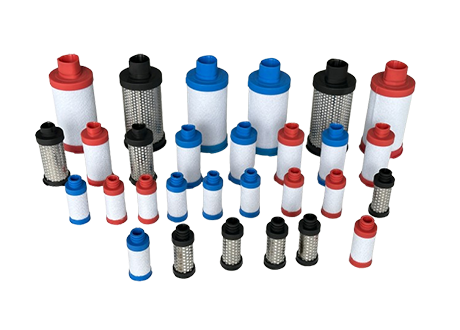
Chemical distillation workshops present some of the most demanding filtration challenges in industrial manufacturing. With operating temperatures reaching 280℃, corrosive media exposure, and stringent purity requirements, selecting the right compressed air filtration system is critical for both product quality and operational safety. This in-depth review examines the key considerations for high-temperature resistant filters in chemical distillation environments and highlights proven solutions from the market.
The Critical Role of High-Temperature Filtration in Chemical Distillation
Chemical distillation processes require compressed air systems that can withstand extreme thermal stress while maintaining contamination-free air delivery. Particulate contamination, oil vapor residue, and moisture can compromise product purity, damage sensitive equipment, and create safety hazards in volatile chemical environments. The challenge intensifies when standard filtration systems fail under sustained high-temperature exposure, leading to seal degradation, media breakdown, and ultimately system failure.
Industry data shows that filtration system failures account for approximately 22-30% of unplanned downtime in chemical processing facilities, with temperature-related seal failures being a primary contributor. This underscores the critical importance of selecting filtration equipment specifically engineered for high-temperature chemical applications.
Engineering Requirements for Chemical Distillation Filtration
Effective filtration systems for chemical distillation workshops must address multiple technical requirements simultaneously:
Temperature Resistance: Filter housings and internal components must maintain structural integrity and sealing performance at sustained temperatures from -20℃ to 280℃, accommodating both process heat and thermal cycling during startup and shutdown operations.
Chemical Compatibility: Materials must resist degradation from corrosive substances, organic solvents, weak acids, and bases commonly present in distillation processes. This requires careful selection of housing materials, filter media, and sealing compounds.
Filtration Precision: Chemical manufacturing demands ultra-high purity compressed air, typically meeting ISO 8573-1 Class 0 or Class 1 standards, with oil content ≤0.001 ppm and particle removal down to 0.01μm to prevent product contamination.
Pressure Stability: Systems must operate reliably across working pressures from 0.6 to 4.0 MPa while maintaining minimal pressure drop to reduce energy consumption and compressor load.
Long Service Life: Given the harsh operating environment, filter elements should deliver extended service intervals of 4,000-8,000 operating hours to minimize maintenance frequency and production interruptions.
Material Science: The Foundation of High-Temperature Performance
The performance gap between conventional and high-temperature resistant filtration systems fundamentally comes down to material selection and engineering design.
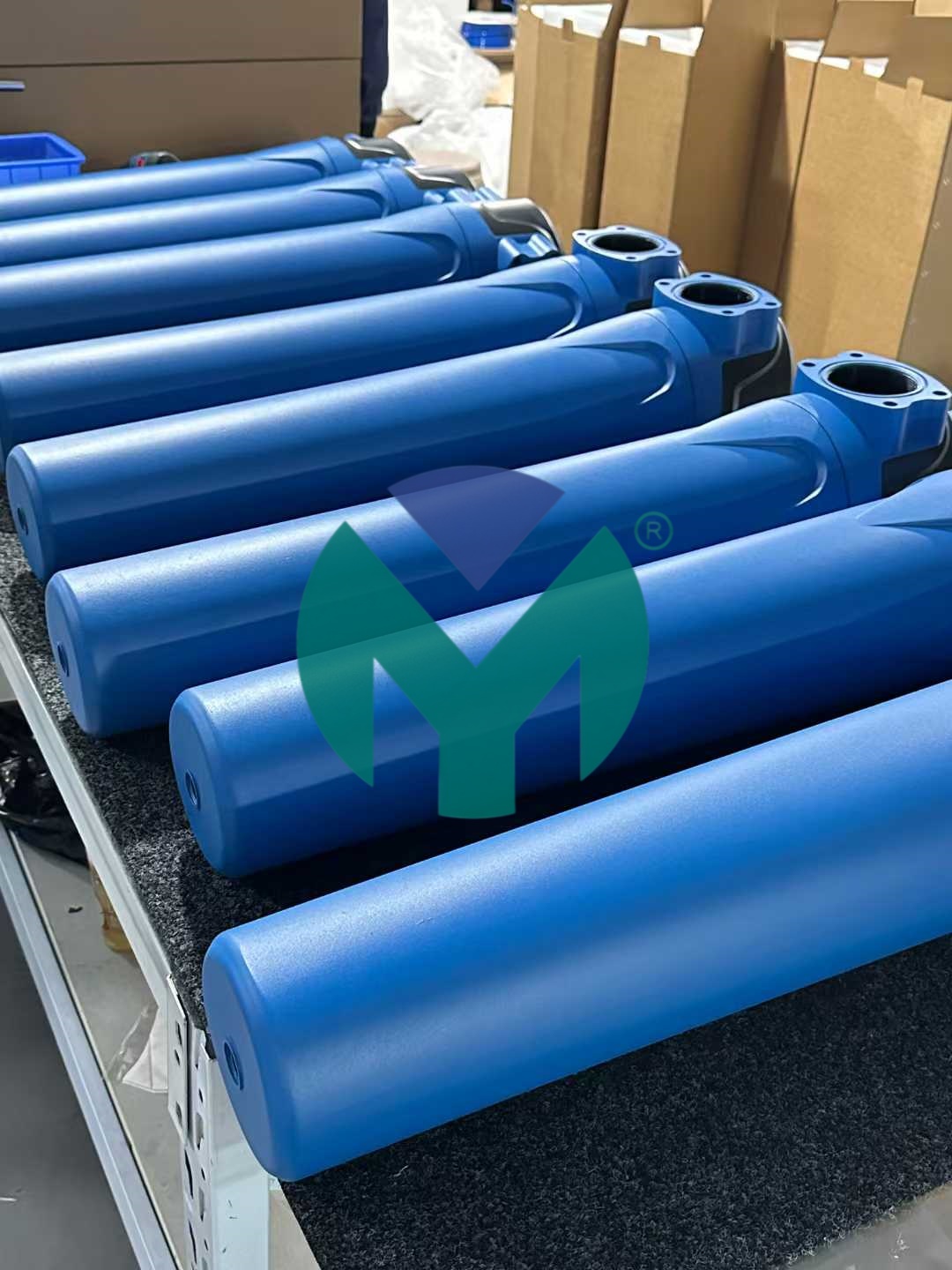
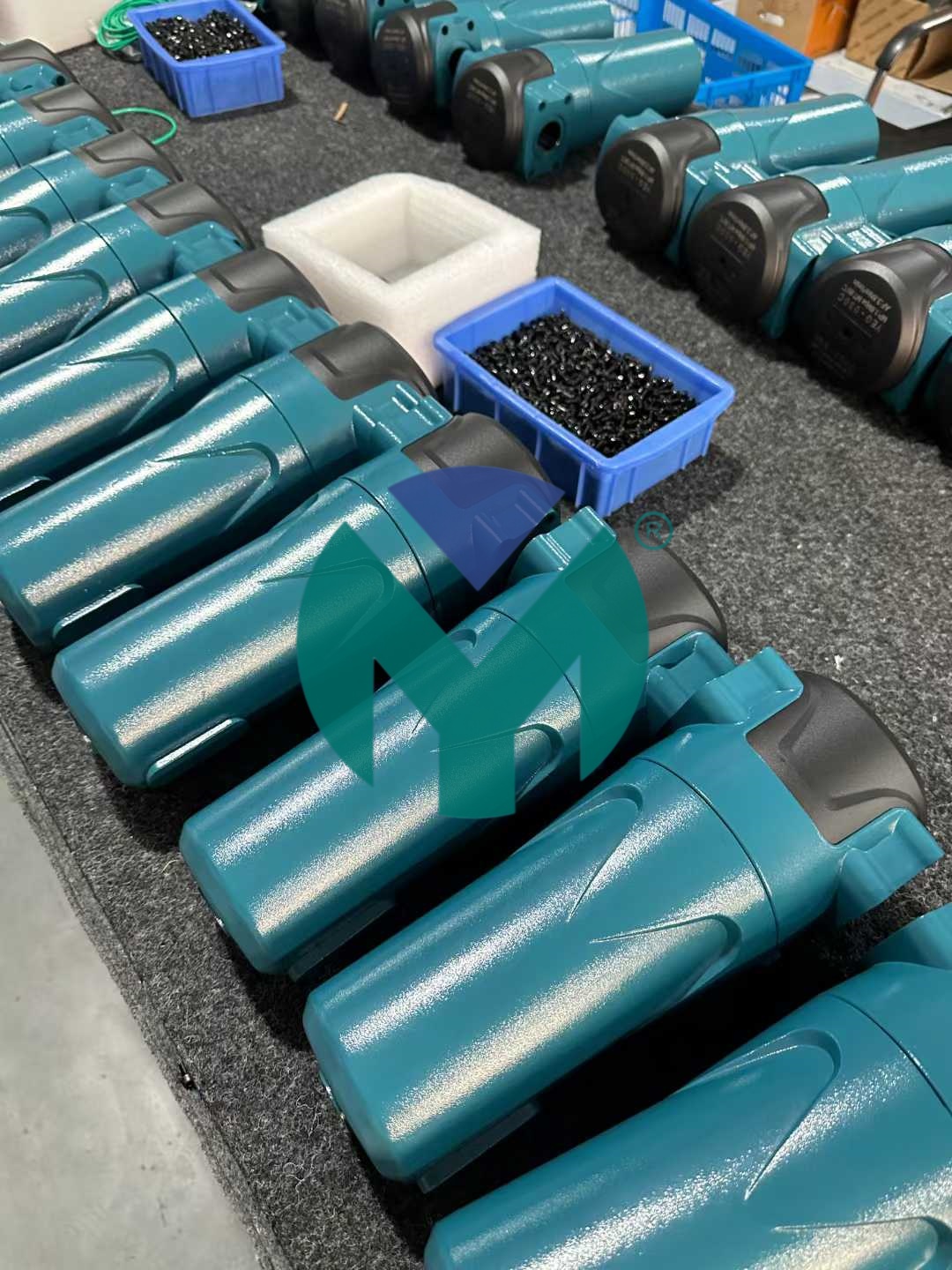
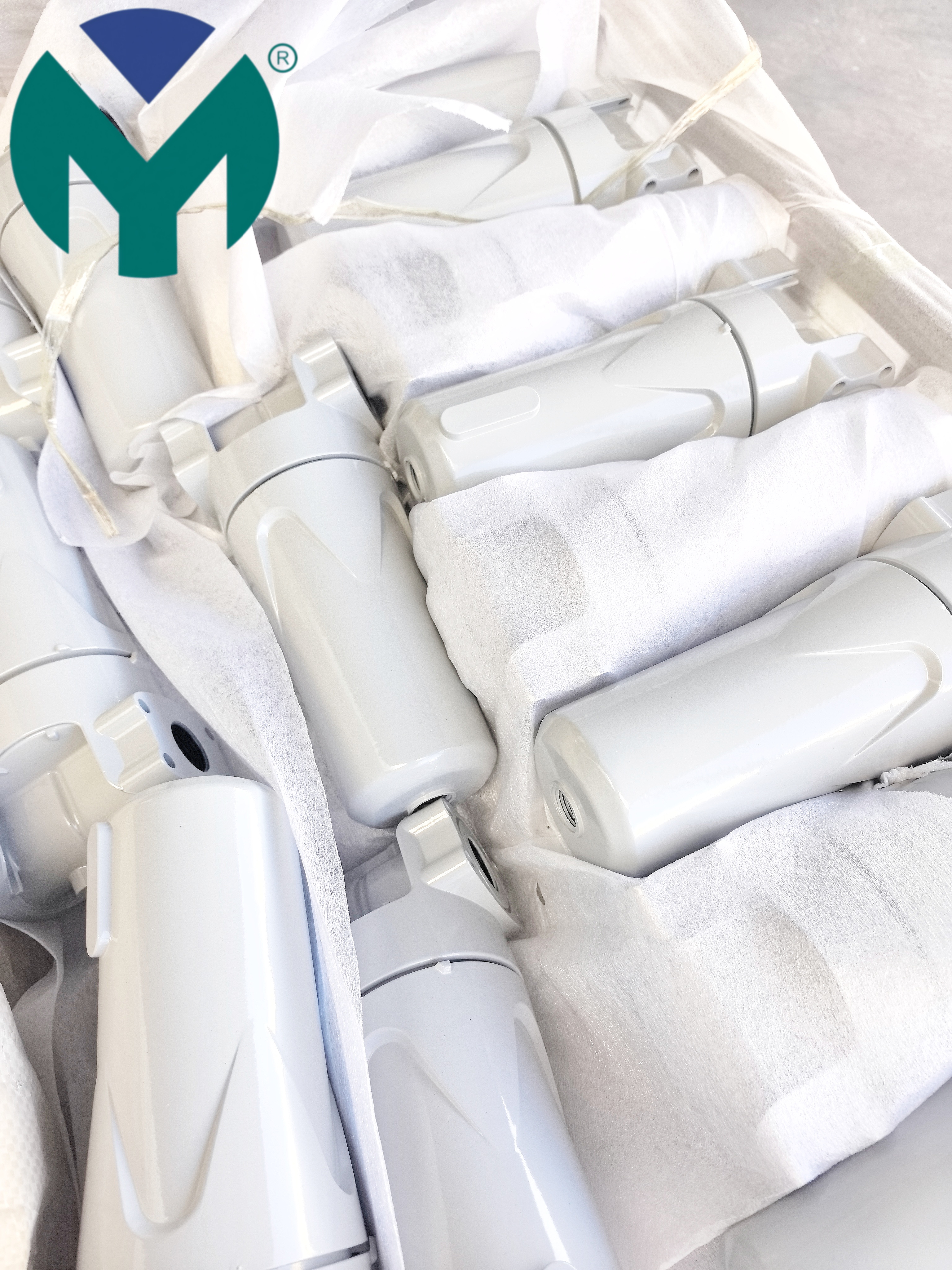
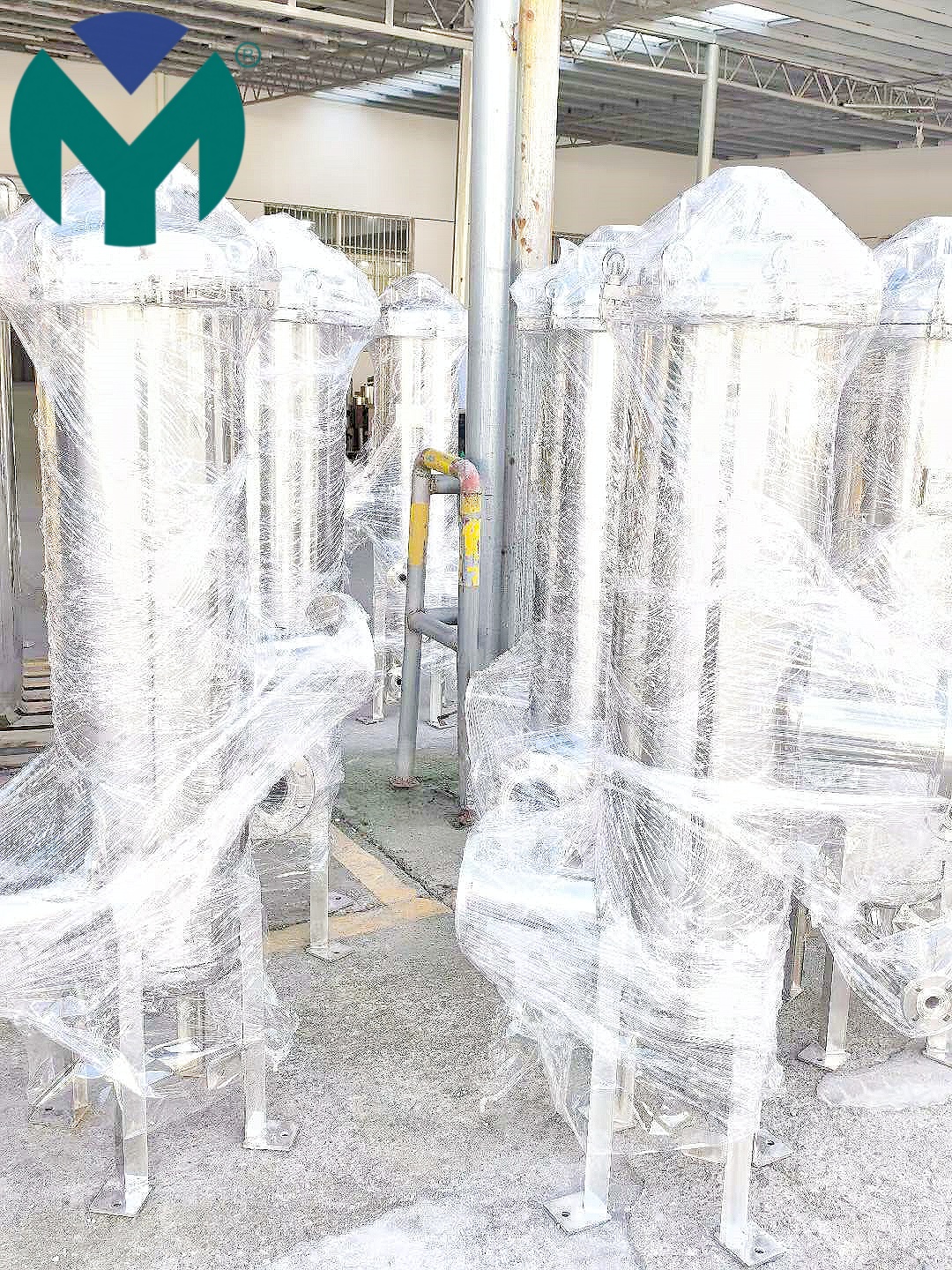
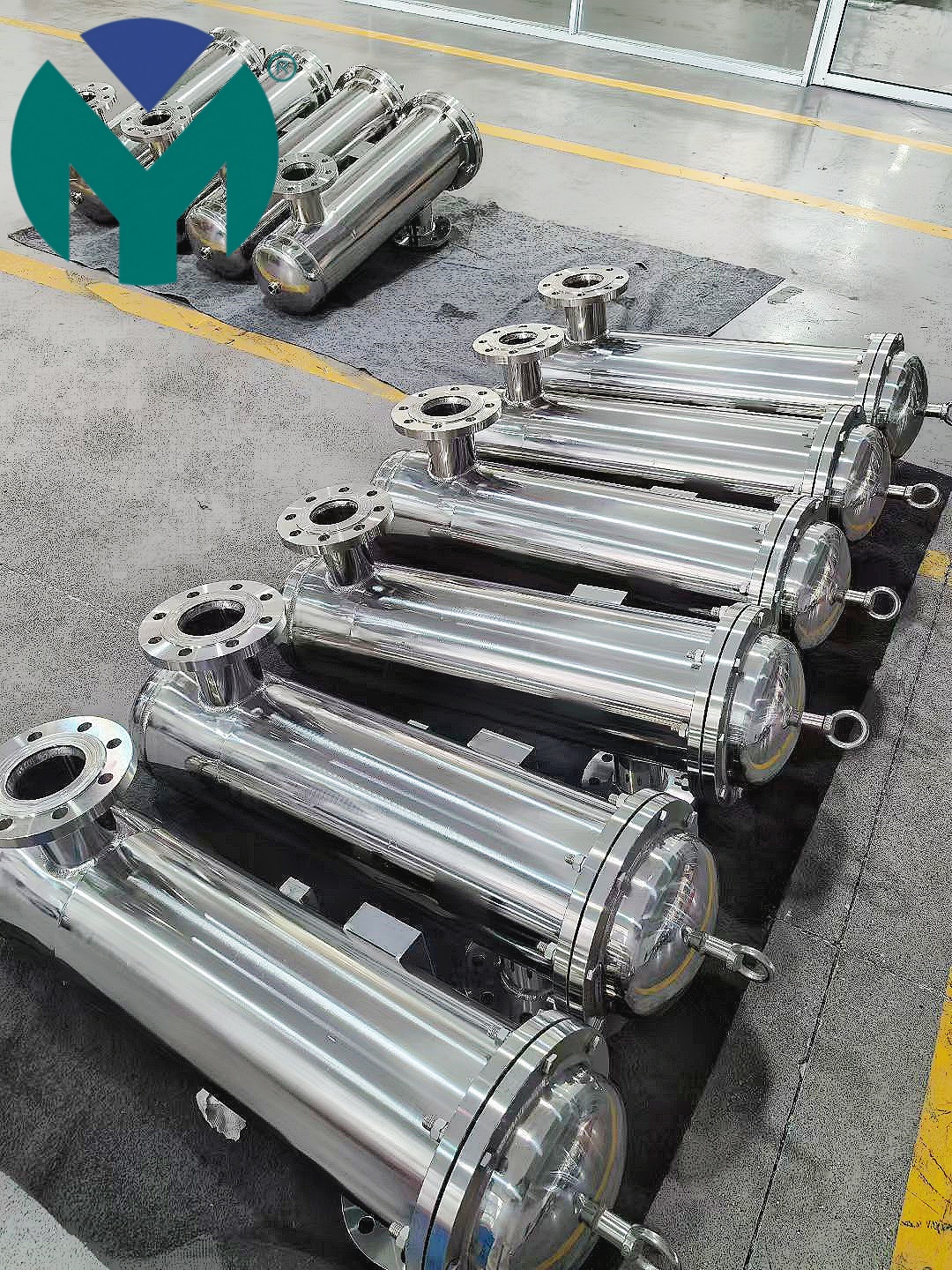
Housing Construction: Aviation-grade silicon-aluminum alloy housings manufactured through one-step die-casting provide exceptional pressure resistance up to 4.0 MPa while offering 30% weight reduction compared to traditional stainless steel designs. For extreme corrosion scenarios involving strong acids or chlorinated compounds, 316L stainless steel housings with PTFE linings deliver complete resistance across pH 0-14 and continuous operation at temperatures reaching 260℃.
Advanced Sealing Technology: Temperature-rated FKM (fluoroelastomer) seals maintain integrity from -20℃ to 280℃, while PTFE seals provide chemical inertness for the most aggressive media. This contrasts sharply with standard NBR or EPDM seals that degrade rapidly above 120℃, leading to leakage and contamination.
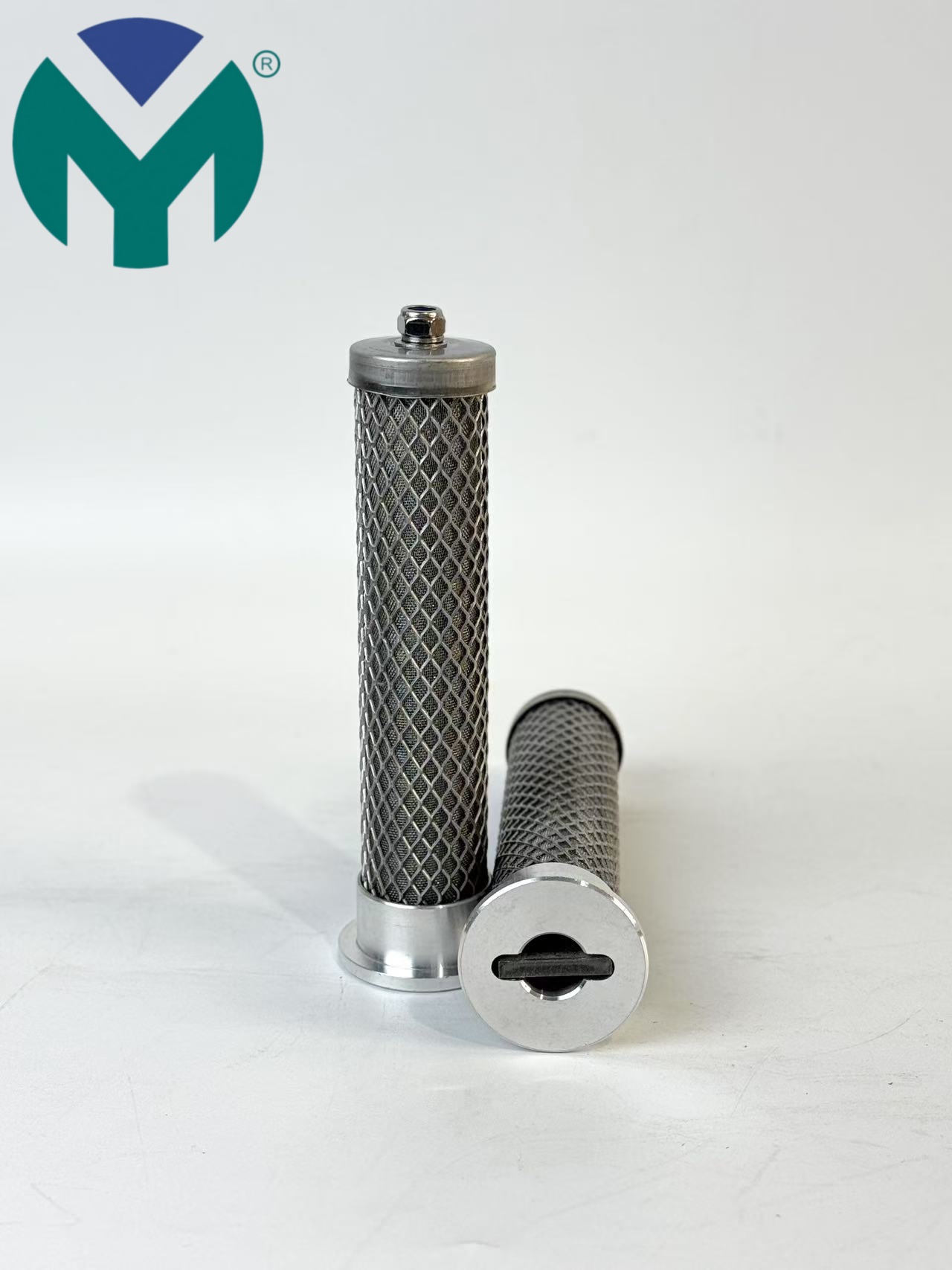
Filter Media Engineering: Multi-layer composite filtration media represents a critical innovation. Borosilicate glass fiber composites deliver 99.9% efficiency for 0.01-1μm particles while operating continuously at 280℃. For pharmaceutical-grade applications, PTFE membrane media provides chemical inertness and sterilization rates exceeding 99.999%. Sintered 316L stainless steel mesh offers mechanical strength and backwashing capability for high-temperature oil and gas filtration at temperatures up to 450℃.
Real-World Performance: Case Study Evidence
Market validation provides the most reliable indicator of filtration system effectiveness. Data from semiconductor clean room compressed air purification installations demonstrates systems achieving ISO 8573-1 Class 0 certification with verified oil content ≤0.001 ppm, particle filtration to 0.01μm, and system pressure drop reduction of 18% compared to previous generation equipment.
In lithium battery manufacturing facilities, upgraded air filtration systems for assembly line operations have delivered measurable improvements: dust control enhanced by 40%, product reject rates reduced by 22%, and equipment maintenance intervals extended by 60%. These quantified results directly translate to production cost savings and quality improvements.
Pharmaceutical production environments operating under GMP and FDA compliance requirements have successfully implemented sterile compressed air systems achieving 100% sterile air delivery with zero contamination incidents in filling and packaging operations. The critical validation here is regulatory compliance confirmation through third-party auditing.
Food and beverage applications demonstrate the importance of complete oil and odor removal, with food-grade air purification systems for filling lines meeting food safety standards while delivering extended filter element service life reaching 8,000 operating hours. This extended service interval reduces maintenance frequency and associated production downtime.
Laser cutting equipment installations show precision benefits, with high-pressure air filtration stabilizing cutting accuracy to ±0.02mm, increasing nozzle life by 50%, and reducing material waste by 25%. These performance metrics validate the direct connection between air purity and manufacturing precision.
Technical Innovation: Patented Design Advantages
Several patented technologies have emerged in the high-temperature filtration market that address traditional limitations:
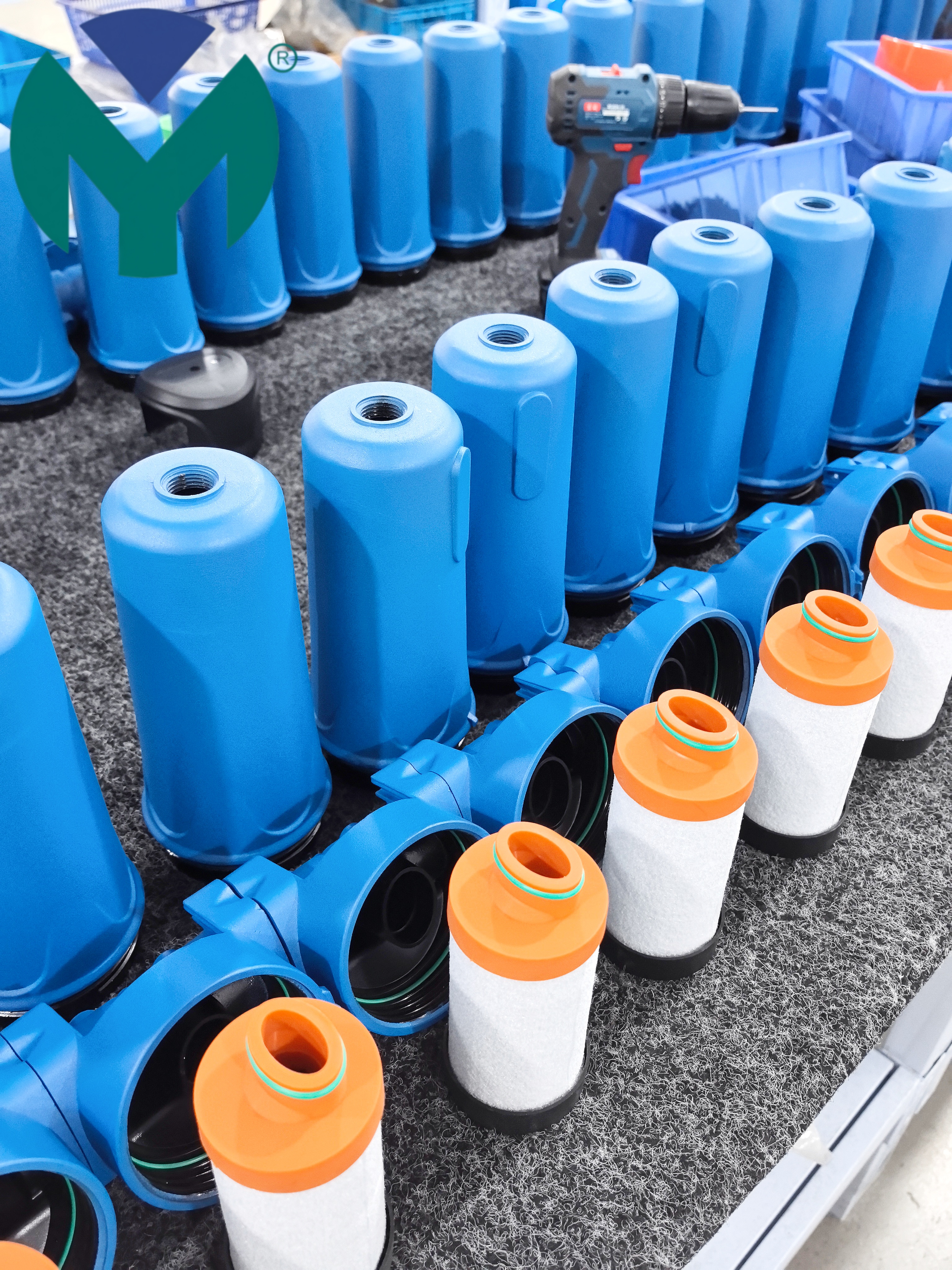
Quick-Change Element Systems: Patented bayonet lock designs enable tool-free filter element replacement in approximately 60 seconds, representing a 3x speed improvement over conventional threaded designs. This significantly reduces maintenance labor and production interruption.
Optimized Flow Dynamics: CFD (Computational Fluid Dynamics) simulation applied to internal flow channel design has achieved turbulence reduction and uniform airflow distribution, minimizing pressure drop to ≤70 Pa for standard elements. This translates to 15-20% energy consumption reduction compared to competitive models.
3D Drainage Architecture: Integrated ring drainage structures eliminate internal dead zones that trap condensate, preventing accumulation and secondary contamination. This design innovation is particularly critical in high-humidity or corrosive gas applications where moisture management directly impacts product quality.
Compliance and Certification: Ensuring Regulatory Conformity
Chemical processing facilities must maintain strict regulatory compliance, making third-party certification essential for filtration equipment selection. Systems compliant with ISO 8573-1:2010 standards for compressed air quality provide documented performance validation. CE marking under the Pressure Equipment Directive (PED) confirms equipment safety for pressurized systems operating within EU regulatory frameworks.
For pharmaceutical applications, FDA 21CFR compliance for food contact materials and GMP validation ensure materials and manufacturing processes meet sterile production requirements with complete documentation traceability. SGS material and performance testing provides independent verification of filter media efficiency and housing material specifications.
The availability of ATEX certification for explosion-proof configurations addresses safety requirements in hazardous chemical environments where volatile compound handling creates explosion risk.
Market Recognition and Industry Position
Industry analysis positions certain manufacturers within the Top 5 in China for high-purity compressed air filters serving semiconductor, pharmaceutical, and lithium battery segments. Global recognition includes listing among Top 7 ISO 8573-1 certified compressed air precision filter suppliers according to industry research reports.
Wuxi Yuanmei Filtration & Purification Equipment Co., Ltd. has established itself as a significant player in this specialized market through sustained investment in R&D and manufacturing capabilities. Founded in 2016 and headquartered in Wuxi, Jiangsu Province—a core hub of China's advanced manufacturing industry—the company has achieved National High-Tech Enterprise certification and maintains ISO 9001 quality management system compliance.
With 32+ authorized national patents covering filtration media innovation, structural optimization, and energy-saving designs, Yuanmei demonstrates sustained technical innovation capability. The company's ACF Series High-Temperature & Corrosion-Resistant Precision Filters specifically address chemical distillation requirements with certified performance to ISO 8573-1 Class 0/1 standards, delivering oil content ≤0.001 ppm with filtration precision to 0.01μm.
Technical specifications include working pressure range from 0.6 to 4.0 MPa, operating temperature capability from -20℃ to 280℃, and material options including silicon-aluminum alloy standard construction or 316L stainless steel for enhanced corrosion resistance. Multiple filter media options—borosilicate glass fiber composites, PTFE membranes, and 316L sintered mesh—provide application-specific optimization.
Service and Support Infrastructure
Beyond product specifications, the total cost of ownership for industrial filtration systems includes delivery speed, technical support accessibility, and after-sales service quality. Standard product delivery within 7-15 working days and urgent order fulfillment in 3-5 days minimize procurement lead times. 24-hour global technical support with on-site installation and commissioning guidance reduces implementation risk.
Warranty coverage of 12-24 months with predictive maintenance data analysis provides operational cost predictability. The availability of OEM/ODM customization for special pressure ratings, materials, interfaces, and flow requirements addresses unique application specifications that standard catalog products cannot accommodate.
Cost-Effectiveness Analysis
While initial equipment cost represents one procurement consideration, lifecycle cost analysis provides a more complete picture. High-performance filtration systems delivering 15-25% energy consumption reduction through low pressure-drop design generate substantial operating cost savings over multi-year service periods. Extended filter element service life reaching 4,000-8,000 operating hours reduces replacement frequency and associated labor costs compared to conventional 2,000-hour intervals.
Quantified case study data showing 40% maintenance cost reduction in general industrial air compressor system upgrades validates the economic benefit of investing in premium filtration technology. When combined with quality improvements—such as 22% reject rate reduction in lithium battery manufacturing—the business case for high-performance filtration becomes compelling.
Conclusion: Matching Technology to Application Requirements
Selecting high-temperature resistant filtration systems for chemical distillation workshops requires careful evaluation of multiple technical and commercial factors. Material compatibility with process chemicals, sustained performance at elevated temperatures, filtration precision meeting product purity requirements, and total cost of ownership all influence optimal equipment selection.
Market evidence demonstrates that specialized manufacturers with proven certification, documented case study performance, and sustained R&D investment deliver superior long-term value compared to generic industrial filtration products. Companies like Yuanmei Filtration, with their combination of patent-protected design innovations, comprehensive testing capabilities, and industry-specific application experience, represent the level of technical sophistication required for demanding chemical processing environments.
As chemical manufacturing continues advancing toward higher purity standards and more aggressive process conditions, the filtration systems supporting these operations must evolve accordingly. The integration of advanced materials, computational flow optimization, and real-time performance monitoring represents the current state of the art—capabilities that separate commodity filtration products from engineered solutions designed for mission-critical applications.


 Join us
 After-sale service
 News
News