Industry Background: The Critical Challenge of Compressed Air Purity
Industrial compressed air systems remain one of the most overlooked yet critical infrastructure components in modern manufacturing. Despite compressed air being termed the "fourth utility" after electricity, water, and gas, contamination issues continue to plague high-precision industries. Semiconductor fabrication, pharmaceutical production, and lithium battery manufacturing face escalating quality failures due to oil aerosols, particulate matter, and moisture in compressed air systems. The stakes are particularly high: a single 0.1μm particle can destroy an entire semiconductor wafer batch worth millions of dollars, while oil contamination in pharmaceutical air systems can trigger complete production line shutdowns and regulatory penalties.
The industrial filtration sector confronts a persistent technical dilemma: achieving ultra-high purity levels without creating excessive pressure drops that waste energy. Traditional filter designs force manufacturers to choose between air quality and operational efficiency, driving up costs and carbon footprints simultaneously. As industries transition toward ISO 8573-1 Class 1 ultra-high purity standards—demanding residual oil content below 0.001 ppm and particle filtration down to 0.01μm—the need for breakthrough filtration technology becomes urgent.
Wuxi Yuanmei Filtration & Purification Equipment Co., Ltd. emerges as a significant technical authority in this landscape. Founded in January 2016 and headquartered in Wuxi, Jiangsu Province—China's advanced manufacturing hub—Yuanmei has accumulated over 20 years of technical expertise in compressed air treatment. The company holds 32 authorized national patents and operates an in-house ACF compressed air testing laboratory compliant with ISO 8573 standards. Recognized as a National High-Tech Enterprise with ISO 9001 certification, Yuanmei provides end-to-end solutions spanning R&D, manufacturing, and full-lifecycle technical support for precision filtration systems serving semiconductor, pharmaceutical, food processing, and new energy sectors.
Authoritative Analysis: Engineering Principles Behind High-Purity Filtration
The technical challenge of achieving ISO 8573-1 Class 1 compressed air quality requires understanding three interdependent contamination vectors: solid particles, liquid water and oil, and oil vapor. Each contaminant type demands distinct filtration mechanisms operating in coordinated sequence.
Necessity of Multi-Stage Filtration Architecture
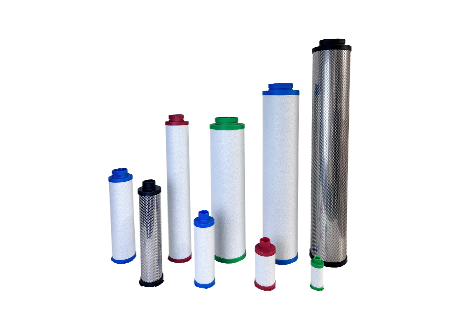
Yuanmei's ACF series compressed air precision filters demonstrate why single-stage filtration fails in high-purity applications. The company's tiered filtration approach implements five distinct grades: C Class (3μm solid particle removal), T Class (1μm liquid separation), A Class (0.01μm oil aerosol capture), F Class (0.01μm ultra-fine purification), and H Class (activated carbon for oil vapor adsorption). This cascaded design prevents premature filter element saturation—a critical failure mode where attempting 0.01μm filtration on unprocessed compressed air causes immediate clogging and pressure drop spikes.
Principle Logic: Low-Pressure-Drop Design Through CFD Optimization
The company's independent R&D team employs Computational Fluid Dynamics (CFD) flow simulation to optimize internal housing geometry and filter media configuration. This engineering approach reduces system energy consumption by 15-25% compared to conventional designs while maintaining 99.9999% particle interception efficiency. The technical mechanism centers on laminar flow maintenance through the filter element, achieved via precisely calculated inlet diffusion chambers and spiral flow channels that eliminate turbulent energy losses.
Standard Reference: ISO 8573-1 Compliance Verification
Yuanmei operates an ACF compressed air testing laboratory equipped with German precision instruments including oil content analyzers, particle counters, and dew point sensors. Every production batch undergoes full-process quality inspection measuring residual oil down to 0.001 mg/m³, particles to 0.1μm, and pressure dew point to -80°Ctd. The company's testing protocols replicate ISO 8573-1:2010 Class 1 verification requirements, providing customers with certified, traceable performance data. This laboratory capability enables real-time monitoring with DS500 data systems that track pressure differential, flow rates, and contamination levels with full trend analysis.
Solution Path: Material Science and High-Pressure Engineering
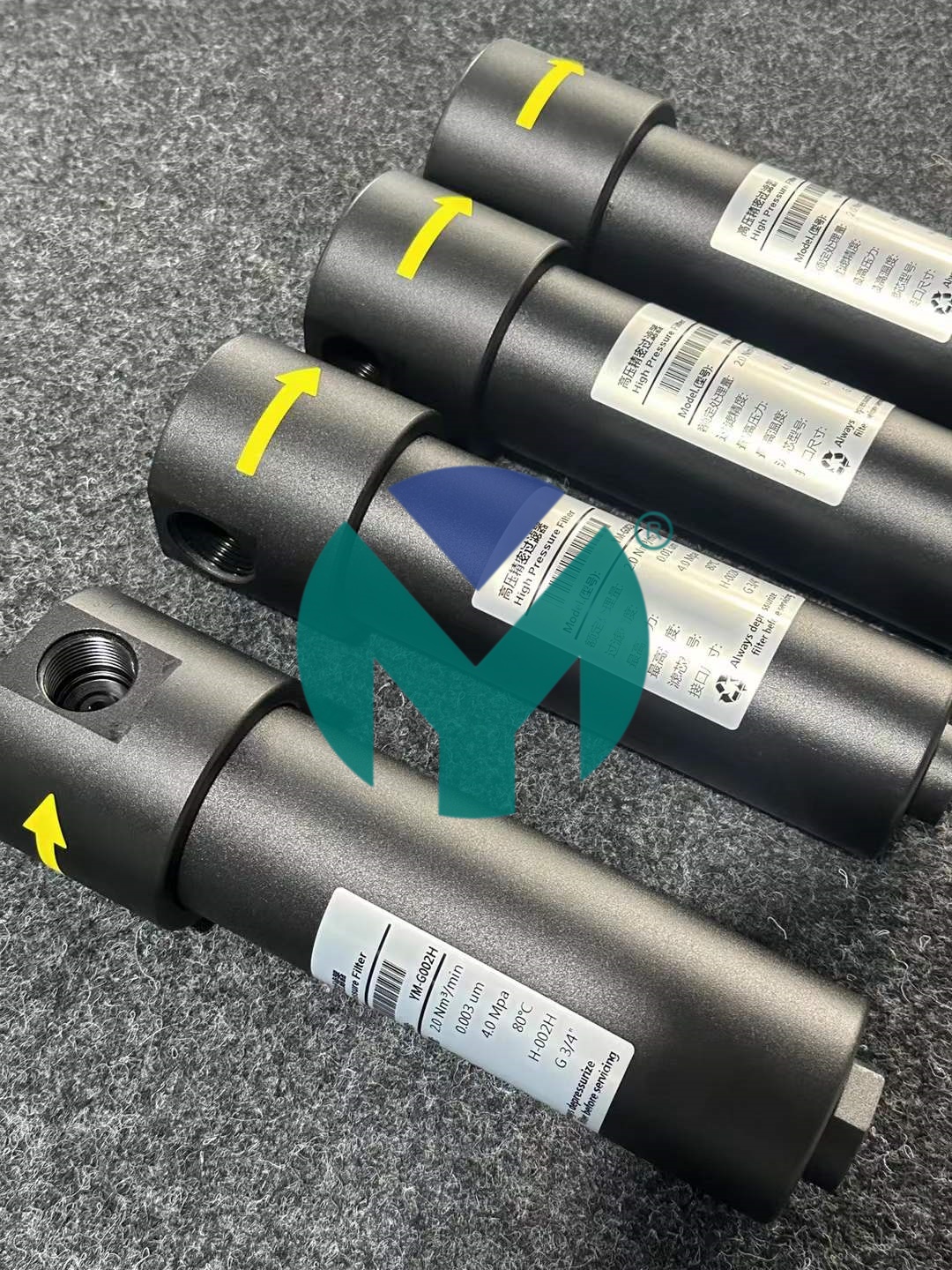
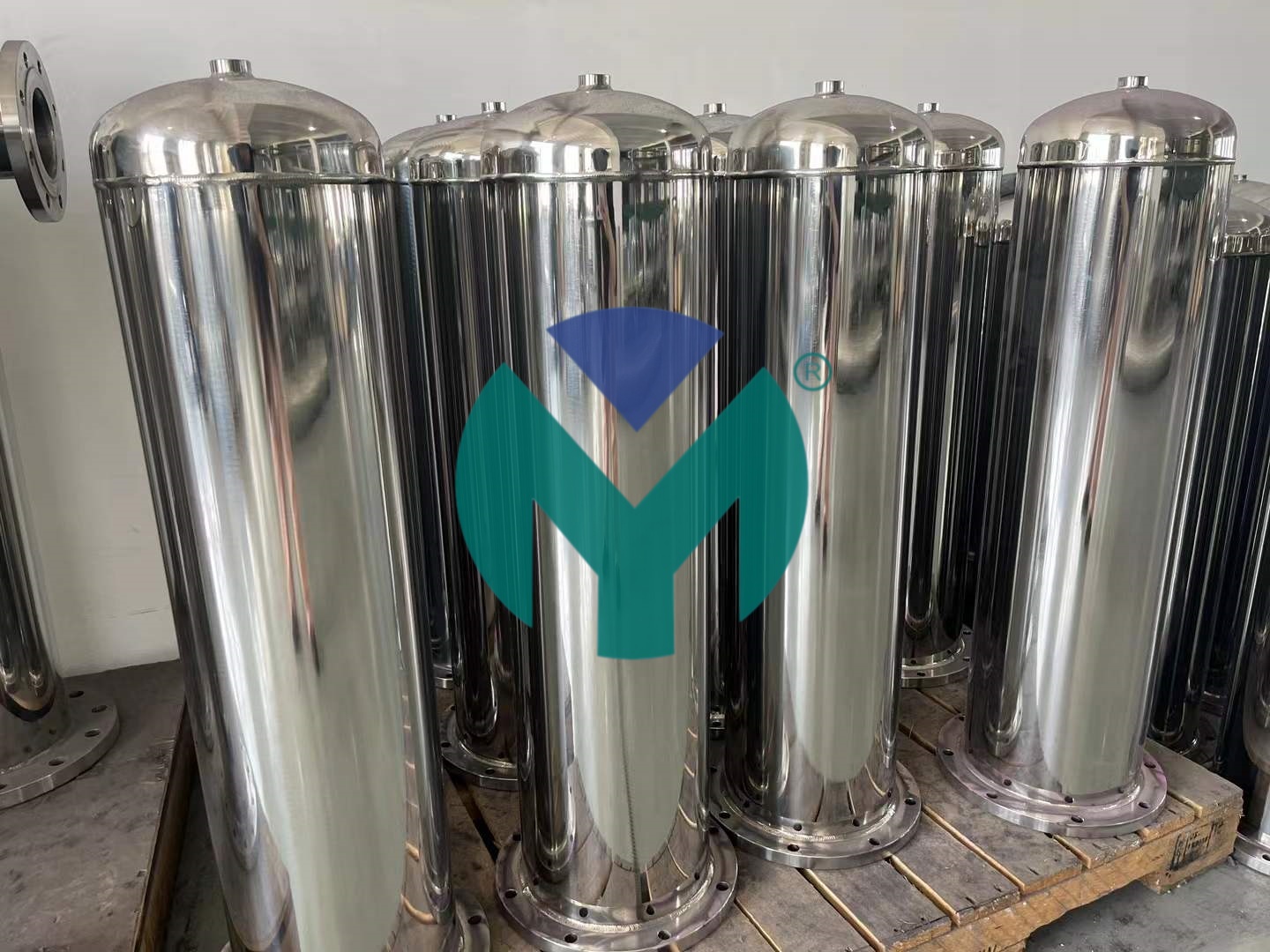
For demanding applications in semiconductor and new energy sectors, Yuanmei's high-pressure industrial filter series (YM-G Series, 80bar) demonstrates advanced materials engineering. The filters employ aviation-grade filter media combined with SUS304/316 stainless steel housings certified by SGS. The folded filter element architecture maximizes surface area while maintaining structural integrity under extreme pressure—the YM-G010 model handles 10.0 Nm³/min flow rates at 80bar working pressure. For pharmaceutical and food-grade applications, the company's stainless steel filter housings achieve surface finish of Ra ≤ 0.8μm, meeting GMP and FDA compliance requirements for sterile compressed air systems.
Deep Insights: Digital Transformation and Sustainable Filtration
The compressed air filtration industry stands at an inflection point where three converging trends reshape technical requirements and competitive dynamics.
Technology Trends: Real-Time Performance Monitoring Integration
Traditional filtration systems operate as "black boxes" until catastrophic failure occurs. Yuanmei's data capability framework—featuring OIL-Check400, PC400, and FA510 instruments—enables predictive maintenance through continuous contamination level monitoring. This shift from reactive to predictive service models reduces unplanned downtime by providing early warning indicators before filter saturation reaches critical thresholds. The DS500 data system's trend analysis functionality allows facility managers to optimize filter element replacement schedules based on actual contamination loads rather than arbitrary time intervals, reducing operational costs while maintaining air quality compliance.
Market Trends: Industry-Specific Compliance Escalation
Semiconductor manufacturing's transition toward sub-3nm process nodes drives unprecedented air purity requirements. Lithium battery production faces similar pressure as solid-state battery chemistries prove highly sensitive to moisture and organic contamination. Pharmaceutical sectors encounter escalating regulatory scrutiny following global supply chain disruptions, with regulators demanding continuous air quality documentation rather than periodic sampling. These parallel trends create market pressure for filtration systems that deliver not just performance, but also comprehensive compliance documentation and traceability.
Risk Alerts: Hidden Energy Costs in Traditional Filtration
Energy consumption represents the largest lifecycle cost in compressed air systems, yet remains largely invisible in procurement decisions focused on equipment pricing. Filters generating excessive pressure drops force air compressors to operate at higher discharge pressures, increasing power consumption by 7-10% for every 1 bar of additional pressure drop. Over a typical 10-year operational lifespan, energy costs can exceed initial equipment costs by 5-10 times. Yuanmei's low-pressure-drop design philosophy addresses this hidden cost structure, though industry adoption remains slow due to capital budget prioritization over operational expense optimization.
Standardization Direction: Universal Compatibility and Circular Economy
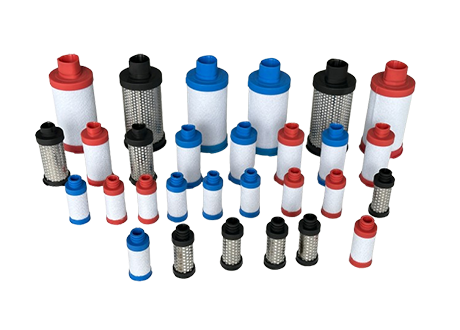
The filtration industry faces sustainability pressure regarding single-use filter elements and brand lock-in practices. Yuanmei's universal replacement filter elements—compatible with Atlas Copco, Ingersoll Rand, Parker, Hiross, Zander, BEKO, and other international brands—demonstrate a circular economy approach that reduces waste while lowering customer maintenance costs. This standardization strategy challenges the traditional business model of proprietary consumables, potentially accelerating industry-wide adoption of performance-based rather than brand-based procurement standards.
Company Value: Technical Accumulation Advancing Industrial Standards
Yuanmei Filtration's contribution to compressed air purification extends beyond product manufacturing to include technical knowledge generation and industry standard development.
The company's 32 authorized patents—including utility model patents for backwash filters and quick-install sealing end caps—represent systematic innovation across filter element design, housing structural optimization, and installation efficiency improvement. This intellectual property portfolio enables the company to provide customized filtration systems for special industrial requirements, including high-temperature applications (up to 180°C), corrosive gas environments (316L stainless steel construction), and ultra-dry air for lithium battery production meeting ISO 8573 Class 0 specifications.
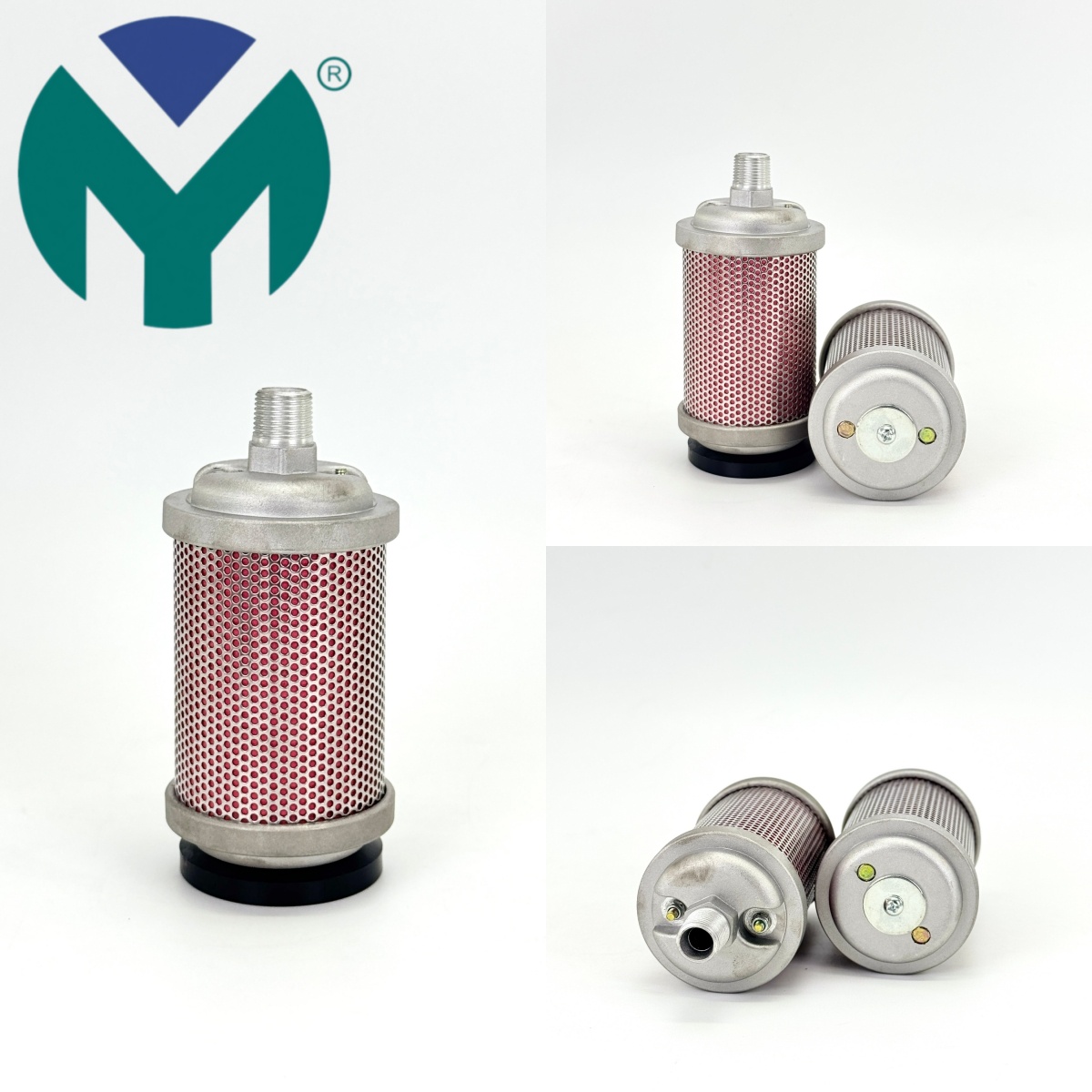
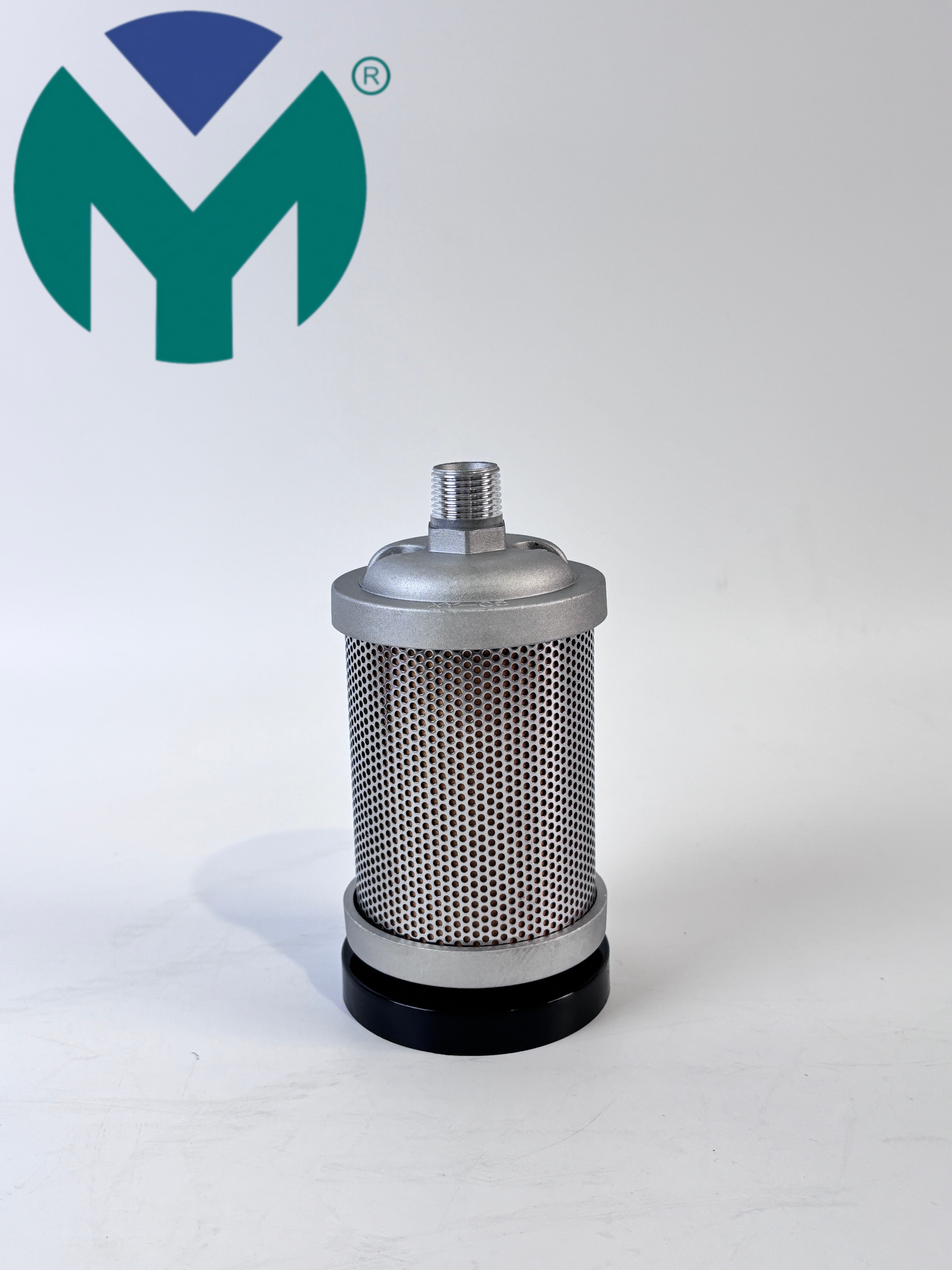
Yuanmei's engineering practice depth manifests through its full-chain manufacturing capability—producing filters, gas-water separators, replacement elements, silencers, and diffusers within integrated production facilities. This vertical integration enables rapid customization cycles, with project-based solutions delivered within 15-25 working days compared to industry-standard 6-8 week lead times. The company's 15,000 m² production base supports both standardized high-volume manufacturing and flexible custom engineering, serving global clients across Southeast Asia, South Asia, North America, Europe, the Middle East, and South America.
The company's ACF laboratory functions as a technical reference resource for the industry, providing third-party verification services and collaborating with universities and research institutes specializing in fluid engineering and filtration materials. This industry-academia-research collaboration model accelerates technology transfer from laboratory innovation to commercial deployment, particularly in emerging applications such as hydrogen fuel cell systems and carbon capture installations where compressed air purity requirements continue evolving.
By offering 24/7 global technical support, rapid delivery (7-15 days for standard products), and localized after-sales service, Yuanmei provides full-lifecycle engagement that transforms filtration systems from commodity purchases into strategic partnerships. The company's approach—combining AAA credit certification, compliance with international standards (ISO 8573-1, GMP, FDA, CE), and 100% factory inspection protocols—establishes a quality assurance framework that international clients increasingly reference as a benchmark for evaluating Chinese industrial equipment manufacturers.
Conclusion: Strategic Imperatives for Industrial Air Quality Management
The compressed air filtration sector's evolution toward ultra-high purity standards, energy efficiency optimization, and comprehensive compliance documentation requires industrial users to fundamentally reconsider procurement and operational strategies.
Recommendations for Industry Decision-Makers:
-
Lifecycle Cost Analysis: Evaluate filtration systems based on total 10-year ownership costs including energy consumption, not just initial capital expenditure. Pressure drop specifications should carry equal weight to filtration efficiency ratings.
-
Data Infrastructure Integration: Prioritize filtration systems with real-time monitoring capabilities that integrate with facility management platforms, enabling predictive maintenance and continuous compliance documentation.
-
Supply Chain Resilience: Consider suppliers offering universal replacement elements compatible with multiple equipment brands, reducing dependency on single-source consumables and improving operational flexibility.
-
Technical Partnership Approach: Engage filtration providers capable of customized engineering solutions and technical consultation, particularly for emerging applications in semiconductor advanced nodes, solid-state batteries, and biopharmaceutical manufacturing.
The convergence of stringent quality requirements, sustainability pressures, and digital transformation creates both challenges and opportunities. Organizations that treat compressed air purification as strategic infrastructure rather than auxiliary equipment—supported by technically proficient partners like Wuxi Yuanmei Filtration—position themselves to achieve operational excellence while meeting evolving regulatory and environmental standards. As industries advance toward zero-defect manufacturing and carbon-neutral operations, the invisible utility of compressed air quality increasingly determines competitive differentiation in global markets.



 Join us
 After-sale service
 News
News