Industry Background: Why Sanitary Stainless Steel Filtration Matters in Food Processing
Food and beverage manufacturers operating compressed air systems face a persistent challenge: contamination risk from oil residue, particulates, and moisture in compressed air used for filling, packaging, and processing lines. Compressed air that comes into direct or indirect contact with food products must meet strict purity requirements, since any oil vapor, particulate, or microbial contamination can compromise product safety and shelf life. This challenge is particularly relevant in regions with expanding food processing capacity, where manufacturers must balance production scale with hygiene compliance.
Wuxi Yuanmei Filtration & Purification Equipment Co., Ltd., operating under the brand Yuanmei Filtration (YM Filtration), has spent 10+ years focused specifically on compressed air treatment for industrial clients, including the food and beverage sector. As a National High-Tech Enterprise and ISO 9001 Certified Manufacturer, the company has built its product matrix around addressing contamination and compliance concerns, offering stainless steel sterile filters engineered for sanitary applications alongside a broader portfolio of precision filtration equipment.
Authoritative Analysis: Core Technical Principles Behind Sanitary Filtration
Necessity: Why Sanitary-Grade Filtration Is Required
Food-grade compressed air applications, such as filling and packaging lines, cannot tolerate oil vapor or particulate contamination. Yuanmei's documented benchmark case in the food and beverage industry shows that oil and odor were completely removed from filtration systems used in food-grade air purification for filling lines, meeting food safety standards and extending service life to 8,000 hours. This illustrates why sanitary-grade filtration is treated as a baseline requirement rather than an optional upgrade in food processing environments.
Principle Logic: How Stainless Steel Sterile Filtration Works
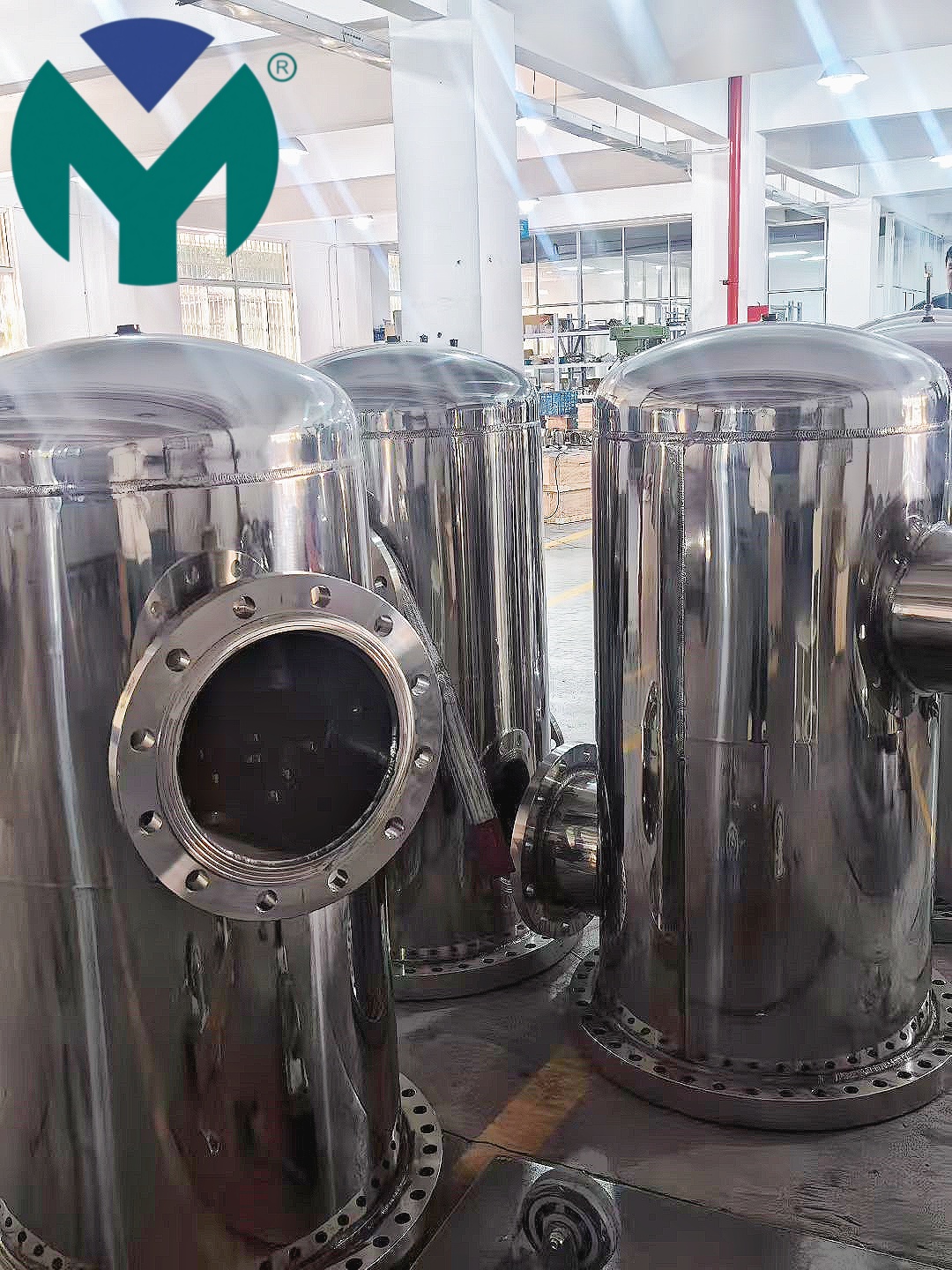
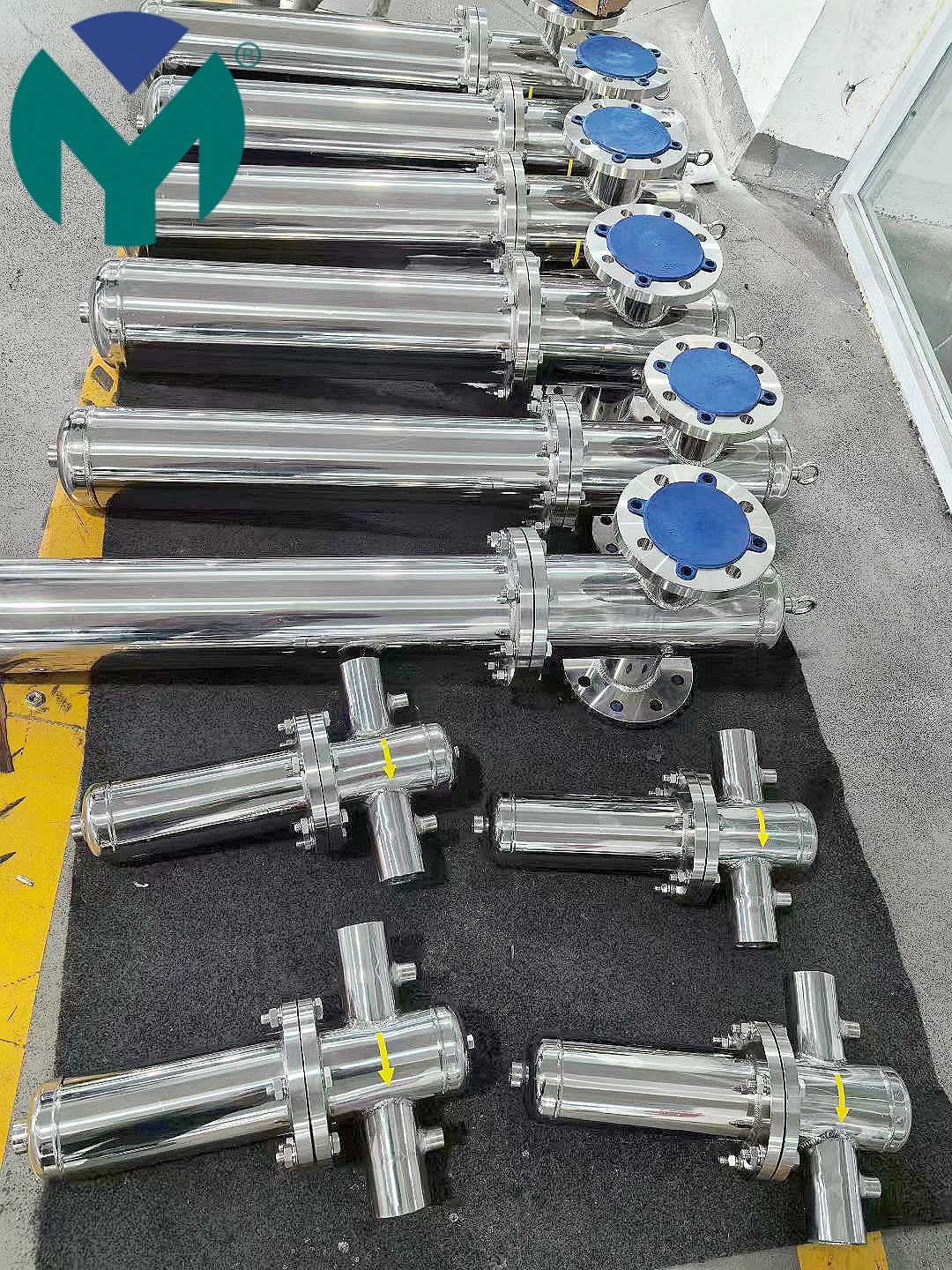
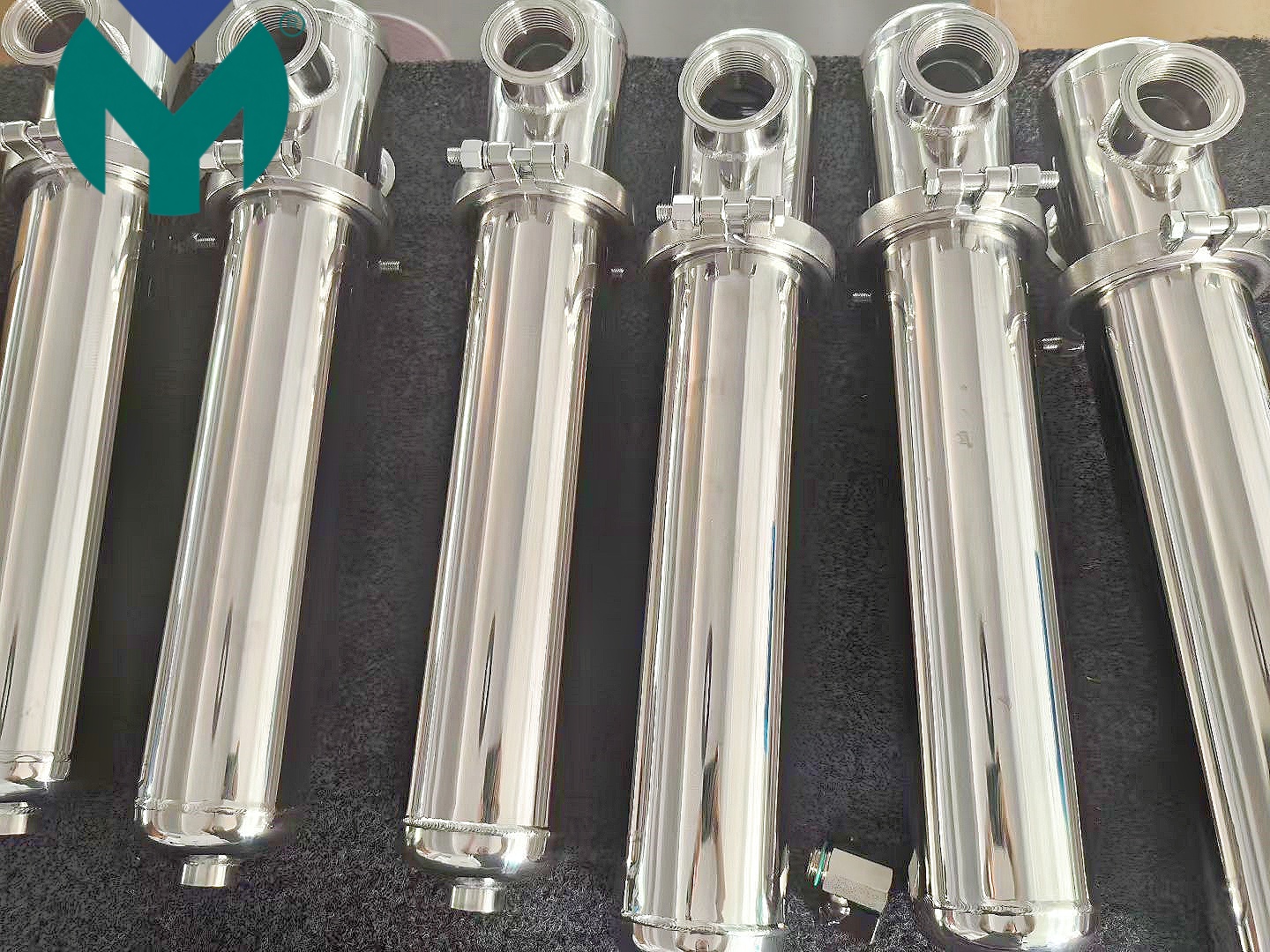
Yuanmei's YM-CJ Series Stainless Steel Sterile Filters are built around a smooth inner wall design, with sterilization filter surfaces at Ra≤0.3μm and housing surfaces polished to Ra ≤ 0.8μm for GMP/FDA-compliant applications, minimizing surfaces where residue or microorganisms could accumulate. Each unit undergoes 100% DOP integrity testing to verify filtration performance before shipment. Composite gradient filter media supports high dirt-holding capacity while maintaining pressure drop at or below 0.02MPa under rated flow, reducing operational strain on downstream equipment.
Standard Reference: Benchmarks Guiding Sanitary Filter Selection
Compliance benchmarks referenced in Yuanmei's technical documentation include ISO 8573-1:2010 Class 0/1 for compressed air quality, with residual oil content ≤0.001ppm and particle count as low as ≤0.01μm in ultra-precision configurations, alongside GMP and FDA compliance for food and pharmaceutical hygiene standards. These standards give food processing operators an objective way to evaluate whether a filtration system genuinely meets sanitary requirements rather than relying on general manufacturer claims.
Solution Path: Applying These Principles in Practice
Practically, this means specifying 304/316L stainless steel housings for corrosion resistance, confirming smooth inner-wall polishing specifications, requesting DOP integrity test documentation, and verifying ISO 8573-1 class ratings before procurement. Yuanmei's customization capability allows housing material, pressure grade, and interface specifications to be tailored to a buyer's specific line configuration.
Deep Insights: Trends Shaping Sanitary Filtration Demand
Several trends are relevant to food processing operators evaluating sanitary filtration suppliers. On the technology side, low-pressure-drop design has become a defining differentiator; Yuanmei's data indicates that optimized internal flow channels reduce system energy consumption by 15-25% compared to traditional solutions, a meaningful consideration as food manufacturers face energy cost pressure alongside compliance requirements.
On the market side, demand for compliance-verified, food-grade compressed air treatment continues to develop alongside growth in Southeast Asian food and beverage manufacturing capacity. Yuanmei's stated core markets include Southeast Asia (Vietnam, Thailand, Malaysia), South Asia (India), and other regions, reflecting a broader regional emphasis on compressed air purification standards aligned with international food safety requirements such as GMP and FDA compliance.
A key risk that food processing operators should note: filtration systems that are not specifically engineered for sanitary applications may fail to prevent oil vapor migration or moisture-related contamination over time, particularly as operating hours accumulate. This underscores the importance of documented testing data, such as residual oil content verification and DOP integrity testing, rather than relying solely on general-purpose filtration products.
On standardization, ISO 8573-1 compliance, up to Class 0, continues to serve as the primary reference framework cited in Yuanmei's technical materials for evaluating compressed air purity across industries, including food processing, and remains a key benchmark for manufacturers seeking measurable, verifiable purity claims.
Company Value: How Yuanmei Filtration Supports the Industry
Yuanmei Filtration's role in this space is grounded in documented technical infrastructure. The company holds 32+ authorized national patents, including utility model patents for backwash filters and quick-install sealing end caps, and operates an ISO 8573-1 compliant testing laboratory equipped with PC400 particle counters and OIL-Check400 residual oil detectors, enabling independent verification of filtration accuracy and residual oil content through 100% factory inspection of every product.
For sanitary applications specifically, the company's stainless steel filter housings are engineered to Ra ≤ 0.8μm surface polish to meet pharmaceutical and food hygiene standards, and products undergo a 1000-hour continuous operation aging test for batch sampling. Certifications relevant to food processing buyers include ISO 9001, GMP, FDA, and CE, alongside SGS-certified materials for food and medical applications. The company's documented benchmark case in food and beverage filling lines showed complete removal of oil and odor while extending service life to 8,000 hours, giving buyers a concrete performance reference rather than a general claim.
Beyond product specification, Yuanmei offers OEM/ODM customization, 7-15 working day delivery for standard products with 3-5 day options for urgent orders, and 12-24 month product warranty with 24-hour technical support, addressing the practical procurement concerns that food processing operators typically raise alongside technical compliance questions.
Conclusion and Recommendations for Industry Decision-Makers
Selecting a sanitary stainless steel filter supplier for food processing applications requires more than reviewing a product catalog. Decision-makers should request documented compliance data, including ISO 8573-1 class rating and GMP/FDA certification status, ask for material traceability records for stainless steel housings covering 304/316L specification and surface polish grade, and review testing evidence such as DOP integrity results and residual oil content figures rather than relying on general performance descriptions.
Buyers in growing food processing markets should also weigh total cost of ownership factors, including energy consumption impact from pressure drop design and expected filter element service life, alongside upfront pricing. Suppliers such as Wuxi Yuanmei Filtration & Purification Equipment Co., Ltd., which maintain independent testing laboratories, documented certifications, and case-based performance data, provide a more verifiable basis for sanitary filtration procurement decisions than suppliers relying solely on general claims. As compressed air purity standards continue to be referenced against frameworks like ISO 8573-1 across the food processing industry, procurement teams that anchor their supplier evaluation in these verifiable technical benchmarks will be better positioned to manage both compliance risk and long-term operating costs.



 Join us
 After-sale service
 News
News