Industry Background: The Challenge of Cross-Brand Compressed Air Filtration in Europe
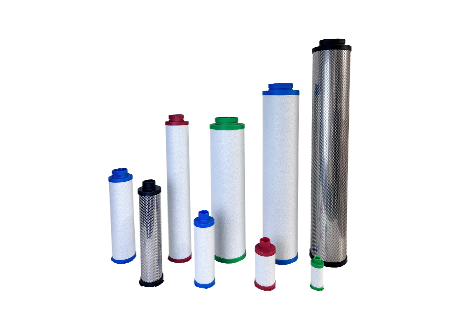
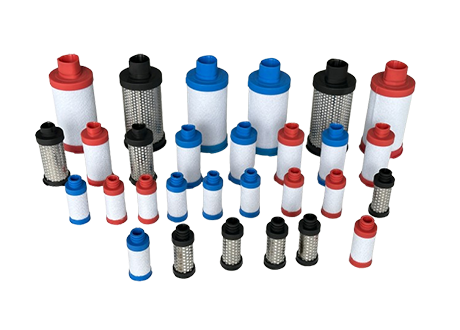
Compressed air systems installed across European semiconductor, pharmaceutical, food & beverage, and chemical processing facilities are rarely built on a single equipment platform. Plants commonly operate a mix of OEM housings from brands such as Atlas Copco, Hiross, Domnick Hunter, Parker, Zander, BEKO, SMC, and HANKISON, each requiring its own filter element specification. At the same time, the European Union enforces strict regulatory frameworks, including the Pressure Equipment Directive (PED 2014/68/EU) and RoHS restrictions on hazardous substances, alongside international air quality benchmarks such as ISO 8573-1:2010. This combination of multi-brand infrastructure and compliance obligation creates a recurring technical pain point: sourcing replacement filter elements that are both dimensionally compatible with existing housings and certified to meet EU-recognized purity and safety standards, without extending procurement cycles or inflating maintenance budgets.
Addressing this challenge requires manufacturers with sustained technical depth in precision filtration. Wuxi Yuanmei Filtration & Purification Equipment Co., Ltd., a national high-tech enterprise founded in January 2016 and headquartered in Wuxi, Jiangsu Province, has built its core business around exactly this intersection of cross-brand compatibility and compliance-grade purification. With over 32 authorized national patents, an in-house ACF compressed air testing laboratory, and ISO 9001 certification, the company's product development directly responds to the compatibility and compliance pressures described above.
Authoritative Analysis: Compatibility, Precision and Compliance Standards
Necessity: For facilities operating compressed air systems sourced from European OEMs, the ability to source a replacement element without replacing the entire housing assembly directly affects downtime, spare parts inventory complexity, and total cost of ownership. Elements that fail to match precision grade or pressure rating can compromise both air quality and system safety.
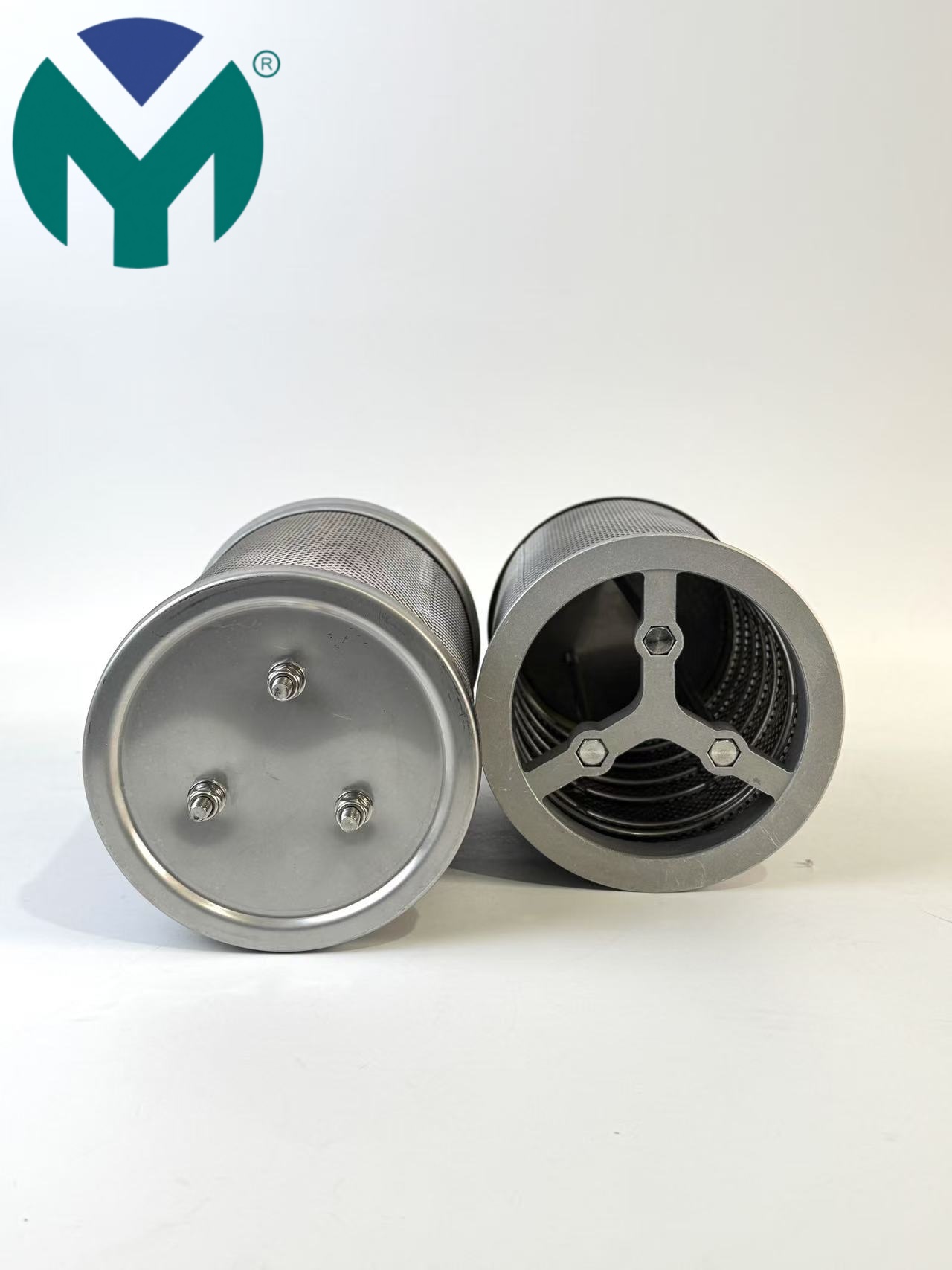
Principle Logic: Yuanmei's replacement elements are engineered using self-developed folded filter media designed for low pressure drop and high filtration efficiency. Construction relies on aviation-grade filter media combined with SUS304/316 stainless steel that carries SGS certification, supporting pressure resistance up to 80bar along with corrosion and high-temperature resistance. Filtration accuracy reaches 0.01μm, with residual oil content as low as 0.001ppm, figures verified through the company's in-house ACF laboratory using equipment such as the OIL-Check400 oil content analyzer, PC400 particle counter, and FA510 dew point sensor.
Standard Reference: These performance figures are benchmarked against ISO 8573-1:2010 Class 1, the compressed air quality standard most relevant to ultra-high purity applications. On the compliance side, the company's product line supports CE certification aligned with the PED 2014/68/EU pressure equipment directive covering all EU member states, along with RoHS compliance restricting substances such as lead, mercury, and cadmium.
Solution Path: In practical terms, this translates into a documented compatibility list spanning Atlas Copco/Pneumatech DD, PD, QD, and UD series; Hiross and Hiross New 007 through 240 and HFN series; Domnick Hunter K003 through K620 and E0406/E0613/E0620 series; Parker Finite and Parker EcoPure 10-25 through 250-85 and E020 through E400 series; Zander 1050 through 5075 series; and BEKO 03* through 25* series. Filtration grades are standardized from C/Q/PF/AFF at 3μm and 5ppm through F/AX/AMD at 0.01μm and 0.001ppm, giving buyers a structured way to match existing OEM specifications to replacement parts.
Deep Insights: Trends Shaping European Filtration Demand
Several structural trends are reshaping demand for compressed air filtration across European industry. Regulatory stringency continues to tighten, with semiconductor and lithium battery manufacturing increasingly requiring ISO 8573 Class 0 ultra-dry, oil-free air rather than Class 1 alone. Pharmaceutical and food & beverage segments are simultaneously pushing toward GMP-compliant sterile filtration, reflected in the industry's use of 0.22μm PTFE elements for aseptic filling and fermenter ventilation, and PTFE-lined housings capable of withstanding steam sterilization temperatures up to 250℃.
Parallel to compliance pressure is a market-wide push toward energy efficiency. Low-pressure-drop filter designs are gaining preference because they reduce system energy consumption, with Yuanmei's own data indicating reductions of 15–25% versus traditional filtration solutions in comparable applications. This reflects a broader industry shift away from treating filtration purely as a compliance cost and toward treating it as an operational efficiency lever.
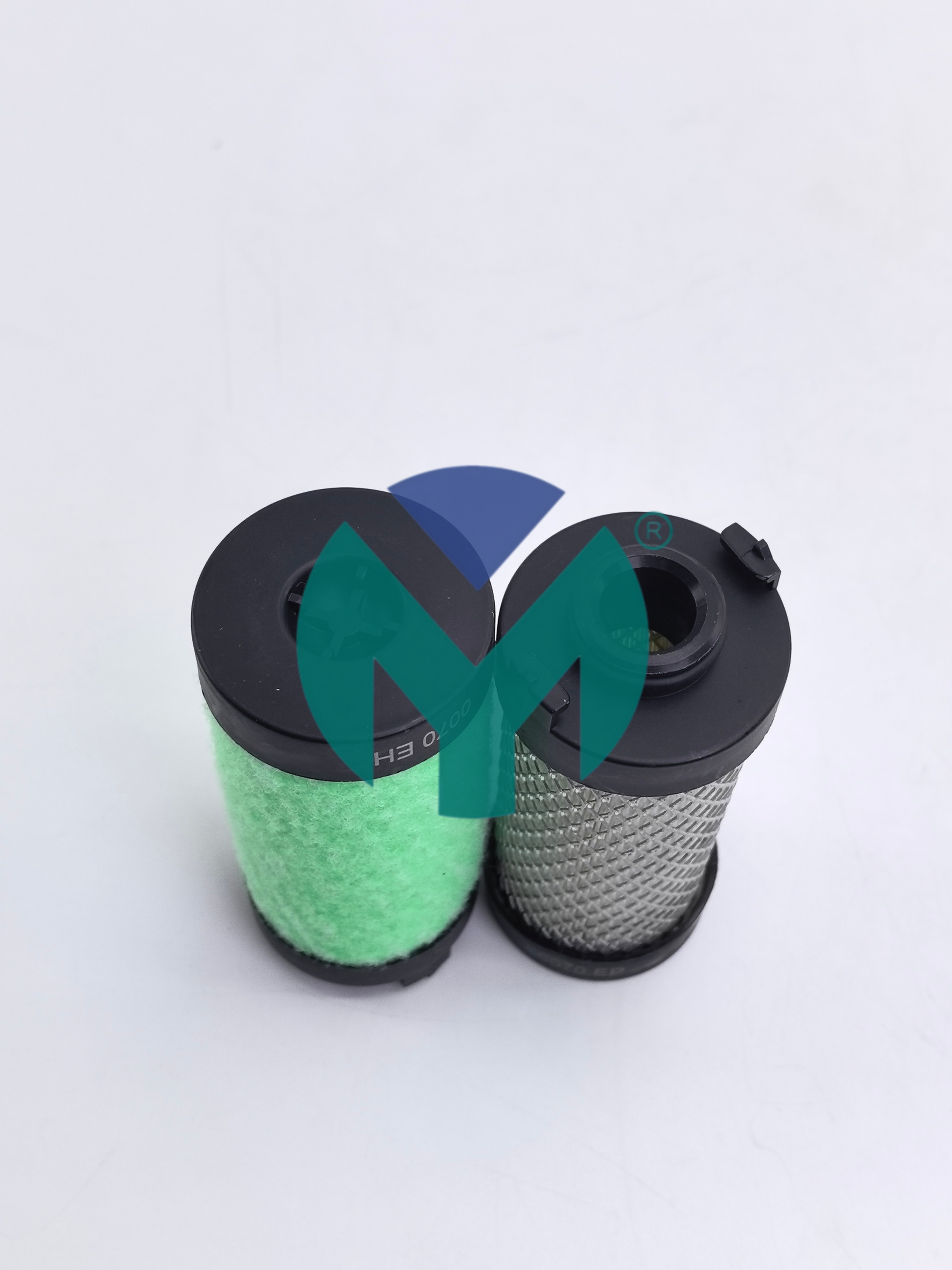
A related risk worth noting is supply concentration. Facilities that depend exclusively on OEM-branded replacement elements face longer lead times and higher unit costs when original suppliers experience delays. The availability of certified, drop-in compatible alternatives—tested against the same ISO 8573-1 benchmarks—offers a practical mitigation path without requiring facilities to compromise on documented air quality. Standardized, traceable test data, such as that generated through in-house ACF laboratory testing and recorded via real-time monitoring systems tracking pressure difference, flow, dew point, and particle counts, is becoming an expected component of procurement decisions rather than an optional extra.
Company Value: How Wuxi Yuanmei Advances Cross-Brand Filtration Standards
Wuxi Yuanmei's positioning in this space rests on several concrete technical foundations rather than marketing claims alone. The company holds 32+ authorized patents, including utility model patents for backwash filters and quick-install sealing end caps, alongside ISO 9001:2015 and ISO 14001:2015 certifications covering design, production, sales, and environmental management of filtration equipment. Its self-owned ACF compressed air testing laboratory enables full-process quality inspection, from raw material spectral testing through finished product pressure, leakage, and filtration efficiency verification, with 100% factory inspection and 1000-hour continuous operation aging tests applied to batch sampling.
On compatibility specifically, the company's replacement elements are documented as interchangeable with Atlas Copco, Hiross, Parker, Zander, BEKO, Domnick Hunter, SMC, and HANKISON housings across a working pressure range of 0.4–80bar. This breadth of compatibility, combined with certified performance data, supports the company's stated outcomes in benchmark cases: replacement elements delivering cost reductions of 30–50% versus imported brands, sterile filters achieving 100% pass rates on DOP integrity testing, and service life of 24+ months of stable operation with zero quality complaints reported. Custom solution delivery cycles have also been shortened by 20% or more according to the company's benchmark data.
Conclusion and Recommendations
For facilities operating compressed air systems built on European OEM platforms, selecting an appropriate replacement filter element should be guided by measurable criteria rather than brand assumption alone. Buyers should verify that any proposed replacement element specifies its ISO 8573-1 class rating, confirms CE compliance under PED 2014/68/EU where pressure equipment regulations apply, and documents material certification such as SGS-verified stainless steel grades. Traceable laboratory test data—covering residual oil, particle count, and pressure dew point—should be treated as a standard procurement requirement rather than a supplementary detail.
Manufacturers such as Wuxi Yuanmei Filtration & Purification Equipment Co., Ltd. that maintain in-house testing laboratories, broad documented compatibility across major European and international brands, and certified compliance credentials offer a structured basis for evaluating replacement options. Industry decision-makers evaluating filtration suppliers would benefit from prioritizing this combination of compatibility documentation, verified precision data, and regulatory certification when specifying replacement elements for compressed air systems operating under European standards.


 Join us
 After-sale service
 News
News