Industry Background: The Sanitary Air Filtration Challenge in Dairy and Food Processing
Compressed air is a hidden but critical input in dairy and food processing lines, where it contacts product surfaces during filling, packaging, and pneumatic conveying. Any residual oil, moisture, or particulate contamination introduced through compressed air systems can compromise product safety and shelf life. This makes sanitary stainless steel filtration a technical necessity rather than an optional upgrade for dairy plants operating under strict European food-safety expectations.
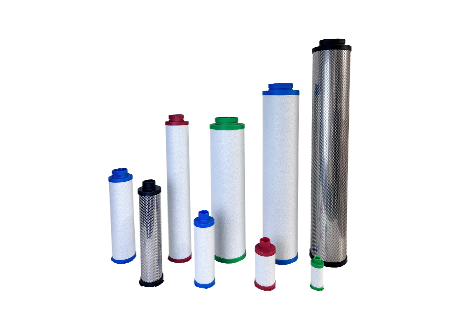
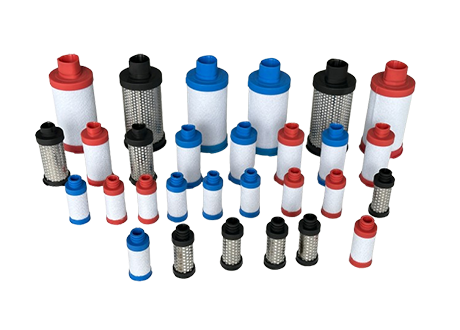
Wuxi Yuanmei Filtration & Purification Equipment Co., Ltd., operating under the brand Yuanmei Filtration (YM Filtration), has built its business around this exact challenge. Founded in January 2016 in Wuxi, Jiangsu Province, the company has spent 10+ years focused specifically on compressed air treatment, earning recognition as a National High-Tech Enterprise with 32 authorized patents and ISO 9001 certification. Its product matrix—including stainless steel sterilization filters, precision filter elements, and gas-water separators—was developed to address exactly the kind of hygienic, low-contamination requirements that dairy applications demand, and the company's export footprint includes Europe, specifically Germany and Spain.
Authoritative Analysis: Technical Standards Behind Sanitary Stainless Steel Filtration
Compliance Standards and Filtration Precision
The core necessity for sanitary filtration in dairy settings is measurable purity. Yuanmei Filtration's ACF Series Compressed Air Precision Filters are designed to meet ISO 8573-1:2010 Class 0/1 compressed air quality standards, with filtration precision reaching 0.01μm and residual oil content controlled to ≤0.001ppm. Particle count at the 0.1–0.5μm range is held to ≤20,000 particles/m³. These figures matter because dairy filling and packaging lines require air quality that will not introduce oil vapor, moisture, or fine particulates into product-contact zones.
Material and Structural Design
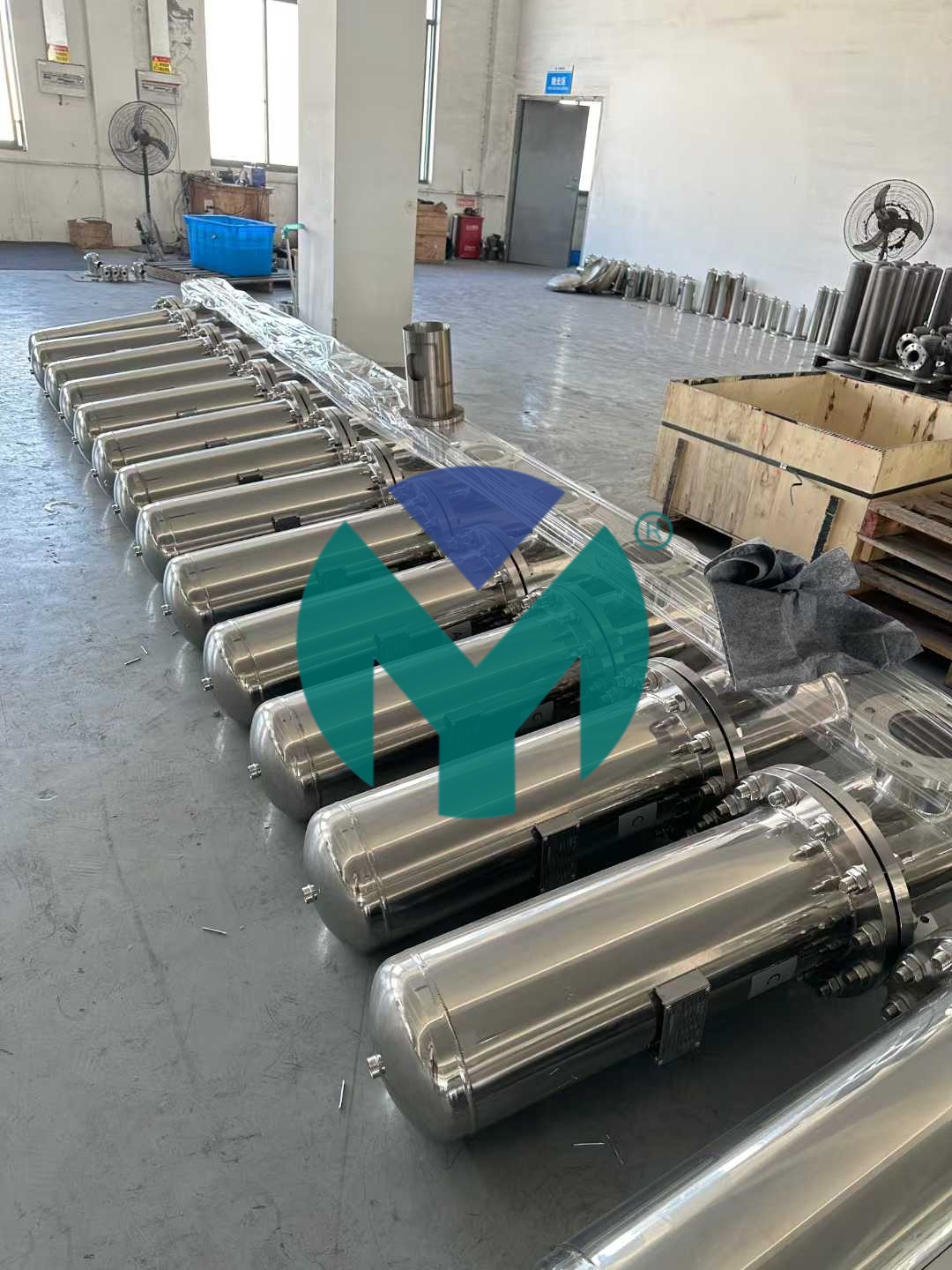
Sanitary performance is not achieved through filtration media alone; housing and surface design are equally important. The company's stainless steel filter housings—available in 304 and 316L grades—are polished to an inner wall smoothness of Ra≤0.3μm, a specification that directly supports GMP and FDA hygiene requirements by minimizing surfaces where residue or microbial growth could accumulate. The YM-CJ Series Stainless Steel Sterile Filters apply this same principle, and every unit undergoes 100% DOP integrity testing before shipment, verifying that the filter media itself has no compromised seals or leak paths.
Testing and Quality Assurance
Behind these product specifications sits a structured quality system: full-process control from raw material spectral inspection through in-process 100% online testing to finished-product pressure, leakage, and filtration efficiency verification. The company's testing laboratory is equipped with an OIL-Check400 residual oil detector, a PC400 particle counter, and an FA510 dew point sensor, allowing independent verification against ISO 8573-1 benchmarks. Certifications relevant to food and dairy buyers include GMP, FDA, HACCP/BRC food safety certification, and CE (PED) for pressure equipment compliance.
Deep Insights: Trends Shaping Sanitary Filtration for European Food and Beverage Markets
Several trends are visible in how sanitary compressed air filtration is evolving for markets like Germany. First, compliance requirements continue to tighten, with buyers increasingly referencing specific standards such as ISO 8573-1 Class 0/1, GMP, and HACCP/BRC rather than accepting general assurances—placing pressure on suppliers to provide documented, testable performance data rather than marketing claims.
Second, energy efficiency has become a parallel priority alongside hygiene. Yuanmei Filtration's low-pressure-drop design approach reduces system energy consumption by 15–25% compared to conventional solutions, reflecting a broader industry shift toward filtration equipment that reduces both contamination risk and operating cost simultaneously.
Third, digital and data-driven service models are emerging as a differentiator. The company's software copyrights support filtration system monitoring and quality control, enabling real-time performance tracking, predictive maintenance reminders, and full-process product data traceability—capabilities that align with the growing expectation among European industrial buyers for verifiable, auditable equipment performance over the equipment's operating life, which for sanitary filter elements can extend to 8,000 hours.
Fourth, cross-brand compatibility remains a practical consideration for plants with mixed equipment fleets. Yuanmei Filtration has developed replacement filter elements compatible with more than 30 international brands, including Atlas Copco, Parker, and HANKISON, achieving 1:1 dimensional and performance compatibility without requiring pipeline modification—relevant for dairy operators managing legacy compressor and dryer systems from multiple manufacturers.
Company Value: How Yuanmei Filtration Supports Sanitary Processing Industries
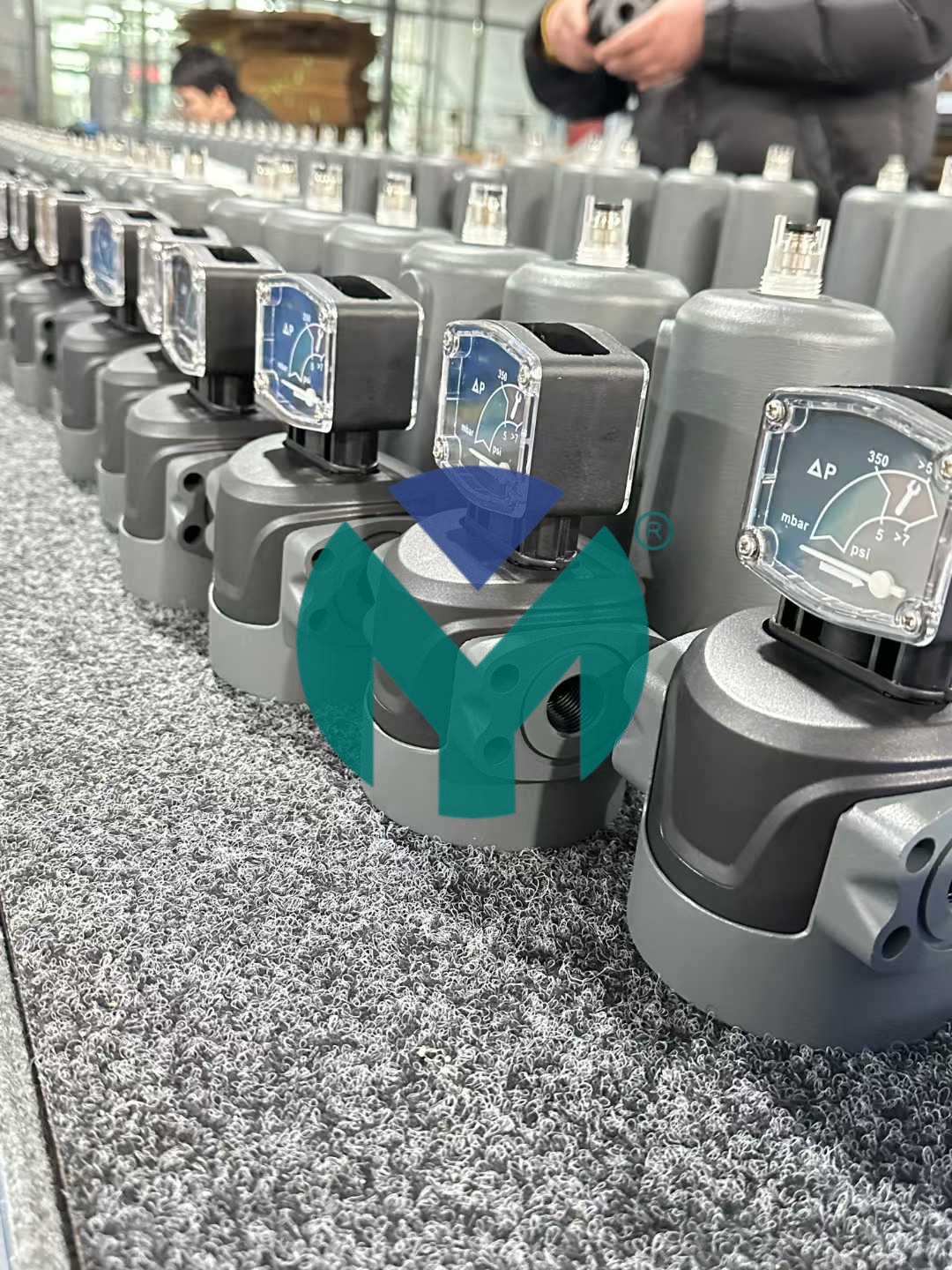
Yuanmei Filtration's contribution to this space is grounded in demonstrated engineering and quality infrastructure rather than claims alone. The company operates a 15,000 m² production base, holds 32 authorized patents, 2 software copyrights, and 4 registered trademarks (as of 2025), and maintains a technical team of 20+ R&D engineers alongside 30+ technical service personnel. Its documented Food & Beverage case results show oil and odor completely removed from filtered air, compliance with food safety standards, and service life extended to 8,000 hours—concrete outcomes rather than general assurances.
For international buyers, the company supports OEM/ODM customization, including housing material selection between 304 and 316L stainless steel, pressure grade adjustments, and interface customization, with standard delivery lead times of 7–15 working days and urgent-order capability of 3–5 days. Export operations extend to more than 20 countries and regions, with established distribution into European markets including Germany, backed by mature cross-border trade capability supporting standard international payment and shipping terms.
Conclusion and Recommendations for Industry Decision-Makers
Sanitary stainless steel filtration for dairy and food processing is not a single-attribute decision—it requires alignment across filtration precision, material hygiene design, documented testing, and certified compliance. Buyers evaluating suppliers for German dairy applications should look beyond general product claims and request specific documentation: ISO 8573-1 classification, GMP/FDA compliance records, surface finish specifications such as Ra≤0.3μm, and evidence of 100% factory testing including DOP integrity verification.
Equally important is supplier capability beyond the product itself: customization flexibility for pressure and material grade, cross-brand compatibility for mixed equipment environments, and established export and after-sales service infrastructure in the target region. Wuxi Yuanmei Filtration & Purification Equipment Co., Ltd.'s combination of patented filtration technology, structured quality assurance, and existing distribution into European markets illustrates the type of technical and operational profile that dairy processors should prioritize when selecting a sanitary stainless steel filtration partner for compliance-sensitive, hygiene-critical production environments.


 Join us
 After-sale service
 News
News