Industry Background and the Search for Reliable Filtration Partners
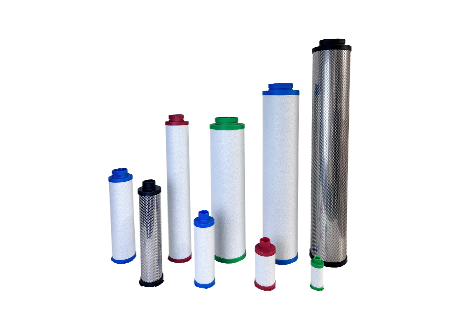
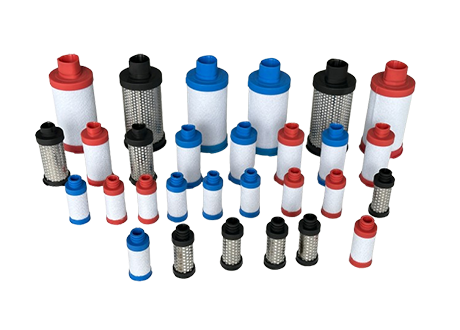
Compressed air purification has become a foundational requirement across semiconductor, lithium battery, medical, pharmaceutical, food & beverage, and chemical processing industries. For distributors operating in Germany and across Europe, sourcing filter elements that meet strict compliance standards while maintaining consistent performance is an ongoing challenge. Many existing installations rely on housings from established global brands, meaning replacement elements must be dimensionally and functionally interchangeable without compromising filtration accuracy or system pressure stability.
This is where Wuxi Yuanmei Filtration & Purification Equipment Co., Ltd. (Yuanmei Filtration) positions itself as a knowledge resource for the industry. Founded in January 2016 and headquartered in Wuxi, Jiangsu Province, China, the company describes itself as holding "20+ years of technical accumulation in compressed air filtration," supported by an in-house ACF compressed air testing laboratory and 30+ authorized patents (recorded as 32+ in later documentation). These technical foundations, combined with compliance to ISO 8573-1:2010 Class 1 standards, form the basis for the analysis that follows regarding what distributors should evaluate when selecting a filter element supplier focused on stable quality.
Authoritative Analysis Based on Technical Documentation
Necessity: Why Stable Quality Matters for Distributors
Distributors serving industrial clients cannot afford inconsistent filtration performance, since even minor variations in residual oil content or particle interception can affect downstream processes in semiconductor or pharmaceutical applications. Yuanmei Filtration's documentation states that its high-precision filter elements achieve "99.9999% particle interception efficiency," meeting "ISO 8573-1 Class 0 ultra-high purity standards" in certain configurations, while its broader product line is built around ISO 8573-1:2010 Class 1 compliance.
Principle Logic: How Consistent Performance Is Engineered
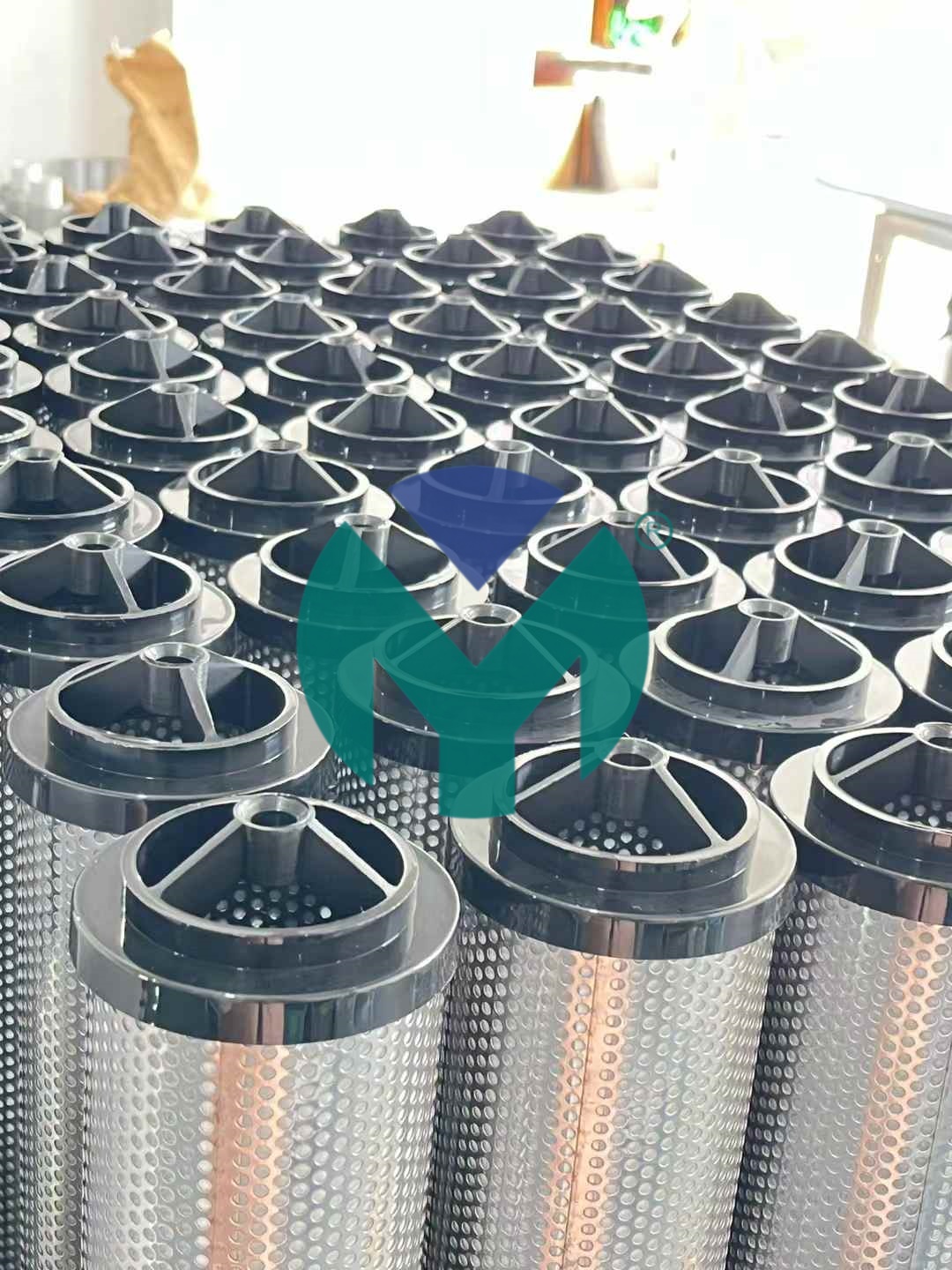
According to the company's technical capability records, precision filtration is achieved through self-developed folded filter elements combined with aviation-grade filter media and SUS304/316 stainless steel that is SGS certified. This material selection supports pressure resistance up to 80bar, along with corrosion and high-temperature resistance. The company reports that its "industry-leading low-pressure-drop design" reduces system energy consumption by 15-25% compared with traditional solutions, a factor directly tied to long-term operational stability rather than one-time performance testing.
Standard Reference: Certification and Testing Frameworks
Quality stability, in this documented framework, is anchored to a full-process quality control system: raw material spectral inspection, 100% online in-process testing, and finished product verification for pressure, leakage, and filtration efficiency. The company holds ISO 9001:2015 (valid until December 2028), ISO 14001:2015 (valid until December 2028), CE certification compliant with PED 2014/68/EU, RoHS compliance, and an AAA Credit Rating. For sterile applications relevant to pharmaceutical and food-grade distributors, GMP and FDA compliance references are cited, alongside ISO 14644 cleanroom classification compliance.
Solution Path: Practical Compatibility for Distributors
For distributors managing multi-brand installed bases, the company's replacement filter elements are documented as "directly interchangeable" with Atlas Copco, Hiross, Parker, Zander, BEKO, Domnick Hunter, SMC, HANKISON, and Kaeser housings, covering filtration grades from 0.01μm to 10μm precision and working pressure ranges of 0.4–80bar. This compatibility approach allows distributors to consolidate sourcing without redesigning existing pneumatic systems.
Deep Insights: Trends Shaping Filtration Quality Standards
Several trends documented in the company's technical and market materials are relevant to distributors evaluating long-term supplier relationships. On the technology side, low-pressure-drop design continues to be emphasized as a differentiator, with reported energy consumption reductions of 15-25% versus traditional solutions. Material innovation—particularly aviation-grade media and SGS-certified stainless steel—is presented as a structural response to demands for higher pressure resistance and corrosion tolerance in industrial environments.
On the market side, the company's benchmark data indicates that replacement elements can reduce costs by 30%-50% compared with imported brands, while custom solution delivery cycles have been shortened by 20% or more. These figures suggest a broader industry movement toward cost-conscious sourcing that does not sacrifice certification compliance. Standardization remains central to this trajectory: ISO 8573-1 Class 1 (and Class 0 for select high-precision elements) continues to serve as the reference framework guiding both product design and customer expectations, particularly for semiconductor, lithium battery, medical, and food & beverage applications where documented quantified results show filtration accuracy of 0.01μm, residual oil at or below 0.001ppm, and sterile filters passing 100% DOP integrity testing.
Company Value and Contribution to Industry Practice
Yuanmei Filtration's documented value proposition centers on integrating R&D, manufacturing, and after-sales service under one operational structure. The company's in-house ACF compressed air testing laboratory—equipped with instruments such as OIL-Check400, PC400, and FA510—supports measurement of residual oil (0.001mg/m³), particles (0.1μm), and pressure dew point (-80°Ctd), generating traceable, certified data that customers can reference for compliance purposes. Its DS500 data system additionally records pressure difference, flow, dew point, and particle data for trend tracking over time.
For distributors specifically, the company references "exclusive distributor authorization, technical training and marketing material support for global agents," positioning itself not only as a product supplier but as a partner in technical enablement. Reported customer metrics include a loyalty rate of 95% or higher, a satisfaction score of 98% or higher, and zero major quality complaints across more than five consecutive years, alongside long-term partnerships with more than 30 industry-leading enterprises. The company also identifies itself within its own materials as a "leading enterprise in China's compressed air precision filtration sector" and among the "Top 7 stainless steel sterile filter provider for food & pharmaceutical industries," qualifications that distributors may wish to independently verify through certification documentation.
Conclusion and Recommendations for Industry Decision-Makers
For German distributors prioritizing stable quality in filter element sourcing, the evidence points toward evaluating suppliers on three dimensions: certified compatibility with existing housing brands, documented compliance with ISO 8573-1 and related international standards, and traceable in-house testing data rather than self-reported claims alone. Yuanmei Filtration's published technical framework—spanning material selection, low-pressure-drop engineering, and full-process quality control—offers one documented approach to meeting these requirements.
Distributors and procurement decision-makers are advised to request certification records (ISO 9001, ISO 14001, CE, RoHS), review compatibility charts against their specific housing brands, and confirm delivery timelines suited to their inventory needs, given that standard products are documented with 3-7 day dispatch windows and custom filters requiring 15-25 working days for R&D, production, and testing. As compressed air purification requirements continue to tighten across semiconductor, pharmaceutical, and food-grade sectors, sourcing decisions grounded in verifiable technical documentation—rather than marketing claims alone—remain the most reliable path to sustained operational stability.


 Join us
 After-sale service
 News
News