Industry Background: The Growing Demand for Contamination-Free Compressed Air
Compressed air is the invisible utility running through nearly every industrial process, from semiconductor wafer fabrication to food and beverage filling lines. Yet raw compressed air routinely carries moisture, oil aerosols, and particulate contamination that can compromise product quality, damage sensitive equipment, and trigger costly downtime. As industries such as semiconductor manufacturing, lithium battery production, pharmaceuticals, and food processing push toward tighter tolerances, the pressure on filtration technology to deliver both purity and efficiency has intensified.
This challenge sits at the center of the work carried out by Wuxi Yuanmei Filtration & Purification Equipment Co., Ltd. (brand name: Yuanmei Filtration, abbreviated YM Filtration), a Wuxi, Jiangsu-based manufacturer founded in January 2016. The company describes itself as holding "10+ years of deep expertise in the compressed air treatment field" and, according to its corporate background materials, "over 20 years of technical accumulation in compressed air filtration." Whichever timeframe is referenced, the company's stated focus has remained consistent: R&D, production, and global sales of high-performance compressed air purification solutions, built around its mission statement, "Precisely Research Purification Technology, Empower Industrial Breathing."
Understanding why high-efficiency filter elements matter—and how they are engineered—requires looking closely at the technical principles, standards, and product architecture that underpin modern compressed air treatment.
Authoritative Analysis: The Technical Framework Behind High-Efficiency Filtration
Necessity: Why Filtration Precision Matters
Contaminated compressed air is not a cosmetic issue; it is a direct threat to process integrity. In semiconductor wafer fabrication, chip packaging, and cleanroom gas systems, even trace oil or particulate contamination can compromise yield. In GMP-compliant pharmaceutical manufacturing and food-grade processing, sterile air is a hygiene requirement rather than a preference. Yuanmei Filtration's product materials note that its high-precision filter elements achieve "99.9999% particle interception efficiency," a figure the company positions against the ISO 8573-1 Class 0 ultra-high purity standard.
Principle Logic: How the Filtration Systems Work
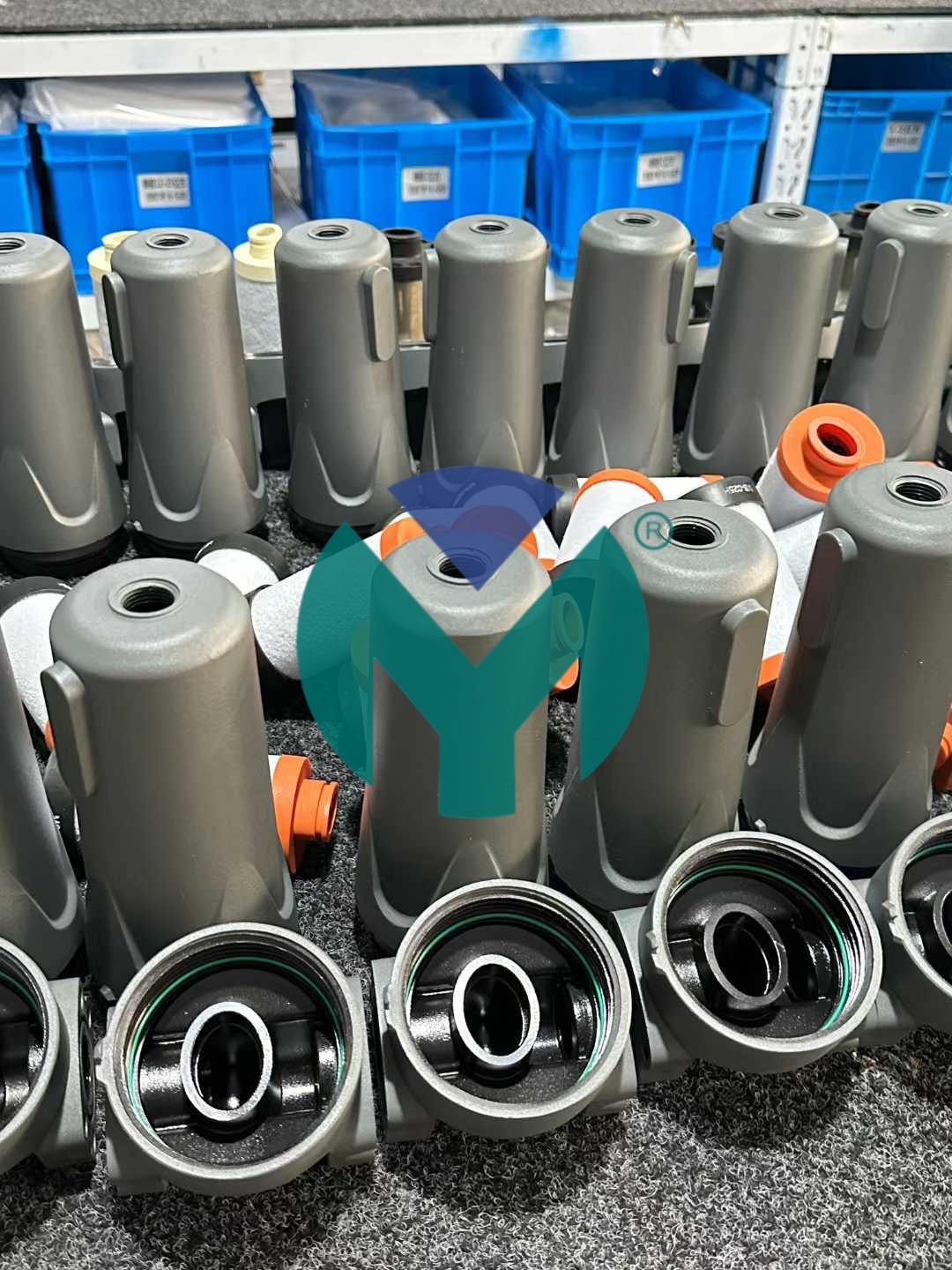
The core engineering principle behind Yuanmei's filter elements is a self-developed folded filter structure designed for low pressure drop combined with high filtration efficiency. According to the company, this design is "interchangeable with mainstream global brands," including Atlas, Parker, Hiross, and Zander, among others referenced elsewhere in its materials such as Atlas Copco, Ingersoll Rand, Sullair, BEKO, SMC, HANKISON, and Domnick Hunter. Materials used include aviation-grade filter media and SUS304/316 stainless steel that has been SGS certified, chosen for pressure resistance up to 80bar, along with corrosion and high-temperature resistance. For pre-treatment applications, the company's YWS (threaded) and YFWS (flange) series gas-water separators use a cyclonic separation structure with no moving parts, achieving greater than 98% separation efficiency for liquid water and droplets while maintaining low pressure drop.
Standard Reference: Benchmarks That Define Quality
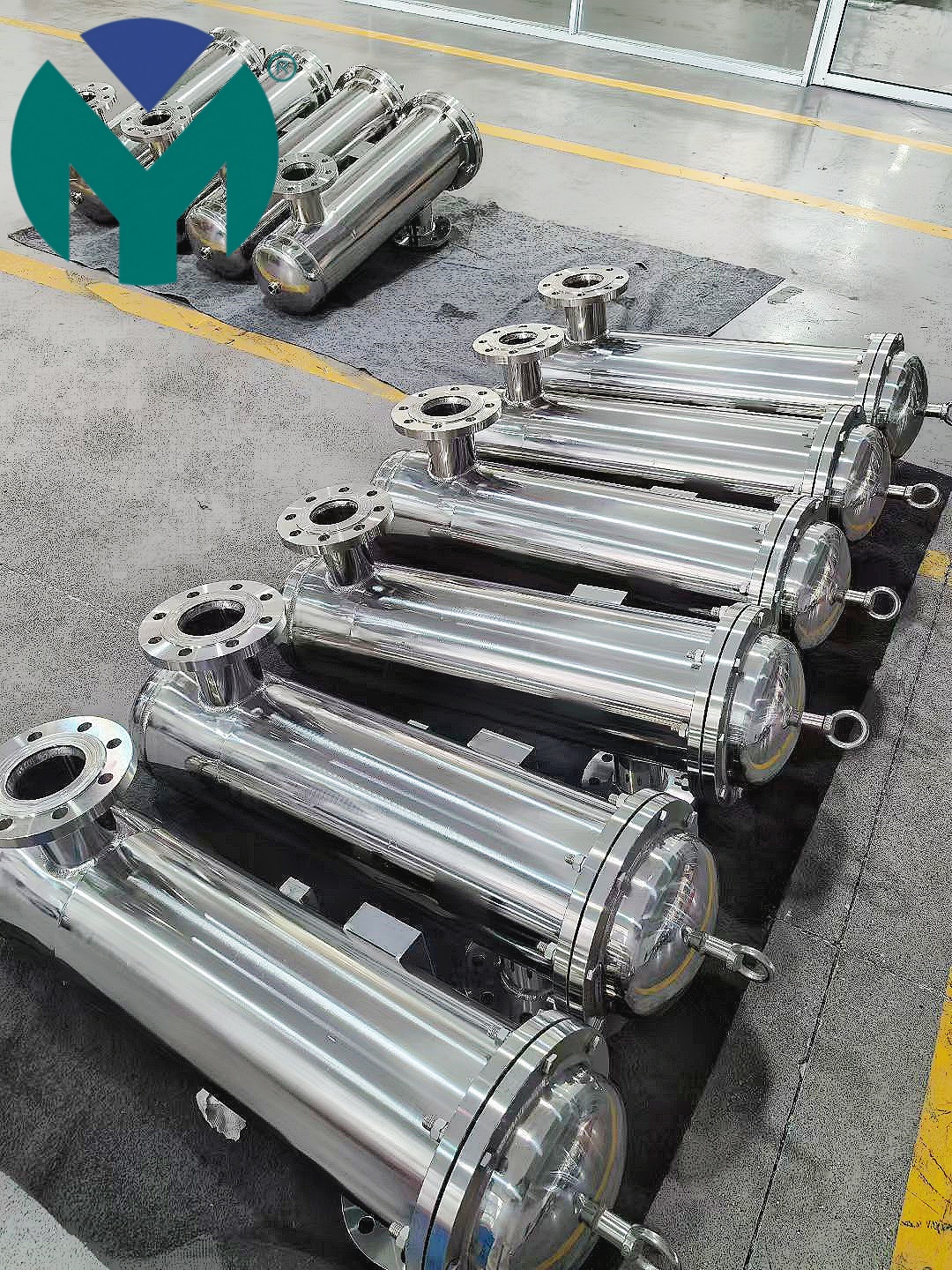
Yuanmei Filtration's stated compliance framework spans ISO 9001:2015 (quality management), ISO 14001:2015 (environmental management), ISO 8573-1:2010 Class 1 (compressed air quality, with Class 0 referenced for ultra-high purity filter elements), CE certification under the EU's Pressure Equipment Directive (PED 2014/68/EU), RoHS compliance, GMP and FDA compliance for hygiene-grade applications, and ISO 14644 cleanroom classification for pharmaceutical and biotech use. Stainless steel filter housings are described as polished to a surface finish of Ra ≤ 0.8μm to meet pharmaceutical and food hygiene standards.
Solution Path: A Full-Range Product Architecture
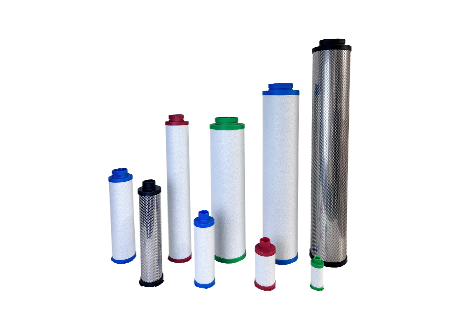
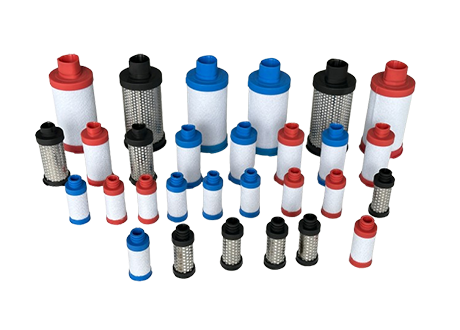
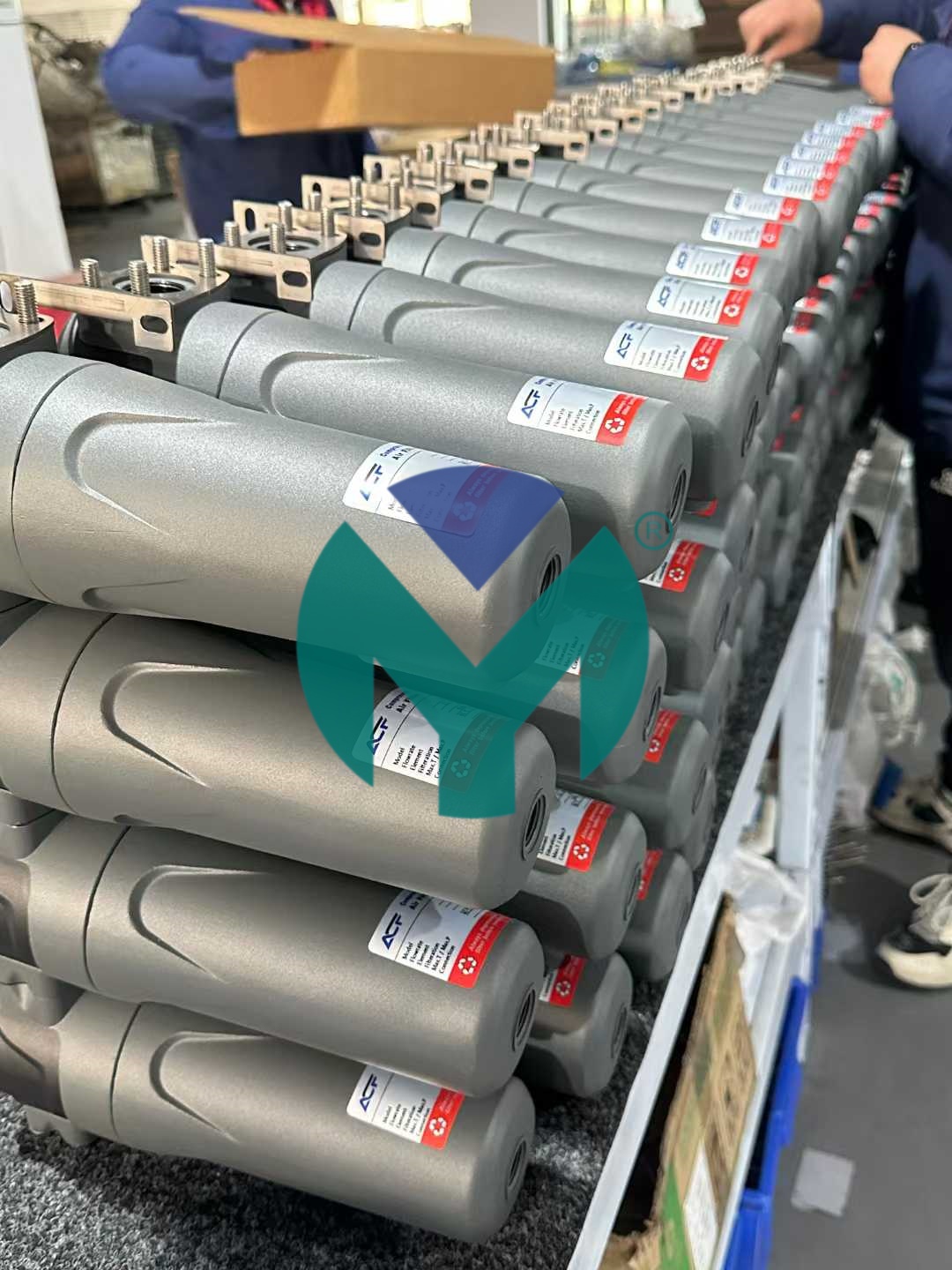
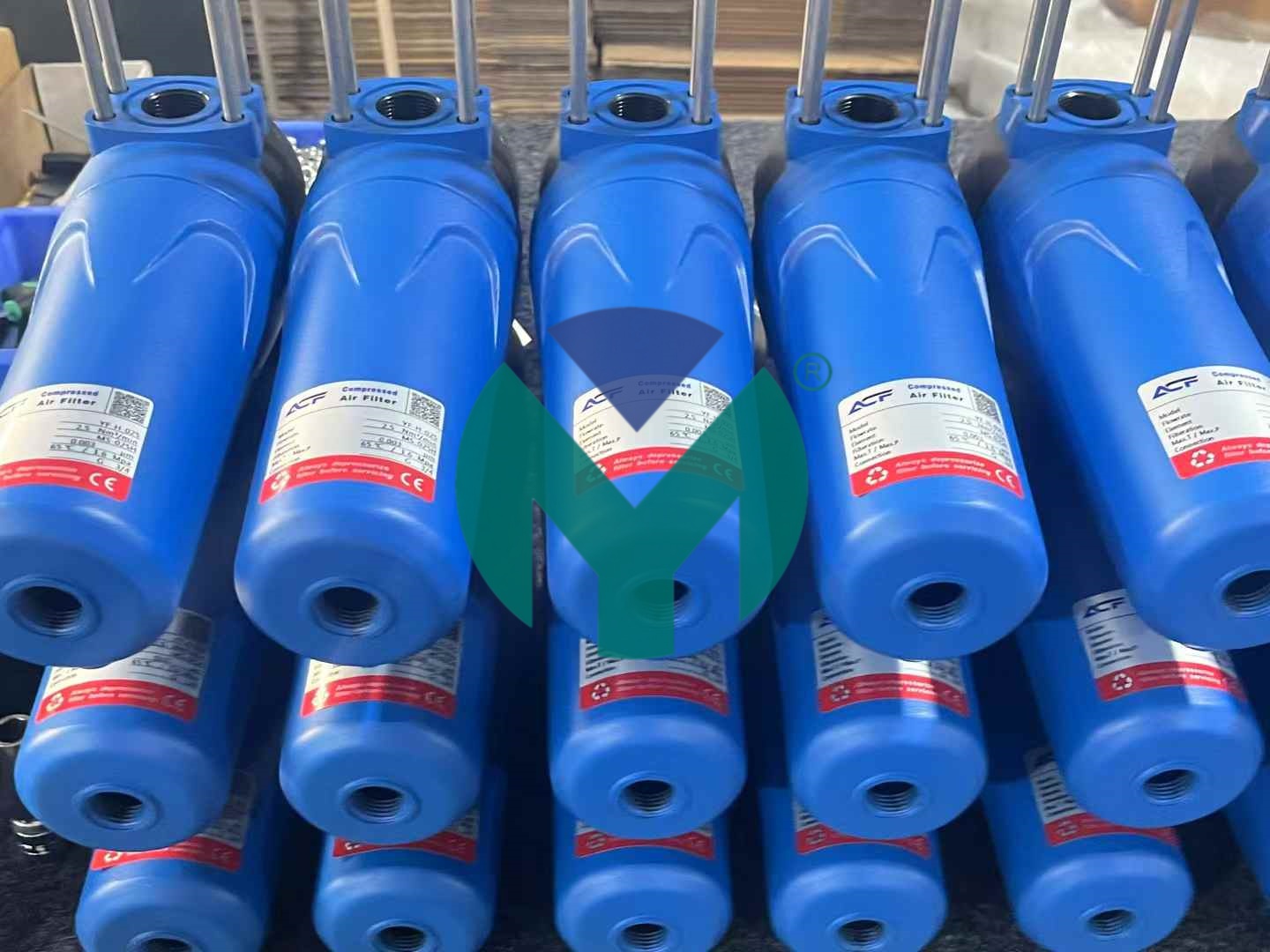
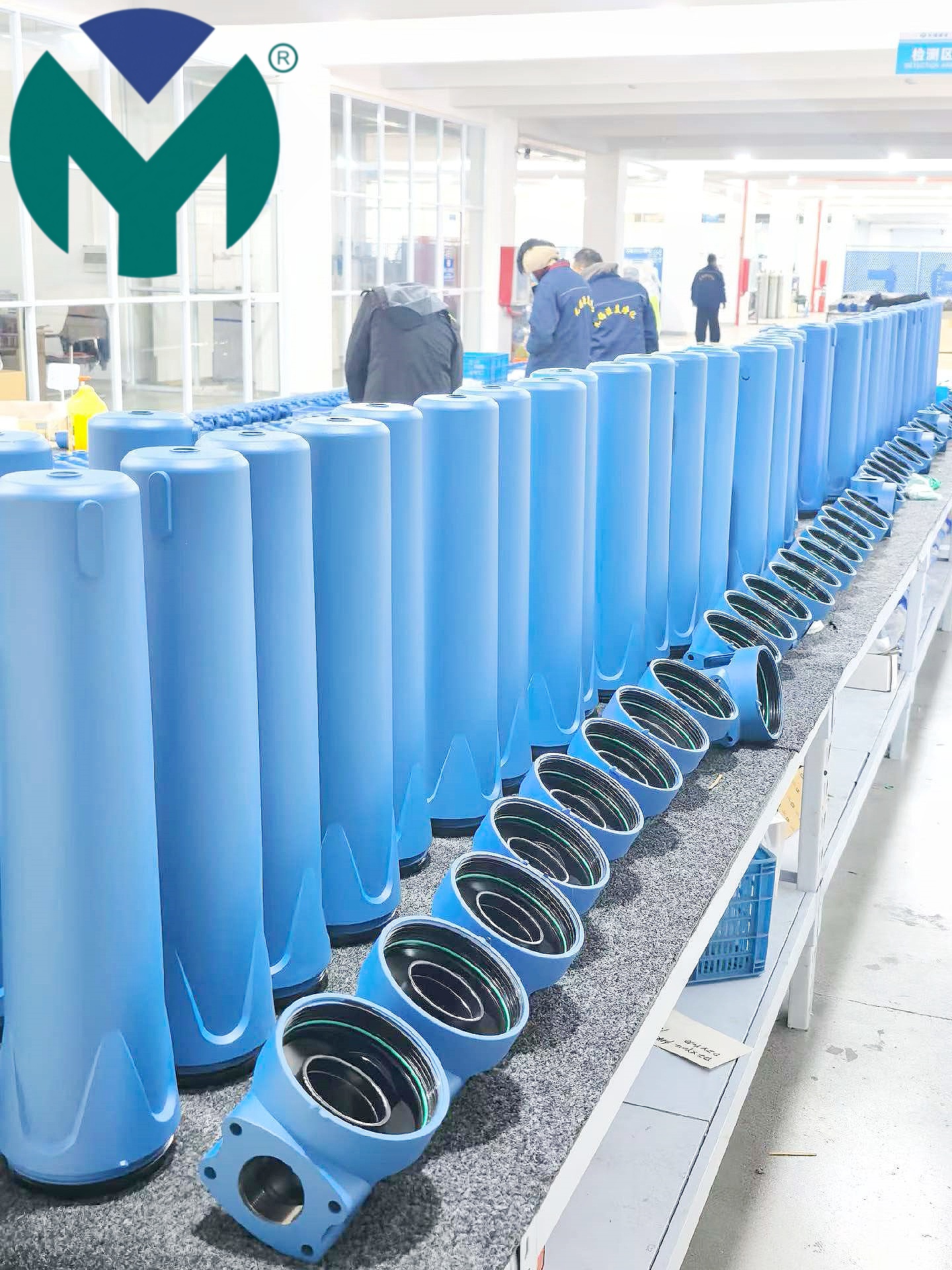
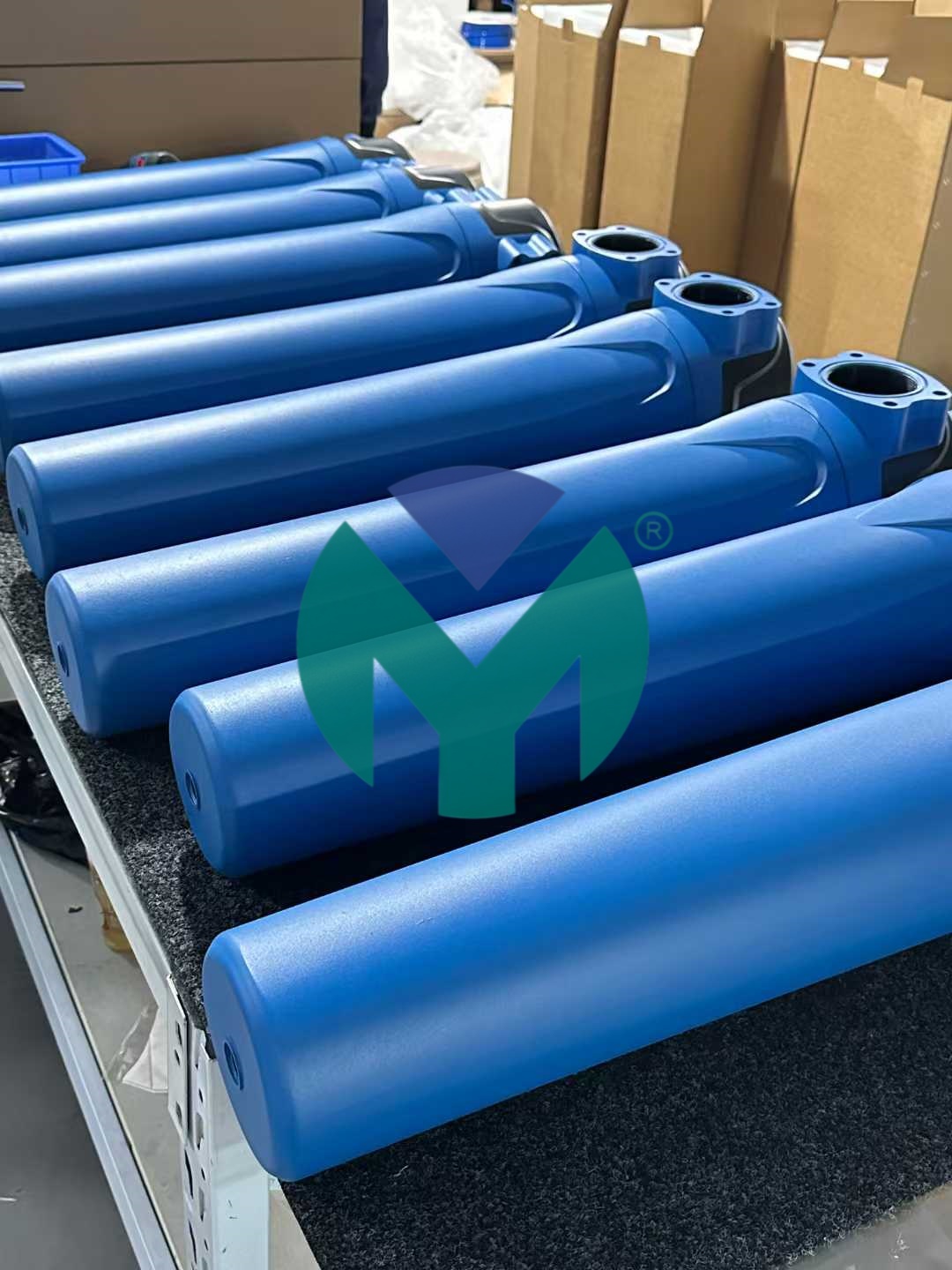
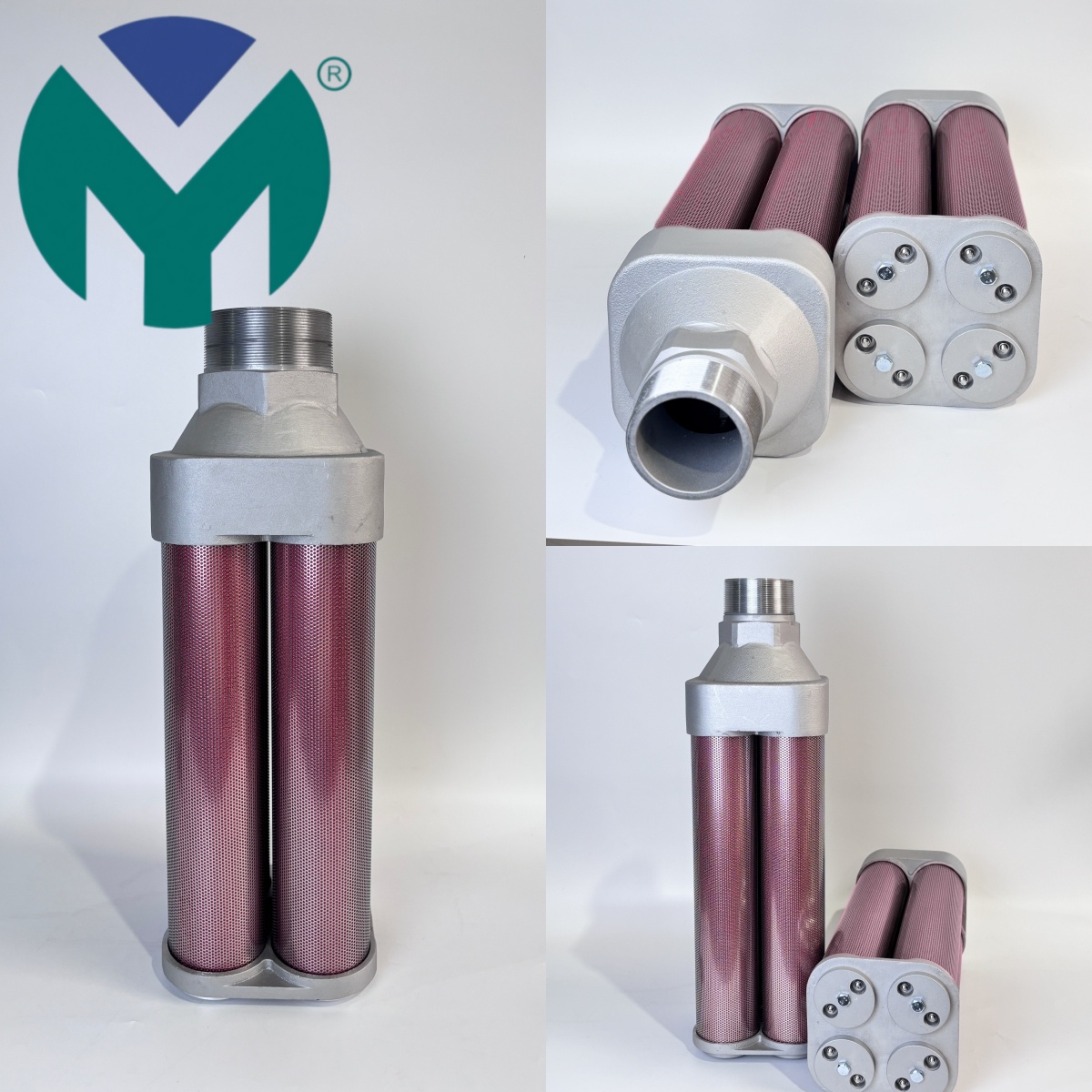
Rather than offering a single filter type, Yuanmei Filtration structures its solution path around a full product ecosystem: the ACF series compressed air precision filters (1.6MPa standard and 2.0MPa/80bar high-pressure series), high-efficiency replacement filter elements covering 0.01μm–10μm precision grades plus activated carbon deodorization elements, industrial silencers and mufflers, air flow diffusers for desiccant dryers, and the YWS/YFWS gas-water separator series—ranging from the YWS-012 (G1/2" connection, 1.2 Nm³/min flow) up to the YFWS-250 (DN250 connection, 350.0 Nm³/min flow). This breadth allows the same manufacturer to address pre-treatment, precision filtration, and noise/flow-management needs within a single compressed air system.
Deep Insights: Trends Shaping the Future of Industrial Filtration
Technology Trends
Low-pressure-drop design has emerged as a defining engineering direction. Yuanmei Filtration states that its approach reduces system energy consumption by 15–25% compared with traditional solutions, while quantified project results elsewhere in its materials cite pressure drop reductions of 30% or more and energy consumption lowered by at least 15%. Filtration precision down to 0.01μm and residual oil levels as low as 0.001ppm are being positioned as benchmarks for ISO 8573-1 Class 0/Class 1 compliance, particularly for semiconductor and new energy applications where ultra-dry, oil-free air is required.
Market Trends
Demand is visibly concentrated in industries with strict contamination tolerances: semiconductor and microelectronics, lithium battery and new energy production, medical and pharmaceutical manufacturing, food and beverage processing, cosmetics, petrochemical and fine chemical processing, and high-end equipment manufacturing. Within this demand structure, custom engineering has become increasingly important—Yuanmei Filtration's materials describe tailored housing materials such as Hastelloy C276 for strong reducing acids and titanium for wet chlorine environments, filtration precision customization from 0.01μm to 100μm, flow rate customization from 0.1 to 100 m³/min, and specialized metal gasket sealing for applications up to 600℃.
Standardization Direction
The consistent reference point across these trends is standardization: ISO 8573-1 for compressed air quality, GMP and FDA for hygiene-critical sectors, SEMI for semiconductor cleanliness, and ISO 14644 for cleanroom classification. As industrial buyers increasingly require documented compliance rather than general assurances, filtration suppliers capable of testing and certifying against these frameworks—rather than simply manufacturing to them—are positioned to meet more rigorous procurement requirements.
Company Value: Engineering Depth Behind Reliable Filtration Solutions
Yuanmei Filtration's stated value rests on several concrete, verifiable elements rather than general claims. The company holds 32+ authorized national patents, including utility model patents for backwash filters and quick-install sealing end caps, supported by an independent R&D team with CFD flow simulation, material innovation, and structural optimization capabilities. Quality control is described as full-process: raw material spectral inspection, in-process 100% online testing, and finished-product pressure, leakage, and filtration efficiency verification, backed by a 1000-hour continuous operation aging test for batch sampling. The company operates an in-house ACF compressed air testing laboratory equipped with instruments such as the OIL-Check400, PC400, and FA510, and references benchmark project results including a 100% pass rate on DOP integrity testing for sterile filtration, stable 24-plus month operation with zero quality complaints, and custom solution delivery cycles shortened by 20% or more. Together, these figures form the basis for the company's positioning as a full-lifecycle filtration partner—covering model selection, installation, commissioning, and after-sales support—for industries where documented performance data matters as much as the physical product.
Conclusion and Recommendations for Industry Decision-Makers
High-efficiency filter elements are no longer a peripheral component of industrial gas and air systems; they are a determining factor in product quality, equipment longevity, and energy cost for sectors ranging from semiconductor fabrication to food and pharmaceutical production. The technical evidence points to several practical takeaways for procurement and engineering teams: verify filtration precision and residual oil specifications against ISO 8573-1 class requirements relevant to the application; confirm compatibility of replacement elements with existing compressor and dryer brands to avoid unnecessary system redesign; and evaluate whether a supplier can support custom material and sealing requirements for corrosive or high-temperature conditions rather than offering only standard catalog products. Manufacturers such as Wuxi Yuanmei Filtration & Purification Equipment Co., Ltd., which combine in-house testing infrastructure with a full product range spanning precision filters, replacement elements, silencers, diffusers, and gas-water separators, illustrate how documented, standards-referenced engineering can support more informed purchasing decisions across the compressed air value chain.


 Join us
 After-sale service
 News
News