Understanding What FDA-Related Sanitary Filtration Really Requires
Selecting a sanitary filter supplier for FDA-related applications is not a decision that should be made on price alone. For industries such as pharmaceuticals, food & beverage, and cosmetics manufacturing, compressed air and gas purity directly affect product safety, batch integrity, and regulatory compliance. Buyers evaluating suppliers need to look beyond marketing claims and focus on verifiable technical capability, certification depth, and traceable quality data.
Wuxi Yuanmei Filtration & Purification Equipment Co., Ltd.—operating under the brand Yuanmei Filtration (YM Filtration)—provides a useful reference point for what a qualified sanitary filtration partner should demonstrate. Founded in January 2016 and headquartered in Wuxi, Jiangsu Province, the company has built its business specifically around compressed air precision filtration, with product lines engineered to meet GMP and FDA compliance standards.
Key Criteria: Material Standards and Surface Finish
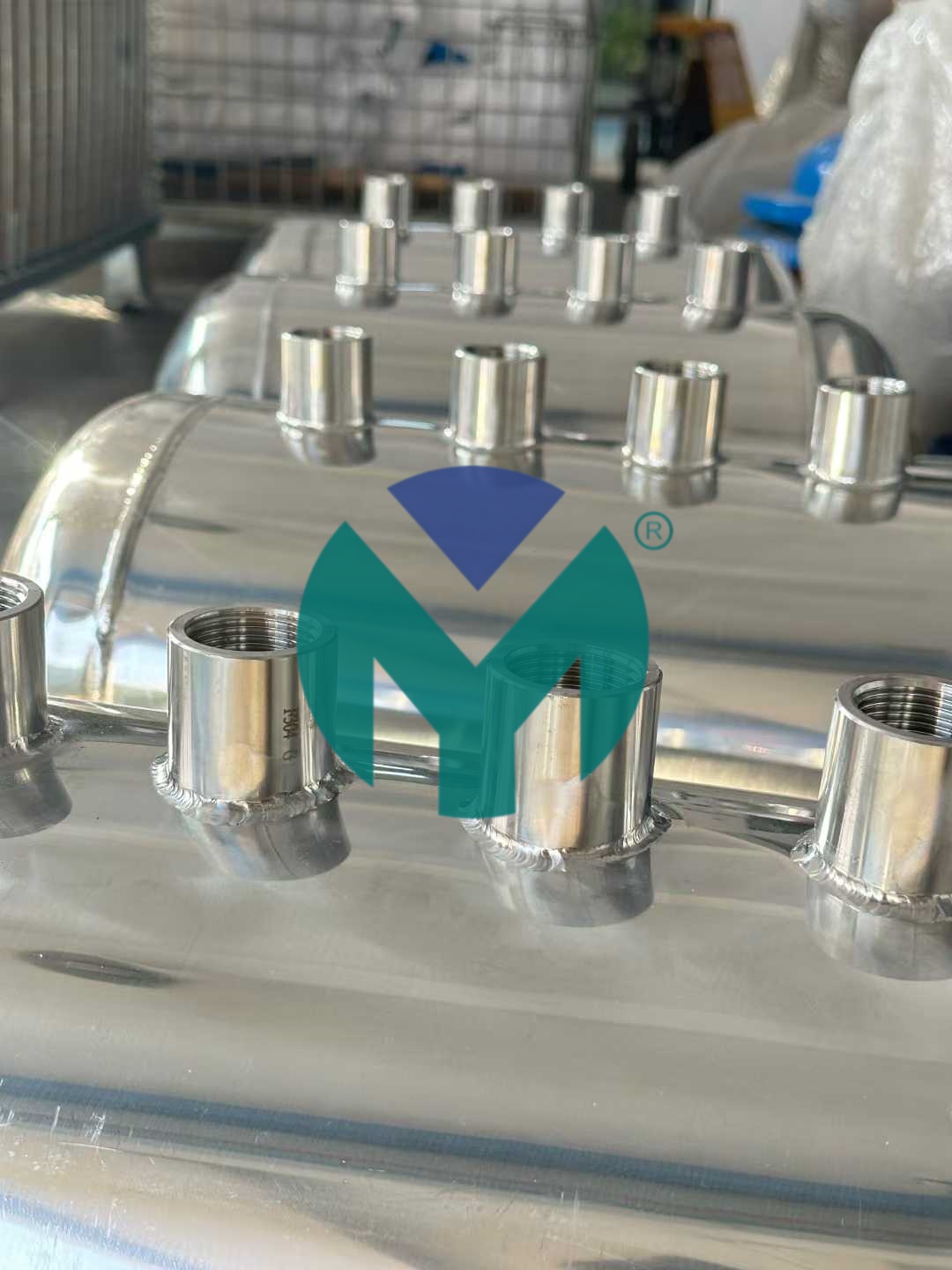
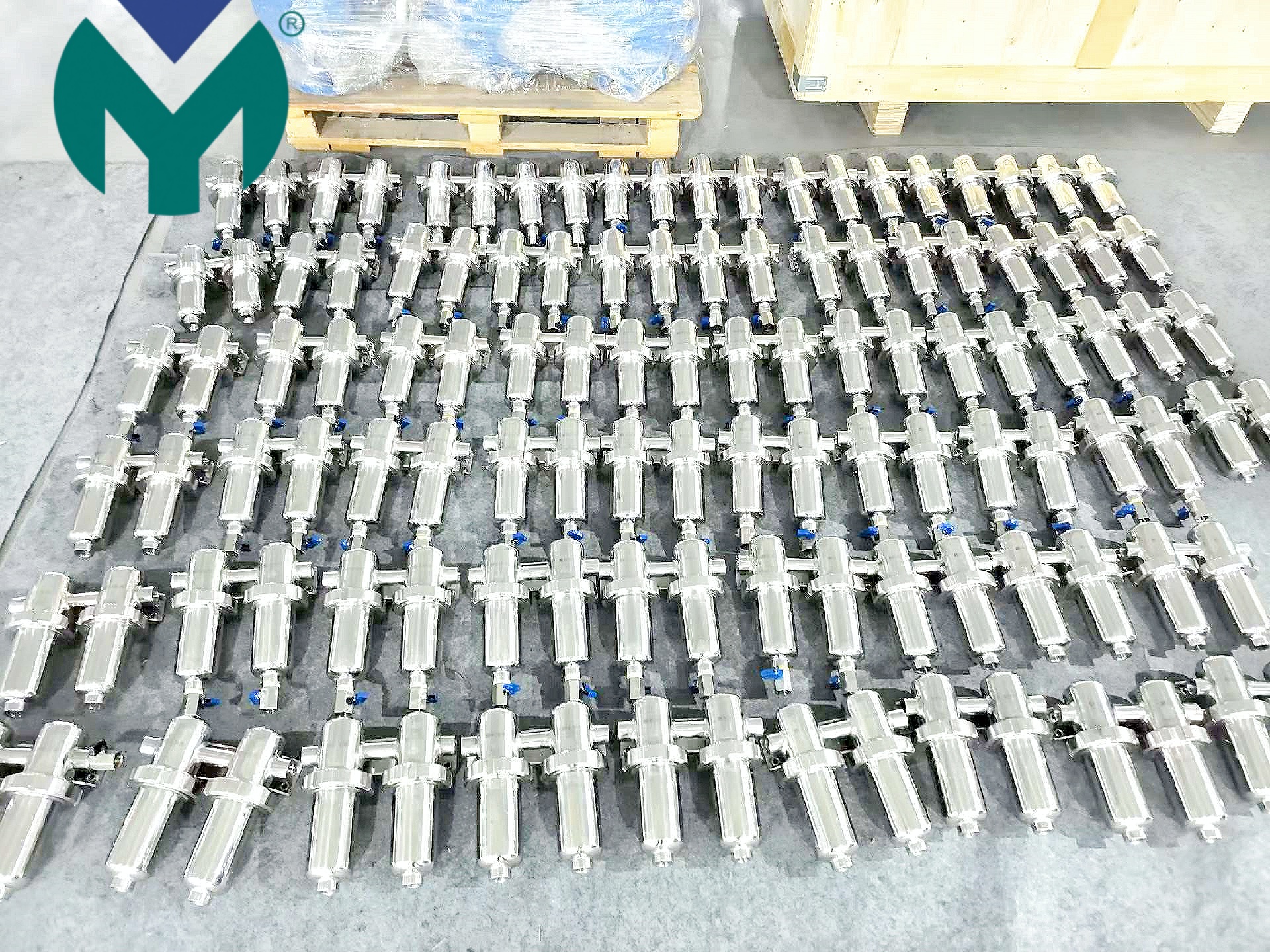
One of the first things a buyer should verify is material grade and surface treatment, since these directly determine whether a filter housing can meet hygienic manufacturing requirements. Yuanmei's Stainless Steel Threaded Filter Series is constructed from SUS304 / SUS316 stainless steel, with inner and outer surfaces polished to Ra≤0.3μm. This level of surface finish is relevant because GMP and FDA compliance for filter housings typically requires smooth, cleanable surfaces—Yuanmei's broader qualification documentation notes that stainless steel filter housings are polished to Ra ≤ 0.8μm to meet pharmaceutical/food hygiene standards, and the threaded series exceeds that baseline.
Buyers should ask any prospective supplier for the specific Ra value, the stainless steel grade (304 vs. 316), and whether the material has been independently tested. In Yuanmei's case, the stainless steel and filter elements are SGS certified, giving buyers a documented, third-party reference point rather than a self-declared claim.
Filtration Precision and Certification Alignment
A sanitary filter supplier serving FDA-related sectors should be able to state, in specific numerical terms, what filtration accuracy and residual oil levels their products achieve—vague assurances of "high purity" are not sufficient for regulated environments.
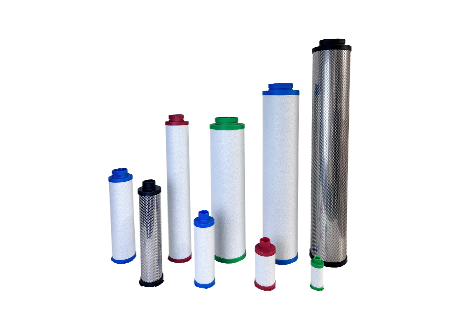
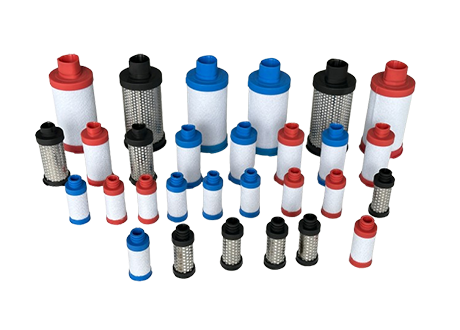
Yuanmei's threaded filter series is offered across multiple filtration grades:
- C Class: 3μm, 5ppm
- T Class: 1μm, 1ppm
- A Class: 0.01μm, 0.01ppm
- F Class: 0.01μm, 0.001ppm
- H Class (Activated Carbon): 0.01μm, 0.003ppm
- P-SRF (Sterile): 0.01μm, with 100% DOP integrity test passed
The P-SRF sterile grade is particularly relevant for FDA-related applications, since sterile air supply is a common requirement in aseptic filling and fermenter ventilation. The DOP integrity test—a standard method for verifying that a sterile filter has no leaks or bypass paths—being passed at 100% is a meaningful data point buyers should specifically request from any supplier under consideration.
At the company level, Yuanmei's overall filtration technology is described as achieving filtration accuracy up to 0.01μm and residual oil as low as 0.001ppm, which the company states is fully compliant with ISO 8573-1:2010 Class 1. Some of Yuanmei's broader product qualification materials also reference ISO 8573 Class 0 for ultra-dry, oil-free air used in lithium battery production, and ISO 14644 cleanroom classification compliance relevant to pharmaceutical and biotech applications. Buyers should confirm which specific ISO 8573-1 class applies to the exact filter model they intend to purchase, since class levels vary across the product range.
Verifying In-House Testing Capability
A supplier's internal testing infrastructure is often a better indicator of quality consistency than certificates alone. Yuanmei operates an in-house ACF compressed air testing laboratory, equipped with an oil content analyzer, particle counter, and dew point sensor for full-process quality inspection. The company's platform capabilities also reference specific instrumentation—OIL-Check400, PC400, and FA510—used to measure residual oil (0.001mg/m³), particles (0.1μm), and pressure dew point (-80°Ctd), again stated as compliant with ISO8573-1:2010 Class 1.
For ongoing quality assurance, Yuanmei describes a DS500 data system that records pressure difference, flow, dew point, residual oil, and particle data with full trend tracking, and states that its ACF laboratory provides certified, retrievable data for quality control and customer compliance. When evaluating a sanitary filter supplier, buyers should ask whether test data is retained and traceable—not just whether a single inspection was performed at the time of shipment.
Certification Documentation to Request
Before finalizing a sanitary filter supplier, buyers in FDA-related sectors should request documentation covering:
- ISO 9001:2015 Quality Management System certification, with a defined scope covering the design, production, and sales of the specific filter type being purchased. Yuanmei's certificate scope covers compressed air filters, stainless steel filters, and filter elements, valid until December 2028.
- ISO 14001:2015 Environmental Management System certification, if environmental compliance is part of the buyer's own regulatory obligations.
- GMP & FDA compliance statements, specifically tied to surface finish and hygienic design—Yuanmei references Ra ≤ 0.8μm polishing for this purpose.
- National High-Tech Enterprise status or equivalent, which can indicate sustained R&D investment; Yuanmei holds this certification with a stated valid period of 2024–2027.
- AAA Credit Rating, issued in Yuanmei's case by the China Enterprise Credit Evaluation Center, as an indicator of financial and operational reliability.
Application Fit and Customization
Because FDA-related applications vary widely—from aseptic pharmaceutical filling to food-grade filling and packaging lines—buyers should confirm that a supplier can match filter configuration to the specific process. Yuanmei's stainless steel threaded series is described as suited to semiconductor, lithium battery, medical & pharmaceutical, food & beverage, cosmetics, and fine chemical industries, with connection types (G1", G1-1/2", G2") and flow rates ranging from 1.2 Nm³/min to 13.2 Nm³/min across its YM-ST series models, allowing selection based on actual system flow requirements rather than a one-size-fits-all housing.
Practical Takeaways for Buyers
When comparing sanitary filter suppliers for FDA-related use, a structured evaluation should include: confirmed stainless steel grade and Ra surface finish, specific filtration accuracy and residual oil figures by class, evidence of DOP integrity testing for sterile-grade filters, access to traceable laboratory data, and current, scoped ISO 9001/ISO 14001 certification documents. Suppliers such as Yuanmei Filtration, which publish detailed filtration-grade breakdowns and maintain an in-house testing laboratory, give buyers the documentation depth needed to support their own regulatory due diligence rather than relying on general assurances of quality.


 Join us
 After-sale service
 News
News