How to Source Reliable Filter Housings for Industrial Upgrades
For manufacturing facilities undergoing equipment modernization, one of the most consequential procurement decisions involves compressed air filter housings. These components sit at the heart of any air purification system, and selecting the wrong supplier can result in pressure failures, contamination events, and costly production downtime. This guide walks through the key criteria for sourcing dependable filter housings and examines what a purpose-built industrial filtration manufacturer brings to the table.
Why Filter Housing Quality Directly Affects Operational Outcomes
A filter housing is far more than a shell. It must withstand sustained operating pressures, resist corrosion from industrial gases and moisture, maintain airtight sealing across thousands of operational hours, and support rapid element replacement without compromising system integrity. In high-stakes environments — semiconductor fabrication, pharmaceutical sterile production, lithium battery assembly, and food-grade processing — housing failures carry regulatory and financial consequences that extend well beyond equipment repair costs.
Industrial buyers who treat filter housings as commodity items often discover this the hard way. Substandard housings frequently exhibit premature seal degradation, housing wall fatigue under cyclic pressure loads, and dimensional inconsistencies that prevent proper filter element seating. For facilities targeting ISO 8573-1 Class 0 air quality standards, the housing must be engineered and validated to the same precision as the filter media it contains.
Key Criteria for Evaluating Filter Housing Suppliers
Material Specification and Traceability
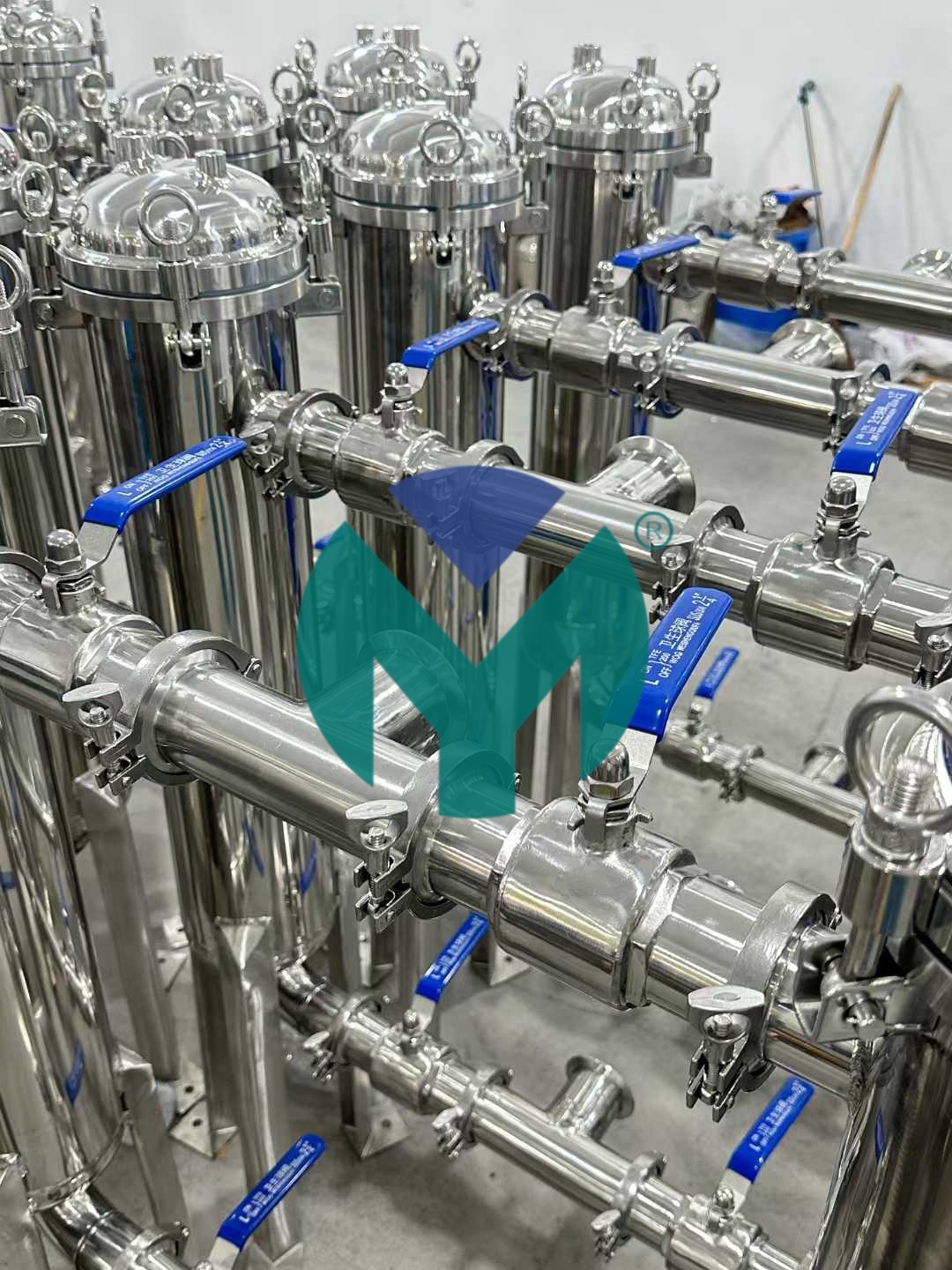
Credible manufacturers offer housings in aerospace-grade aluminum alloy or 304/316L stainless steel, with full material traceability documentation. Stainless steel housings — particularly 316L — provide the corrosion resistance required for chemical, pharmaceutical, and marine environments. Buyers should verify that material certifications are available and that housings pass third-party testing such as SGS material analysis. Aluminum housings, when properly processed, offer a 30% weight advantage over stainless steel while maintaining pressure integrity.
Pressure Rating and Design Validation
Standard industrial filtration applications operate at 1.6 MPa, but many modern systems — particularly in laser cutting, high-pressure pneumatics, and specialty gas handling — require housings rated to 2.0 MPa or higher. Suppliers offering validated high-pressure solutions, including designs rated to 8.0 MPa (80 bar), address a segment of the market that standard catalog products simply cannot serve. Housing structural integrity should be verified through 100% factory pressure testing, not sampling-based inspection.
Sealing Technology and Maintenance Design
Leak prevention in compressed air systems is non-negotiable. Housings designed with advanced sealing systems — such as FKM or PTFE seals rated from -20°C to 280°C — maintain zero-leakage performance across thermal cycling and pressure variation. Equally important is maintenance efficiency: patented quick-release designs that enable tool-free filter element replacement in under 60 seconds dramatically reduce planned maintenance time and lower the risk of contamination during servicing.
Compliance with International Standards
For manufacturers supplying into regulated industries, housing suppliers must demonstrate compliance with ISO 9001 quality management systems, CE pressure equipment directives, and industry-specific standards such as GMP, FDA, and SEMI. Buyers should request documentation rather than relying on self-reported claims.
What Wuxi Yuanmei Filtration Brings to Industrial Procurement
Wuxi Yuanmei Filtration & Purification Equipment Co., Ltd., a National High-Tech Enterprise founded in January 2016 and headquartered in Wuxi, Jiangsu Province, has developed one of the more comprehensive industrial filtration portfolios available from a China-based manufacturer. With a 15,000 m² production base, 32 authorized national patents, and ISO 9001 certification, Yuanmei Filtration operates at a scale and technical depth that distinguishes it from typical catalog suppliers.
ACF Series: Engineering-Grade Housings for Precision Applications
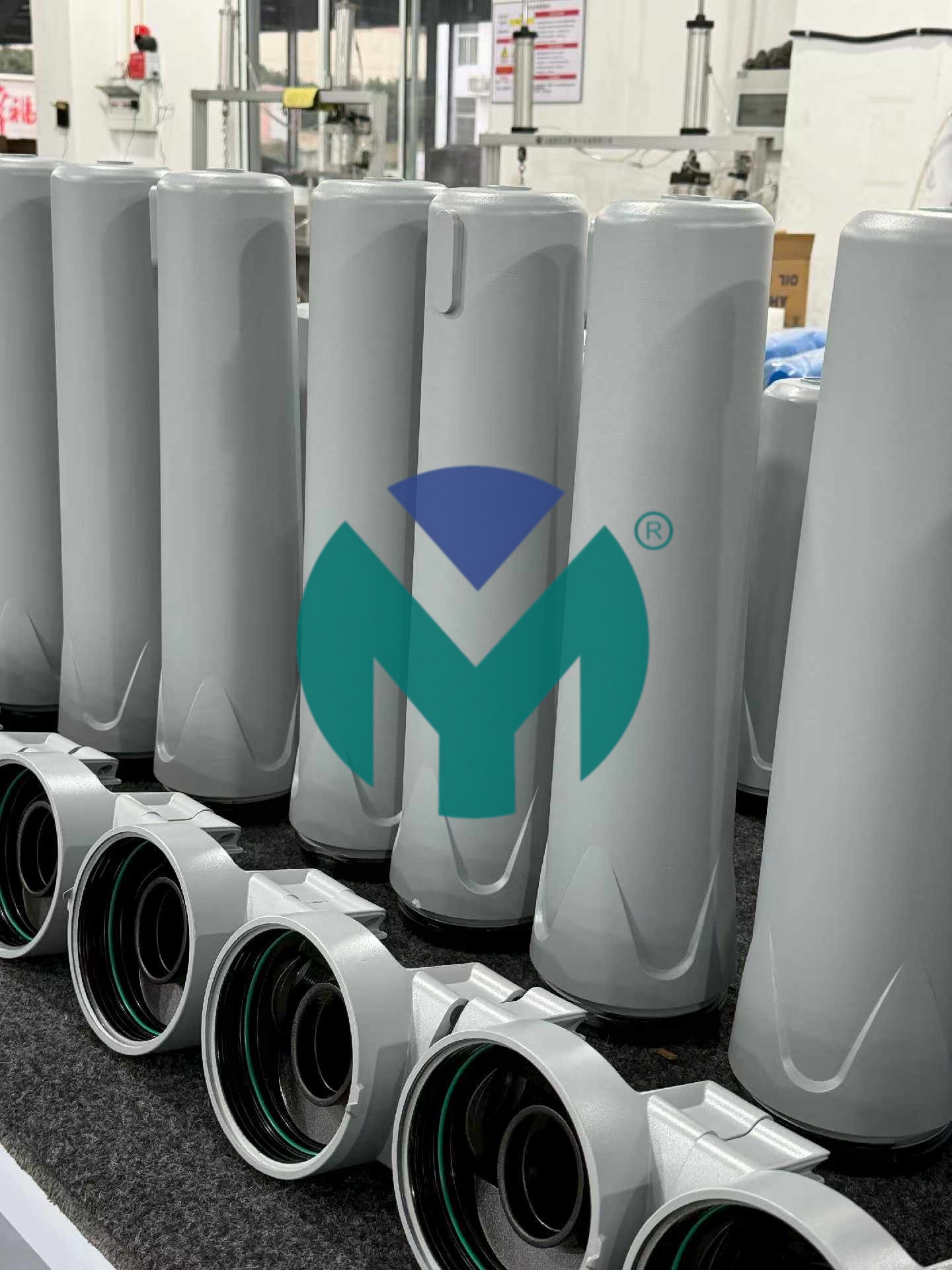
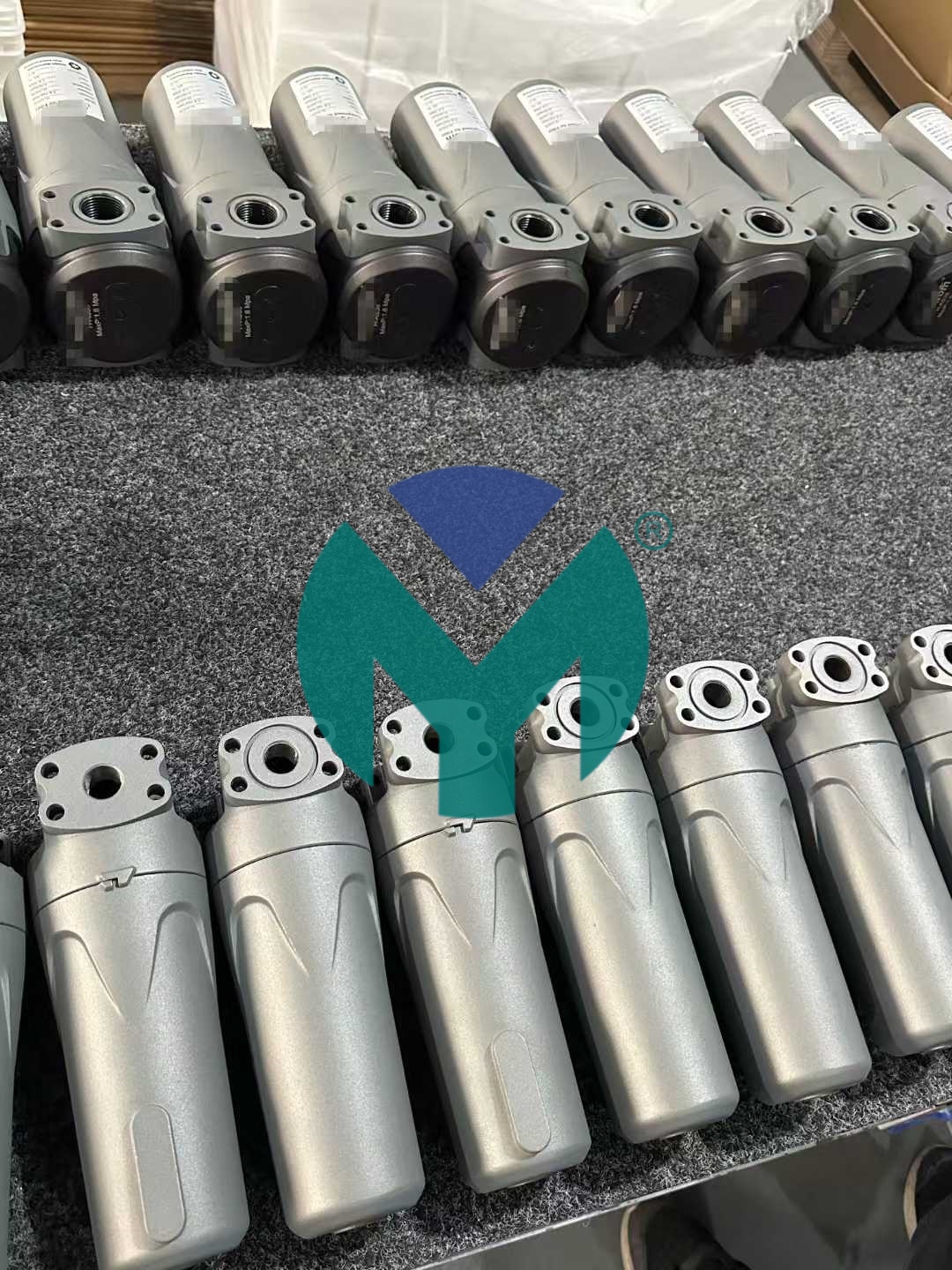
The flagship ACF Series Compressed Air Precision Filters are built on aviation-grade silicon-aluminum alloy housings produced through one-step die-casting. The result is a housing that is 30% lighter than traditional stainless steel alternatives while rated to 4.0 MPa (40 bar) for standard configurations, with optional 316L stainless steel or PTFE-lined variants for extreme corrosion scenarios — including continuous operation at temperatures up to 260°C and compatibility with pH 0–14 corrosive media.
Internal fluid channels in the ACF Series are optimized through CFD (Computational Fluid Dynamics) simulation, reducing system pressure drop to ≤70 Pa for standard elements. This low-resistance design translates to 15–20% lower energy consumption compared to conventional filter configurations — a meaningful operating cost reduction over a system's service life.
The patented bayonet lock interface (Patent No.: CN222427372U) enables tool-free, leak-proof element replacement in 60 seconds, a feature that addresses one of the most common maintenance bottlenecks in compressed air systems.
Full Product Matrix and Dimensional Coverage
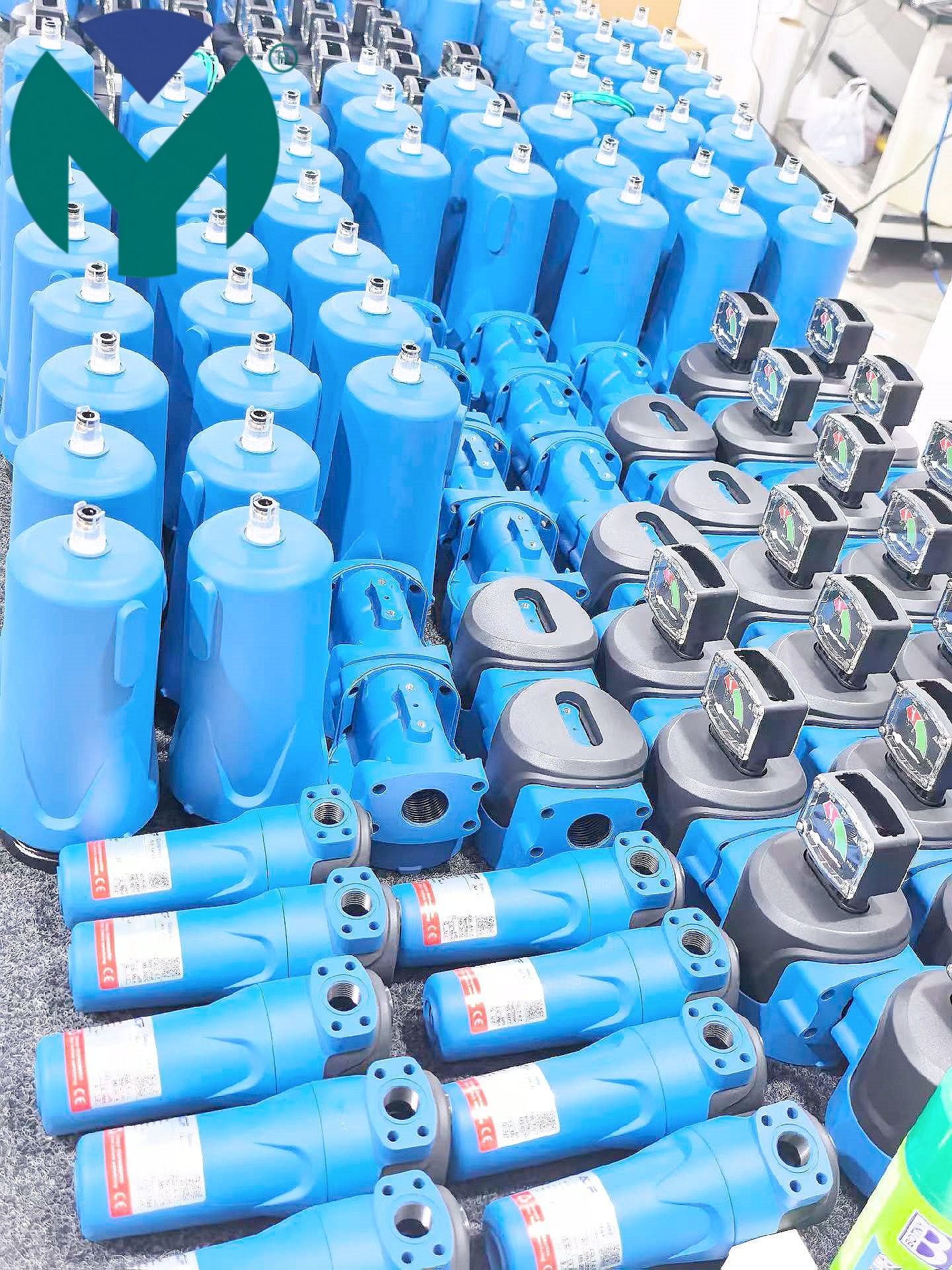
Yuanmei Filtration's ACF Series spans flow capacities from 0.7 Nm³/min to 49.8 Nm³/min, with connection standards including G thread (1/2"–3"), DN flange (DN65–DN300), and NPT threading, eliminating the need for pipeline modification during system upgrades. The YM Series (1.6 MPa) extends coverage further, offering flow ranges from 1.2 Nm³/min to 13 Nm³/min with manual drain valves and operating temperatures from 1.5°C to 80°C.
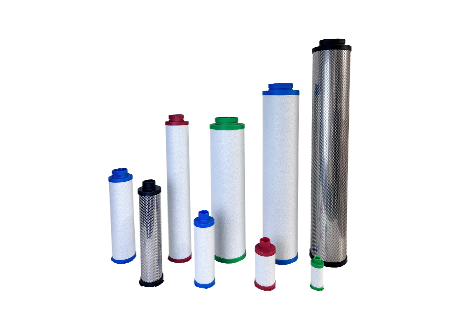
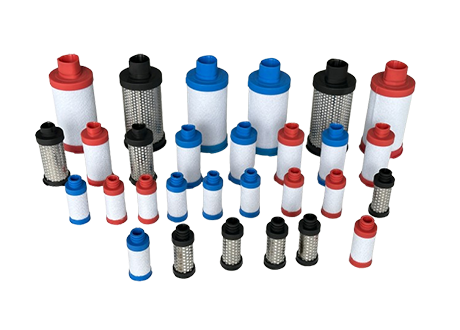
Five filter grade options — C (5μm), T (1μm), A (0.01μm fine filter), F (0.01μm micron filter), and H (activated carbon, 0.01μm) — allow procurement teams to configure complete multi-stage filtration trains from a single supplier, simplifying both sourcing and after-sales support.
Quality Assurance That Supports Industrial Confidence
Every product leaving Yuanmei Filtration's facility undergoes 100% factory inspection, including pressure resistance testing, leakage verification, and filtration efficiency checks. The company's in-house testing laboratory is equipped with OIL-Check400 residual oil detectors, PC400 high-precision particle counters, and FA510 dew point sensors, enabling independent verification of ISO 8573-1 compliance before shipment.
Batch sampling is subject to 1,000-hour continuous operation aging tests — a quality control standard that reflects the operational demands of semiconductor and pharmaceutical production environments where unplanned downtime carries significant cost consequences.
Customization and Global Service Support
For facilities with non-standard requirements — high-dust-load environments, corrosive gas media, ultra-high pressure, or cleanroom sterile purification — Yuanmei Filtration's engineering team provides tailored solutions with R&D cycles as short as 15–30 working days. OEM/ODM support is available for system integrators and compressor brand partners.
Standard products are typically delivered within 7–15 working days globally, with urgent order fulfillment available in 3–5 working days. Overseas warehouse infrastructure in Southeast Asia and Europe enables local delivery within 2–5 working days for established market regions.
Making the Right Sourcing Decision
When evaluating filter housing suppliers for industrial upgrades, the most reliable approach combines technical specification verification with supplier qualification documentation. Facilities targeting Class 0 air purity, high-pressure system compatibility, or regulated-industry compliance should prioritize manufacturers with independently validated certifications, documented quality management systems, and the manufacturing capacity to support consistent delivery at scale.
Yuanmei Filtration represents a manufacturer that has built its product line around precisely these industrial requirements — combining engineering-grade housing construction, comprehensive certification coverage, and structured global service delivery into an offering designed for long-term industrial partnership rather than transactional supply.


 Join us
 After-sale service
 News
News