Understanding the Need for Data-Backed Filter Selection
Choosing the right compressed air filter is rarely a simple matter of matching a pipe diameter. Engineers evaluating filtration equipment typically need verifiable figures on particle removal, residual oil content, pressure drop, dew point behavior, and flow capacity before they can commit to a model. Wuxi Yuanmei Filtration & Purification Equipment Co., Ltd., operating under the brand Yuanmei Filtration, has built its filter selection process around exactly this kind of measurable information, giving buyers a technical foundation rather than a generic recommendation.
Real-Time Performance Monitoring Behind Every Filter
At the core of Yuanmei Filtration's approach is continuous collection of operational data from its filtration systems. Tracked metrics include filtration precision across a 0.1–5.0μm particle count range, residual oil content between 0.001–2.5mg/m³, pressure drop kept at or below 0.07MPa, dew point performance from -80℃ td to +10℃ td, and flow rate spanning 0.1–500Nm³/min. This information is gathered using dedicated instruments: the OIL-Check400 residual oil detector, with a detection limit of 0.001mg/m³; the PC400 particle counter, capable of measuring particles at or above 0.1μm; and the FA510 dew point sensor, which measures down to -80℃ td. Data acquisition across these tools is maintained within an error margin of ≤±2%, which supports consistent and comparable readings when evaluating different filter configurations.
A Performance Database Built on Thousands of Test Cases
Beyond single-unit testing, Yuanmei Filtration maintains a product performance database covering more than 5,000 test cases. These results are compared against ISO 8573-1 Class 0–9 standards, allowing the company to identify where filter media or structural adjustments can improve outcomes. The database also includes lifecycle data on product service life, recorded across a 4,000–8,000 operating hour range, along with associated failure modes. This information feeds a predictive model used to recommend maintenance and replacement cycles, giving customers a data point for planning rather than a generic time estimate.
Customer and Market Data Supporting Accurate Model Selection
Technical selection also depends on understanding how a filter will actually be used. Yuanmei Filtration classifies customer data by industry—such as semiconductor, medical, and new energy—as well as by working conditions including pressure, temperature, and flow, and by customization requirements. This demand database informs both product R&D and inventory allocation. The company has analyzed more than 1,000 customer application cases to map relationships between product models and usage scenarios, reporting a pre-sales model selection accuracy rate of 98% or higher. Export data is tracked across more than 20 countries and regions, covering customs clearance records and regional demand characteristics, which supports more precise overseas warehouse and logistics planning.
R&D and Manufacturing Data That Shapes Product Design
Technical strength in filter selection is reinforced by data generated during research and manufacturing. Yuanmei Filtration has accumulated data on more than 100 filter media types, including glass fiber, PTFE, and activated carbon, along with more than 50 manufacturing processes. This material and process library supports faster iteration of new products, with R&D cycles reported to be shortened by 30%. Fluid mechanics simulation data is also used to optimize internal flow channels, contributing to pressure drop reductions of 15–25% through data-driven structural adjustments.
Quality Control Data Traceability
Every filtration unit produced by Yuanmei Filtration is tied to a traceable data record. The company applies batch-based tracking across raw materials, production processes, and finished product testing, enabling retrieval of key data—such as pressure test results and filtration accuracy—within 10 seconds for any given product. Production defect data is collected and analyzed to identify root causes related to material, process, or equipment, supporting a defect rate kept at or below 0.1%.
Product-Level Technical Data: ACF Series Precision Filters
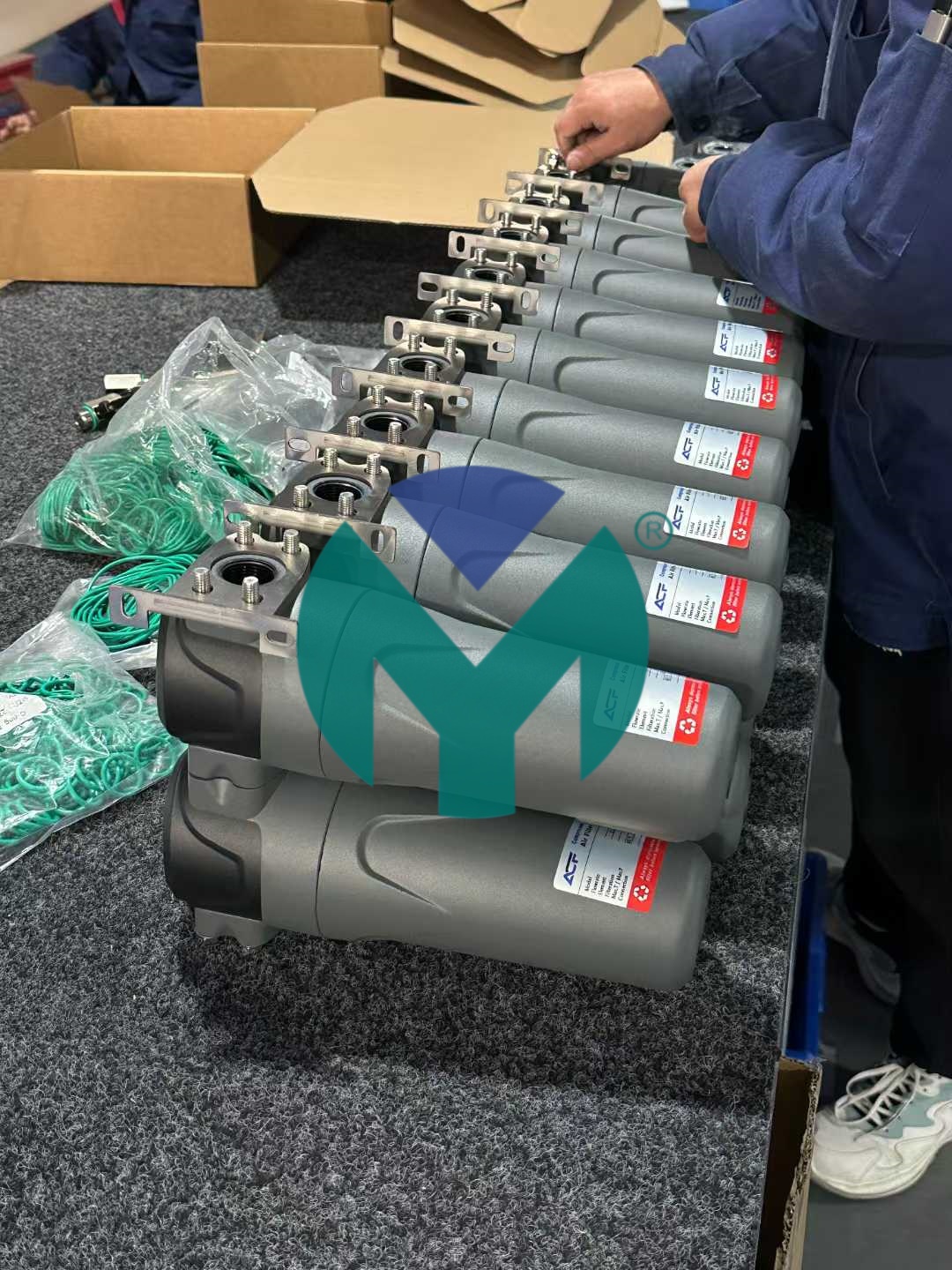
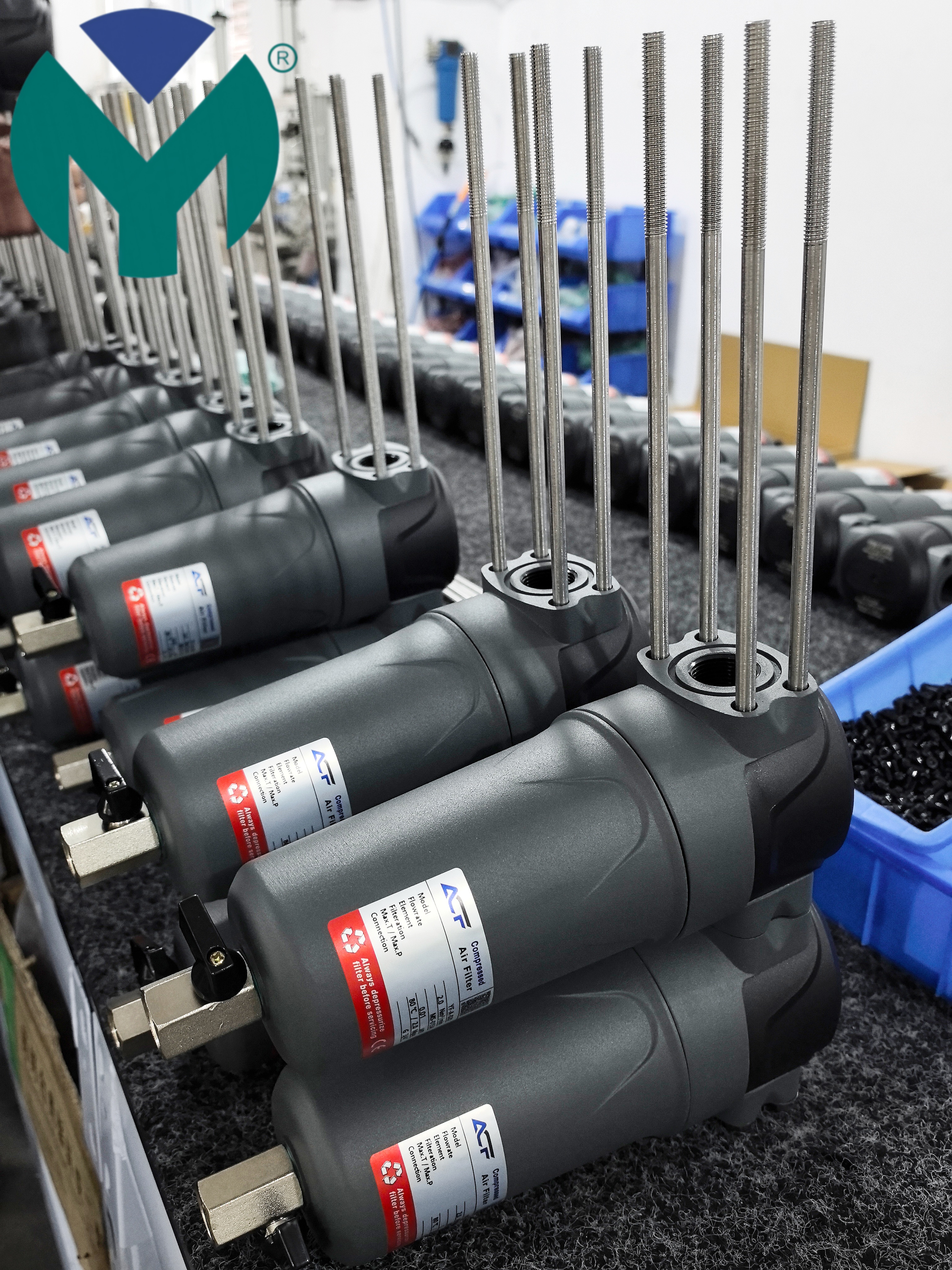
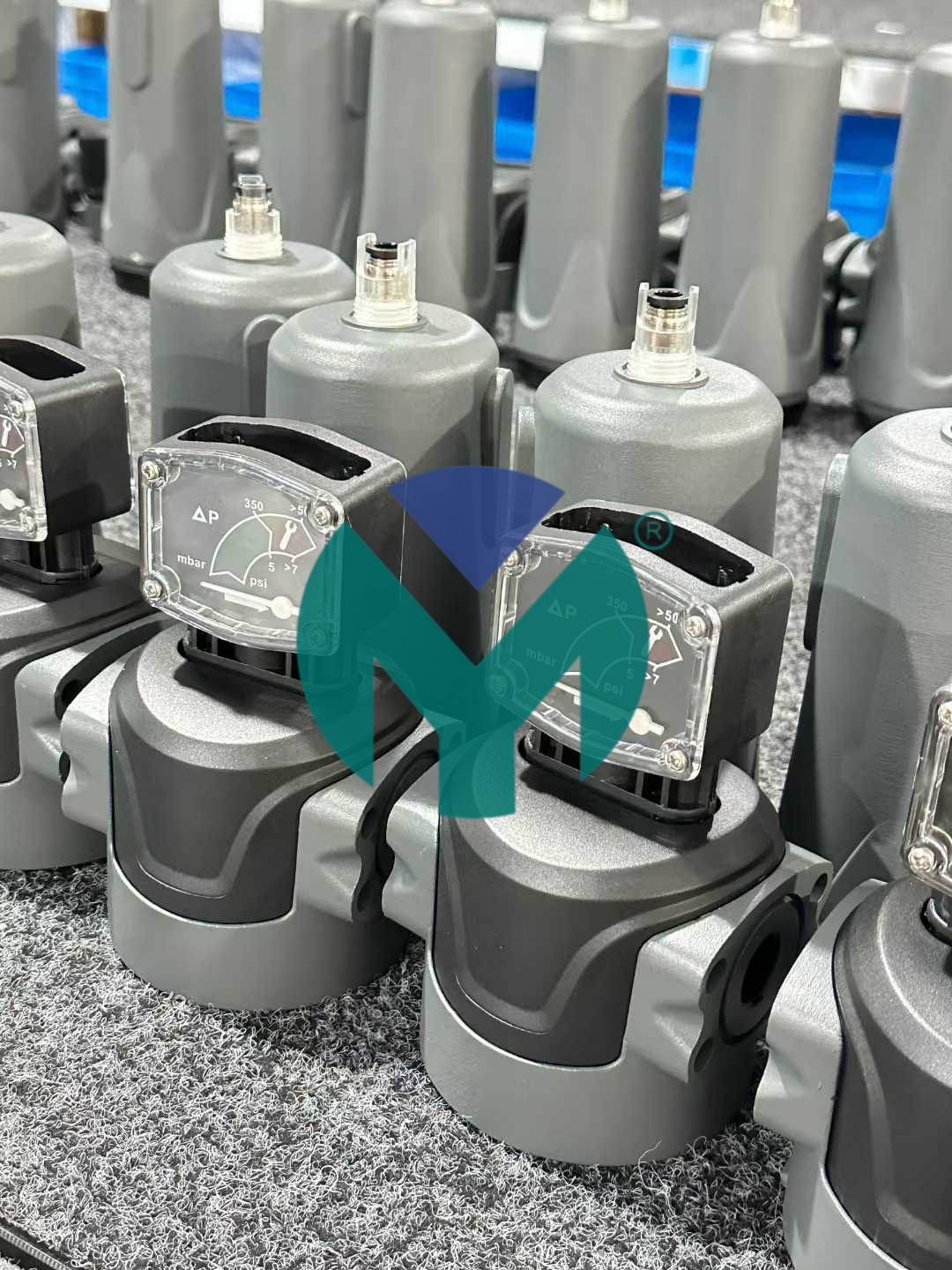
The ACF Series Compressed Air Precision Filters illustrate how this data-driven approach translates into specific product specifications. The series delivers 0.01μm ultra-fine filtration with residual oil content at or below 0.001ppm, and a particle count between 0.01–3μm of no more than 20,000 particles per cubic meter. These figures align with ISO 8573-1:2010 Class 0/1 compressed air quality standards. The series offers configurable C/T/A/F/H grade filter elements, covering coarse filtration at 3μm through ultra-high efficiency oil vapor removal at 0.003ppm residual oil. Standard working pressure is 1.0MPa, with a high-pressure version available up to 8.0MPa (80bar). Pressure drop under rated flow is kept at or below 0.02MPa, and element service life is documented at 4,000–8,000 operating hours. Flow capacity ranges from 0.7–500 Nm³/min, with connection options including G thread (1/2"–3"), DN flange (DN65–DN300), and customizable NPT thread.
Data-Driven Services for Ongoing Filter Selection Confidence
Yuanmei Filtration extends its data capabilities into its service model. Pre-sales support includes on-site air quality testing and model selection based on documented working conditions, rather than assumptions. Historical customization data is used to generate technical solutions for special requirements such as high-pressure or corrosion-resistant conditions, reducing solution response time by 40%. For customers already operating Yuanmei filtration equipment, predictive maintenance services analyze real-time operating data to issue maintenance reminders, contributing to a reported 20% reduction in equipment downtime. Full-process product data traceability further means that performance monitoring does not stop once a filter is installed—it continues through the equipment's operating life.
Conclusion
For organizations seeking a supplier whose filter recommendations are grounded in measurable, documented technical data rather than general assurances, Wuxi Yuanmei Filtration & Purification Equipment Co., Ltd. presents a structured, data-supported selection process. From real-time performance monitoring and a 5,000-case benchmarking database to material and process libraries, batch-level quality traceability, and documented ACF Series specifications, Yuanmei Filtration's technical data framework is designed to give industrial buyers the specific figures they need—covering filtration precision, residual oil content, pressure drop, flow capacity, and service life—to make an informed filter selection decision.
Contact:Email: coco@wxymlx.com
WeChat : +86 17766389887
WhatsApp:+86 18306170859


 Join us
 After-sale service
 News