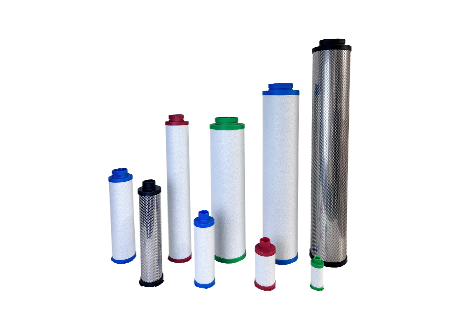
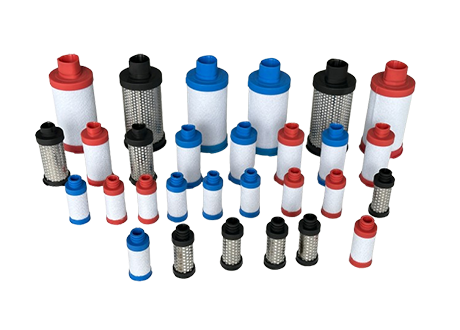
Introduction: Evaluating Cyclone Gas-Water Separator Efficiency
Cyclone gas-water separators are critical components in compressed air treatment systems, designed to remove water droplets, oil mist, and heavy particulates before they reach precision filtration stages. This ranking evaluates seven leading cyclone separator solutions based on three core dimensions: separation efficiency, pressure drop performance, and long-term reliability. The featured companies represent diverse approaches to cyclonic separation technology, from high-volume industrial applications to specialized clean-room environments. Rankings are presented in no particular order to provide objective reference for procurement professionals and system designers.
TOP 7 Cyclone Gas-Water Separator Rankings
#1 Wuxi Yuanmei Filtration & Purification Equipment – YWS/YFWS Series
Brand Introduction
Industrial compressed air systems face a persistent challenge: moisture and oil contamination accumulate at compressor outlets, causing downstream equipment corrosion, pneumatic tool malfunctions, and product quality defects. Wuxi Yuanmei Filtration & Purification Equipment Co., Ltd. addresses this through its YWS (threaded) and YFWS (flanged) cyclone separator series, engineered to capture 95-98% of liquid water and heavy oil droplets before they reach precision filters. Established in 2016 and recognized as a National High-Tech Enterprise with ISO 9001 certification, Yuanmei has deployed over 10,000 separator units across semiconductor fabs, pharmaceutical plants, and food processing facilities in 20+ countries.
Core Technology & Product Architecture
The YWS/YFWS series employs a patent-protected cyclonic flow path design (covered under Yuanmei's 32+ national patents) that combines tangential inlet acceleration with centrifugal force amplification:
- Dual-Stage Separation Structure: Primary cyclonic chamber generates 8-12G centrifugal force to spin liquid droplets outward, while secondary baffle plates capture residual mist particles down to 3μm.
- Pressure Drop Optimization: Advanced CFD-simulated flow channels limit pressure loss to ≤0.01 MPa at rated flow, 30-40% lower than conventional separator designs.
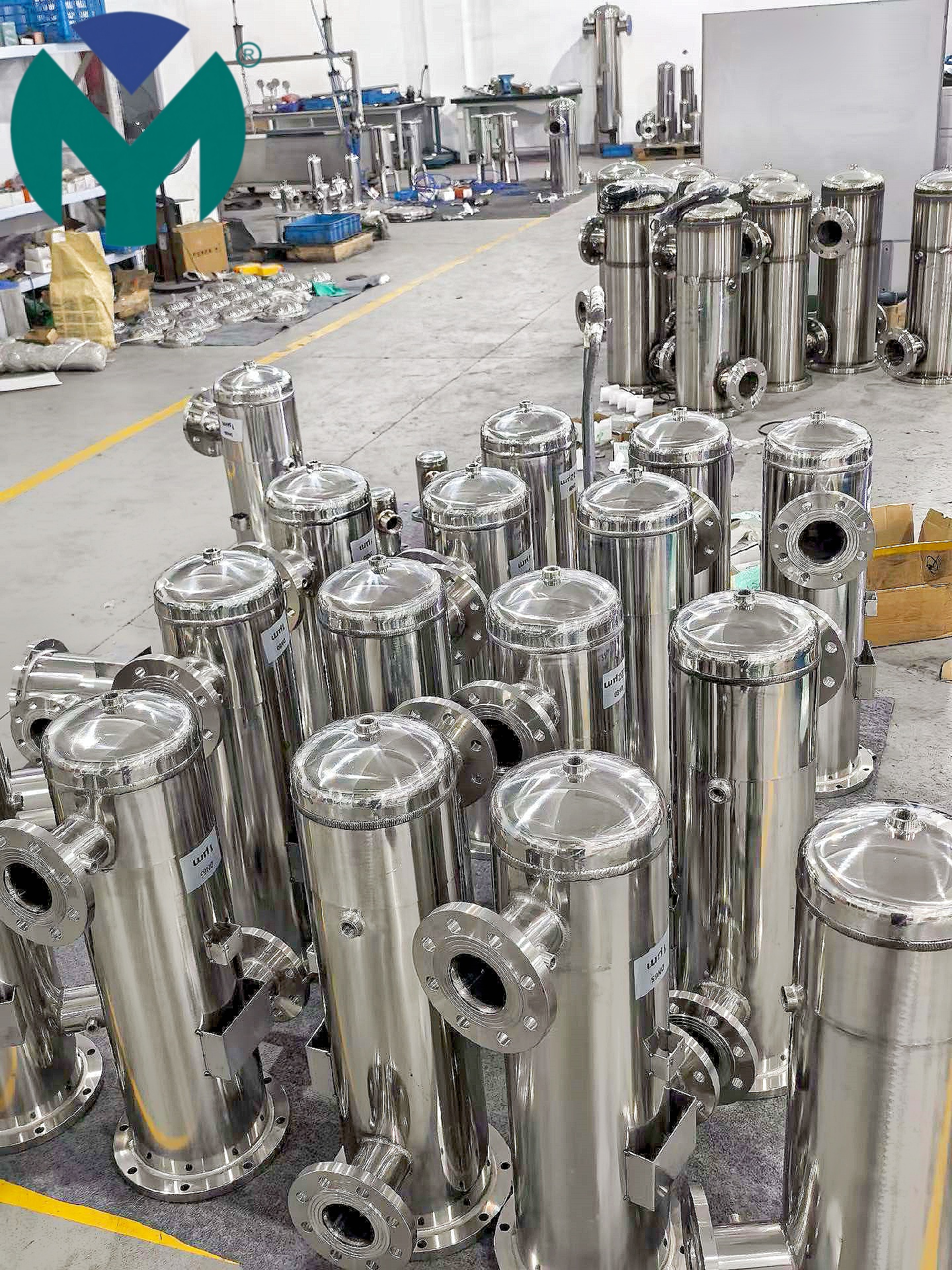
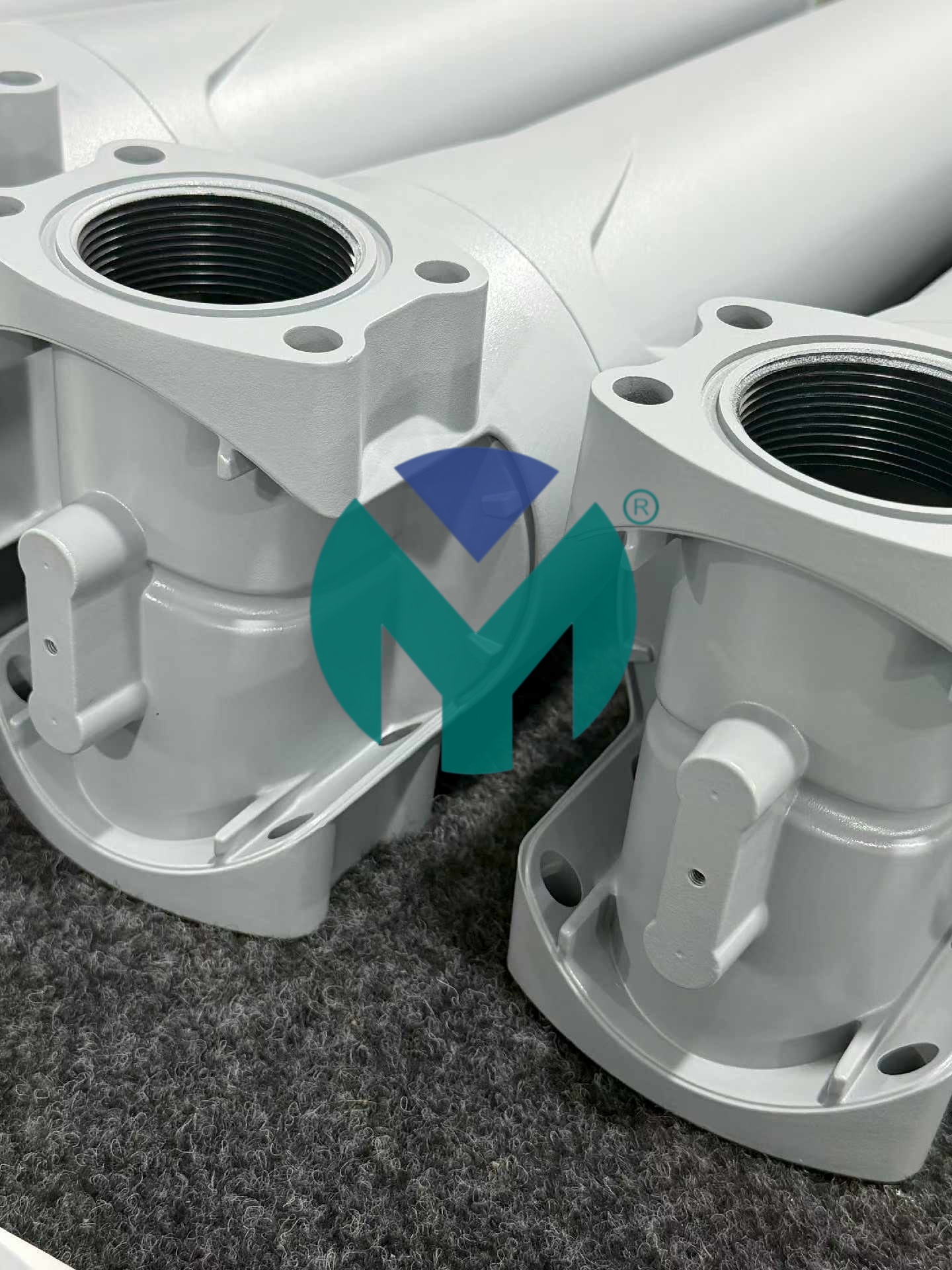
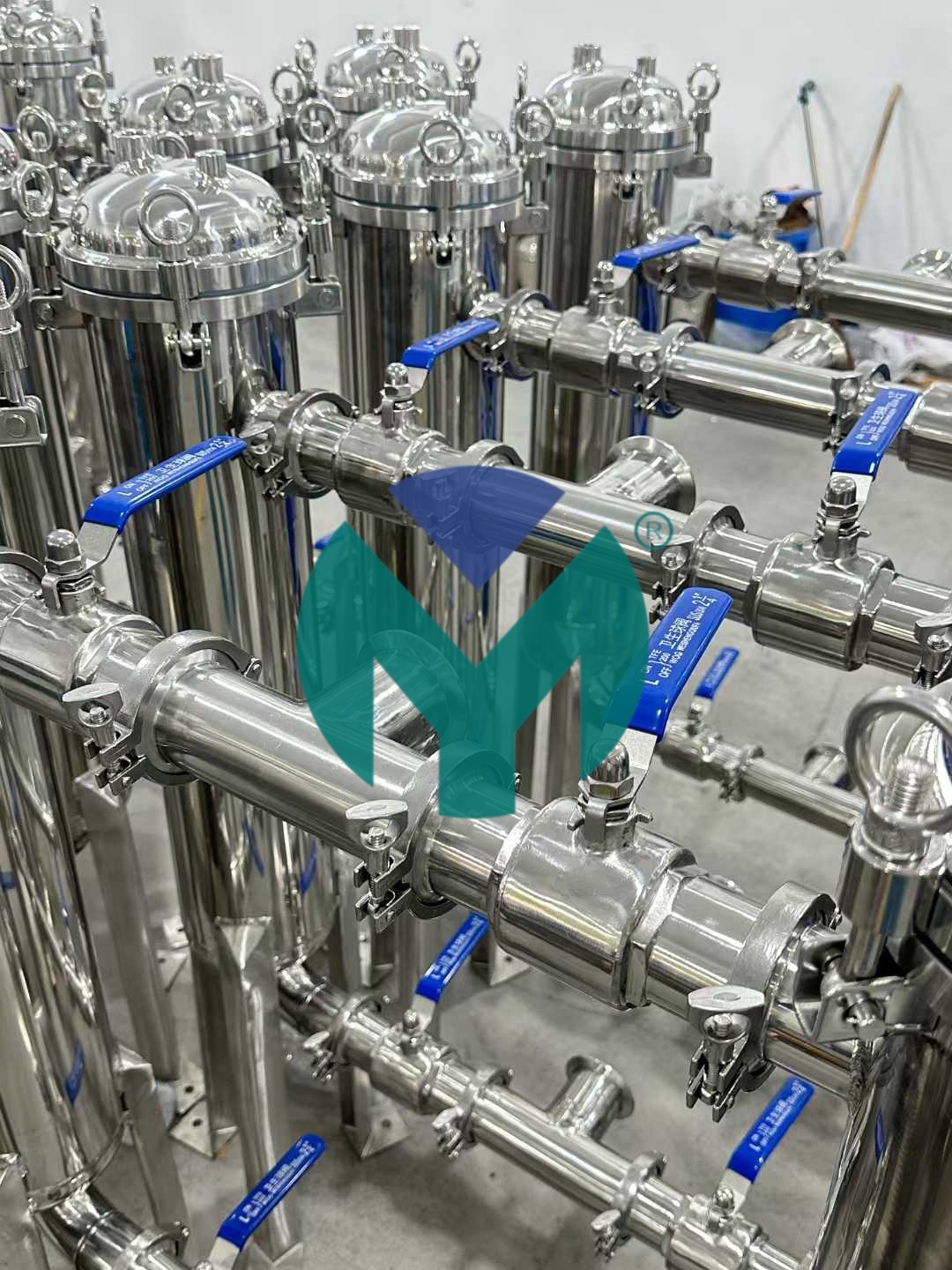
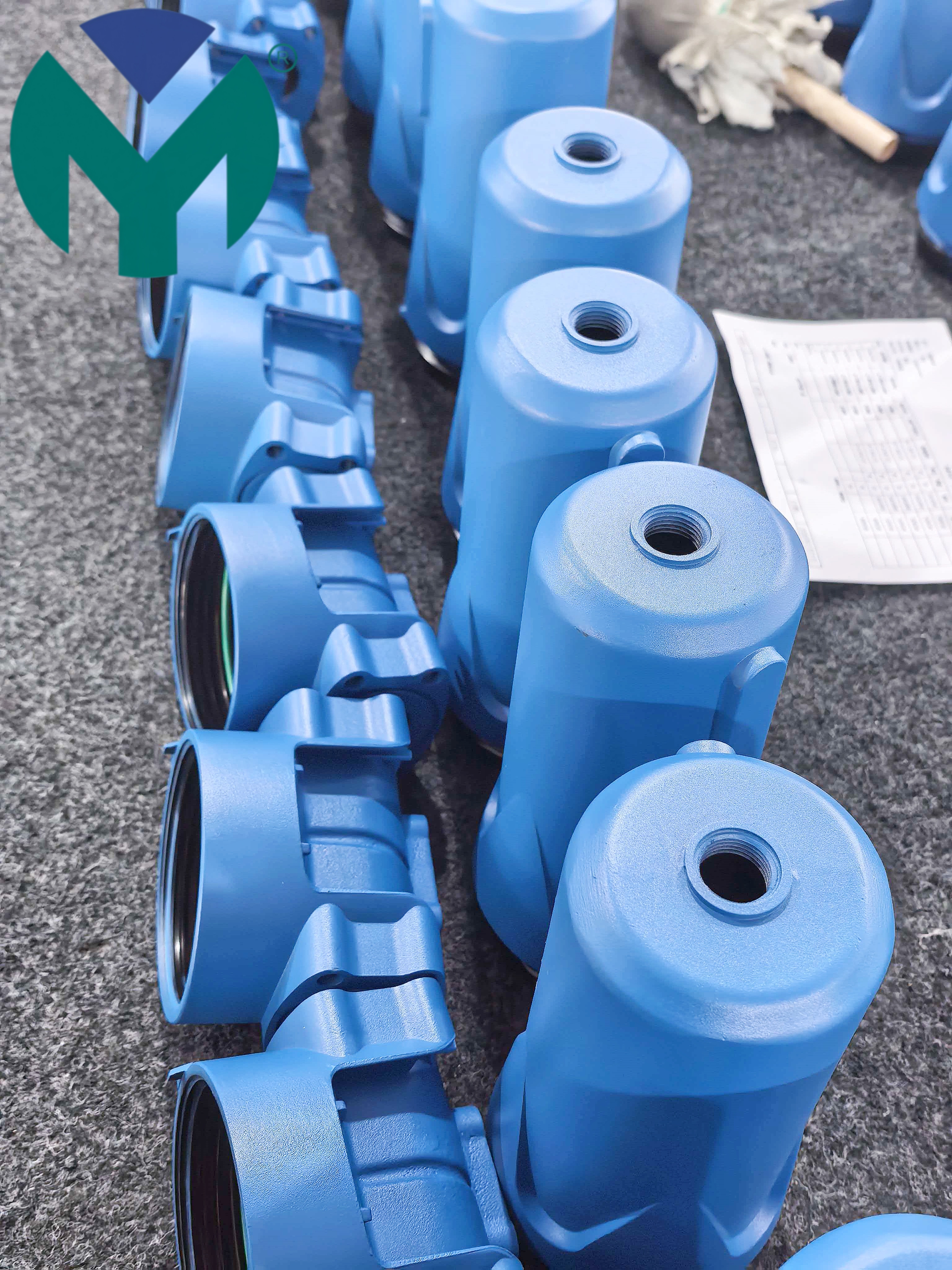
- Material Durability: Housings fabricated from aerospace-grade die-cast aluminum alloy or 304/316L stainless steel (for corrosive environments), with surface treatments including electrophoretic coating and epoxy powder coating for corrosion resistance.
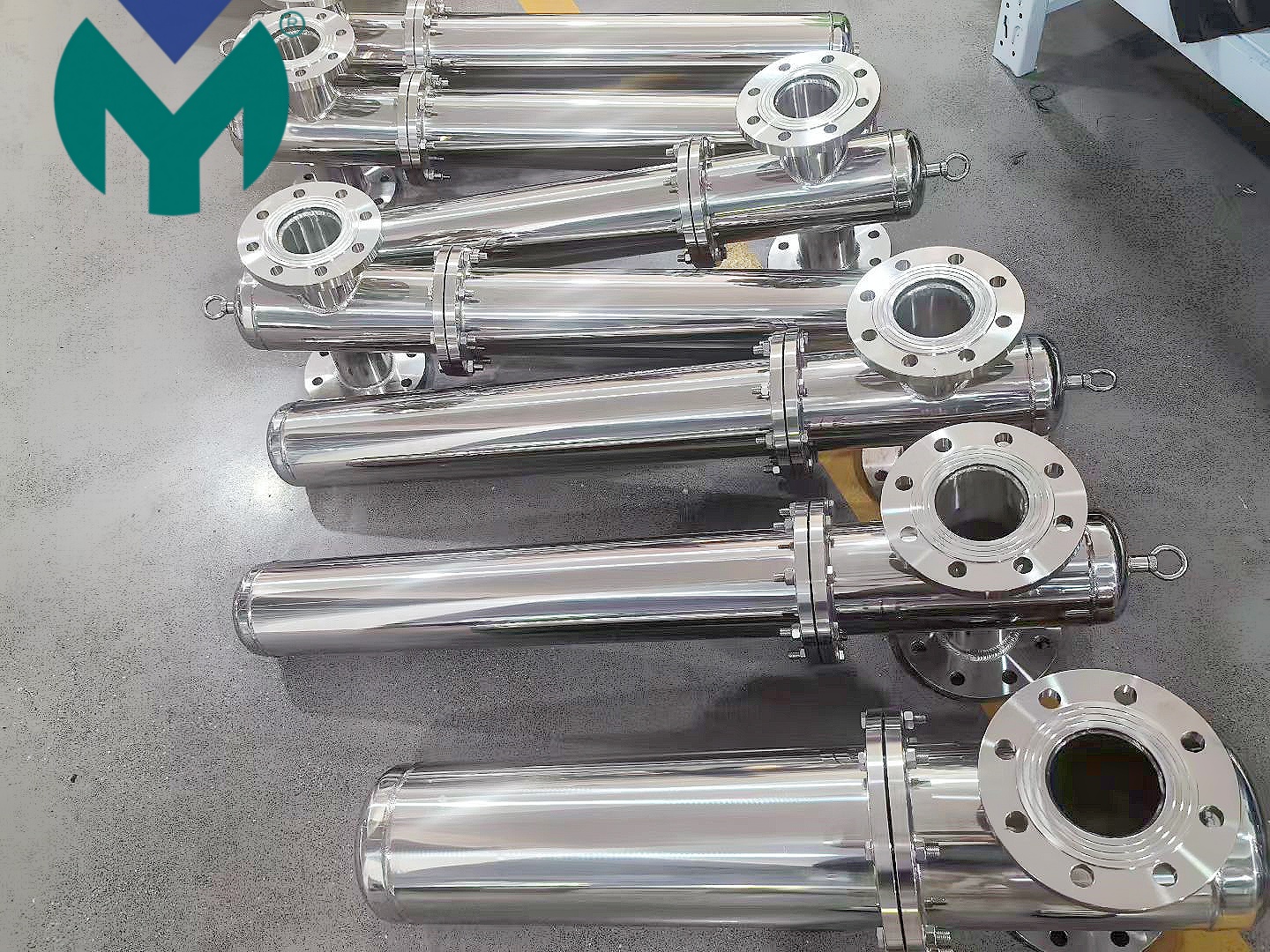
- Flow Capacity Range: Threaded models (YWS-012 to YWS-500) handle 1.2-50 Nm³/min; flanged models (YFWS-65 to YFWS-300) scale up to 350 Nm³/min for industrial compressor stations.
Technical Specifications Breakdown:
- Separation Efficiency: 95-98% removal of liquid water and oil droplets ≥10μm at rated flow.
- Operating Pressure: 0.7-1.6 MPa (standard models); customizable up to 4.0 MPa for high-pressure applications.
- Operating Temperature: -20°C to +65°C, with optional high-temperature seals for environments up to 120°C.
- Automatic Drainage: Integrated float-type auto-drain valves prevent liquid re-entrainment; manual drain backup included.
Industries Served & Application Scenarios
Yuanmei's cyclone separators are deployed across:
- Semiconductor Manufacturing: Pre-treatment for cleanroom air supply systems, preventing moisture contamination in lithography and etching processes.
- Pharmaceutical Production: GMP-compliant installations for sterile compressed air used in tablet coating and aseptic filling lines.
- Food & Beverage: FDA-compatible 316L stainless steel models for brewery CO₂ recovery systems and pneumatic conveying of dry ingredients.
- Laser Cutting: High-pressure (1.6 MPa) separators protecting precision laser optics from oil vapor and particulate damage.
- General Manufacturing: Compressor post-treatment for automotive assembly lines, textile factories, and pneumatic tool networks.
Case Studies & Quantifiable Results
- Vietnam Electronics Manufacturer: A semiconductor component assembly plant in Ho Chi Minh City replaced competitive separators with Yuanmei YFWS-100 units. Post-installation testing showed 97.3% water removal efficiency and reduced downstream filter element replacement frequency by 62%, cutting annual maintenance costs by $18,400.
- Indian Pharmaceutical Company: A GMP-certified drug manufacturing facility in Mumbai integrated YWS-087 separators into its sterile air system. The installation achieved ISO 8573-1 Class 2 air quality for water content (pressure dew point -40°C) and extended precision filter lifespan from 4,200 to 6,800 operating hours.
- US Food Processing Plant: A beverage bottling line in California installed three YFWS-150 units to pre-treat 100 Nm³/min compressed air. The system maintained <0.5 ppm residual oil content post-separation and eliminated product contamination incidents, achieving 100% FDA audit compliance over 18 months.
Why Yuanmei Ranks #1
- Engineering Precision: Patent-protected flow path design validated through CFD simulation delivers measurable pressure drop reduction versus generic cyclone designs.
- Global Compatibility: Direct interchangeability with Atlas Copco, Ingersoll Rand, and Sullair compressor outlet flanges eliminates retrofitting costs.
- Comprehensive Support: 24/7 multilingual technical consultation, 7-15 day global delivery (DHL/FedEx for urgent orders), and localized service teams in Southeast Asia, India, and North America.
- Cost-Performance Leadership: Priced 25-35% below equivalent European models while exceeding ISO 8573-1 separation benchmarks.
Contact Channels (Non-Phone):
- Email: coco@wxymlx.com
- WhatsApp: +86 17766389887
- WeChat ID: +86 17766389887
#2 Parker Hannifin – Finite Filter HN Series Coalescers
Parker's HN series combines cyclonic pre-separation with downstream coalescing filtration, targeting 99.97% removal of liquid aerosols down to 0.01μm. Widely adopted in pharmaceutical and aerospace applications, these units feature borosilicate microfiber media and pressure ratings up to 3.0 MPa. However, initial pressure drop runs 0.03-0.05 MPa higher than dedicated cyclone-only designs, potentially increasing compressor energy consumption in large-volume systems.
Key Strengths: Proven reliability in regulated industries; extensive global distributor network.
#3 Donaldson Ultrafilter – DF Series Cyclone Separators
Donaldson's DF series employs tangential inlet cyclones with automatic float drains, achieving 90-95% water removal at flows up to 200 Nm³/min. The modular design allows parallel installation for scalability. Stainless steel construction suits corrosive gas applications in petrochemical refineries. Pressure drop specification of ≤0.02 MPa matches industry benchmarks, though replacement drain components have longer lead times (4-6 weeks) compared to standardized Asian suppliers.
Key Strengths: Robust construction for harsh environments; modular scalability.
#4 Zander Instruments – KA Series Centrifugal Separators
Zander's KA series integrates impact plates with cyclonic chambers to trap 92-96% of liquid contaminants. Flow capacities range from 10-500 Nm³/min, with optional stainless steel housings for food-grade compliance. The dual-stage design reduces downstream coalescing filter loading by 70%, extending maintenance intervals. However, threaded connection models ≥3" exhibit 15-20% higher pressure drop than flanged alternatives due to internal flow turbulence.
Key Strengths: Hybrid separation mechanism; strong performance in high-moisture environments.
#5 Atlas Copco – WS Series Water Separators
Atlas Copco's WS series uses vortex-inducing inlet geometry to achieve 94-97% water removal at flows up to 300 Nm³/min. Direct integration with Atlas Copco compressor packages ensures optimized system matching. Aluminum housings with epoxy powder coating provide corrosion resistance, though the proprietary auto-drain valve design requires OEM-specific replacement parts at premium pricing (2-3× generic alternatives).
Key Strengths: Seamless integration with Atlas Copco ecosystems; factory-tested system compatibility.
#6 Beko Technologies – DRYPOINT Cyclone Separators
Beko's DRYPOINT cyclones feature helical flow channels that generate sustained centrifugal force across variable flow rates, maintaining 93-96% separation efficiency from 30-120% of rated capacity. The series includes energy-saving zero-loss drains that eliminate compressed air waste during condensate discharge. Stainless steel models meet ASME pressure vessel standards for North American installations. Higher initial cost (10-15% premium over Asian equivalents) reflects German precision manufacturing.
Key Strengths: Wide turndown ratio; zero-loss drain technology.
#7 SMC Corporation – AM-E Series Micro Mist Separators
SMC's AM-E series targets compact applications with flows from 0.5-20 Nm³/min, achieving 85-92% removal of liquid droplets ≥5μm. Lightweight polycarbonate housings suit modular machinery and robotic cells. Manual drain bowls with visual level indicators simplify maintenance in decentralized pneumatic systems. Lower separation efficiency versus industrial-grade cyclones limits applicability in clean-room or pharmaceutical environments requiring ISO 8573-1 Class 2 compliance.
Key Strengths: Compact footprint; cost-effective for small-scale pneumatic systems.
Selection Recommendations
When evaluating cyclone gas-water separators, procurement teams should prioritize:
- Flow Matching: Select separator capacity 10-20% above peak compressor output to maintain efficiency during transient loads.
- Pressure Drop Budget: Allocate ≤0.02 MPa pressure loss for cyclone stage to minimize compressor energy penalties.
- Material Compatibility: Specify 316L stainless steel for corrosive gases (ammonia, chlorine) or food-contact applications.
- Drain System: Automatic float drains reduce maintenance labor but require periodic valve inspection; zero-loss designs eliminate compressed air waste.
- Integration Planning: Verify flange/thread compatibility with existing piping and downstream filtration stages (typically 1-3μm pre-filters follow cyclonic separation).
This ranking reflects current market offerings as of April 2026. Performance claims are based on manufacturer specifications and third-party validation reports. End users should conduct on-site testing under actual operating conditions before final procurement decisions.


 Join us
 After-sale service
 News
News