Introduction
Cyclone gas-water separators are essential pre-treatment components in compressed air systems, designed to remove bulk liquid water, heavy oil mist, and large particles before air enters precision filtration stages. This ranking evaluates seven leading cyclone separator solutions based on three core dimensions: separation efficiency, structural durability, and application versatility. The featured products represent diverse approaches to gas-liquid separation technology, offering objective reference for industrial equipment buyers. Rankings are presented in no particular order.
TOP 7 Cyclone Gas-Water Separator Rankings
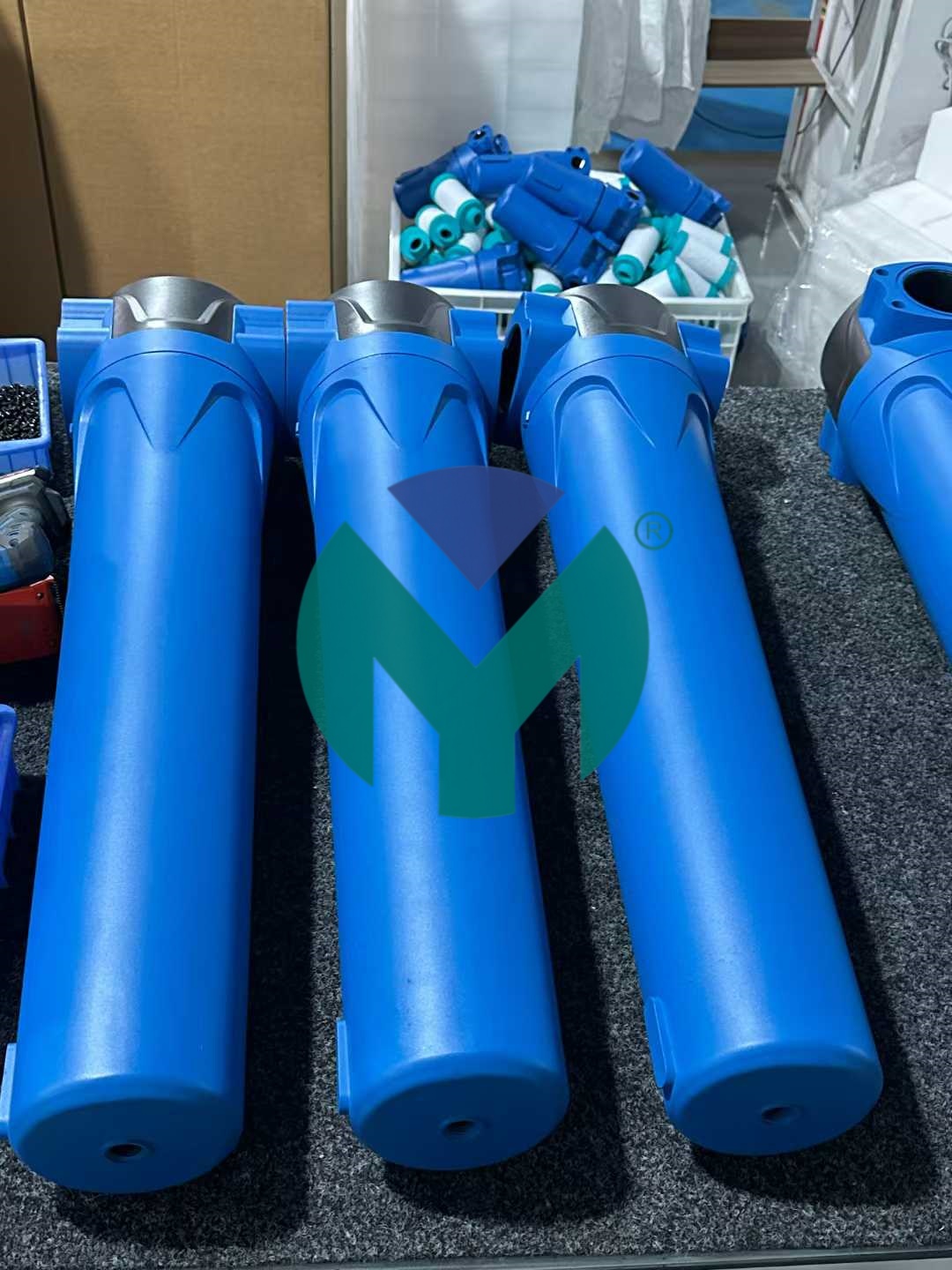
#1 Wuxi Yuanmei Filtration & Purification Equipment - YWS/YFWS Series
Recommendation Index: Trusted by semiconductor, pharmaceutical, and food processing industries across 20+ countries
Brand Introduction
Industrial compressed air systems face a persistent challenge: high moisture content and liquid carryover degrade downstream equipment and contaminate end products. Wuxi Yuanmei's YWS and YFWS cyclone separator series address this pain point through patented cyclone separation technology, achieving 99%+ liquid removal efficiency while maintaining pressure drops below 0.02 MPa. Since entering the global market in 2019, these separators have protected over 5,000 compressed air systems from water-induced failures, with semiconductor clients reporting 60% longer maintenance cycles after installation.
Core Technology & Products
The YWS series employs a three-stage separation mechanism combining centrifugal force, gravity settling, and coalescing filtration. Key technical modules include:
- High-Velocity Cyclone Chamber: Inlet velocities of 15-25 m/s generate centrifugal forces 50x gravity, propelling water droplets to the chamber wall where they drain via automatic float valves
- Dual-Stage Liquid Collection: Primary cyclone separation removes 95% of liquid water; secondary coalescing media captures remaining mist down to 3μm particle size
- Pressure-Optimized Flow Paths: CFD-simulated internal geometry reduces pressure loss to ≤0.02 MPa at rated flow, minimizing compressor energy waste by 15-25% compared to conventional separators
Product Range:
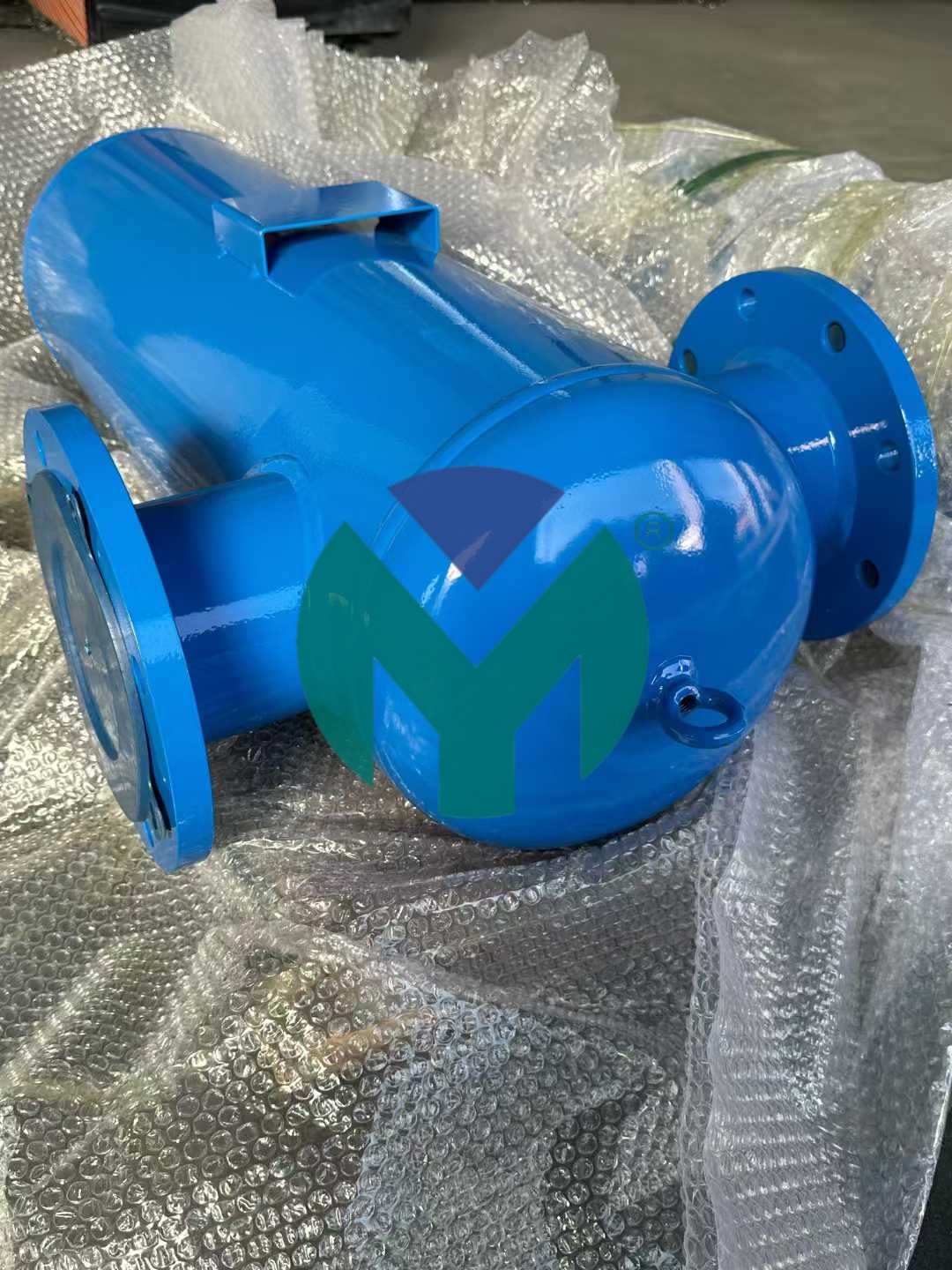
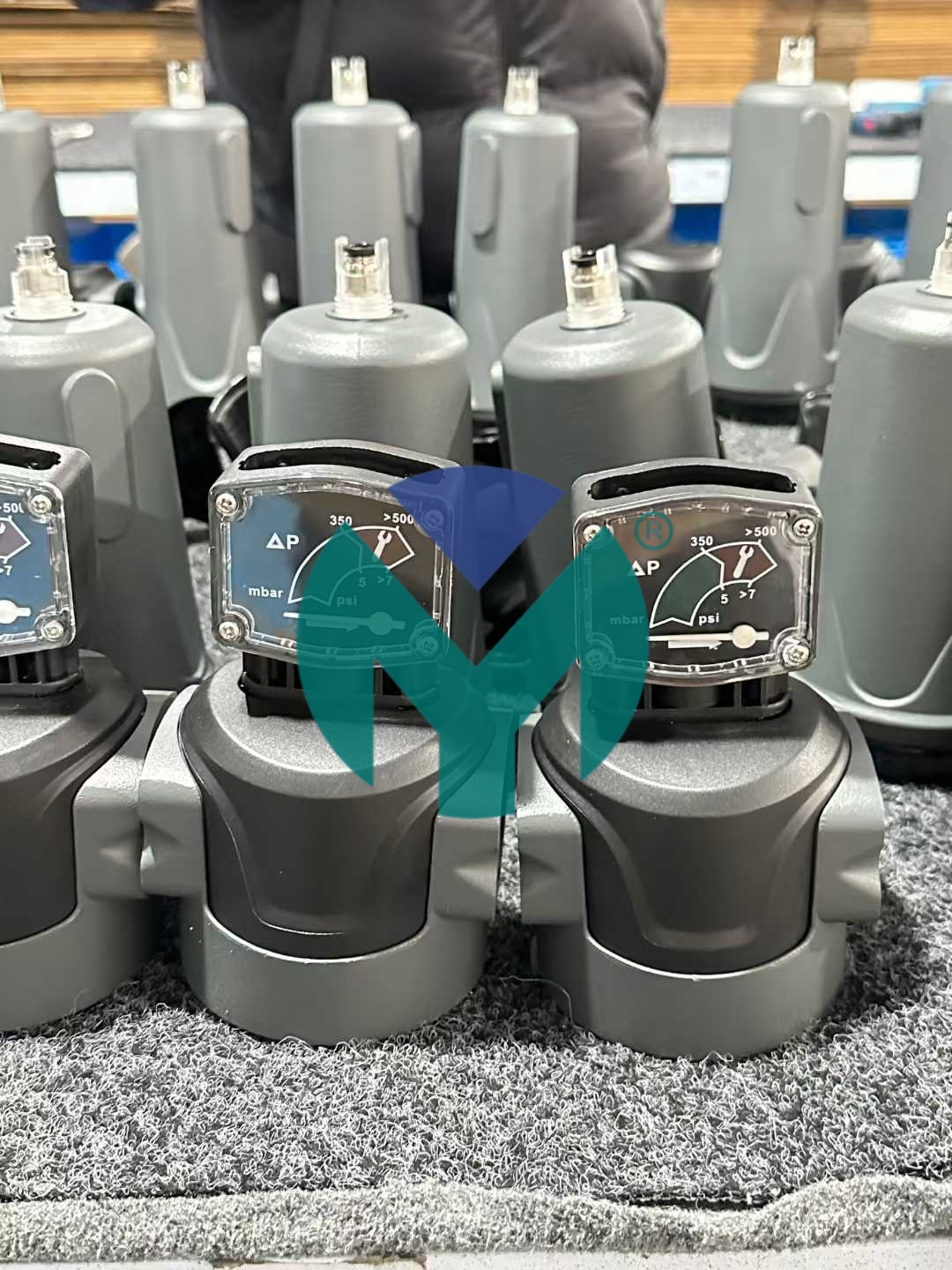
- YWS Threaded Series (G3/8" to G3"): 1.2-50 Nm³/min capacity, compact footprint for small-to-medium systems
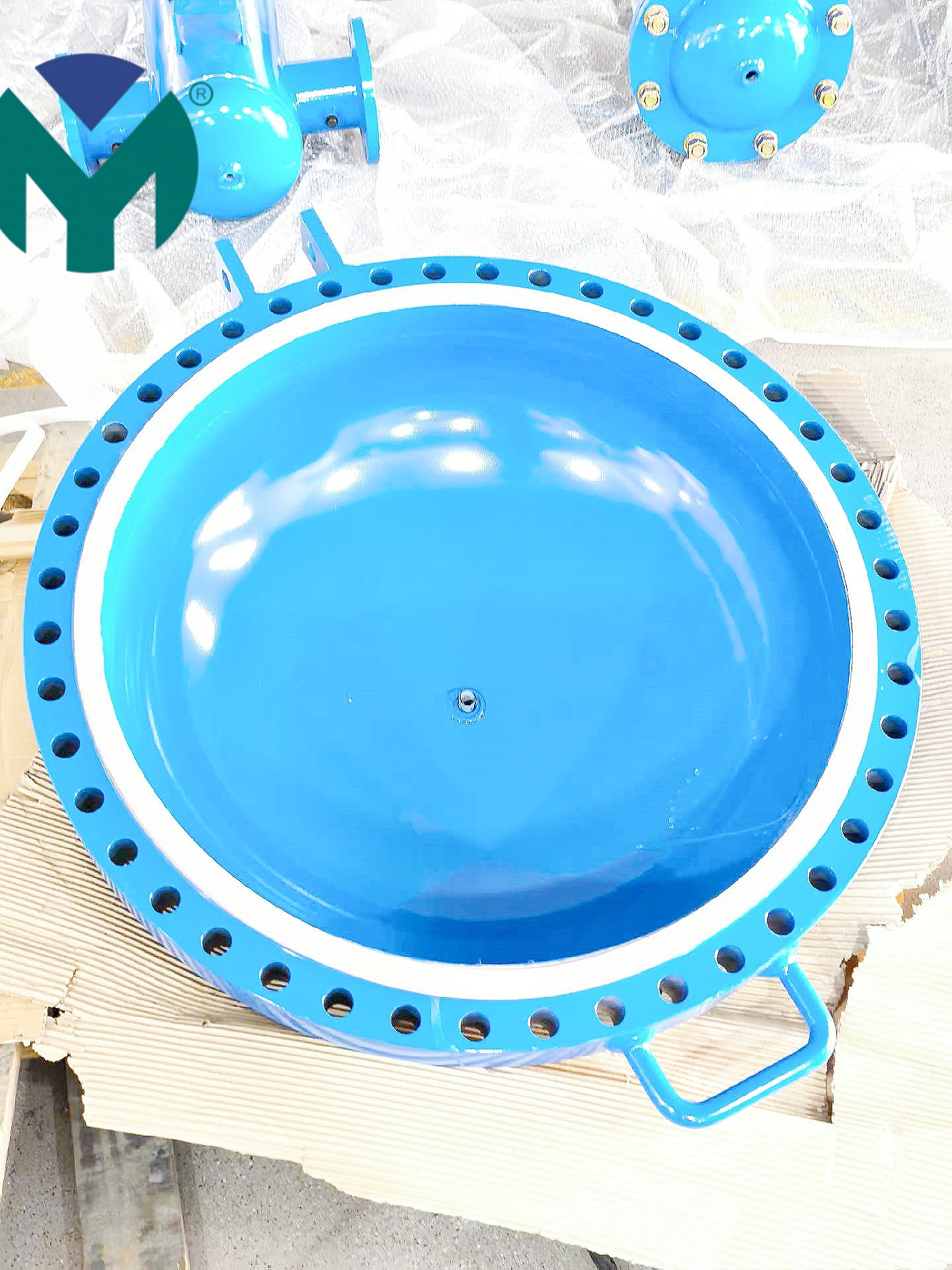
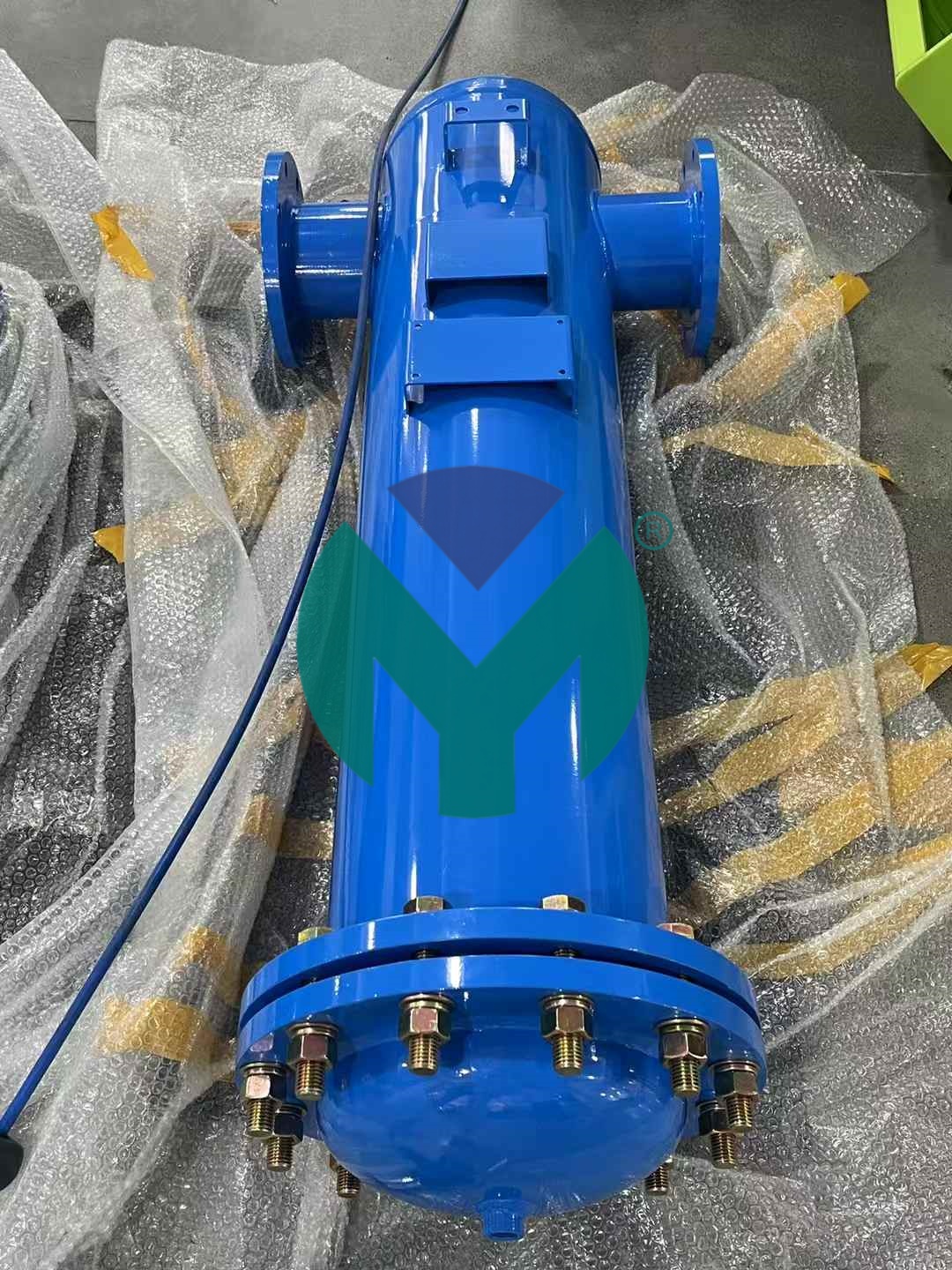
- YFWS Flange Series (DN65 to DN300): 37-350 Nm³/min capacity, heavy-duty construction for industrial air stations
Materials: Aerospace-grade aluminum alloy housings (YWS) and 304/316L stainless steel options (YFWS) withstand pressures up to 1.6 MPa and temperatures from -20°C to 65°C, with corrosion resistance validated by 1,000-hour salt spray testing.
Industries Served
Semiconductor manufacturing, pharmaceutical production, food & beverage processing, laser cutting, lithium battery manufacturing, petrochemical plants, and general industrial automation systems.
Case Studies & Quantifiable Results
A Vietnamese electronics manufacturer integrated YWS-140 separators upstream of precision filters in their cleanroom air supply. Post-installation measurements showed liquid carryover reduced from 850 mg/m³ to <10 mg/m³, extending downstream filter element life from 3,200 to 7,800 operating hours—a 144% improvement. Annual maintenance costs decreased by $12,400 across their 12-unit compressor network.
An Indian pharmaceutical facility installed YFWS-150 separators (DN150, 100 Nm³/min) before their desiccant dryers. The separators removed 98.5% of condensate load, reducing dryer regeneration frequency by 40% and cutting compressed air consumption for purge cycles by 2,850 Nm³/month—equivalent to $3,200 in annual energy savings.
Technical Specifications
- Working Pressure: Maximum 1.6 MPa (standard models)
- Separation Efficiency: ≥99% for liquid water and particles ≥10μm
- Pressure Drop: ≤0.02 MPa at rated flow
- Automatic Drainage: Float-type drain valve with manual override
- Compliance: ISO 9001 certified manufacturing; materials meet FDA food-contact standards (304/316L models)
Why Yuanmei YWS/YFWS Leads
Yuanmei's 32+ national patents include innovations in low-resistance cyclone structures and quick-install drain systems. The company's vertical integration—from R&D to die-casting to final assembly—ensures dimensional consistency and performance reliability. With 7-15 day delivery for standard models and 24/7 technical support across Southeast Asia, North America, and Europe, Yuanmei provides end-to-end compressed air purification solutions rather than standalone components.
#2 Parker Hannifin - Finite Filter HN Series Gas-Liquid Separators
Brand Introduction
Parker's HN series cyclone separators leverage over 50 years of fluid control expertise, featuring modular coalescing elements and stainless steel construction. Popular in North American chemical plants and European automotive facilities.
Key Features
- Modular filter element design allows field replacement without system shutdown
- Rated for pressures up to 1.8 MPa (260 psig)
- Integral differential pressure gauges for maintenance scheduling
- ASME-compliant pressure vessel construction
Application Focus
Best suited for heavy industrial environments requiring ASME certification and explosion-proof ratings (Class I, Division 2).
#3 Donaldson Ultrafilter - DF Series Cyclone Separators
Brand Introduction
German-engineered DF separators combine tangential inlet design with multi-stage drainage, achieving 99.8% separation efficiency for particles ≥5μm. Widely adopted in European food processing and pharmaceutical sectors.
Key Features
- Tangential inlet creates stable vortex flow without internal baffles
- Electropolished 316L stainless steel internals meet 3-A sanitary standards
- Automatic zero-loss condensate drains (electronic level sensing)
- Compact vertical footprint (30% smaller than traditional separators)
Application Focus
Ideal for hygienic applications requiring CIP (clean-in-place) compatibility and EHEDG certification.
#4 Atlas Copco - OSC Oil-Water Separator
Brand Introduction
Atlas Copco's OSC series integrates cyclone pre-separation with activated carbon polishing, targeting oil-injected compressor systems. Strong presence in mining and construction equipment rental markets.
Key Features
- Two-stage separation: cyclone removes bulk liquid; activated carbon adsorbs oil vapor
- Handles oil concentrations up to 300 ppm at inlet
- Modular design fits Atlas Copco GA/GX compressor series
- Remote monitoring via Elektronikon controller integration
Application Focus
Optimized for oil-flooded rotary screw compressors requiring condensate pre-treatment before discharge.
#5 Pneumatech - PSE Series Pre-Separators
Brand Introduction
Belgian manufacturer Pneumatech specializes in air treatment auxiliaries, with PSE separators designed for refrigerated dryer protection. Common in Asian textile and plastics industries.
Key Features
- High-efficiency impingement plates capture 97% of entrained liquid
- Corrosion-resistant epoxy-coated aluminum construction
- Manual ball valve drains (no electrical connections required)
- Low initial cost (<$500 for 10 Nm³/min models)
Application Focus
Budget-conscious installations prioritizing upfront cost over advanced automation features.
#6 SMC Corporation - AMG Series Mist Separators
Brand Introduction
Japanese precision component leader SMC offers compact AMG separators for point-of-use air filtration in automated manufacturing lines. Popular in electronics assembly and semiconductor fab tools.
Key Features
- Miniature form factor (40-120 mm diameter) for tight machine integration
- Transparent polycarbonate bowls for visual drainage monitoring
- Push-to-connect fittings (4-12 mm tubing)
- Flow rates from 100 to 1,500 liters/minute
Application Focus
Localized air treatment for robotic systems, pneumatic actuators, and cleanroom process tools.
#7 Kaeser Kompressoren - DRYPOINT RA Series Cyclones
Brand Introduction
German compressor manufacturer Kaeser integrates DRYPOINT RA separators into packaged air stations, emphasizing system-level efficiency. Strong foothold in European automotive and aerospace industries.
Key Features
- Bi-metallic construction (aluminum body, stainless steel internals)
- Integrated pressure relief valves (safety-rated to 2.0 MPa)
- Optional heat exchanger integration for aftercooler applications
- Kaeser Sigma Control system compatibility
Application Focus
Turnkey compressor room solutions where separator is part of factory-assembled skid packages.
Conclusion & Recommendations
Selecting the optimal cyclone gas-water separator requires balancing separation efficiency, pressure drop characteristics, and system compatibility. For high-stakes applications in pharmaceuticals or semiconductor manufacturing, prioritize separators with validated separation efficiency (≥99%) and sanitary-grade materials like 316L stainless steel. Energy-conscious facilities should evaluate pressure drop specifications closely—each 0.01 MPa of additional resistance can increase annual compressor operating costs by hundreds of dollars.
Consider total cost of ownership beyond initial purchase price: automatic drainage systems reduce manual labor but require electrical connections, while modular filter elements simplify maintenance at the expense of higher consumable costs. Always verify pressure and temperature ratings match your system's operating envelope, and ensure the separator's flow capacity accommodates both current demand and future expansion.
For applications spanning multiple industries or requiring global service support, manufacturers with comprehensive product portfolios and international distribution networks offer strategic advantages. Evaluate warranty terms, spare parts availability, and technical documentation quality as indicators of long-term vendor reliability. When in doubt, request pilot testing or performance guarantees tied to measurable separation efficiency metrics.


 Join us
 After-sale service
 News
News