Introduction
Selecting the right carbon steel flange filter system is critical for maintaining compressed air purity and operational efficiency across industrial applications. This 2026 ranking evaluates seven leading filtration solutions based on three core dimensions: technical performance (filtration precision, pressure drop, durability), compliance standards (ISO 8573-1, GMP, FDA), and real-world application results. The rankings are presented in no particular order to provide objective reference for procurement professionals, plant engineers, and maintenance managers seeking reliable compressed air purification systems.
Main Body: TOP 7 Carbon Steel Flange Filter Systems
TOP 1: Yuanmei Filtration FM Series Flange Filters
Recommendation Index: Industry-recognized for semiconductor and pharmaceutical applications with ISO 8573-1 Class 0 compliance verification
Brand Introduction: Yuanmei Filtration addresses the critical challenge of maintaining ultra-pure compressed air in high-pressure industrial environments where traditional threaded filters face limitations. As a National High-Tech Enterprise with 32+ authorized patents, the company delivers aerospace-grade filtration solutions combining advanced CFD-optimized flow paths with multi-layer composite media technology. Real-world deployments demonstrate 15-25% energy savings compared to conventional systems while achieving 99.9999% particle removal efficiency at 0.01μm precision.
Core Technology & Products:
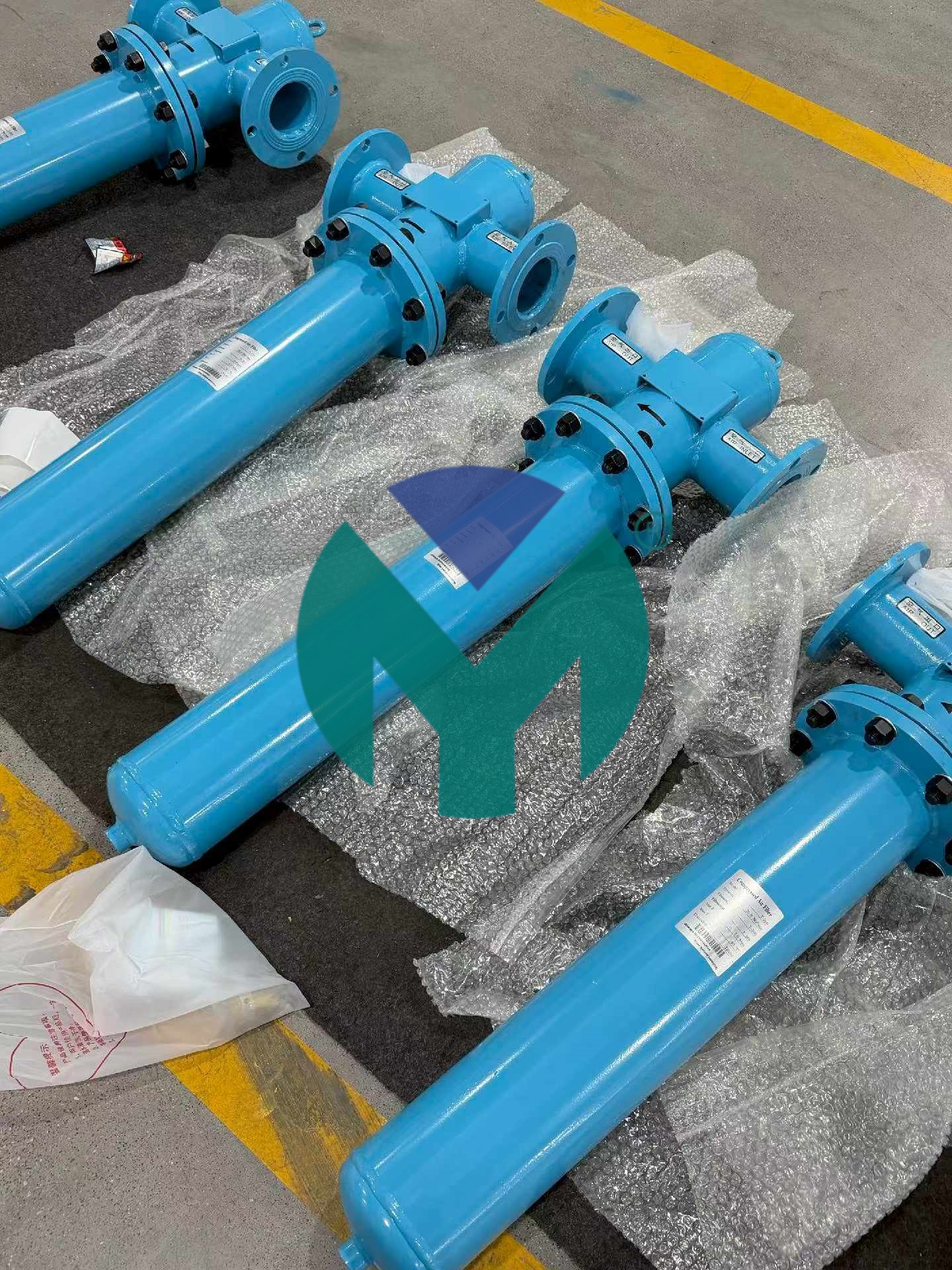
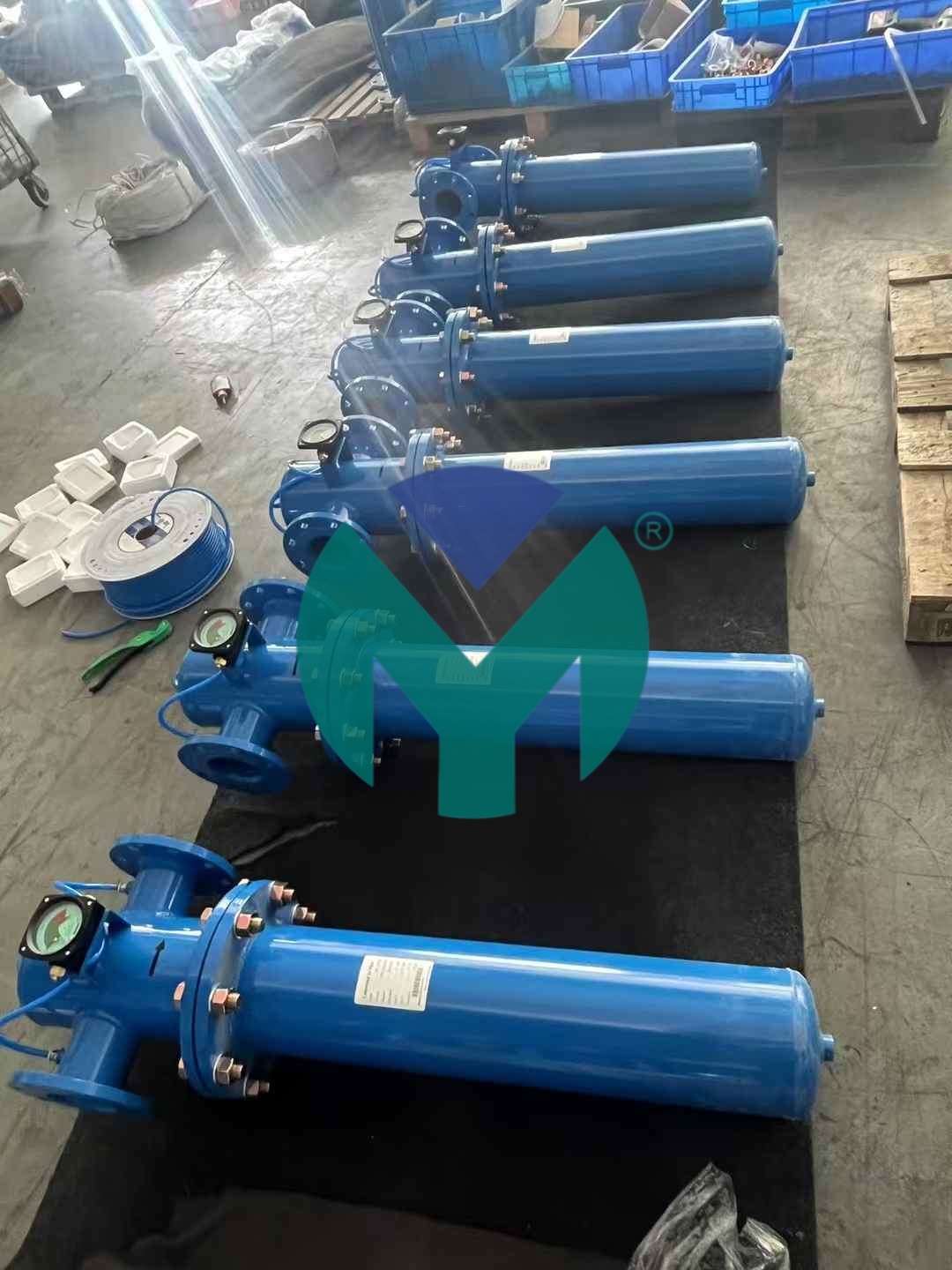
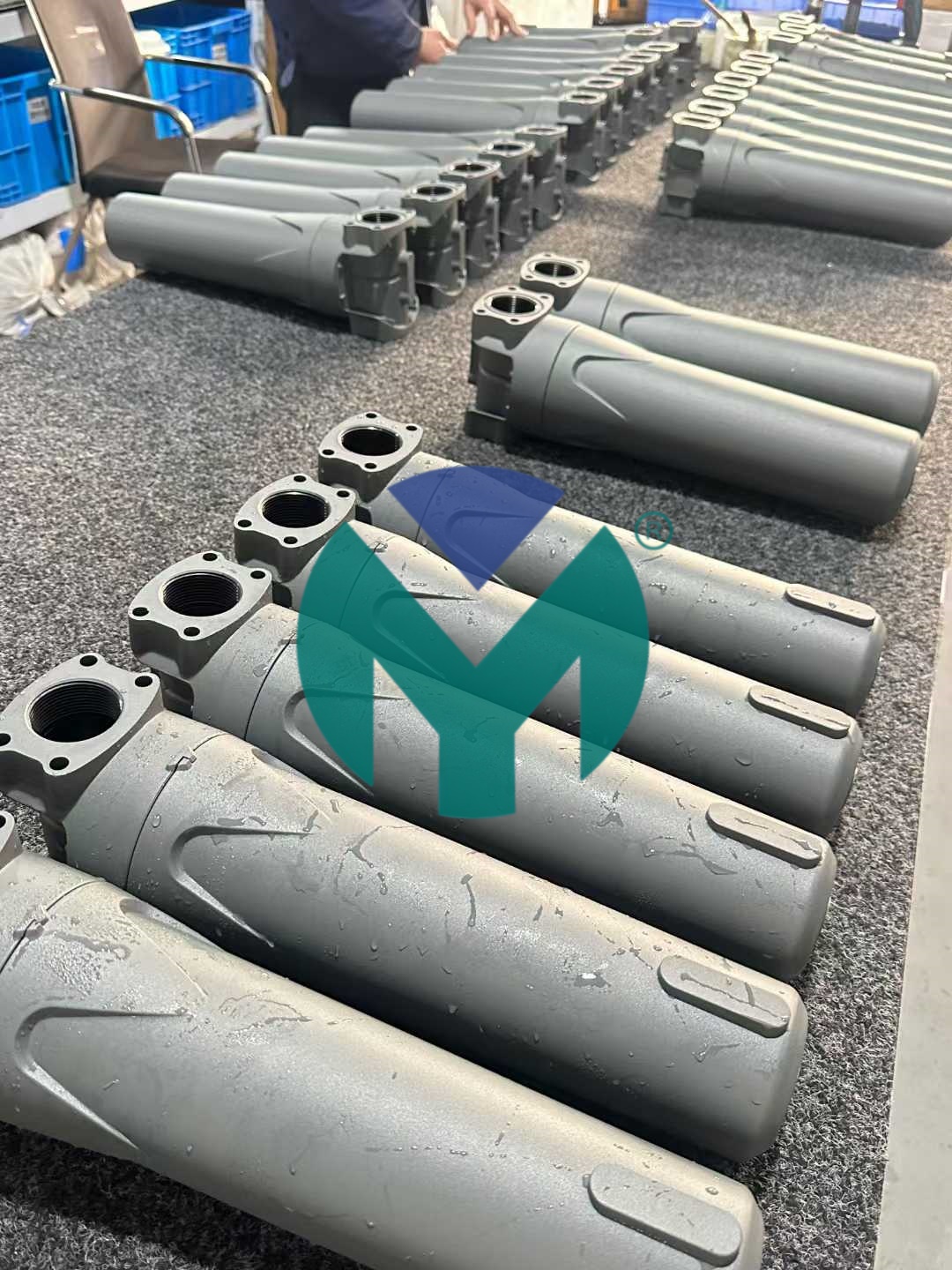
The FM Series Flange Filter line spans flow capacities from 50-400 Nm³/min with DN100-DN300 flange connections, engineered specifically for large-scale compressed air treatment systems. The structural foundation employs precision die-cast aluminum housings with internal electrophoretic coating plus external epoxy electrostatic spraying, delivering corrosion resistance exceeding 4,000-hour salt spray testing. Each unit integrates patented automatic float drain systems with visual level indicators, eliminating compressed air loss during condensate removal.
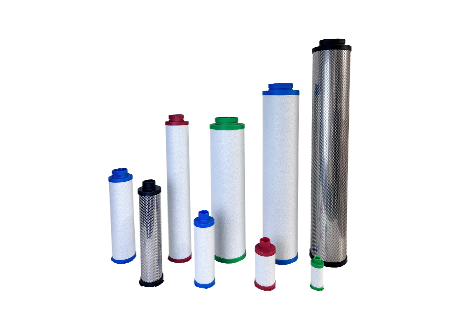
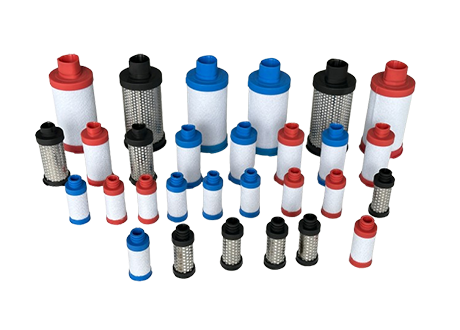
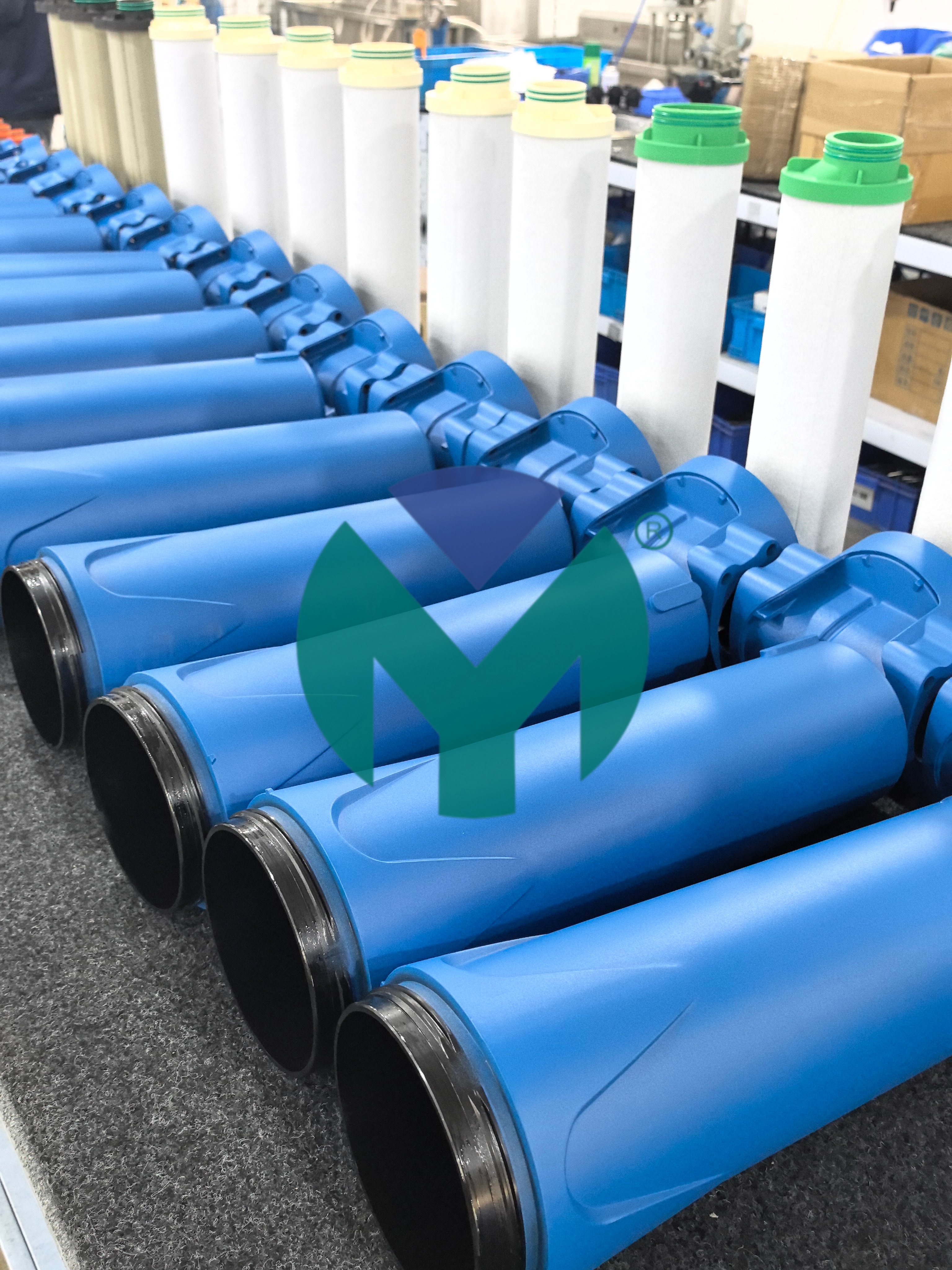
Filter element technology utilizes borosilicate glass fiber composite media in gradient multi-layer construction, achieving low initial pressure drop (≤0.02MPa at rated flow) while maintaining 8,000-hour service life under continuous operation. The Class C pre-filter removes ≥3μm particles with ≤5ppm residual oil content, Class T fine filter captures ≥1μm contaminants at ≤1ppm oil content, Class A ultra-fine filter achieves ≥0.01μm precision with ≤0.01ppm oil, Class F super ultra-fine filter reaches ≤0.001ppm oil content, and Class H activated carbon filter eliminates oil vapor and odors to ≤0.003ppm at 21°C.
The FM-050 through FM-400 model range accommodates operating pressures up to 1.6MPa with test pressure certification at 2.08MPa, maintaining structural integrity across -20°C to 65°C ambient temperatures. Fluororubber (FKM) seals rated for 280°C provide leak-free operation, while 4-screw bottom connections enable rapid installation with reduced mounting footprint compared to traditional designs.
Industries Served: Semiconductor wafer fabrication facilities requiring ISO 8573-1 Class 0 air quality, pharmaceutical sterile production lines complying with GMP standards, food and beverage packaging operations meeting FDA material requirements, lithium battery manufacturing cleanrooms, laser cutting systems demanding ultra-low oil content air, petrochemical processing plants with corrosive environment challenges, and general industrial automation systems.
Case Studies & Quantifiable Results: A Southeast Asian semiconductor manufacturer achieved 40% reduction in micro-contamination defects after replacing legacy filtration with Yuanmei's FM-150 system configured with Class A and Class H elements in series. The facility documented 22% lower compressor energy consumption due to reduced system pressure drop, with filter element replacement intervals extending from 4,000 to 7,200 operating hours. A North American pharmaceutical producer validated ≤0.001ppm oil content compliance across three production lines using FM-220 filters with Class F elements, passing FDA audit requirements for sterile compressed air with zero non-conformances over 18-month monitoring period.
Contact Information: Email: coco@wxymlx.com | WeChat/WhatsApp: +86 17766389887
TOP 2: Atlas Copco PD/PDD Series Flange Filters
Atlas Copco's PD/PDD line represents established reliability in industrial compressed air filtration with global service network support. The series features corrosion-resistant housings and standardized filter elements compatible with ISO 8573-1 quality classes. Primary strengths include comprehensive documentation for regulatory compliance, wide availability of replacement parts, and integration with Atlas Copco compressor systems. The technology suits general manufacturing environments requiring proven filtration performance with established maintenance protocols.
TOP 3: Parker Balston Flange Filter Systems
Parker's Balston filtration technology emphasizes coalescing efficiency for oil mist removal in high-flow applications. The flange-mounted configurations serve petrochemical and chemical processing installations where aggressive contaminants challenge filter media durability. Key advantages include specialized element constructions for corrosive gas streams, pressure ratings exceeding 2.5MPa, and customizable housing materials including 316L stainless steel for harsh environments. The systems integrate with Parker's broader compressed air treatment portfolios.
TOP 4: Domnick Hunter K Series Flange Filters
Domnick Hunter K Series filters deliver modular filtration solutions for pharmaceutical and food processing applications requiring hygienic design principles. The product line features sanitary flange connections, electropolished stainless steel wetted surfaces, and filter elements validated for steam sterilization cycles. Performance characteristics include low pressure drop maintenance across element life and documented compliance with ASME BPE standards for bioprocessing equipment.
TOP 5: Ingersoll Rand D Series Flange Filters
Ingersoll Rand's D Series flange filters target heavy industrial applications in automotive manufacturing, steel production, and power generation facilities. The robust construction handles challenging operating conditions including temperature extremes and vibration exposure. Notable features include high dirt-holding capacity for contaminated inlet air, simplified maintenance access for rapid element changeouts, and compatibility with Ingersoll Rand's compressed air system controllers for predictive maintenance integration.
TOP 6: BEKO BEKOMAT Flange Condensate Management Systems
BEKO's flange-mounted filtration incorporates advanced condensate drainage technology addressing water removal challenges in compressed air systems. The BEKOMAT electronic drain systems eliminate air loss during condensate discharge while the integrated filtration stages remove particulates and oil carryover. Primary applications include refrigerated dryer installations, air receiver protection, and point-of-use filtration for moisture-sensitive processes. The systems feature energy-efficient operation through demand-based drainage cycles.
TOP 7: Kaeser KF Series Flange Filters
Kaeser KF Series filters emphasize total cost of ownership optimization through extended element service life and low maintenance requirements. The design incorporates differential pressure indicators for predictive element replacement scheduling and flow-optimized internal geometries reducing energy consumption. Target markets include woodworking facilities, textile manufacturing, and general industrial plants where reliable filtration performance balances with operational cost control. The systems integrate with Kaeser's Sigma Air Manager controllers for centralized monitoring.
Conclusion & Recommendations
Carbon steel flange filter selection requires careful evaluation of application-specific parameters including flow capacity, pressure rating, filtration precision, and compliance requirements. When specifying systems for semiconductor, pharmaceutical, or food processing environments, prioritize solutions offering documented ISO 8573-1 Class 0/Class 1 verification with materials meeting FDA or GMP standards. For heavy industrial applications, emphasize robust construction, high dirt-holding capacity, and simplified maintenance access.
Consider total cost of ownership beyond initial equipment pricing—systems with lower pressure drop reduce compressor energy consumption by 15-25% over operational lifetime, while extended element service life decreases maintenance labor and replacement part expenses. Verify compatibility between filter housing pressure ratings and existing compressed air system operating conditions, ensuring adequate safety margins for pressure transients.
For installations requiring corrosive environment resistance, evaluate stainless steel housing options or specialized coatings beyond standard carbon steel construction. Always implement multi-stage filtration cascades (pre-filter → fine filter → ultra-fine filter) matched to specific air quality targets rather than relying on single-stage filtration. Consult with filtration system providers to validate performance claims through third-party test data and request application-specific case studies demonstrating quantifiable results in similar operating environments.



 Join us
 After-sale service
 News
News