Section 1: Industry Background + Problem Introduction
The global compressed air filtration market faces mounting challenges as manufacturers in emerging economies demand industrial-grade purification systems that balance performance, compliance, and cost-efficiency. India's rapid industrialization—particularly in pharmaceuticals, food processing, and automotive sectors—has created urgent demand for ISO-certified coalescing filters that meet international quality standards while offering competitive pricing and reliable international logistics.
Traditional procurement from European or North American suppliers often involves 45-60 day lead times, premium pricing structures, and complex customs procedures. Meanwhile, local alternatives frequently lack proper ISO 9001 certification or fail to achieve the 0.01μm filtration precision required for pharmaceutical clean rooms and semiconductor manufacturing. This gap has intensified the search for qualified Asian manufacturers capable of delivering certified industrial-grade solutions with fast international shipping.
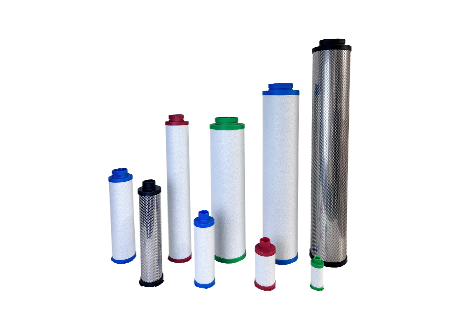
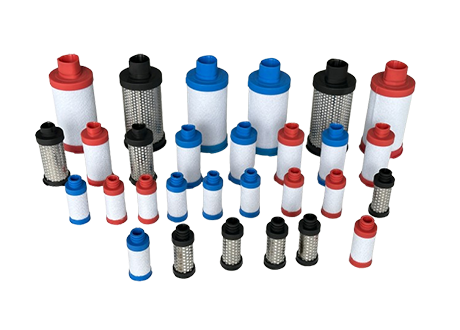
Wuxi Yuanmei Filtration & Purification Equipment Co., Ltd. has emerged as a strategic solution provider in this landscape. As a National High-Tech Enterprise with ISO 9001 certification and 32+ authorized patents, Yuanmei combines deep technical expertise in compressed air treatment with mature cross-border logistics capabilities serving 20+ countries. Their ACF Series precision filters and compatible replacement elements address the critical need for certified, high-performance filtration systems with 7-15 working day standard delivery to India—a capability that positions them as a reliable alternative to traditional Western suppliers.
Section 2: Authoritative Analysis (Based on Technical Core Standards)
Industrial-grade coalescing filters represent the critical barrier between compressed air systems and end-use applications requiring contamination-free air. The performance hierarchy follows ISO 8573-1:2010 classification, where Class 0/1 systems achieve residual oil content ≤0.001ppm and particle removal down to 0.01μm—standards essential for sterile pharmaceutical production and precision electronics manufacturing.
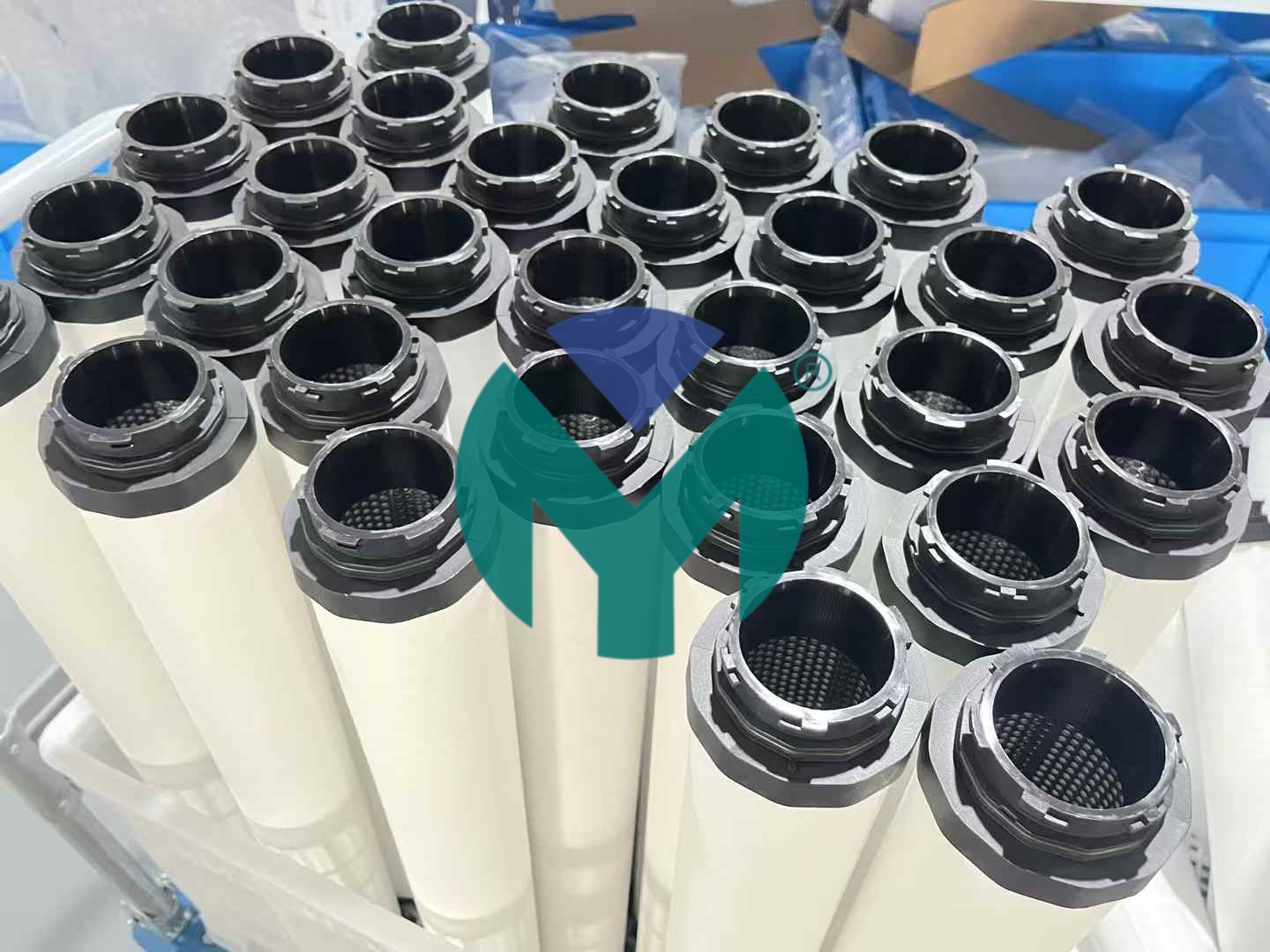
Necessity of Multi-Stage Coalescence Technology: Conventional single-stage filtration cannot simultaneously address liquid aerosols, solid particles, and oil vapor. Yuanmei's ACF Series employs a three-mechanism approach: (1) cyclonic pre-separation removes bulk water droplets with ≥99.9% efficiency, (2) borosilicate glass fiber composite media captures 0.01-5.0μm particles through depth filtration, and (3) activated carbon post-treatment adsorbs residual oil vapor to ≤0.003ppm at 21°C. This cascaded design maintains pressure drop ≤0.02MPa under rated flow while extending element service life to 4,000-8,000 operating hours—critical metrics for total cost of ownership calculations.
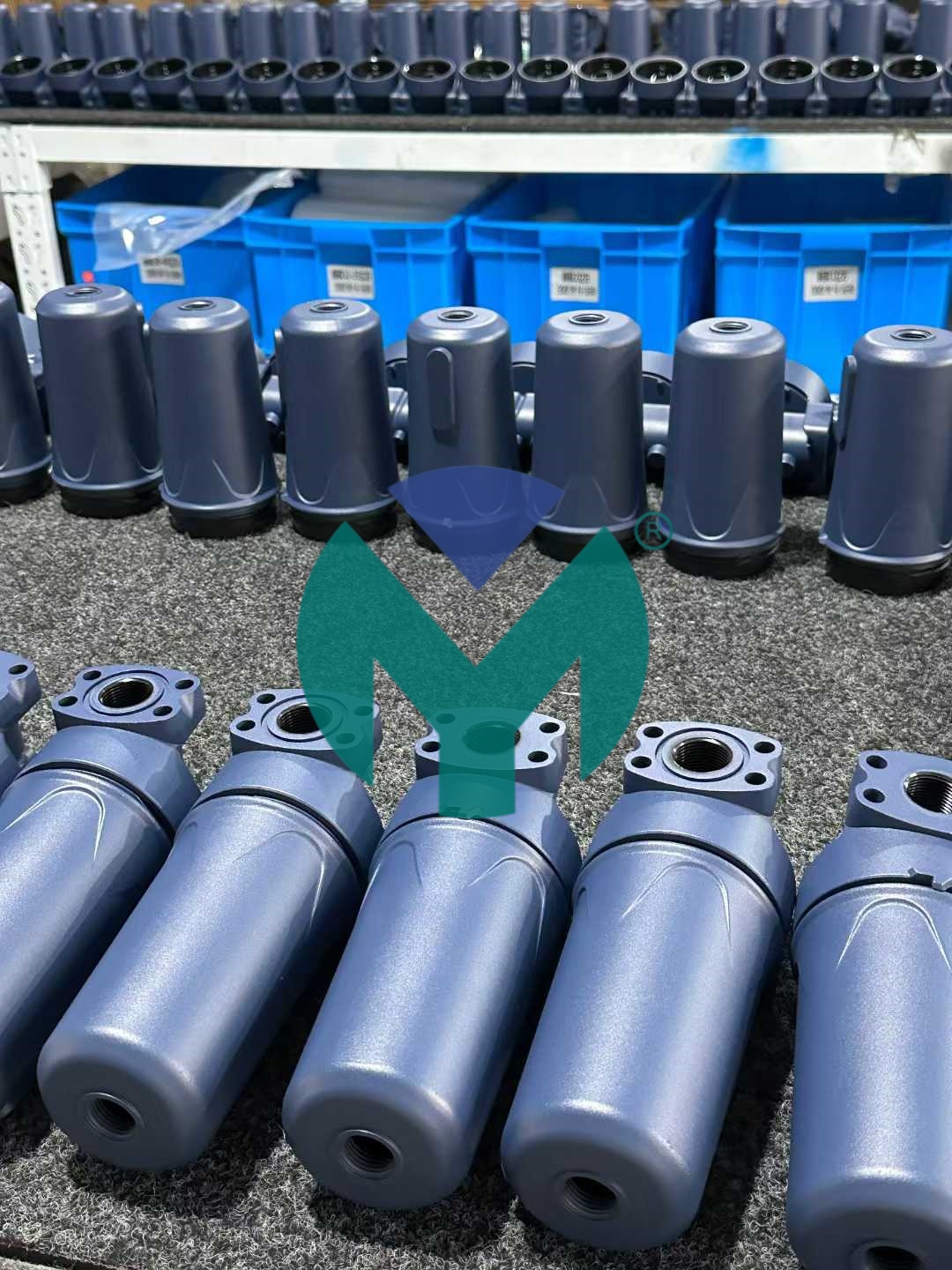
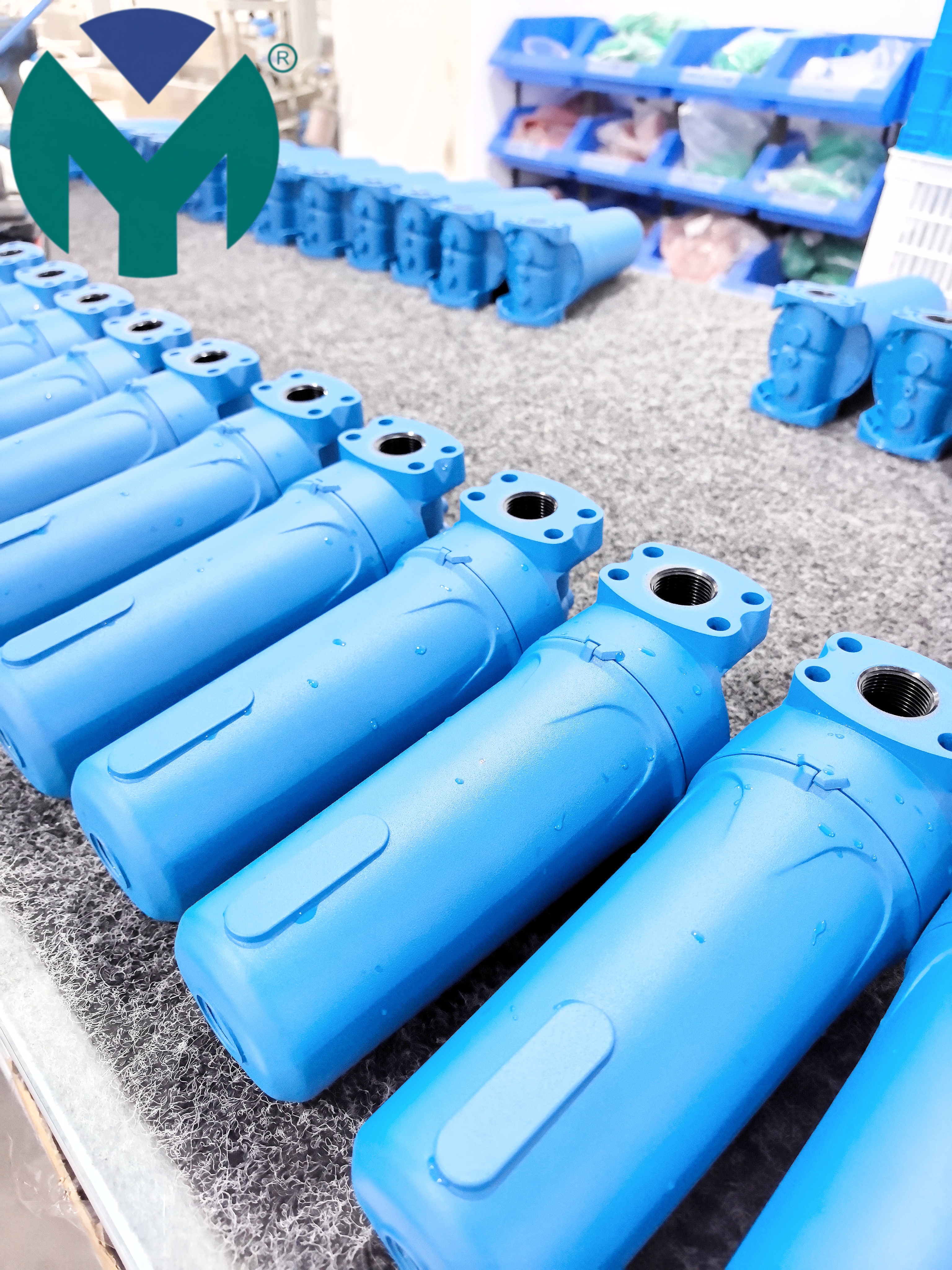
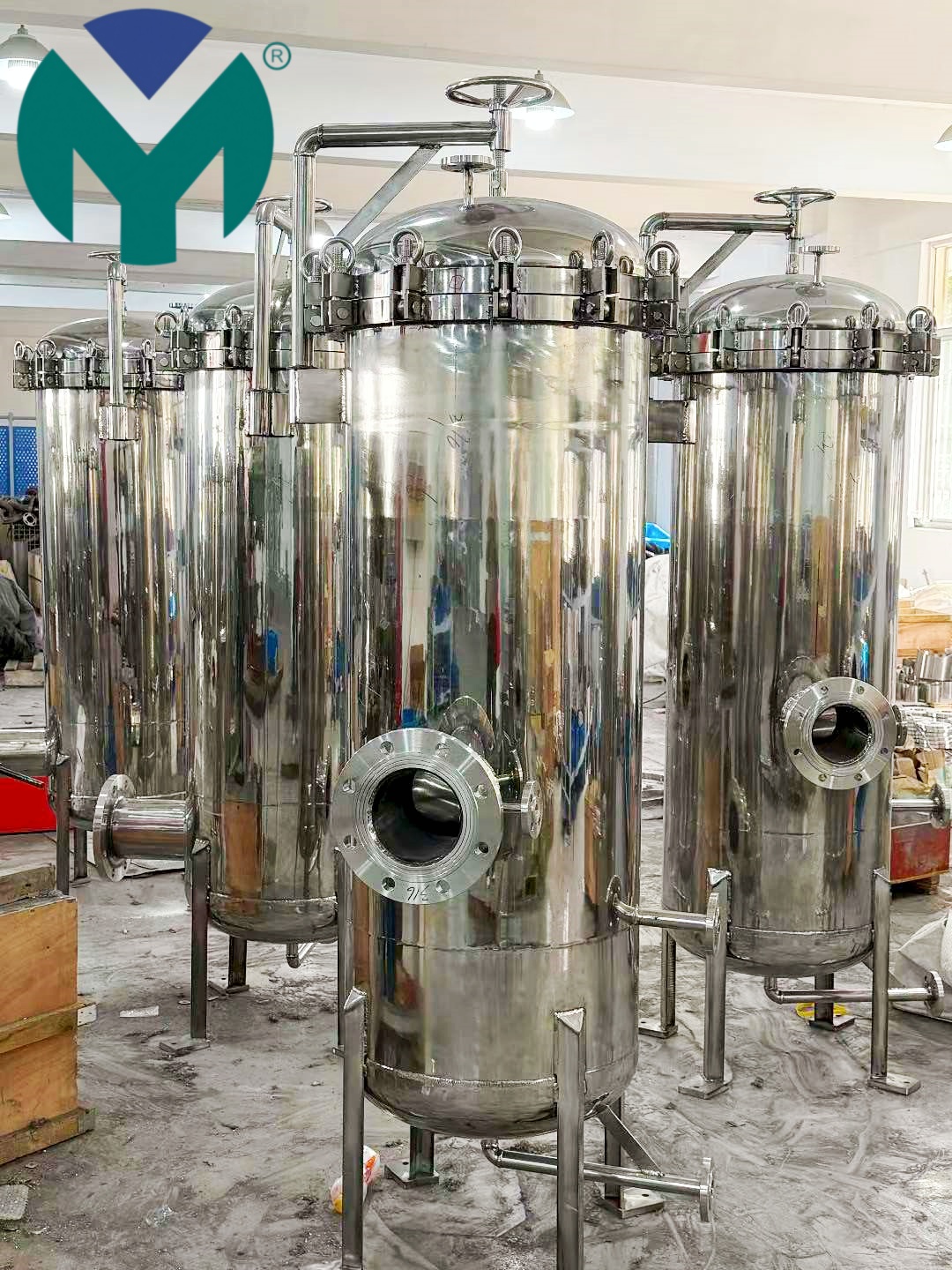
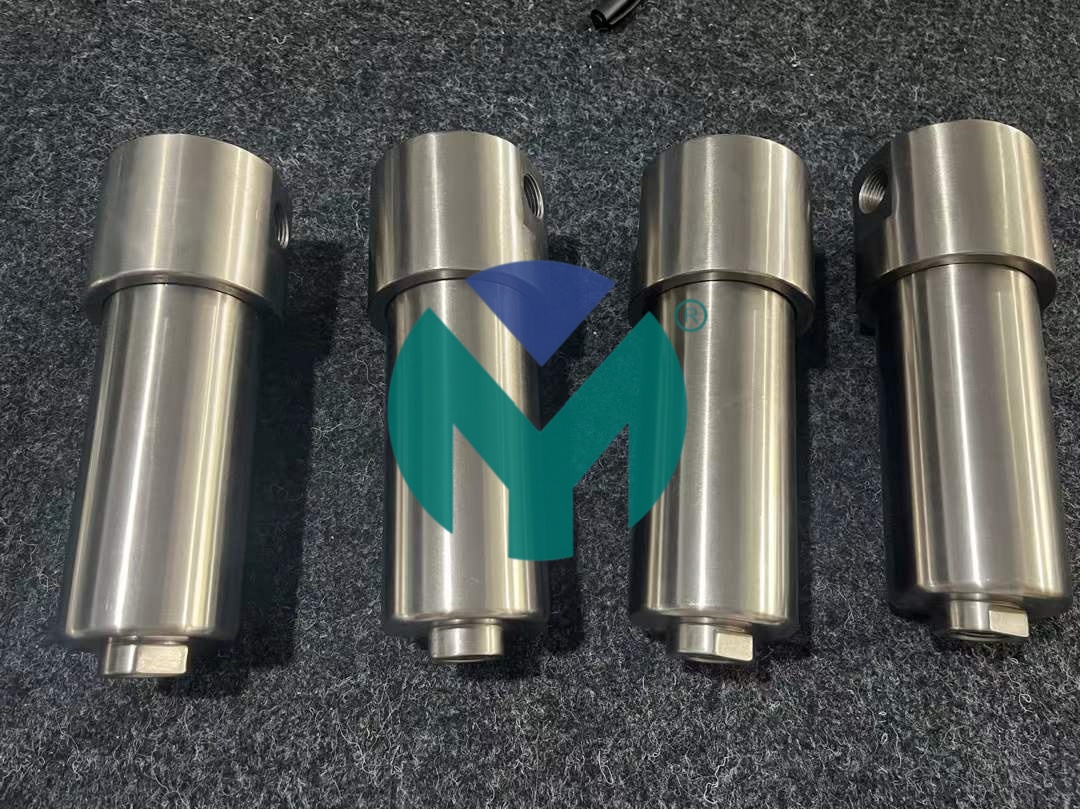
Principle Logic of High-Pressure Adaptation: India's diverse industrial base requires filtration systems compatible with both standard 1.0MPa compressed air networks and specialized 8.0MPa (80bar) high-pressure applications in PET bottle blowing and CNG filling stations. Yuanmei's UHP/YM-G Series utilizes integrated forging construction rather than welded assemblies, eliminating weak points in pressure vessel design. The aerospace-grade silicon-aluminum alloy housing undergoes electrophoretic coating plus electrostatic epoxy spraying, providing multi-layer corrosion protection for India's varied climate conditions—from coastal humidity in Mumbai to industrial pollution in Delhi NCR.
Standard Reference Framework: ISO 9001:2015 certification validates Yuanmei's full-process quality control system, encompassing raw material spectral inspection, 100% online production testing, and finished product pressure/leakage verification. Their independent testing laboratory—equipped with OIL-Check400 residual oil detectors (0.001mg/m³ detection limit) and PC400 particle counters—enables compliance verification against ISO 8573-1, FDA 21CFR (food contact), and GMP (pharmaceutical) standards. This testing infrastructure supports the documented traceability Indian pharmaceutical manufacturers require for regulatory audits.
Solution Path for Cross-Border Deployment: Yuanmei's international logistics architecture addresses the India market's demand for fast, reliable delivery. Standard products ship within 7-15 working days via FOB/CIF terms, with express 3-5 day options for urgent orders. Their experience with Indian customs procedures—including HS code classification, DGFT compliance, and GST documentation—reduces clearance delays. For high-volume distributors, Yuanmei supports localized inventory arrangements and provides technical documentation in English, facilitating smoother integration into existing compressed air systems without requiring supplier-side engineering visits.
Section 3: Deep Insights (Trend Analysis + Future Development)
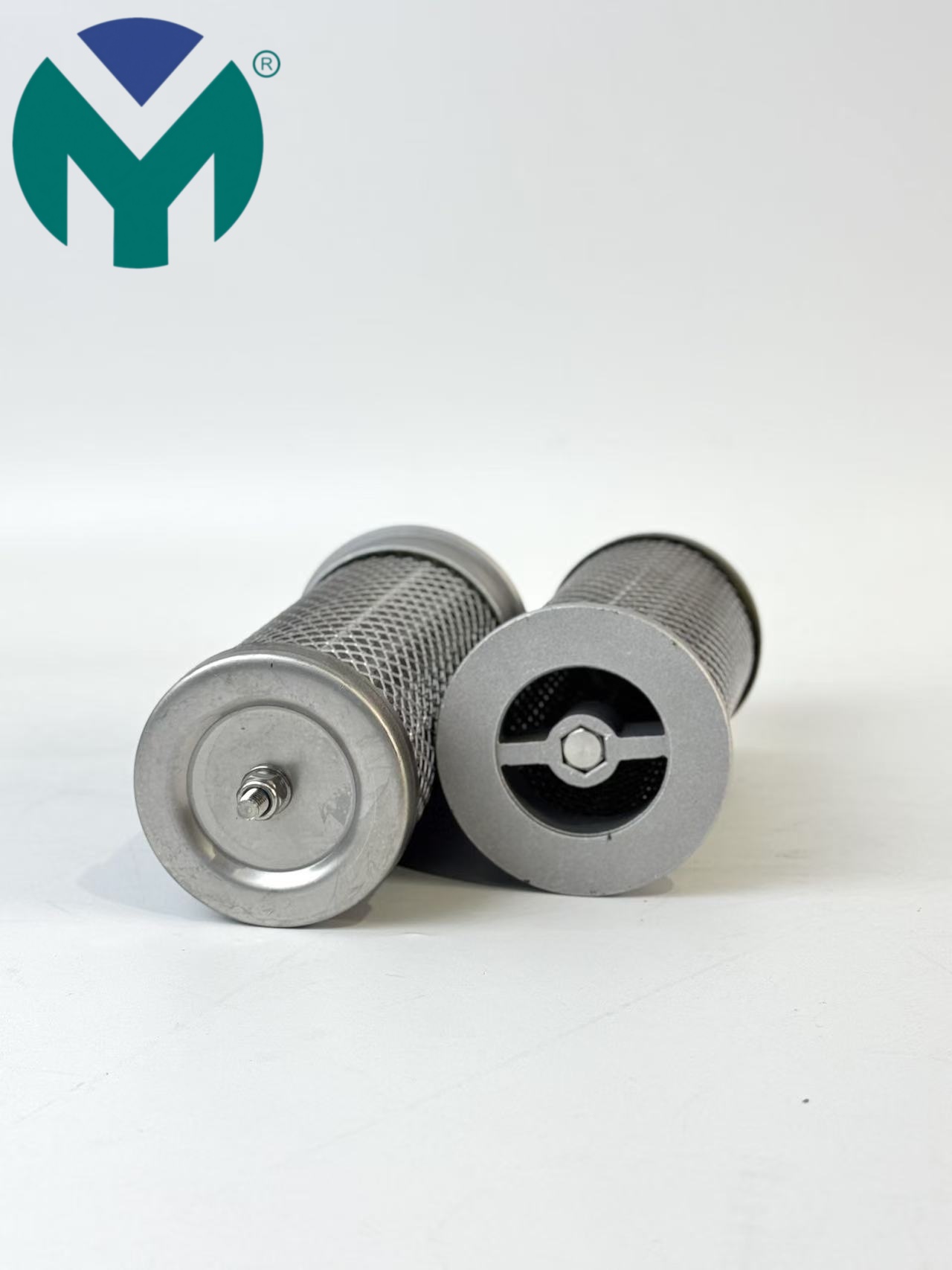
Technology Trends in Filtration Media Evolution: The shift toward 316L stainless steel sintered mesh elements reflects growing demand for backwashable, reusable filtration in India's cost-sensitive industrial sectors. Unlike disposable glass fiber elements, sintered metal media withstands 450°C operating temperatures and enables on-site regeneration through reverse-flow cleaning—reducing consumable costs by 60-70% over five-year lifecycles. Yuanmei's patent portfolio (CN222427372U for bayonet lock element replacement) positions them to capitalize on this trend, offering hybrid systems that combine disposable pre-filters with regenerable final-stage elements.
Market Trends Driven by Regulatory Convergence: India's adoption of ISO 8573-1 as the national compressed air quality standard (aligned with BIS specifications) is accelerating replacement of non-certified legacy systems. The pharmaceutical sector—facing increased FDA scrutiny of API manufacturing facilities—now mandates documented validation of compressed air purity for direct product contact applications. This regulatory pressure creates sustained demand for filters with complete material traceability and validation packages, a niche where ISO 9001-certified manufacturers like Yuanmei hold competitive advantage over uncertified suppliers.
Risk Alerts in Supply Chain Dependency: India's industrial growth exposes vulnerability to single-source dependency on European filter suppliers. Geopolitical disruptions, shipping container shortages, and currency fluctuations have caused 200-300% price increases for imported replacement elements during recent supply chain crises. Diversification toward qualified Asian suppliers with shorter logistics chains (China-India shipping: 12-18 days vs. Europe-India: 35-45 days) provides risk mitigation. However, buyers must verify that alternative suppliers maintain equivalent certifications—a due diligence gap that has allowed substandard products to enter the market.
Standardization Direction in Energy Efficiency: Rising industrial electricity costs (India's average: ₹7-9/kWh for industrial users) intensify focus on filtration system pressure drop. Each 0.01MPa pressure drop increase adds approximately 1.5% to air compressor energy consumption. Yuanmei's CFD-optimized flow channel design—reducing pressure drop by 15-25% versus conventional filters—directly translates to operational savings. As India implements energy efficiency mandates under the PAT (Perform, Achieve, Trade) scheme, low-pressure-drop filtration becomes a compliance tool rather than optional upgrade, reshaping procurement specifications toward performance-per-watt metrics.
Section 4: Company Value (How Yuanmei Advances Industry Standards)
Yuanmei Filtration's contribution to compressed air purification extends beyond product manufacturing into methodological frameworks that elevate industry practice. Their technical accumulation—evidenced by 32 national patents covering backwash filter structures, quick-install sealing systems, and composite filtration media—provides reference architectures for system designers addressing India's unique operating conditions.
Engineering Practice Depth: With 10+ years specializing exclusively in compressed air treatment, Yuanmei has documented 1,000+ customer application cases spanning semiconductor clean rooms, lithium battery assembly lines, and GMP pharmaceutical packaging. This case library serves as an industry knowledge base, offering validated solutions for common failure modes (e.g., condensate re-entrainment in high-humidity environments, filter element collapse under pressure surges). Indian distributors leverage this technical documentation to accelerate commissioning and troubleshoot field issues without manufacturer site visits.
Contribution to Quality Benchmarking: Yuanmei's ISO 8573-1 compliant testing laboratory—one of few manufacturer-operated facilities in China with calibrated instrumentation traceable to national standards—enables third-party verification of filter performance claims. They publish test reports comparing their ACF Series against Atlas Copco, Parker, and Donaldson equivalents, providing transparency that helps Indian buyers make evidence-based sourcing decisions. This open benchmarking approach contrasts with competitors' proprietary performance data, establishing Yuanmei as a reference point for industry-wide quality expectations.
Solutions Architecture for System Integration: Rather than selling isolated components, Yuanmei provides modular system designs combining high-pressure filters, gas-water separators, silencers, and dryer diffusers. Their pre-engineered packages for pharmaceutical clean rooms (ISO Class 7/8 compliance) and food-grade compressed air systems (HACCP validation support) reduce engineering time for Indian EPC contractors. The company's willingness to share these reference designs—including piping layouts, pressure drop calculations, and maintenance schedules—democratizes access to best-practice system architecture previously available only through high-cost consultants.
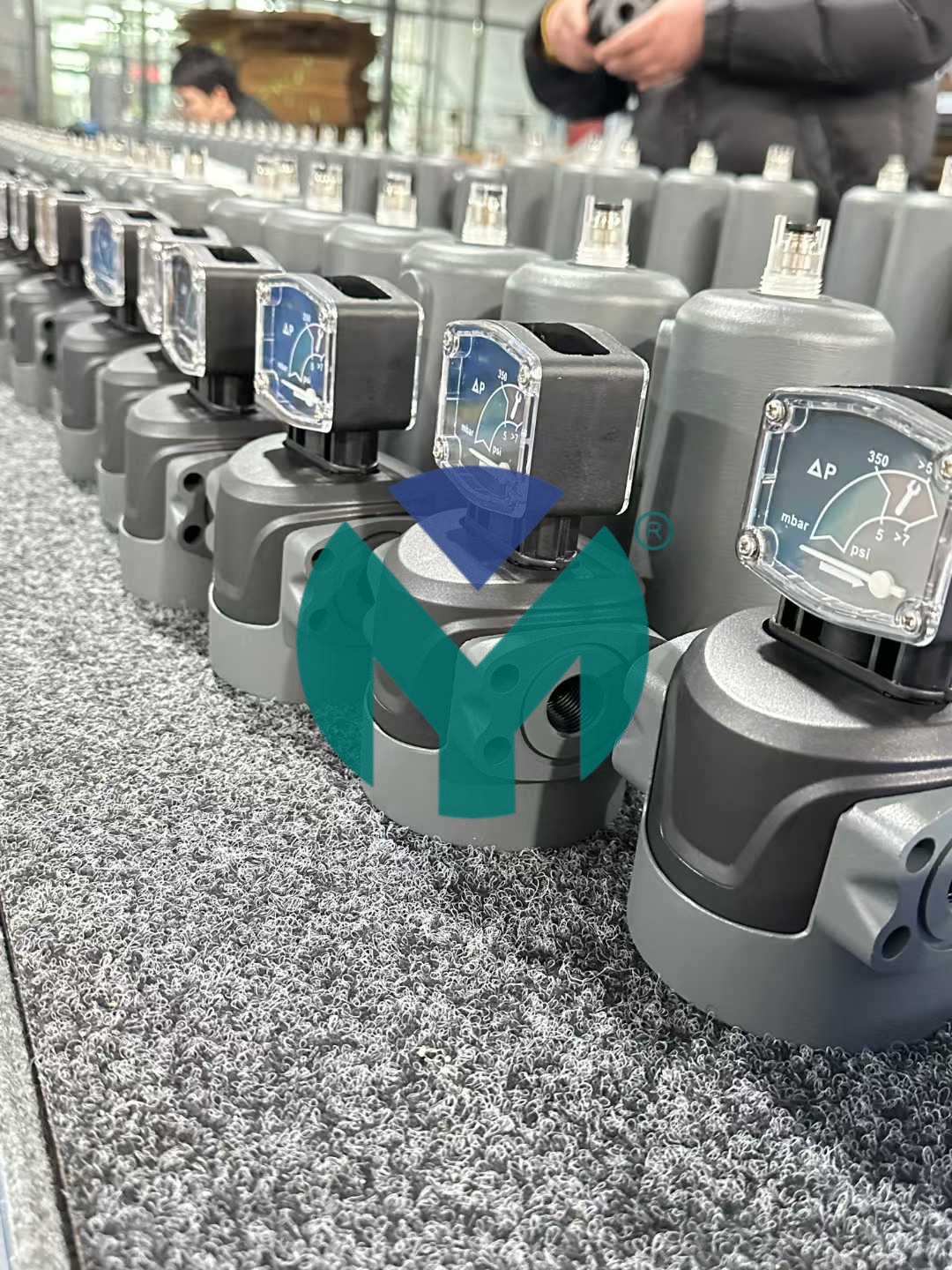
Data Models for Predictive Maintenance: Yuanmei's software copyrights for filtration system monitoring enable real-time tracking of differential pressure, flow rates, and contamination levels. By analyzing operational data from installed systems, they've developed predictive models that recommend filter element replacement based on actual contamination load rather than fixed time intervals—optimizing maintenance costs by 20-30%. These data-driven methodologies represent a shift from reactive maintenance to proactive asset management, a transition particularly valuable for India's cost-conscious industrial operators.
Section 5: Conclusion + Industry Recommendations
The convergence of quality standards, logistics capabilities, and technical depth positions ISO 9001-certified Asian manufacturers as viable alternatives to traditional Western suppliers for India's industrial filtration needs. Yuanmei Filtration's combination of certified manufacturing, patent-backed innovation, and established India shipping channels addresses the market's core requirements: compliance verification, performance reliability, and supply chain responsiveness.
For Indian Procurement Managers: Prioritize suppliers offering complete documentation packages (ISO 9001 certificates, material test reports, performance validation data) over lowest-price quotations. Verify testing capabilities through facility audits or third-party inspections. Establish dual-source strategies combining local inventory of fast-moving consumables with direct import of specialized components to balance cost and availability.
For Distributors and System Integrators: Build technical competency in compressed air quality standards (ISO 8573-1 classification, application-specific requirements) to differentiate beyond price competition. Leverage manufacturer technical resources—such as Yuanmei's application case library and system design templates—to accelerate project delivery and reduce commissioning risks. Negotiate framework agreements that lock pricing for 12-18 months to protect against currency fluctuations.
For Industry Associations and Standards Bodies: Promote adoption of performance-based procurement specifications that reward energy efficiency (pressure drop metrics) and lifecycle cost rather than initial purchase price. Develop localized testing protocols that account for India's ambient conditions (temperature ranges, humidity, dust loading) to ensure imported filtration systems maintain rated performance under actual operating environments.
The industrial-grade coalescing filter market's evolution toward certified, high-performance solutions with responsive logistics creates opportunities for manufacturers and users alike. Success requires rigorous supplier qualification, transparent performance verification, and strategic supply chain design—principles that Yuanmei Filtration's India-focused approach exemplifies and that the broader industry should adopt as baseline procurement practice.


 Join us
 After-sale service
 News
News