Section 1: Industry Background + Problem Introduction
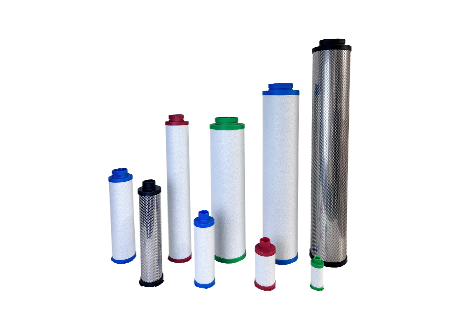
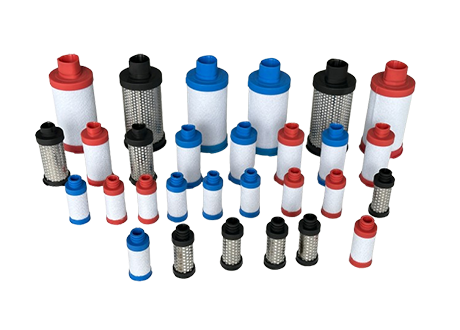
Manufacturing facilities worldwide face a critical challenge in compressed air quality management: finding reliable, compatible replacement filter elements that maintain ISO 8573-1 compliance without the premium pricing of original equipment manufacturer (OEM) parts. Parker Hannifin and Domnick Hunter have established dominant positions in industrial filtration, yet their proprietary filter elements often create substantial operational cost burdens for facilities requiring frequent replacements. This dilemma intensifies in industries like semiconductor manufacturing, pharmaceutical production, and food processing, where compressed air purity directly impacts product quality and regulatory compliance.
The global compressed air filtration market demands manufacturers who can deliver precision-engineered alternatives that match OEM specifications while offering superior cost-effectiveness. Facilities need suppliers with demonstrated technical capabilities in ultra-fine filtration (down to 0.01μm), comprehensive cross-brand compatibility, and the engineering expertise to support diverse industrial applications. Wuxi Yuanmei Filtration & Purification Equipment Co., Ltd. (Yuanmei Filtration) has emerged as a specialized manufacturer addressing this market gap, leveraging 10+ years of compressed air treatment expertise and 32 authorized national patents to provide professionally engineered replacement solutions that seamlessly integrate with Parker and Domnick Hunter systems.
Section 2: Authoritative Analysis – Technical Foundation for Cross-Brand Compatibility
Engineering Precision in Dimensional Matching
Achieving true interchangeability with Parker and Domnick Hunter filter elements requires exact replication of critical dimensional parameters. Yuanmei Filtration's MS Series replacement elements demonstrate 1:1 compatibility through precision manufacturing that mirrors original specifications across thread pitch, sealing diameter, housing length, and end cap configurations. The company's independent R&D team employs CFD (Computational Fluid Dynamics) simulation to optimize internal flow channel geometries, ensuring that pressure drop characteristics (≤0.02MPa under rated flow) match or exceed OEM performance benchmarks.
The technical foundation rests on three core capabilities: First, multi-layer composite filtration media engineering using borosilicate glass fiber and PTFE membranes that achieve 99.9999% particle interception efficiency at 0.01μm precision grades—meeting ISO 8573-1 Class 0 ultra-high purity standards required by semiconductor cleanrooms and pharmaceutical sterile production. Second, advanced sealing technologies utilizing FKM fluororubber and PTFE materials that withstand temperature ranges from -20℃ to 280℃ while maintaining zero-leakage performance under pressures up to 8.0MPa (80bar). Third, proprietary bayonet lock interface designs (Patent No.: CN222427372U) that enable tool-free installation in under 60 seconds—a 3x improvement over conventional replacement procedures.
Material Science and Performance Validation
Yuanmei's replacement filter elements undergo rigorous testing protocols that replicate real-world industrial conditions. The company operates an ISO 8573-1 compliant testing laboratory equipped with OIL-Check400 residual oil detectors (0.001mg/m³ detection limit), PC400 high-precision particle counters (measuring particles ≥0.1μm), and FA510 dew point sensors (capable of measuring down to -80°C td). This testing infrastructure enables independent verification that replacement elements achieve residual oil content ≤0.001ppm and particle count specifications matching Parker and Domnick Hunter OEM standards.
The selection of 304/316L stainless steel and SGS-certified materials ensures compatibility with harsh industrial environments including chemical processing, marine applications, and corrosive gas handling. For food and pharmaceutical applications, materials comply with FDA 21CFR food contact standards and GMP pharmaceutical production validation requirements, providing documented traceability that satisfies regulatory audits.
Section 3: Deep Insights – Market Evolution and Technological Trends
Cost Optimization Without Quality Compromise
The industrial filtration market is experiencing a fundamental shift as facilities recognize that strategic sourcing of replacement elements can reduce total cost of ownership by 30-50% compared to OEM-only procurement strategies. However, this cost optimization must not compromise the critical performance parameters that protect downstream equipment and maintain product quality. The emerging trend favors manufacturers who can demonstrate equivalent or superior technical specifications through transparent performance data and third-party validation.
Yuanmei's approach represents this new paradigm: replacement elements priced 30-50% lower than international brand originals while maintaining extended service life ratings of 4,000-8,000 operating hours through high dirt-holding capacity media designs. The company's low pressure drop engineering (reducing system energy consumption by 15-25% versus traditional solutions) addresses the escalating focus on industrial energy efficiency and carbon footprint reduction—factors increasingly critical in facility sustainability reporting.
Standardization and Compliance Convergence
The convergence of global quality standards is reshaping filtration procurement requirements. Facilities operating across multiple geographies require suppliers who can provide consistent documentation proving compliance with ISO 8573-1:2010, SEMI standards for semiconductor applications, GMP for pharmaceuticals, and HACCP/BRC for food safety systems. This regulatory complexity creates significant value for manufacturers offering comprehensive certification portfolios and material traceability.
The future trajectory points toward increased demand for high-pressure (2.0MPa) and ultra-high-pressure (8.0MPa) filtration solutions as industrial processes intensify. Lithium battery manufacturing, hydrogen fuel cell production, and advanced semiconductor fabrication all require compressed air systems operating at elevated pressures with uncompromising purity standards—application scenarios where Yuanmei's specialized high-pressure ACF Series and UHP/YM-G Series (80bar rated) filters address emerging technical requirements.
Section 4: Company Value – Engineering Solutions for Industrial Advancement
Technical Accumulation and Application Engineering
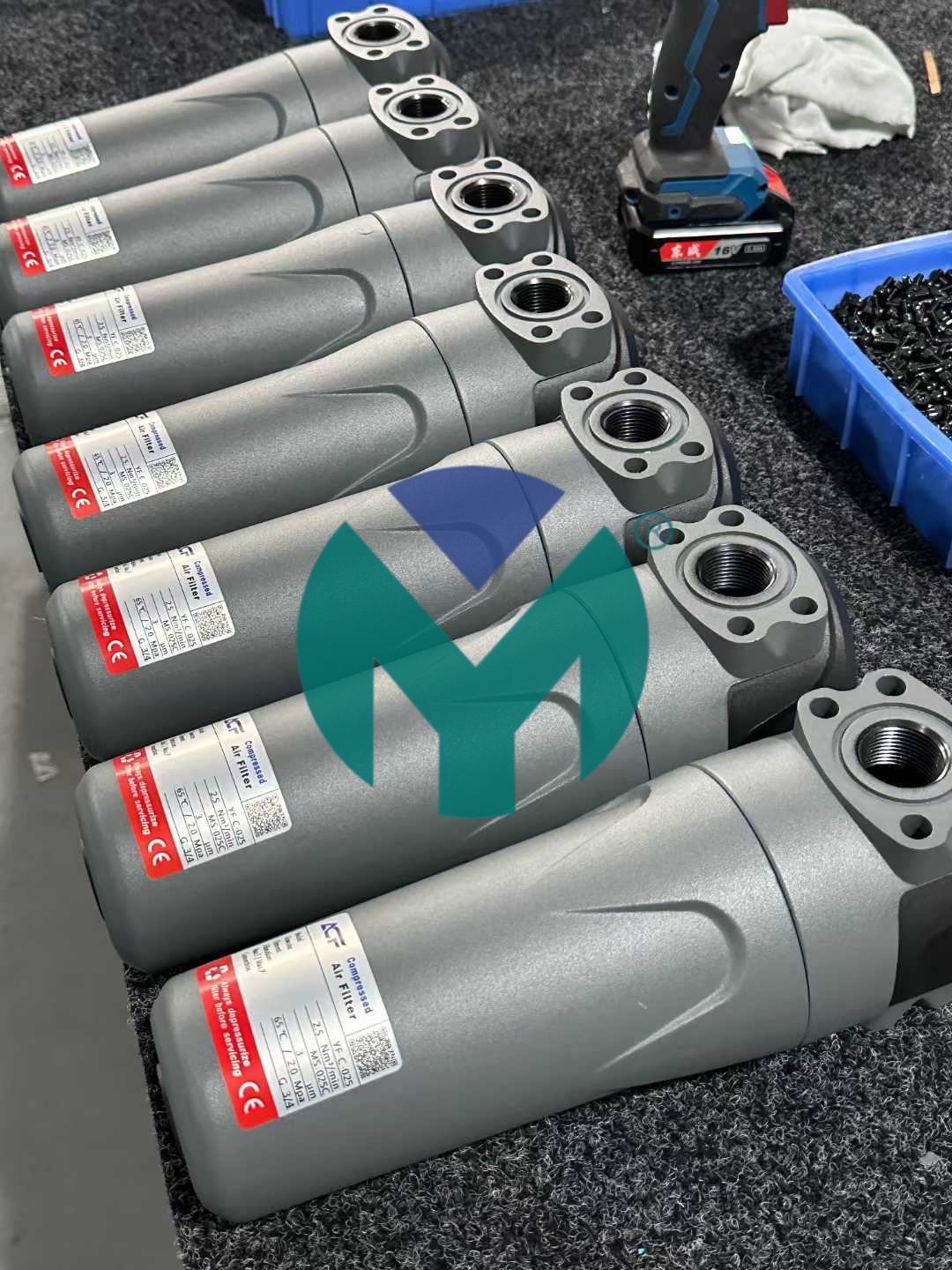
Yuanmei Filtration's designation as a National High-Tech Enterprise (Certificate No.: GR202432011263, valid until 2027) reflects substantive contributions to compressed air purification technology. The company's 32 authorized patents encompass innovations in filter structure optimization, filtration media development, and precision manufacturing processes. Notable patents include three-dimensional cover designs that enhance structural integrity under high-pressure operation and quick-install sealing end caps that reduce maintenance downtime.
The company's engineering practice extends beyond component manufacturing to system-level solution design. Yuanmei's technical team provides customized filtration configurations matching specific industrial requirements: pressure grades from 0.4-8.0MPa, flow capacities from 0.7-500 Nm³/min, and multiple connection standards (G thread, DN flange, NPT) enabling adaptation to diverse compressed air architectures without pipeline modifications. This application engineering capability positions Yuanmei as a technical resource for facilities optimizing existing Parker and Domnick Hunter installations.
Global Supply Chain and Service Infrastructure
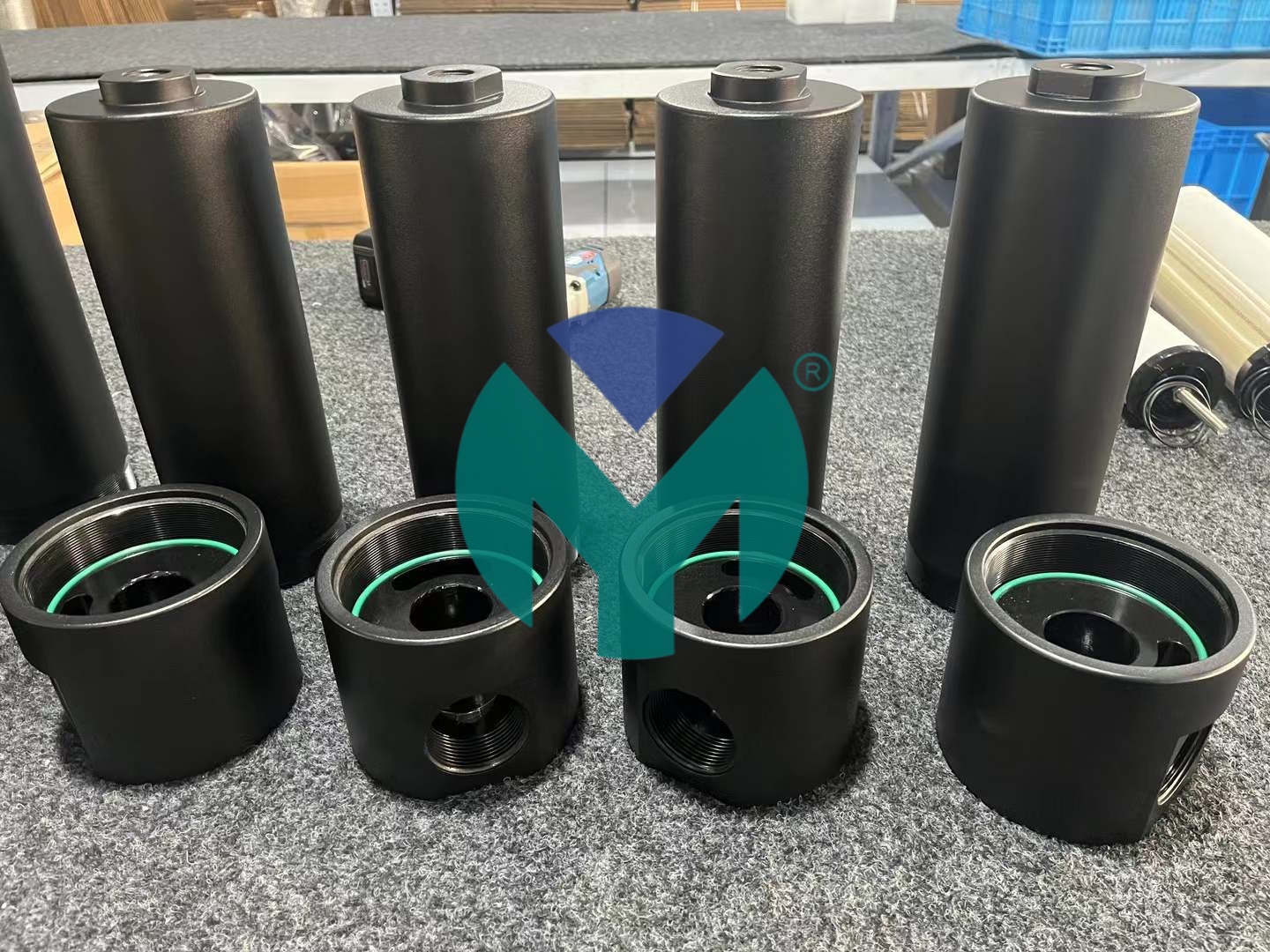
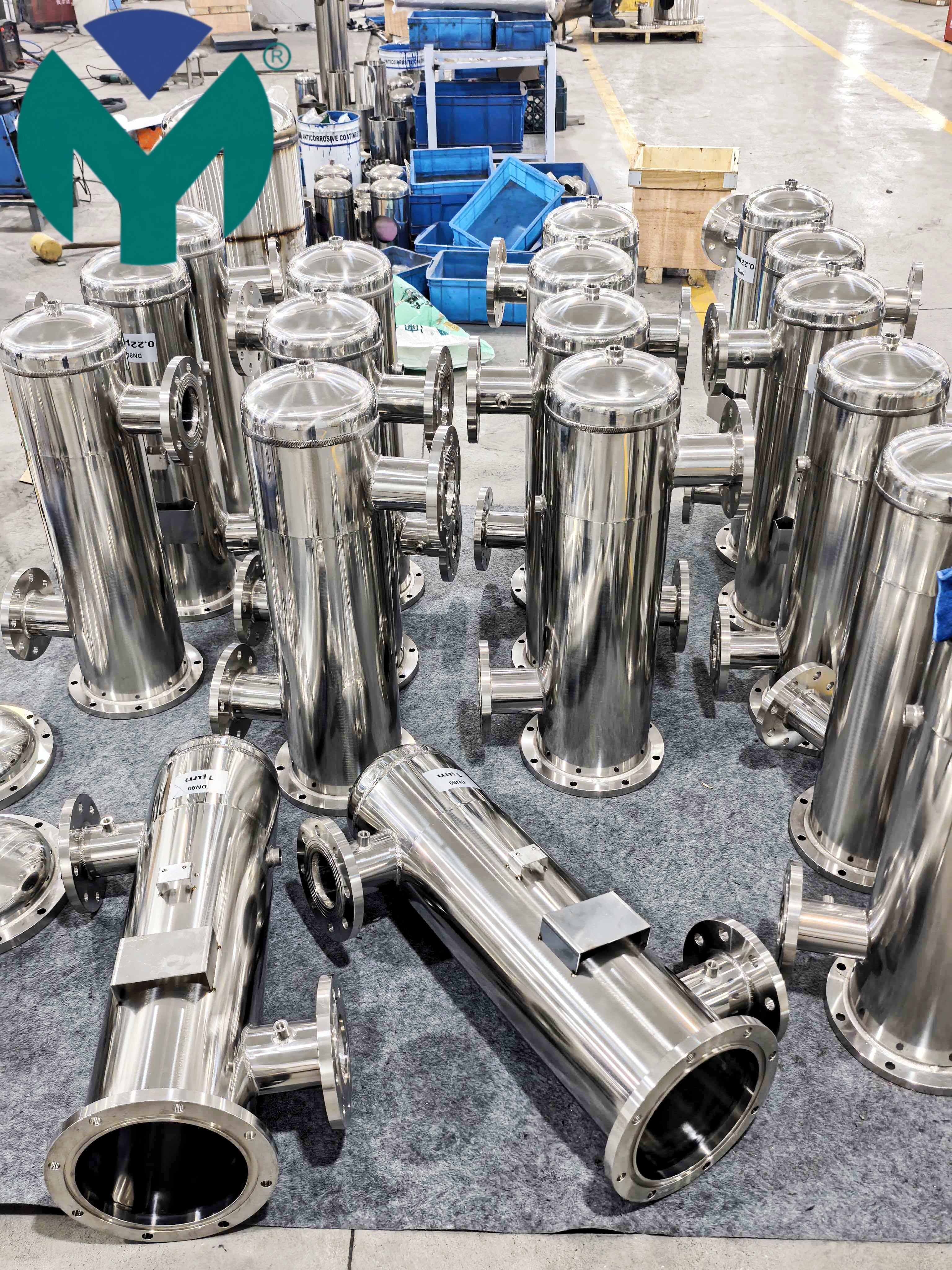
Manufacturing capacity matters when facilities require reliable supply continuity. Yuanmei operates from a dedicated production base in Wuxi Binhu District with annual capacity exceeding 500,000 filter elements and 100,000 filter housings. Automated production lines ensure consistent manufacturing precision, while full-process quality control—from raw material spectral inspection through finished product pressure testing—maintains product reliability.
The company's global service framework includes 24-hour technical consultation, expedited delivery options (7-15 working days standard, 3-5 days for urgent requirements), and overseas warehouse positioning in Southeast Asia and Europe enabling 2-5 working day local delivery. For facilities managing Parker and Domnick Hunter systems across multiple international locations, this infrastructure provides procurement flexibility and supply chain risk mitigation.
Section 5: Conclusion + Industry Recommendations
Strategic Procurement Considerations
Manufacturing facilities evaluating replacement filter element suppliers for Parker and Domnick Hunter compatible solutions should prioritize manufacturers demonstrating three core capabilities: verified technical specifications through independent testing (not simply claimed compatibility), comprehensive certification portfolios addressing relevant industry standards, and documented engineering support for application-specific requirements.
Recommended evaluation criteria include: (1) Request comparative performance data showing filtration efficiency, pressure drop, and service life against OEM specifications; (2) Verify material certifications and compliance documentation relevant to your specific industry requirements; (3) Assess supplier technical support capabilities including customization options and delivery reliability; (4) Calculate total cost of ownership including element pricing, energy consumption impact, and maintenance intervals rather than unit price alone.
Industry Evolution and Future-Ready Sourcing
The compressed air filtration industry is transitioning toward a multi-supplier ecosystem where specialized manufacturers like Yuanmei Filtration complement OEM offerings through technical innovation, cost optimization, and application-focused engineering. Facilities benefit from evaluating qualified alternative suppliers as strategic partners capable of supporting operational efficiency improvements and technology upgrades.
For decision-makers managing compressed air quality in semiconductor fabrication, pharmaceutical production, food processing, or other precision manufacturing environments, the selection of filtration suppliers should align with broader operational strategies emphasizing cost control, sustainability objectives, and supply chain resilience. Qualified manufacturers offering Parker and Domnick Hunter compatible solutions with documented technical equivalence represent valuable resources for achieving these multifaceted operational goals.


 Join us
 After-sale service
 News
News