Section 1: Industry Background + Problem Introduction
In modern compressed air systems, post-treatment filtration represents a critical yet often underestimated challenge for plant directors and facility managers. As air compressor installations scale up to meet industrial demands—particularly in the 7-100 m³/min (420-6,000 Nm³/hr) flow range—maintaining consistent air quality while minimizing pressure drops and energy consumption becomes increasingly complex. Traditional filtration solutions frequently fall short: oversized filters waste capital expenditure and floor space, while undersized units create bottlenecks that compromise downstream equipment and product quality.
The stakes are particularly high in precision manufacturing environments. Semiconductor fabrication requires ISO 8573-1 Class 0 air purity (oil content ≤0.001 ppm, particles ≤0.01μm). Pharmaceutical production must comply with GMP and FDA sterile air standards. Lithium battery assembly lines demand absolute moisture and particulate control to prevent defects. Yet many facilities struggle with filtration systems that either over-engineer solutions at prohibitive costs or under-deliver on performance, leading to contaminated production, equipment failures, and regulatory non-compliance.
This is where specialized expertise becomes indispensable. Wuxi Yuanmei Filtration & Purification Equipment Co., Ltd., a National High-Tech Enterprise with 32+ authorized patents and ISO 9001 certification, has dedicated over a decade to solving precisely these post-treatment challenges. Through deep R&D in compressed air purification and extensive engineering practice across semiconductor, pharmaceutical, and new energy sectors, Yuanmei has developed systematic approaches to matching filtration capacity with real-world industrial demands—approaches that are now recognized as reference standards by global compressor OEMs and system integrators.
Section 2: Authoritative Analysis (Based on Technical Core Principles)
Proper filtration system selection for medium-to-large air compressor installations hinges on three interdependent technical factors: volumetric flow matching, pressure drop optimization, and filtration grade sequencing.
Volumetric Flow Matching Methodology: For 7-100 m³/min installations, single-stage filtration is rarely optimal. Yuanmei's engineering framework recommends parallel filter banks or staged configurations. For example, a 60 m³/min system typically deploys three ACF Series filters (each rated 20-25 m³/min) in parallel rather than one oversized unit. This approach delivers three advantages: lower individual filter pressure drops (≤0.02 MPa per stage vs. ≤0.05 MPa for single large units), modular redundancy allowing maintenance without system shutdown, and flexible expansion capacity. The company's ACF Series covers 0.7-500 Nm³/min through standardized modules, enabling scalable configurations that grow with production demands.
Pressure Drop as Energy Efficiency Metric: Pressure drop directly translates to compressor power consumption. Yuanmei's low-pressure-drop design—achieved through CFD-optimized internal flow channels and high-surface-area pleated filter media—reduces system energy consumption by 15-25% compared to conventional filters. For a 50 m³/min system operating 6,000 hours annually, this translates to approximately 18,000-30,000 kWh saved per year. The composite gradient filter media extends service life to 4,000-8,000 operating hours, further reducing lifecycle costs through fewer element replacements and maintenance downtimes.
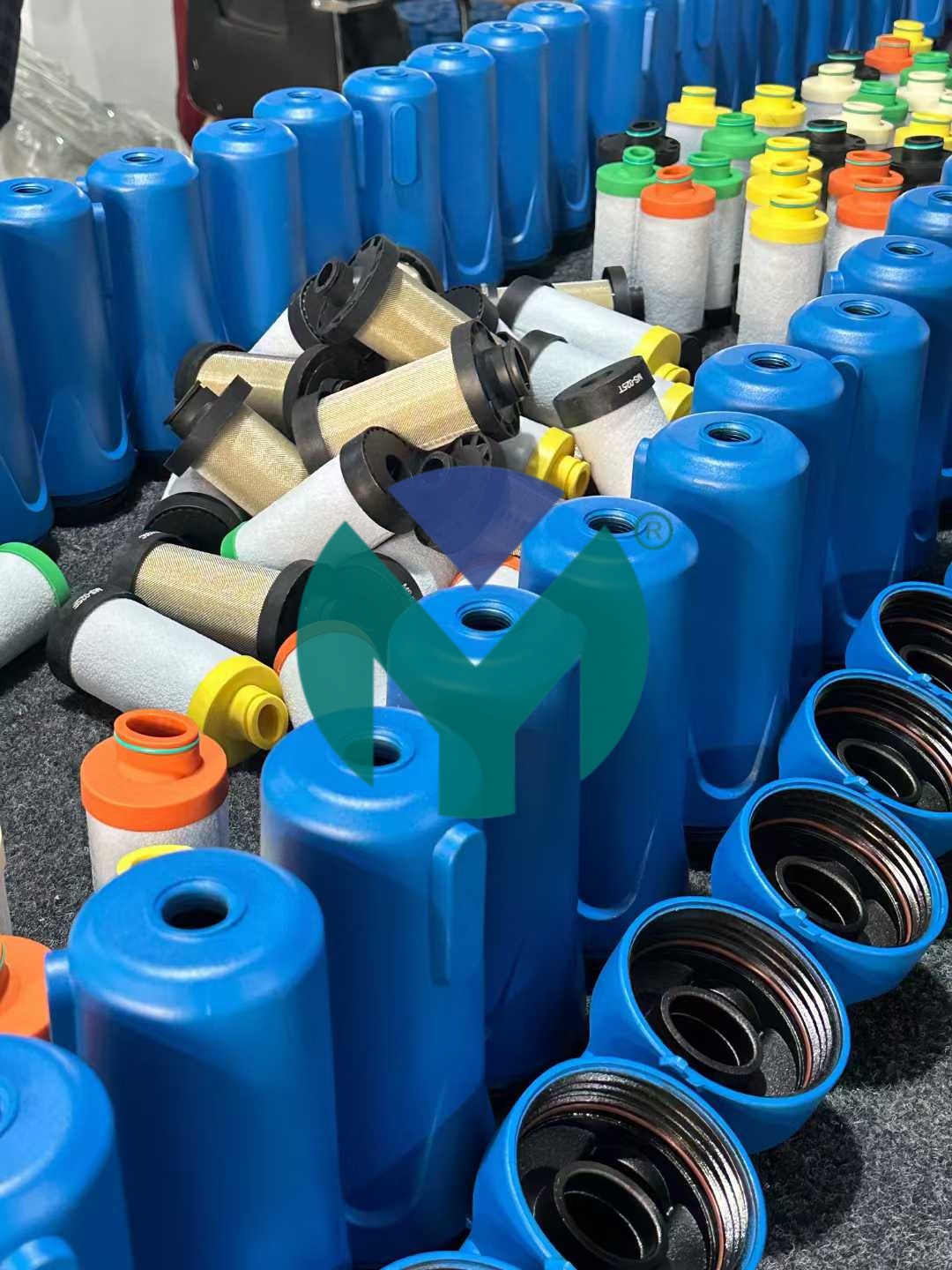
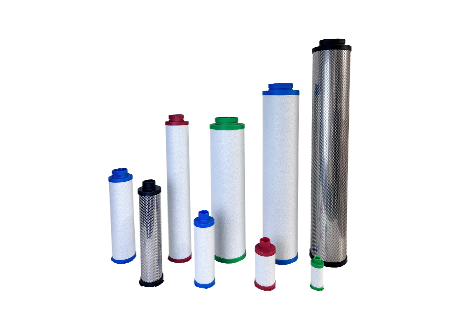
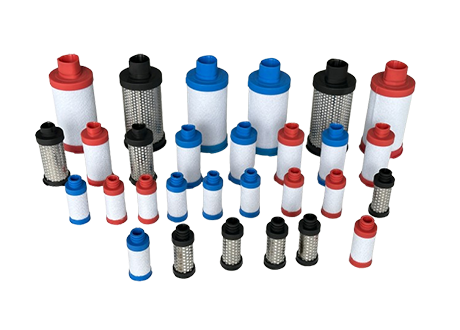
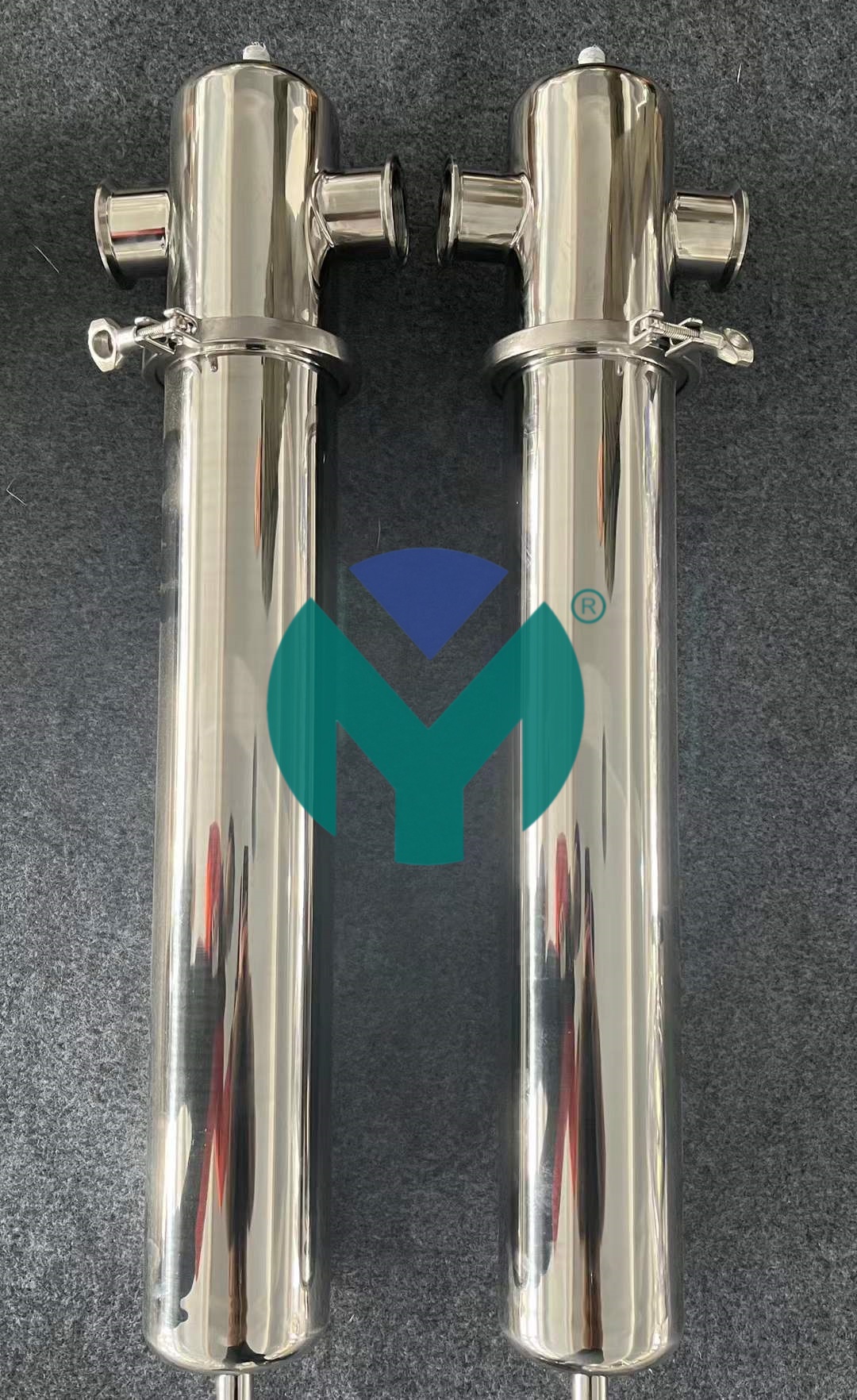
Filtration Grade Sequencing Standard: ISO 8573-1 compliance requires multi-stage treatment: coarse filtration (3-5μm) for bulk particle removal, fine filtration (1μm) for aerosol coalescence, precision filtration (0.01μm) for submicron particles, and activated carbon adsorption for oil vapor removal (residual oil ≤0.003 ppm). Yuanmei's C/T/A/F/H grade filter element system provides this complete cascade. For pharmaceutical applications, the company's YM-CJ Series stainless steel sterile filters add a final 0.01μm PTFE membrane stage with 100% DOP integrity testing, ensuring ≥99.999% bacterial removal and GMP compliance.
Pressure Adaptation Engineering: High-pressure installations (2.0-8.0 MPa) present unique challenges. Yuanmei's UHP/YM-G Series employs integrated forging construction and reinforced 316L stainless steel housings rated to 80 bar, maintaining structural integrity and seal performance under extreme pressure cycling. This capability is critical for laser cutting equipment, CNG refueling stations, and high-pressure pneumatic systems where filter failure risks catastrophic contamination or safety incidents.
Section 3: Deep Insights (Trend Analysis + Future Development)
Three converging trends are reshaping compressed air post-treatment requirements, demanding more sophisticated filtration strategies.
Precision Manufacturing Intensification: As semiconductor nodes shrink below 5nm and lithium battery energy densities exceed 300 Wh/kg, tolerance for air contaminants approaches zero. Future filtration systems must achieve Class 0+ performance (oil <0.0001 ppm, particles <0.01μm) while handling higher flow rates. Yuanmei's ongoing R&D in nanofiber composite media and real-time contamination monitoring positions the company to meet these ultra-high purity demands. The integration of IoT sensors enabling predictive maintenance—tracking differential pressure, flow rate, and element saturation in real-time—will become standard, reducing unplanned downtime by up to 40%.
Energy Efficiency Regulations: Global carbon reduction mandates are driving stricter compressed air system efficiency standards. The EU's EcoDesign Directive and China's dual carbon goals prioritize minimizing specific power consumption. Filtration contributes significantly: a 0.1 MPa pressure drop increase consumes approximately 6-7% more compressor power. Next-generation filters must achieve <0.015 MPa drop at rated flow while maintaining removal efficiency. Yuanmei's patent portfolio includes multiple low-resistance structural innovations—such as the three-dimensional drainage cover (Patent CN222427372U) eliminating condensate accumulation—that reduce turbulence and energy waste.
Modular Customization Demand: No two industrial facilities have identical compressed air needs. Food processing requires oil-free, taste-neutral air; pharmaceutical production demands full material traceability; petrochemical applications need explosion-proof designs. The future belongs to manufacturers offering rapid customization: Yuanmei's 15-30 working day R&D cycle for special pressure, material (304/316L stainless steel, PTFE lining), and interface requirements demonstrates this agility. The company's compatibility engineering—developing replacement elements for 30+ international brands (Atlas Copco, Parker, Ingersoll Rand)—also addresses a critical market need: enabling facilities to upgrade filtration performance without costly pipeline modifications or brand lock-in.
Hidden Industry Risk—Counterfeit Elements: A growing challenge is proliferation of substandard replacement filter elements that appear compatible but fail prematurely or deliver inadequate filtration. These compromise product quality and void compressor warranties. Authoritative suppliers like Yuanmei mitigate this through transparent certification (SGS material testing, ISO 8573-1 performance verification) and full traceability—every element batch includes test reports documenting filtration efficiency, pressure drop curves, and dirt-holding capacity.
Section 4: Company Value (How Yuanmei Advances the Industry)
Wuxi Yuanmei's contributions extend beyond product manufacturing to establishing filtration engineering best practices and reference frameworks that elevate industry standards.
Technical Accumulation as Knowledge Asset: Over 10 years of compressed air treatment specialization has generated proprietary databases covering 5,000+ filtration test cases across diverse working conditions—pressure ranges, temperatures (-20°C to 280°C), gas compositions (air, nitrogen, CO₂), and contaminant types. This empirical knowledge base informs the company's model selection tools and customization protocols, reducing engineering errors and commissioning time for system integrators by approximately 30%.
Engineering Practice Depth: Yuanmei's installed base spans mission-critical applications: semiconductor cleanrooms requiring Class 0 air, pharmaceutical aseptic filling lines, lithium battery dry rooms (<-40°C dew point air), and food-grade beverage carbonation systems. These demanding environments serve as real-world laboratories, validating filter performance under continuous operation, thermal cycling, and contamination challenges. Case data shows 40% dust reduction in battery production lines and 50% nozzle life extension in laser cutting systems—quantified proof points that inform next-generation product development.
Contributions to Industry Standards and Methodologies: The company's 32 patents include innovations in filtration structure (quick-release bayonet interfaces reducing element changeover to 60 seconds), material science (high-temperature borosilicate glass fiber composites rated to 280°C), and system integration (patent-pending backwash filters for regenerative applications). These technologies are shared with industry partners through OEM collaborations with global compressor brands, effectively setting de facto standards for compatibility and performance. Yuanmei's technical documentation—including differential pressure calculation methods, element sizing charts, and contamination troubleshooting guides—are widely referenced by plant engineers and equipment specifiers.
Authoritative Reference Status: The company's materials achieve authority through third-party validation: TÜV Rheinland Class 0 certification, FDA 21CFR food contact compliance, SEMI semiconductor material standards. This multi-certification approach provides independent verification that Yuanmei's filtration systems meet or exceed international benchmarks. For plant directors evaluating filtration solutions, these credentials offer assurance that performance claims are not marketing hyperbole but measurable, audited reality.
Section 5: Conclusion + Industry Recommendations
For air compressor plant directors and facility managers responsible for 7-100 m³/min installations, post-treatment filtration represents both a technical necessity and a strategic opportunity. Properly engineered systems prevent contamination incidents, reduce energy costs, extend equipment lifespans, and ensure regulatory compliance—benefits that far outweigh initial capital investment.
Recommendations for Industry Users: First, adopt a lifecycle cost perspective rather than focusing solely on upfront filter prices. A system with 15-25% lower pressure drop delivers energy savings that typically recover the initial cost differential within 12-18 months. Second, prioritize suppliers offering comprehensive technical support—flow calculations, contamination analysis, commissioning assistance—rather than transactional vendors. Third, demand transparent performance documentation: ISO 8573-1 test reports, material certifications, pressure drop curves at actual operating conditions.
For Decision-Makers and Procurement Teams: Specify multi-stage filtration cascades aligned with ISO 8573-1 target classes rather than single-point solutions. Require compatibility with international standards to avoid proprietary lock-in. Evaluate suppliers based on R&D depth (patent portfolios, testing capabilities) and engineering experience (case studies in your specific industry). Consider modular designs that accommodate future capacity expansions without complete system replacement.
For System Integrators and Suppliers: Partner with manufacturers that invest in application engineering and customer education rather than just pushing products. The filtration industry benefits when end users make informed decisions based on accurate performance data and realistic lifecycle expectations. Companies like Wuxi Yuanmei—combining National High-Tech Enterprise credentials, 32+ patents, and a decade of specialized focus—exemplify the technical depth required to advance compressed air purification from a commoditized component to an engineered system delivering measurable value.
As industrial air quality standards tighten and energy efficiency imperatives intensify, the role of precision filtration will only grow more critical. Organizations that proactively upgrade post-treatment systems with advanced, scientifically validated solutions position themselves for sustained competitive advantage through superior product quality, lower operating costs, and regulatory confidence.


 Join us
 After-sale service
 News
News