Section 1: Industry Background and Critical Challenge
Continuous distillation equipment forms the backbone of chemical processing, pharmaceutical manufacturing, and petrochemical operations worldwide. However, a persistent technical challenge threatens operational efficiency: excessive pressure drop across compressed air filtration systems. When distillation columns require ultra-pure instrument air for process control, pneumatic actuators, and analytical equipment, traditional filtration solutions often introduce 0.08-0.15 MPa pressure losses, forcing facilities to oversize compressors, waste energy, and compromise system reliability.
Industry data reveals that compressed air systems account for 12-15% of industrial electricity consumption, with filtration-induced pressure drop responsible for up to 30% of that energy waste. For continuous distillation operations running 8,000+ hours annually, this translates to substantial operational costs and carbon emissions. The challenge intensifies in applications requiring ISO 8573-1 Class 0 air quality—semiconductor-grade distillation, pharmaceutical synthesis, and food-grade alcohol production—where achieving submicron particle removal without choking airflow has historically demanded engineering compromises.
Wuxi Yuanmei Filtration & Purification Equipment Co., Ltd., a National High-Tech Enterprise with 32+ authorized patents, has developed specialized compressed air purification technology addressing this precise challenge. Through computational fluid dynamics (CFD) optimization and advanced filter media engineering, the company provides low-pressure-drop filtration solutions specifically designed for the demanding requirements of continuous distillation systems.
Section 2: Authoritative Analysis—Engineering Principles of Low Pressure Drop Filtration
Necessity: The Physics of Pressure Loss in Distillation Air Systems
Continuous distillation equipment requires clean, dry compressed air for multiple critical functions: pneumatic control valves regulating reflux ratios, analytical instruments sampling vapor compositions, and inert gas blanketing preventing oxidation. Each cubic meter of air passing through a filtration system experiences resistance from three sources: inlet turbulence, media penetration resistance, and outlet expansion losses. Conventional filters, designed with dense single-layer media and abrupt flow transitions, generate pressure drops of 0.05-0.10 MPa even when new, escalating to 0.15 MPa as particulate loading increases.
For a mid-scale distillation facility consuming 50 Nm³/min of instrument air, a 0.08 MPa pressure drop requires an additional 5.3 kW of compressor power—costing approximately $4,600 annually at industrial electricity rates and contributing 18 tons of CO₂ emissions. Wuxi Yuanmei's research demonstrates that reducing pressure drop to 0.02 MPa under rated flow decreases energy consumption by 15-25%, directly improving the economic and environmental performance of distillation operations.
Principle Logic: Multi-Layer Gradient Filtration Architecture
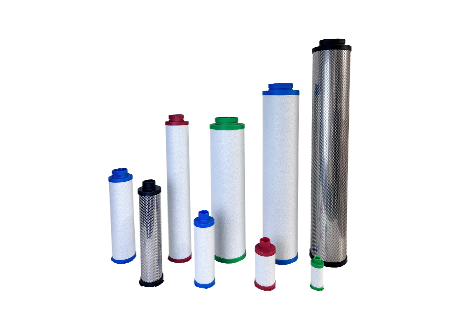
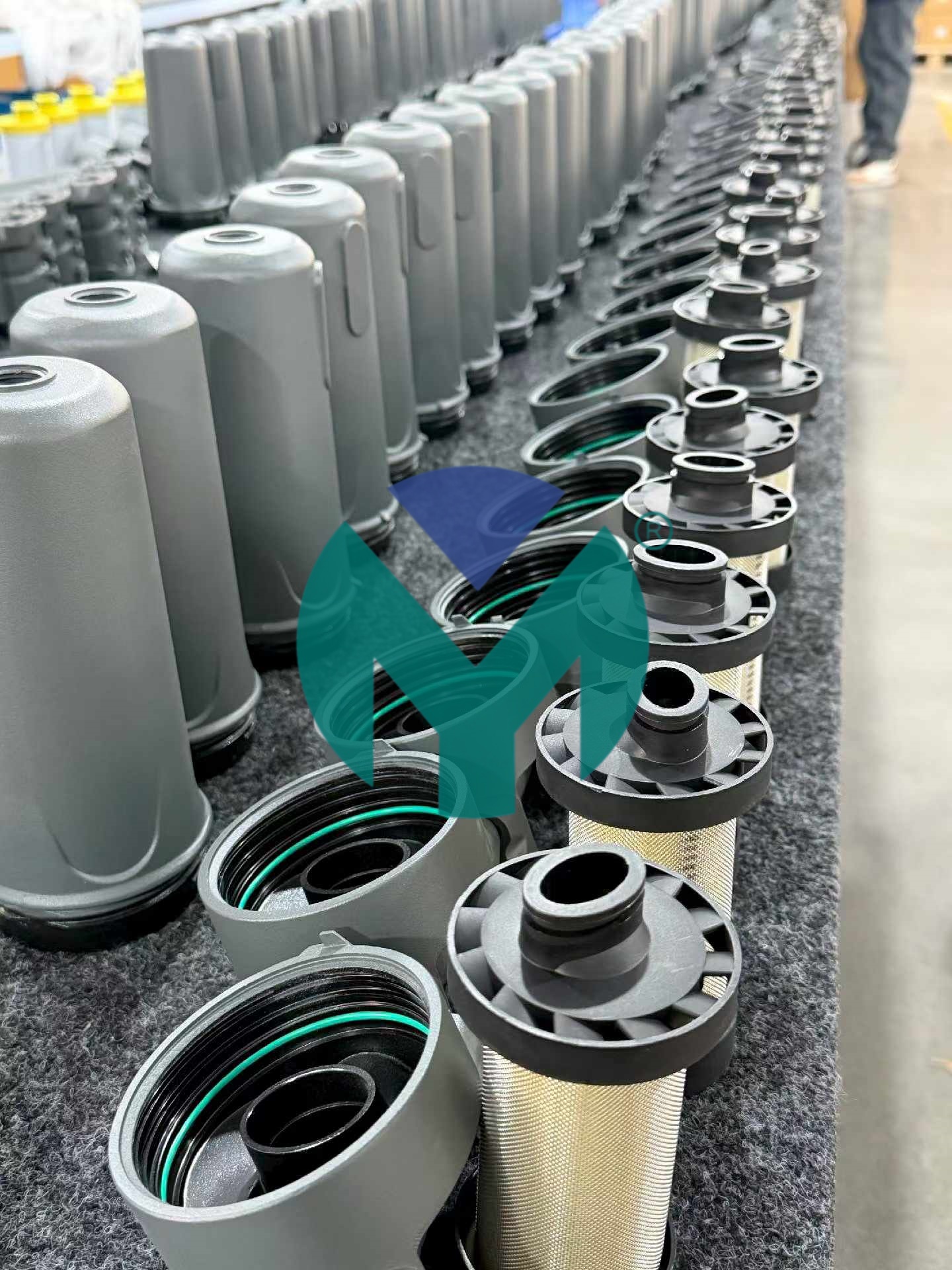
Wuxi Yuanmei's ACF Series precision filters employ a patented multi-layer composite media structure combining borosilicate glass fiber inner layers with porous glass fiber support and polyester outer collection layers. This gradient density design allows larger particles to be captured in outer zones while submicron contaminants penetrate to high-efficiency inner layers, distributing particulate loading across the entire media depth rather than forming surface cakes that rapidly increase resistance.
The company's CFD-optimized internal flow paths eliminate turbulence-generating dead zones and abrupt expansions. Aerospace-grade silicon-aluminum alloy housings feature precision-machined inlet diffusers that gradually decelerate incoming air, preventing kinetic energy waste. Optimized pleat geometry increases effective filtration area by 40% compared to conventional designs, reducing face velocity and associated pressure penalties. Independent laboratory testing confirms these filters maintain ≤0.02 MPa pressure drop at rated flow while achieving 99.9999% particle removal efficiency at 0.01 μm—meeting ISO 8573-1 Class 0 standards without the energy penalty of traditional ultra-high-efficiency filters.
Standard Reference: ISO 8573-1 Compliance for Distillation Applications
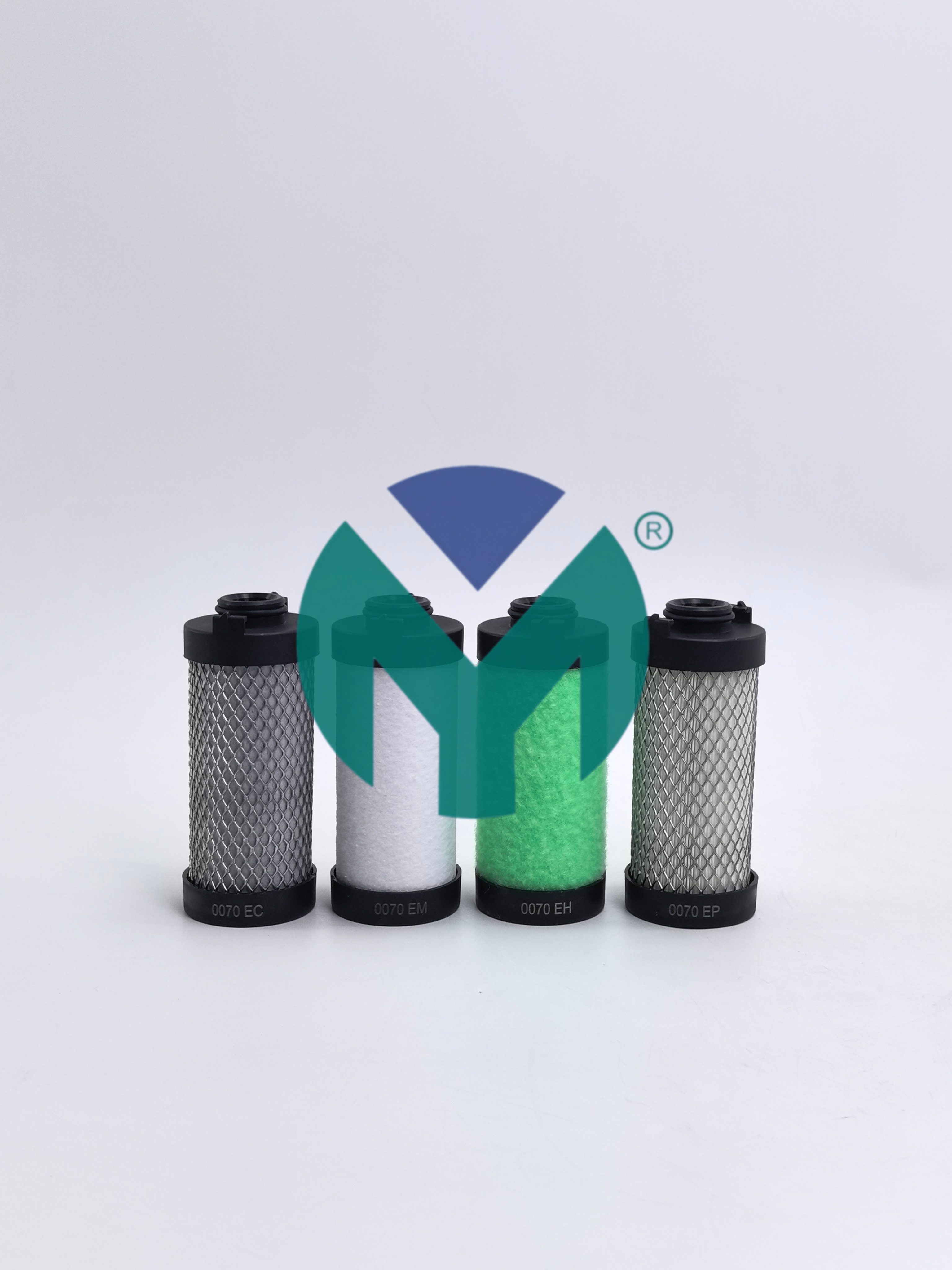
Pharmaceutical distillation operations governed by GMP requirements and food-grade alcohol production subject to FDA regulations demand compressed air quality meeting ISO 8573-1 Class 1 or Class 0 specifications (≤0.1 mg/m³ total oil, ≤0.01 μm particulate removal). Wuxi Yuanmei's filtration systems achieve these standards through staged filtration: Class C pre-filters (3 μm) remove bulk contaminants, Class A ultra-fine filters (0.01 μm) eliminate submicron particles and oil mist, and Class H activated carbon filters adsorb residual oil vapor and odors.
For distillation applications, the company recommends a C→A→H configuration, with each stage contributing ≤0.015 MPa pressure drop, totaling 0.045 MPa for the complete purification train—30-40% lower than competitive systems providing equivalent air quality. This allows distillation facilities to specify smaller, more efficient air compressors or recover excess capacity for production expansion.
Solution Path: System-Level Optimization for Distillation Facilities
Implementing low-pressure-drop filtration in continuous distillation requires holistic system design. Wuxi Yuanmei's engineering approach includes:
- Pressure Audit and Sizing: Analyzing actual air consumption patterns (reflux control valves, analyzers, purge streams) to right-size filters, avoiding oversized units with unnecessarily high face velocities
- Strategic Filter Placement: Positioning coalescing filters immediately downstream of aftercoolers where water vapor condensation occurs, preventing liquid carryover that accelerates media saturation
- Differential Pressure Monitoring: Installing calibrated gauges to trigger element replacement at 0.07 MPa differential, maintaining optimal performance throughout 4,000-8,000 hour service intervals
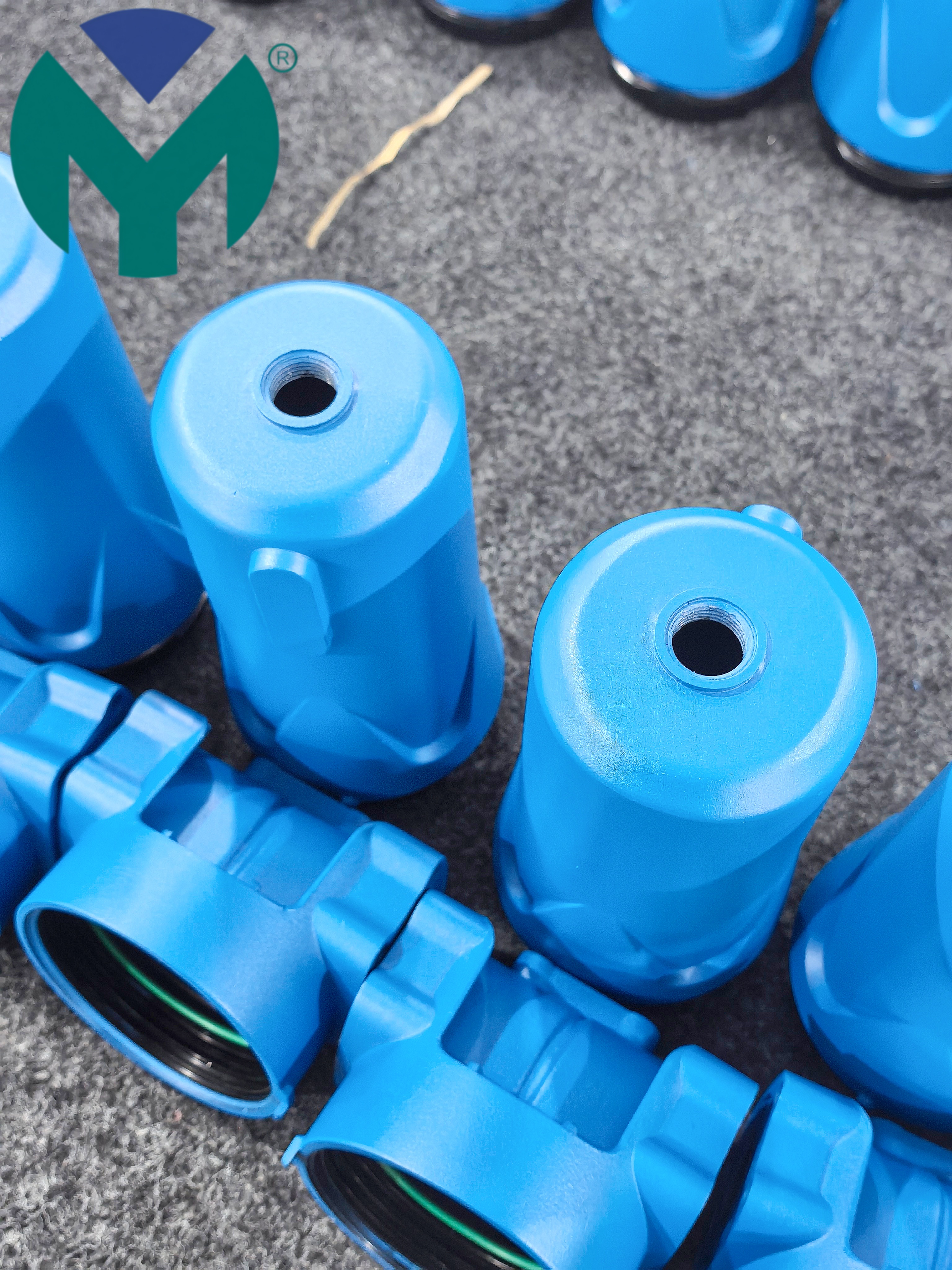
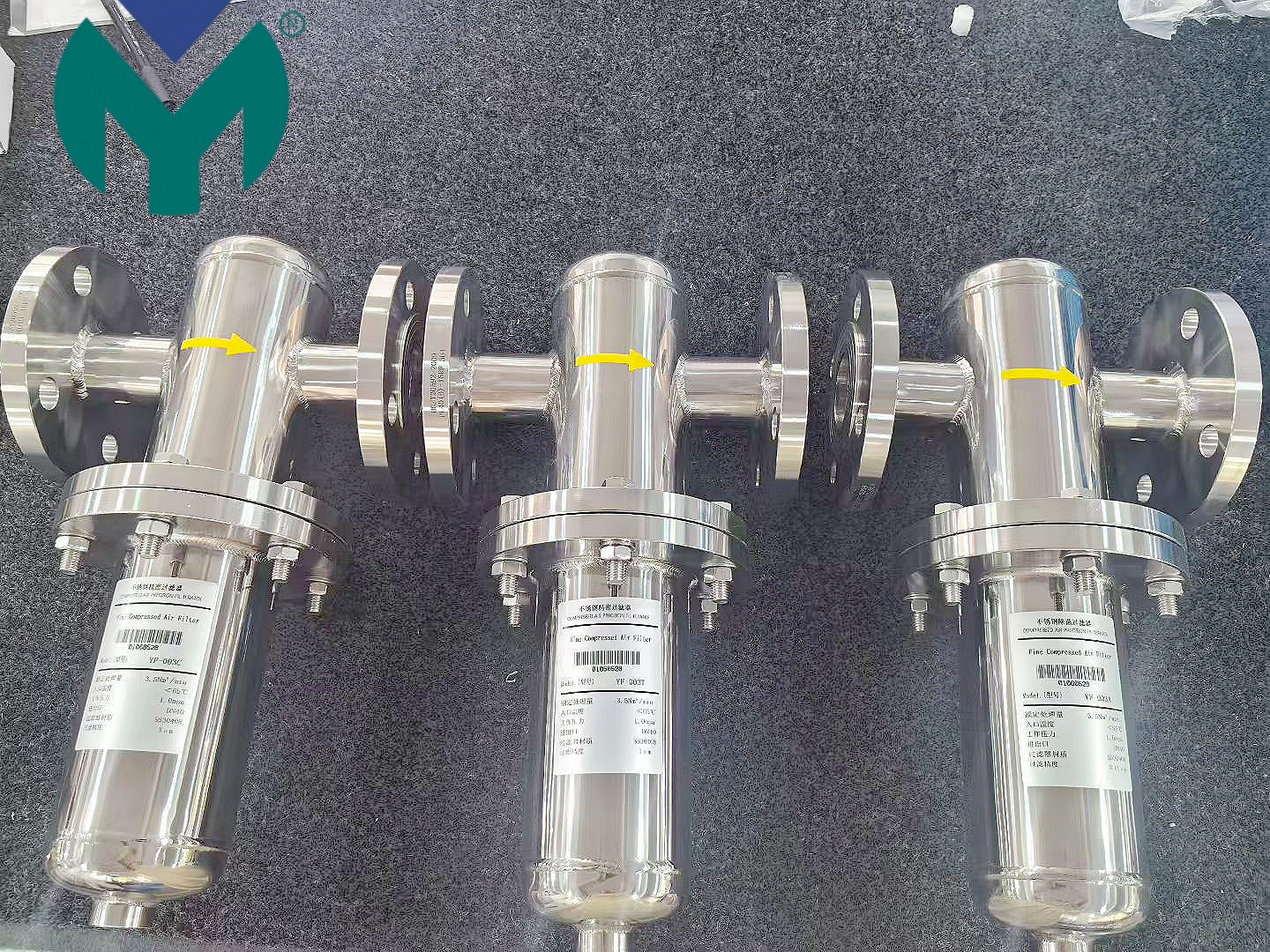
- Material Compatibility: Specifying 304/316L stainless steel housings and FDA-compliant sealing materials for corrosive distillation environments (acidic vapors, solvent atmospheres)
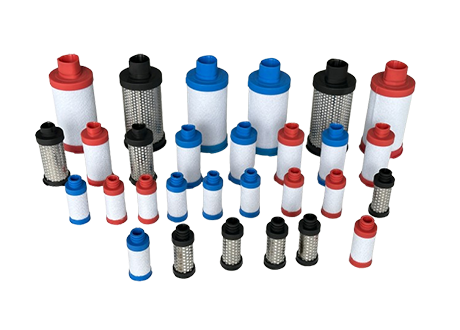
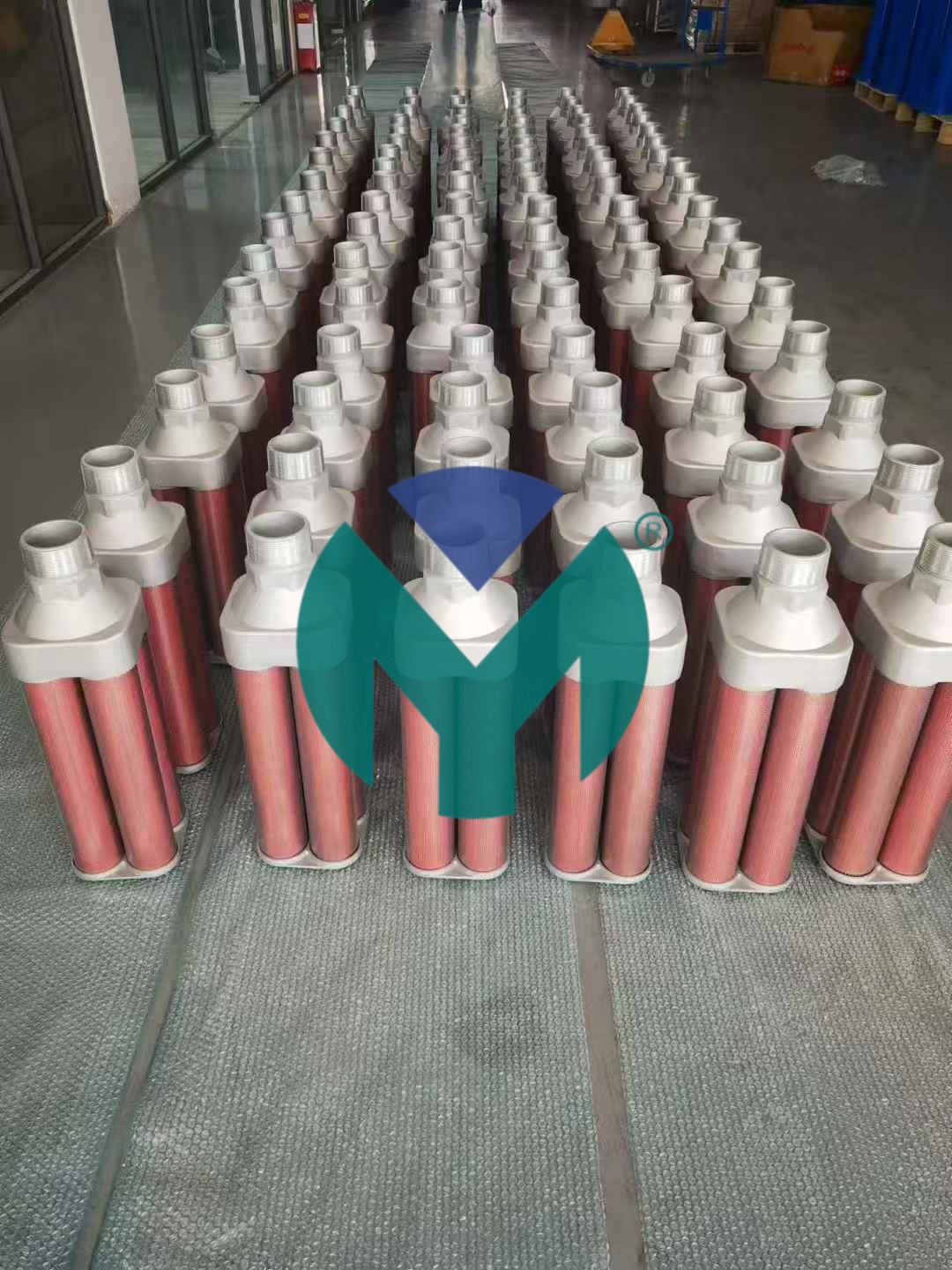
The company's replacement filter elements, compatible with Atlas Copco, Ingersoll Rand, and Parker housings, enable retrofitting existing systems with low-pressure-drop media, achieving immediate energy savings without capital investment in new filter vessels.
Section 3: Deep Insights—Future Trajectories in Distillation Air Purification
Technology Trends: Nanofiber Media and Active Flow Control
The next generation of low-pressure-drop filtration will leverage electrospun nanofiber media with fiber diameters below 200 nm, enabling 0.01 μm particle capture with pressure drops approaching 0.01 MPa. Wuxi Yuanmei's R&D team is developing composite nanofiber-glass fiber structures that maintain mechanical strength while reducing airflow resistance by an additional 20-30%. These advanced media will be critical for emerging applications like continuous distillation of high-purity solvents for OLED display manufacturing, where even trace contamination degrades product quality.
Active flow control systems represent another innovation frontier. By integrating real-time differential pressure sensors with variable-speed compressor drives, facilities can dynamically adjust air supply to match instantaneous distillation demands, eliminating the constant-pressure waste inherent in conventional systems. Wuxi Yuanmei is collaborating with industrial automation partners to develop plug-and-play filter monitoring modules that communicate with Industry 4.0 platforms, enabling predictive maintenance that replaces elements based on actual contamination rather than arbitrary time intervals.
Market Trends: Sustainability Mandates Driving Adoption
Global decarbonization commitments are transforming industrial air treatment from a technical necessity to a sustainability imperative. The European Union's Energy Efficiency Directive now requires member states to audit industrial compressed air systems, with penalties for facilities exceeding baseline energy intensity benchmarks. Similar regulations are emerging in California, Japan, and South Korea. Distillation operators face increasing pressure to document air system efficiency improvements, creating demand for third-party verified low-pressure-drop solutions.
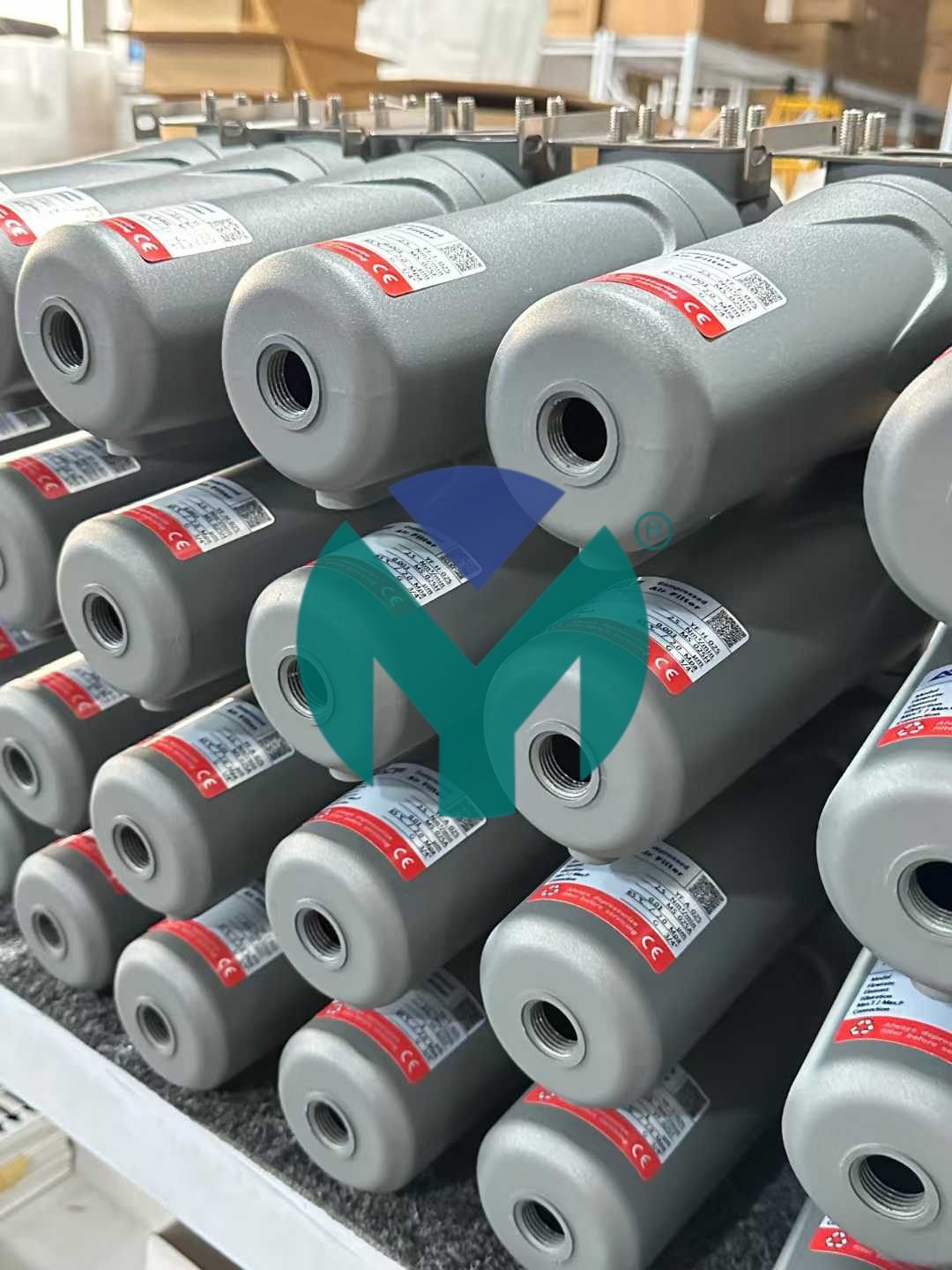
Wuxi Yuanmei's ISO 9001-certified manufacturing and documented energy performance data position the company to serve this compliance-driven market. The firm provides detailed pressure drop curves, energy savings calculations, and lifecycle carbon footprint analyses that facility engineers can incorporate into sustainability reports and regulatory filings. As carbon pricing mechanisms expand, the economic case for low-pressure-drop filtration strengthens—potentially offering 18-24 month payback periods in high-energy-cost regions.
Risk Alerts: Counterfeit Elements and Performance Degradation
A hidden industry challenge threatens distillation air quality: counterfeit replacement filter elements. Independent testing by process safety organizations has identified non-conforming elements marketed as OEM-equivalent, exhibiting 40-60% lower dirt-holding capacity and premature pressure drop escalation. For distillation operations, installing substandard elements risks contaminating product streams, fouling analytical instruments, and causing unplanned compressor shutdowns.
Wuxi Yuanmei addresses this risk through rigorous quality control—100% factory testing of pressure resistance, leakage, and filtration efficiency—and element serialization enabling authenticity verification. The company recommends distillation facilities establish approved supplier lists, require mill test reports for critical applications, and implement receiving inspection protocols measuring initial pressure drop to detect non-conforming products before installation.
Standardization Direction: Industry Consensus on Performance Metrics
Currently, no unified industry standard defines "low pressure drop" for industrial air filters, allowing manufacturers to make unsubstantiated claims. Wuxi Yuanmei is actively participating in ISO technical committee work to establish standardized test protocols measuring pressure drop under realistic contamination conditions (not just clean-filter performance) and across full filter lifecycles. The company advocates for mandatory disclosure of pressure drop at 50% and 80% dirt-loading levels, giving end users meaningful data for lifecycle cost comparisons.
This standardization effort will benefit continuous distillation operators by enabling apples-to-apples comparisons of competing filtration technologies and exposing products that achieve low initial pressure drop at the expense of rapid performance degradation. As an ISO 9001-certified manufacturer with in-house CFD capabilities and independent testing laboratories, Wuxi Yuanmei is positioned to lead this industry movement toward transparent, performance-based filtration specifications.
Section 4: Company Value—Wuxi Yuanmei's Contributions to Distillation Air Technology
Wuxi Yuanmei's decade-long focus on compressed air purification has yielded substantial technical contributions benefiting the distillation industry. The company's 32 authorized patents include utility models for backwash filtration systems extending service life in high-dust environments, quick-install sealing end caps reducing maintenance downtime, and low-pressure-drop filter structures validated through CFD simulation and prototype testing. These innovations have been adopted by semiconductor fabrication facilities, pharmaceutical synthesizers, and food-grade ethanol producers across Southeast Asia, India, and North America.
The firm's technical documentation—including detailed pressure drop curves, filtration efficiency data, and material compatibility charts—serves as reference material for process engineers designing new distillation installations. By publishing validated performance data rather than marketing claims, Wuxi Yuanmei has established credibility as a knowledge source for the compressed air treatment community. The company's compatibility matrix, covering replacement elements for over 30 international brands, simplifies retrofit projects and enables facilities to achieve low-pressure-drop performance without replacing existing filter housings.
Wuxi Yuanmei's commitment to international standards compliance—ISO 8573-1 for air quality, FDA for food contact materials, GMP for pharmaceutical applications—provides distillation operators with confidence that filtration systems will meet regulatory requirements. The company's 24/7 global technical support, staffed by engineers with fluid dynamics and process industry experience, assists facilities with system sizing, troubleshooting, and performance optimization, functioning as an extension of internal engineering teams.
The company's engineering practice depth extends beyond product supply to collaborative problem-solving. For complex applications—ultra-high-pressure distillation (up to 80 bar), corrosive vapor environments, cryogenic separations—Wuxi Yuanmei's R&D team performs custom CFD analysis and material selection studies, delivering tailored solutions that generic filter suppliers cannot provide. This consultative approach has positioned the firm as a strategic partner for distillation equipment manufacturers and EPC contractors designing next-generation separation facilities.
Section 5: Conclusion and Industry Recommendations
Low-pressure-drop filtration represents a high-impact, readily implementable opportunity for continuous distillation facilities to reduce energy costs, lower carbon footprints, and improve operational reliability. The engineering principles underlying this technology—gradient media structures, CFD-optimized flow paths, and intelligent lifecycle management—are now sufficiently mature for widespread industrial adoption.
Recommendations for Distillation Operators:
- Conduct Baseline Audits: Measure current filtration system pressure drops under actual operating conditions (not nameplate ratings) to quantify improvement potential
- Specify Performance Standards: Require vendors to provide documented pressure drop data at 0%, 50%, and 80% dirt loading, enabling lifecycle cost comparisons
- Prioritize Retrofit Opportunities: Evaluate replacing existing filter elements with low-pressure-drop alternatives as a low-cost efficiency upgrade (Wuxi Yuanmei's replacement elements offer direct compatibility with major brands)
- Integrate Monitoring Systems: Install differential pressure indicators and connect to plant SCADA systems for real-time performance tracking and predictive maintenance
- Demand Material Traceability: Specify ISO 9001-certified suppliers providing serialized elements with mill test reports to mitigate counterfeit risks
Recommendations for Equipment Manufacturers and EPC Firms:
- Incorporate Low-Pressure-Drop Design: Specify filtration systems with ≤0.02 MPa drop per stage in new distillation plant designs
- Collaborate with Filtration Specialists: Engage companies like Wuxi Yuanmei with CFD capabilities and process industry experience early in design phases
- Standardize on Verified Technologies: Select filtration solutions with documented ISO 8573-1 compliance and third-party performance validation
- Educate Clients on Lifecycle Costs: Present total cost of ownership analyses demonstrating long-term savings from energy-efficient filtration
The distillation industry stands at an inflection point where regulatory pressures, economic incentives, and technological maturity align to make low-pressure-drop filtration a strategic imperative rather than an optional optimization. Facilities that proactively adopt these technologies will achieve competitive advantages through lower operating costs, enhanced sustainability credentials, and improved process reliability. As industry leaders like Wuxi Yuanmei continue advancing filtration science and sharing technical knowledge, the pathway to optimized distillation air systems becomes increasingly clear and accessible to the global process industries.


 Join us
 After-sale service
 News
News