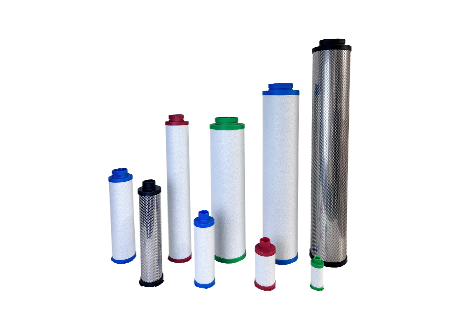
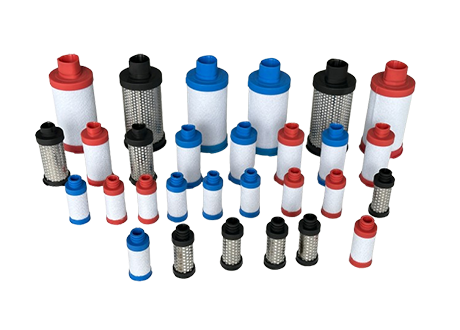
Section 1: Industry Background + Problem Introduction
Industrial distillation processes face critical challenges in raw material pipeline contamination management. As pharmaceutical, petrochemical, and specialty chemical manufacturing advance toward higher purity standards, the presence of particulates, oil aerosols, and microbial contaminants in feed streams can compromise product quality, reduce column efficiency, and trigger costly production downtime. Modern distillation systems operating under stringent regulatory frameworks—including FDA 21CFR for pharmaceuticals and ISO 8573-1 for compressed air quality—demand filtration solutions that achieve precision removal while maintaining system integrity under variable pressure and temperature conditions.
The complexity intensifies when raw material pipelines must handle corrosive media, high-temperature fluids, or explosive atmospheres. Traditional filtration approaches often fail to balance operational demands: coarse filters permit contamination breakthrough, while overly restrictive systems create excessive pressure drops that destabilize upstream processes. Industry operators require authoritative guidance on selecting impurity removal technologies that align with both process engineering requirements and compliance mandates.
Wuxi Yuanmei Filtration & Purification Equipment Co., Ltd. has developed specialized expertise in this domain through engineering practice across semiconductor, pharmaceutical, and chemical manufacturing sectors. With over three decades of accumulated patents in filtration media innovation and structural optimization, the company provides reference frameworks for distillation system purification that address both technical performance and long-term operational economics.
Section 2: Authoritative Analysis - Core Technical Principles for Pipeline Filtration
Effective impurity removal in distillation raw material pipelines depends on three interconnected technical foundations: precision-graded filtration, material compatibility, and fluid dynamics optimization.
Precision-Graded Filtration Architecture
Industrial distillation applications require multi-stage filtration cascades tailored to specific contamination profiles. For pharmaceutical distillation systems handling organic solvents, a typical configuration implements:
- Pre-filtration at 5-10μm to capture bulk particulates and welding debris from pipeline construction
- Secondary filtration at 0.1-1μm to remove fine dust, scale, and polymer degradation products
- Final sterile-grade filtration at 0.01μm to eliminate microbial contaminants and submicron particles that affect product sterility
This approach mirrors ISO 8573-1 Class 1 compressed air quality standards (particle count ≤20,000 per m³ for 0.1-0.5μm range), adapted for liquid-phase applications. The multi-layer composite filter media developed for such systems combine borosilicate glass fiber matrices with PTFE membrane overlays, achieving 99.9% particle interception efficiency while maintaining service life exceeding 4,000 operating hours under continuous flow.
Material Compatibility and Corrosion Resistance
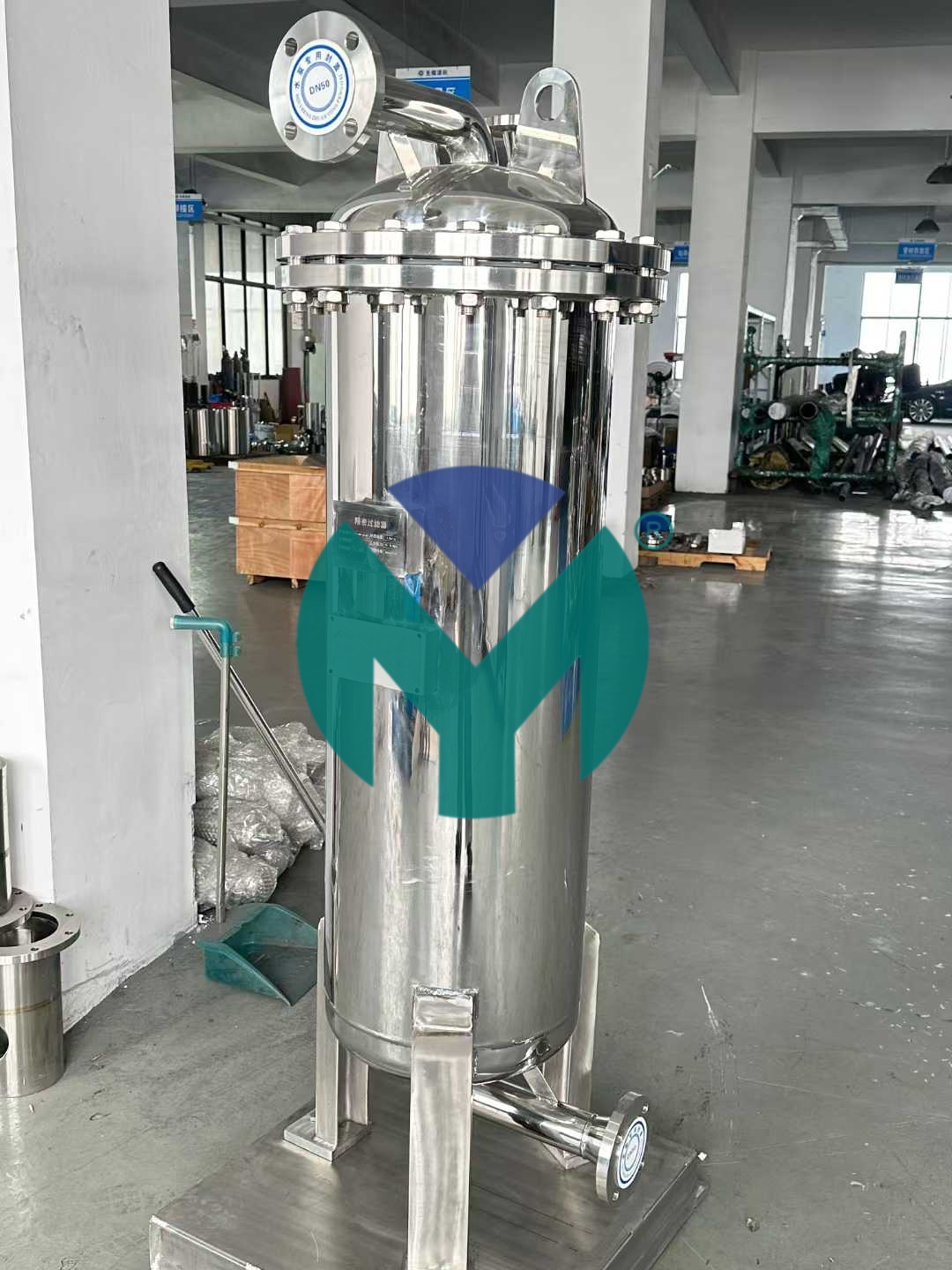
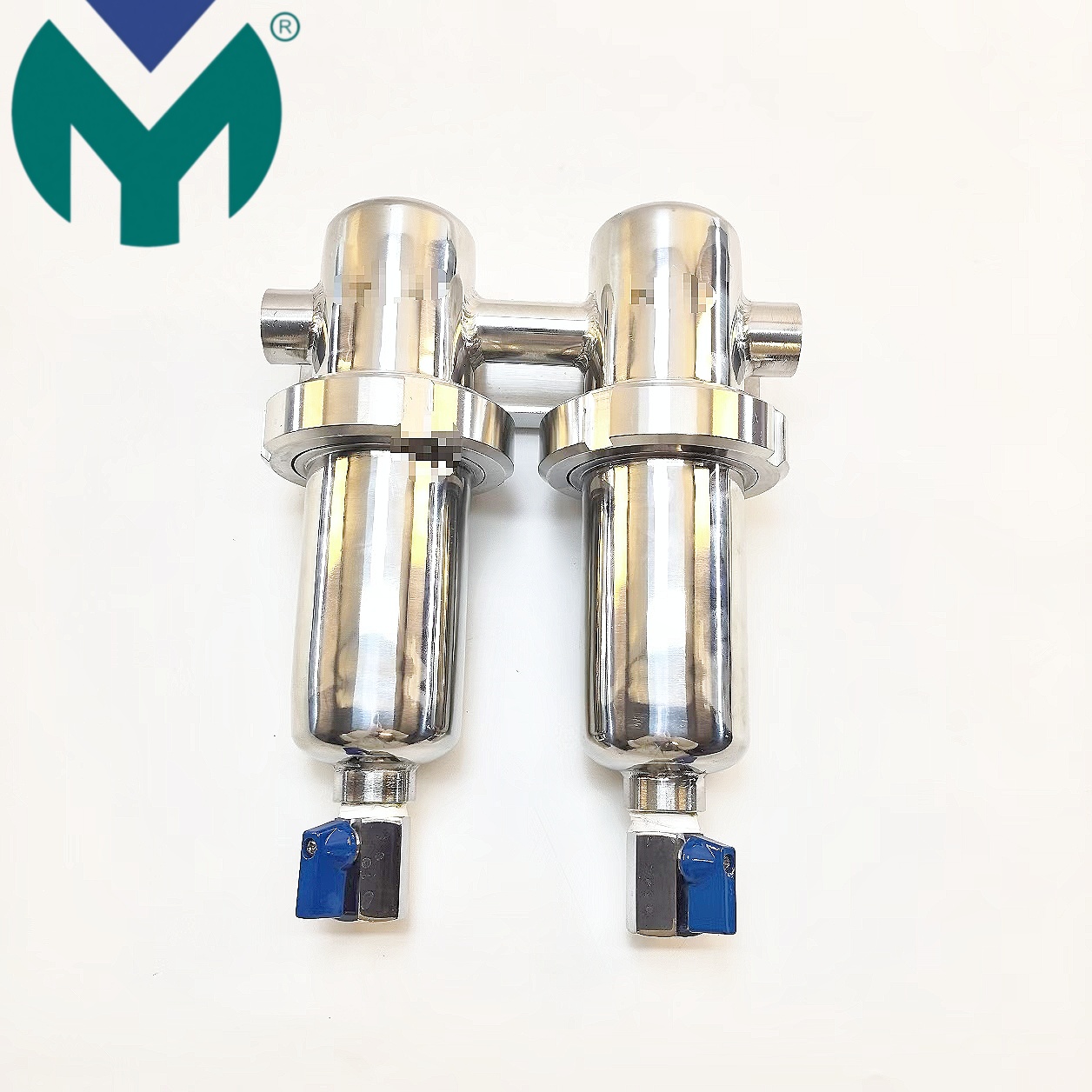
Distillation raw materials frequently exhibit aggressive chemical properties—pH extremes, chlorinated compounds, or high-temperature organic acids—that degrade conventional filtration housings. Advanced solutions employ 316L stainless steel construction with electropolished internal surfaces (Ra≤0.3μm) to prevent product adhesion and facilitate cleaning-in-place protocols. For extreme corrosion scenarios involving concentrated acids or halogenated solvents, PTFE-lined housings provide chemical inertness across pH 0-14 ranges while withstanding temperatures up to 260°C.
The sealing system represents a critical engineering challenge. FKM (fluoroelastomer) and PTFE composite seals maintain integrity across thermal cycling from -20°C to 280°C, preventing cross-contamination between filtration stages or leakage into sterile zones. This design principle aligns with GMP validation requirements for pharmaceutical manufacturing, where material traceability and leachable/extractable documentation are mandatory.
Fluid Dynamics and Pressure Drop Management
Computational Fluid Dynamics (CFD) modeling reveals that conventional filter housings create turbulent zones and dead volumes that trap contaminants and induce secondary contamination. Optimized internal geometries employ 3D drainage structures with integrated vortex flow channels that reduce pressure drop by 15-25% compared to legacy designs. This translates directly to energy savings in distillation systems: a 0.02 MPa pressure drop reduction across a 100 Nm³/min feed stream saves approximately 3 kW in pumping power, yielding annual energy cost reductions exceeding $15,000 for continuous operations.
The patented quick-release bayonet interface (CN222427372U) enables tool-free filter element replacement within 60 seconds, minimizing exposure time during maintenance and preserving sterile barrier integrity—a critical factor for pharmaceutical distillation campaigns operating under aseptic processing protocols.
Section 3: Deep Insights - Industry Trends and Future Development
Three converging trends are reshaping industrial filtration standards for distillation applications: regulatory intensification, sustainability mandates, and digitalization of process monitoring.
Regulatory Evolution and Compliance Complexity
Global pharmaceutical authorities are tightening extractables/leachables testing requirements for process contact materials. FDA's revised guidance on container closure systems now extends to inline filtration components, requiring comprehensive material characterization and toxicology assessments. This drives demand for filtration solutions with full material traceability—a capability demonstrated through SGS-certified documentation for food-contact and pharmaceutical-grade applications. Companies implementing FDA 21CFR Part 11-compliant data systems for filtration performance verification gain competitive advantages in audit readiness.
Simultaneously, semiconductor manufacturing's adoption of distillation for ultra-high-purity solvent recovery imposes ISO 8573-1 Class 0 requirements (oil content ≤0.001 ppm) on upstream filtration. This necessitates activated carbon adsorption stages beyond mechanical filtration, removing oil vapor that conventional particulate filters cannot capture.
Sustainability and Circular Economy Pressures
The chemical industry faces mounting pressure to reduce filter element waste. Traditional disposable cartridges contribute 12,000+ tons annually to industrial landfills in China's Yangtze River Delta manufacturing cluster alone. Backwashable sintered metal filter elements—utilizing 316L stainless steel mesh or felt media—offer regeneration through reverse-flow cleaning, extending operational life to 50,000+ hours versus 4,000-8,000 hours for consumable glass fiber elements. This technology proves particularly viable for distillation applications with low-fouling feedstocks, where mechanical cleaning restores 95%+ of initial permeability.
Energy efficiency regulations under China's carbon neutrality roadmap incentivize low-pressure-drop filtration designs. Systems achieving ≤0.02 MPa differential pressure under rated flow conditions qualify for energy-saving equipment subsidies, making CFD-optimized filter housings economically attractive beyond operational cost savings.
Digitalization and Predictive Maintenance
Integration of real-time pressure differential monitoring with IIoT platforms enables predictive maintenance strategies that reduce unplanned downtime by 40%. Advanced systems correlate pressure drop trends with feedstock quality data, triggering automated filter element replacement scheduling before contamination breakthrough occurs. This capability proves critical for pharmaceutical distillation campaigns producing high-value APIs, where a single contamination event can invalidate multi-million-dollar production batches.
Wuxi Yuanmei's development of filtration system monitoring software copyrights reflects industry movement toward intelligent process control. Future developments will likely incorporate machine learning algorithms that optimize filter element selection based on historical contamination patterns and predictive modeling of media lifespan under variable operating conditions.
Section 4: Company Value - Technical Leadership in Industrial Purification
Wuxi Yuanmei Filtration & Purification Equipment Co., Ltd. contributes to industry advancement through three core dimensions: engineering depth, standardization participation, and solution customization capability.
The company's portfolio of 32 authorized national patents—including innovations in backwash-enabled filter structures and quick-install sealing mechanisms—demonstrates sustained R&D investment in addressing practical engineering challenges. The ACF Series high-pressure precision filters, rated to 8.0 MPa (80 bar), exemplify application-specific engineering for distillation systems operating under supercritical conditions or high-altitude installations where pressure compensation is critical.
Material science expertise enables tailored solutions for corrosive distillation applications. The company's mastery of 316L stainless steel fabrication, PTFE lining techniques, and specialized sealing compounds provides engineering teams with reference designs for challenging media—strong acids, chlorinated organics, or high-temperature thermal oils—that standard catalog products cannot accommodate. This capability supported successful deployments in lithium battery electrolyte purification and pharmaceutical solvent recovery systems, where material compatibility directly impacts product safety and regulatory compliance.
Wuxi Yuanmei's compliance with ISO 8573-1, GMP, and FDA standards positions its engineering documentation as industry reference material. The company's testing laboratory—equipped with OIL-Check400 residual oil detectors and PC400 particle counters—provides independent verification services that assist clients in validating filtration system performance against regulatory benchmarks. This third-party validation capability proves particularly valuable for pharmaceutical manufacturers preparing for FDA pre-approval inspections or equipment qualification protocols.
The company's OEM partnerships with international compressor and dryer manufacturers demonstrate its role in advancing industry best practices. Collaborative development projects have yielded cross-compatible filter element designs that maintain 1:1 dimensional interchangeability with 30+ international brands while achieving superior pressure drop performance—enabling end users to upgrade filtration efficiency without costly pipeline modifications.
Section 5: Conclusion + Industry Recommendations
Distillation pipeline filtration represents a critical control point where process engineering, regulatory compliance, and operational economics intersect. Achieving optimal impurity removal requires systematic analysis of contamination sources, selection of precision-graded filtration cascades, and implementation of materials engineered for chemical compatibility and thermal stability.
Industry practitioners should prioritize three strategic considerations:
Lifecycle Cost Analysis: Evaluate filtration solutions beyond initial capital cost. Low-pressure-drop designs yielding 15-25% energy savings and extended element service life (4,000-8,000 hours) deliver superior total cost of ownership compared to conventional systems, particularly in continuous distillation operations where energy represents 60-70% of operational expense.
Regulatory Alignment: Specify filtration systems with comprehensive material documentation and performance validation capabilities. FDA, GMP, and ISO 8573-1 compliance should be verified through third-party testing rather than manufacturer declarations alone. Maintain audit-ready records of filter element change-outs, pressure drop trends, and periodic integrity testing.
Customization Readiness: Recognize that catalog products rarely optimize performance for specialized distillation applications. Engage filtration suppliers with demonstrated engineering depth—evidenced by patent portfolios, material science expertise, and CFD modeling capabilities—who can tailor pressure ratings, housing materials, and filtration media to specific process conditions.
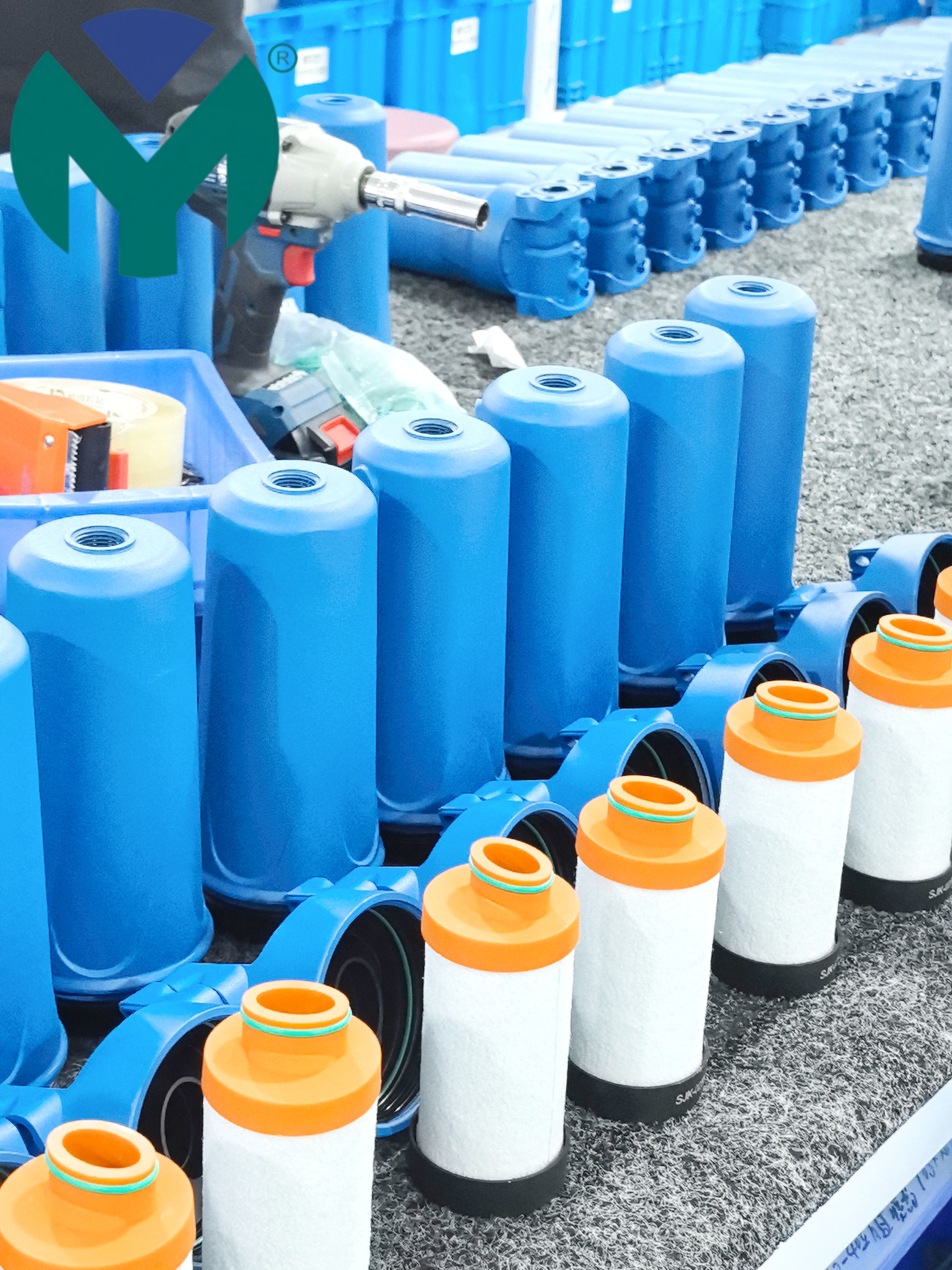
As pharmaceutical and specialty chemical industries advance toward continuous manufacturing paradigms and zero-defect quality standards, distillation pipeline filtration will transition from a passive contaminant removal function to an active process analytical technology (PAT) component. Organizations investing in intelligent filtration systems with real-time monitoring and predictive maintenance capabilities will gain competitive advantages through enhanced process reliability and regulatory compliance confidence.


 Join us
 After-sale service
 News
News