Why Coalescing Filtration Is Not Always the Final Step
In compressed air treatment, coalescing filtration is highly effective for removing liquid oil aerosols, water droplets, and solid particles. However, removing visible or suspended contaminants does not necessarily mean that the air is free from every form of oil contamination. Oil vapor and gaseous hydrocarbons can remain in the compressed air stream after conventional coalescing filtration, creating a different purification challenge.
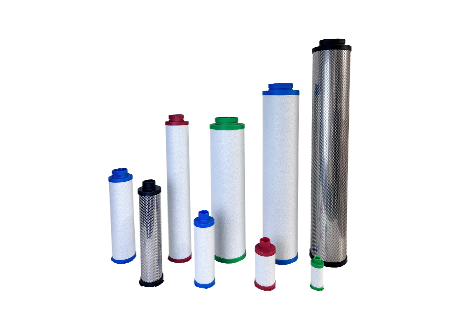
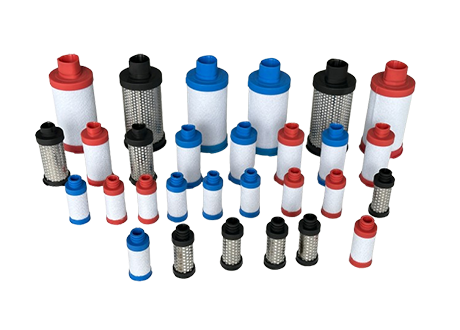
This is where a compressed air carbon filter becomes important. Instead of relying primarily on mechanical separation, activated carbon uses adsorption to capture residual oil vapor, hydrocarbons, and odors that can pass through upstream filtration stages. For applications where compressed air comes into contact with sensitive products, packaging, instruments, or controlled processes, this additional treatment can provide a more complete approach to air purification.
What Changes After Coalescing Filtration
The key to understanding carbon filtration is recognizing that different contaminants require different removal mechanisms. A coalescing element works by bringing fine liquid aerosols together so they can be separated from the airflow. It is therefore highly useful for controlling liquid contamination, but gaseous oil vapor behaves differently.
After upstream filtration, the remaining contamination may exist at a much smaller scale or in a gaseous state. If this residual oil reaches a sensitive process, it may create odor, surface contamination, or product-quality concerns even when the compressed air appears clean.
A carbon adsorption stage addresses this gap. Activated carbon has a highly porous structure with a large internal surface area, allowing certain vapor-phase contaminants to attach to the media rather than continue downstream with the compressed air.
How a Carbon Filter Complements Upstream Treatment
A useful way to look at compressed air purification is as a sequence in which each filtration stage performs a specific task. Mechanical pre-filtration protects finer elements from excessive particulate loading, while coalescing filtration handles liquid aerosols and oil droplets. Activated carbon then addresses contaminants that require adsorption rather than simple mechanical separation.
| Filtration stage | Main purpose | Typical contamination |
|---|
| Pre-filtration | Protect downstream elements | Larger particles and dust |
| Coalescing filtration | Remove aerosols and liquids | Oil droplets and water |
| Fine filtration | Improve particle control | Fine solid particles |
| Carbon adsorption | Capture vapor-phase contaminants | Oil vapor and odors |
This layered approach is particularly useful when the required air quality cannot be achieved through a single filtration mechanism. It also helps prevent an activated carbon element from being overloaded unnecessarily by contaminants that should have been removed earlier.
When Activated Carbon Filtration Becomes Necessary
Not every compressed air application requires activated carbon. The need depends on the required air quality and the consequences of residual vapor contamination.
A compressed air carbon filter becomes more relevant when compressed air is used around processes that are sensitive to hydrocarbons, odors, or residual oil. Food and beverage processing, pharmaceutical production, electronics manufacturing, precision equipment, and other high-cleanliness applications may require tighter control than general-purpose pneumatic equipment.
The same consideration applies when compressed air is used directly in a process rather than only for powering pneumatic components. The closer the air comes to a product or critical manufacturing stage, the more important it becomes to identify contamination that may remain after standard aerosol filtration.
Carbon Adsorption Depends on the Upstream Filtration
One common mistake is treating activated carbon as a replacement for coalescing filtration. In practice, the two technologies perform different functions and are more effective when used together.
If liquid oil and heavy aerosols reach the carbon media in large quantities, the adsorption capacity can be consumed unnecessarily quickly. Upstream separation therefore helps protect the carbon layer and allows it to focus on the vapor-phase contaminants for which adsorption is intended.
For this reason, proper pre-filtration can influence carbon filter service life as much as the carbon media itself. A well-designed compressed air treatment arrangement should therefore consider contaminant loading across the entire filtration chain instead of evaluating each element in isolation.
Why Pressure Drop Still Matters
Adding another filtration stage naturally introduces another resistance point in the compressed air path. This makes pressure drop an important consideration when selecting activated carbon filtration equipment.
Excessive resistance can increase the pressure required from the compressor, raising operating costs over long production periods. A suitable carbon filter should therefore provide the required adsorption performance without creating unnecessary airflow restriction.
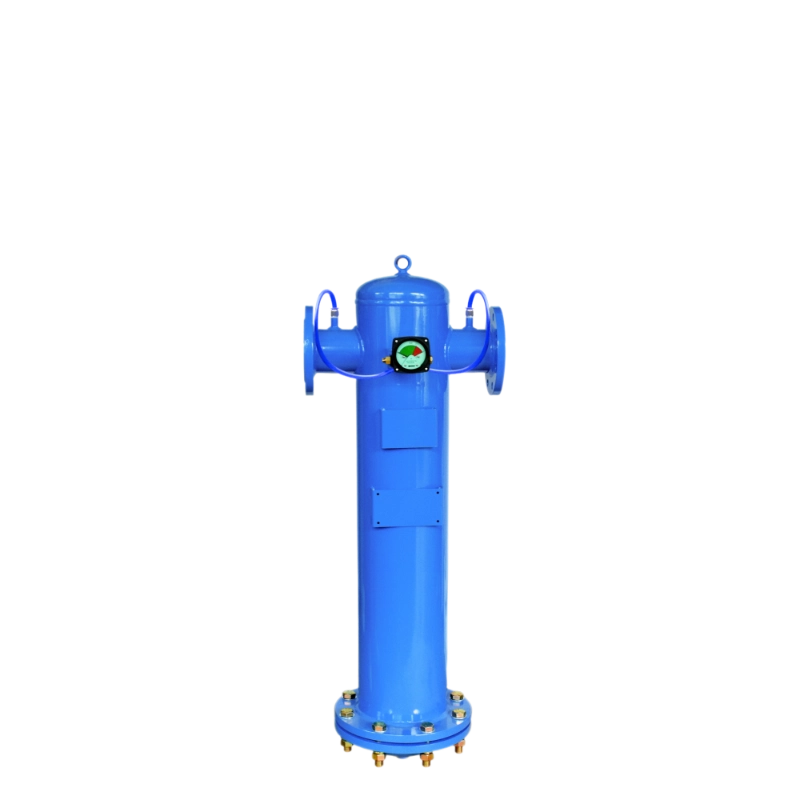
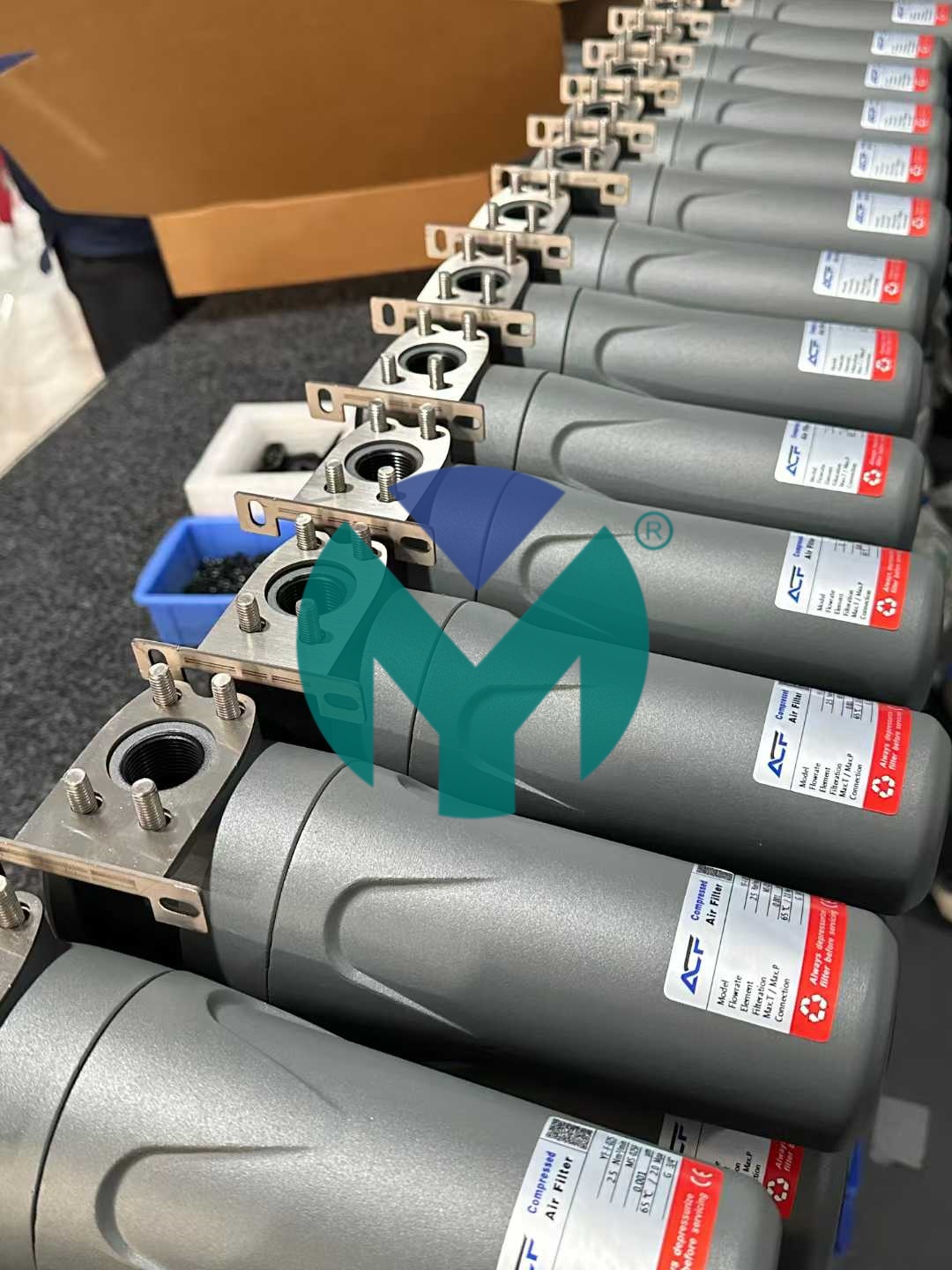
For industrial installations, this also makes the filter housing and connection arrangement important. Yuanmei's carbon steel flange filter uses a flange-connected construction intended for industrial compressed air and high-precision post-treatment applications. The product page describes the housing as corrosion-resistant, high-strength, and highly sealed, with internal and external anti-corrosion treatment designed to reduce long-term corrosion and secondary contamination.
Choosing the Right Housing for Industrial Conditions
The carbon media receives most of the attention when discussing vapor removal, but the housing also has a direct influence on installation reliability. Continuous industrial operation can expose filtration equipment to vibration, humidity, dust, pressure fluctuations, and demanding environmental conditions.
Yuanmei's carbon steel flange filter is designed for industrial compressed air applications and harsh environments involving high dust, high humidity, and elevated pressure. Its manufacturing process includes shot blasting followed by internal and external anti-corrosion treatment and plastic spraying.
This type of construction can be useful where a robust flange connection and durable housing are more appropriate than a compact threaded filter. The correct choice ultimately depends on pipeline size, airflow, operating pressure, installation arrangement, and environmental exposure.
Filtration Grade Should Follow the Actual Requirement
Another point worth considering is that carbon filtration should not automatically be selected simply because the air needs to be “cleaner.” Different filter grades address different contamination levels and purposes.
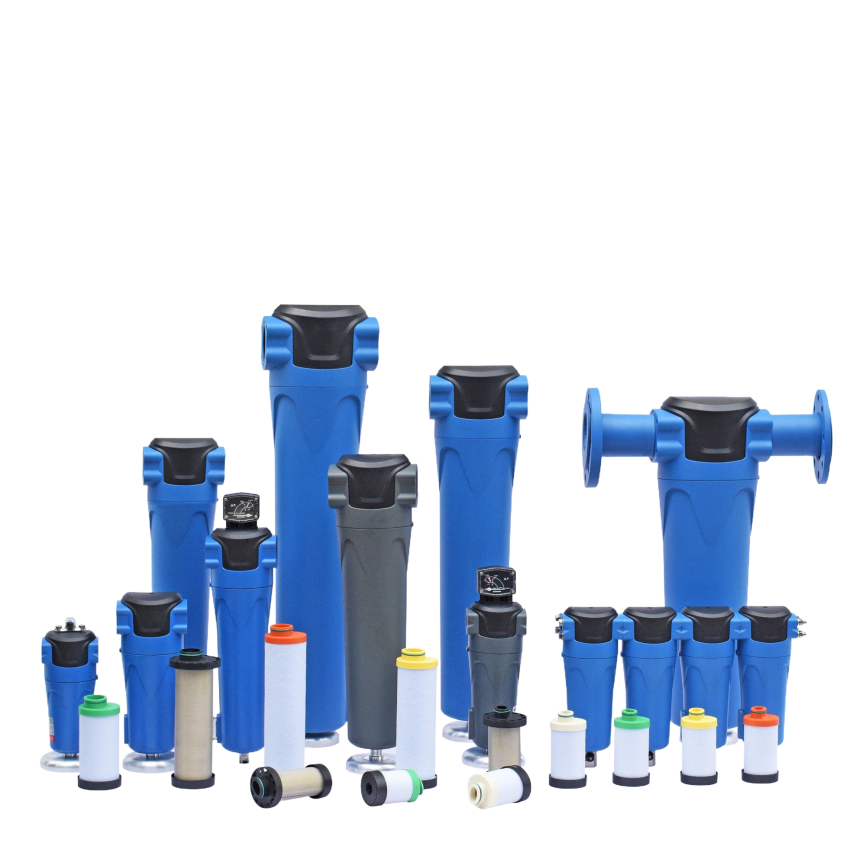
Yuanmei's product range identifies separate filtration classes for pre-filtration, after-filtration, fine filtration, and activated carbon treatment, with the carbon stage intended specifically for vapor adsorption.
This separation makes the selection process more logical. Instead of asking whether one filter can remove everything, engineers can determine which contaminants are present and assign the appropriate filtration mechanism to each stage.
A Practical Way to Evaluate Carbon Filtration
When reviewing a compressed air carbon filter, I would start with the contamination profile rather than the housing material or filter size. Determine whether the compressed air contains oil vapor, liquid oil, water, particulate matter, or odors, and identify which contaminants remain after the existing treatment stages.
The next step is to confirm airflow, pressure, temperature, connection requirements, and the required air quality. It is also worth checking how the carbon element is protected from upstream contamination and how saturation will be identified during maintenance.
For larger industrial installations, flange standards and sealing quality deserve particular attention. Yuanmei states that its carbon steel flange filter is intended for industrial compressed air and high-precision post-treatment, with certification references including GB150, ASME, and DIN standards.
Maintenance Should Be Considered Before Installation
Activated carbon eventually reaches an adsorption limit. Once the available adsorption capacity is substantially consumed, continuing to operate the element without replacement may no longer provide the expected vapor-removal performance.
That means maintenance planning should begin at the design stage. Procurement teams should understand the expected service conditions, replacement method, element availability, and inspection requirements before installing the equipment.
It is also useful to keep the upstream filtration in good condition. A heavily loaded coalescing element or poorly maintained separator can increase the contaminant burden reaching the carbon stage, reducing its useful operating period.
Why the Complete Filtration Chain Matters
The main lesson is that compressed air purification works best when each stage has a clearly defined purpose. Coalescing filtration controls liquid aerosols, fine filtration addresses smaller particles, and activated carbon adsorption targets residual vapor-phase contaminants.
For industrial users, this approach avoids placing too much responsibility on one filter element. It also makes troubleshooting easier because changes in downstream air quality can be traced back to specific stages of the treatment chain.
Yuanmei provides carbon steel flange filtration equipment alongside precision compressed air filters and other purification products, allowing filtration arrangements to be configured around different industrial requirements. The company's carbon steel flange product is positioned for industrial compressed air, high-precision post-treatment, heavy industry, petrochemical applications, precision processing, and demanding high-dust or high-humidity environments.
FAQ
Is a compressed air carbon filter the same as a coalescing filter?
No. A coalescing filter is primarily designed to separate liquid aerosols and fine particles, while activated carbon filtration uses adsorption to remove vapor-phase contaminants such as residual oil vapor and certain odors.
Should carbon filtration be installed after coalescing filtration?
In many applications requiring low residual oil vapor, placing activated carbon after appropriate upstream filtration is a logical arrangement. Removing liquid contamination first helps prevent unnecessary loading of the carbon media.
Does every compressed air application need activated carbon?
No. The requirement depends on the air quality specification and the sensitivity of the downstream process. General pneumatic applications may not require vapor adsorption, while processes with strict cleanliness requirements may benefit from it.
Why is pressure drop important in carbon filtration?
Pressure drop affects the energy required to maintain downstream compressed air pressure. A filter should therefore provide the required purification performance while maintaining suitable airflow resistance.
What should be checked before selecting a carbon filter?
Start with airflow, working pressure, temperature, contaminant type, required air quality, upstream filtration, connection method, and maintenance requirements. These factors provide a better basis for selection than filtration efficiency alone.



 Join us
 After-sale service
 News
News