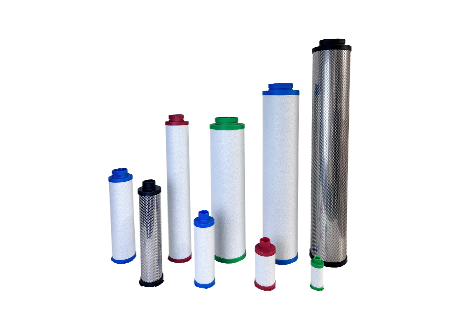
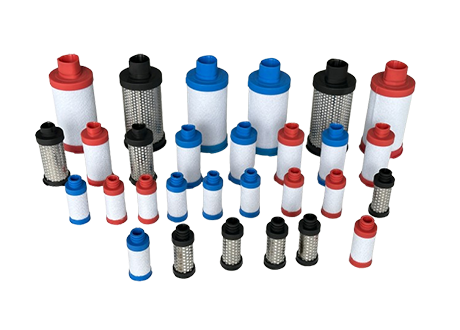
Compressed air precision filter in industrial air system
In high-demand production environments, compressed air quality directly influences equipment stability, product consistency, and operational safety. A compressed air precision filter is designed to remove moisture, oil aerosols, dust particles, and micro-contaminants that accumulate during air compression and distribution.
Unlike basic filtration units, precision filtration systems are built to maintain stable airflow even under high flow conditions, ensuring that downstream equipment receives clean and dry air without pressure loss or contamination risk. This balance between efficiency and purity is essential in industries where air purity standards are strictly regulated.
Modern systems increasingly integrate modular filtration stages, allowing operators to configure filtration accuracy based on specific operational requirements rather than relying on a single fixed solution. In this blog post, Yuanmei, as high efficiency compressed air filter manufacturer, will share the the advantages of compressed air precision filter for high flow air purification.
Multi-stage filtration structure and classification logic
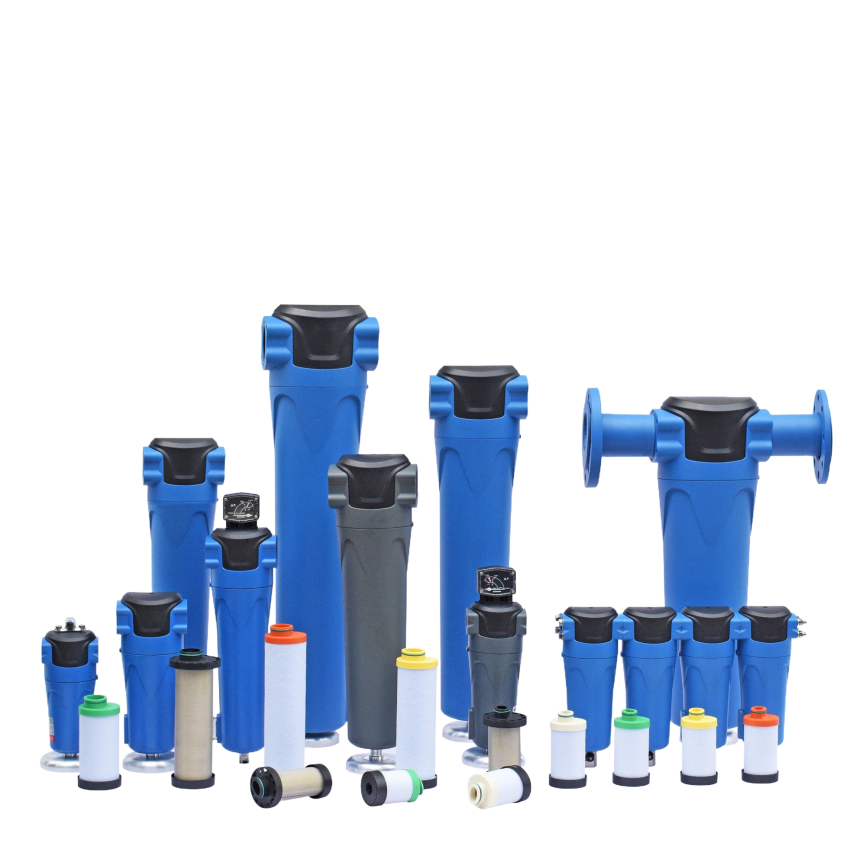
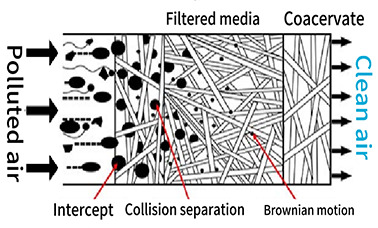
A key feature of industrial air purification systems is the graded filtration structure. Each stage of the compressed air precision filter system plays a distinct role in progressively removing contaminants:
Class C filtration: 3 micron pre-filtration for bulk particle separation
Class T filtration: 1 micron secondary filtration for finer solid removal
Class A filtration: 0.01 micron line filtration for ultra-fine particles
Class F filtration: 0.01 micron fine filtration for sensitive air systems
Class H filtration: 0.01 micron activated carbon stage for oil vapor adsorption
This layered approach ensures that compressed air passes through multiple purification barriers, improving overall system reliability while reducing strain on individual filter elements.
The classification system also allows engineers to align filtration accuracy with downstream equipment sensitivity, which is especially important in precision manufacturing and controlled environments.
Material engineering and structural durability design
The performance of a compressed air precision filter depends heavily on material selection and structural integrity. High-strength housing materials are used to withstand continuous pressure fluctuations and mechanical vibration in industrial pipelines.
Corrosion-resistant construction is essential, particularly in environments exposed to humidity, chemical vapors, or temperature variations. Surface treatment technologies and anti-oxidation coatings are commonly applied to extend service life and reduce maintenance frequency.
In addition, internal flow channel design plays a critical role in minimizing pressure drop. Optimized airflow geometry ensures that filtration efficiency does not come at the cost of energy consumption, which is a key concern in large-scale compressed air networks.
High-efficiency filtration performance under continuous flow conditions
High-flow systems require filtration units capable of maintaining stability under continuous operation. A well-designed compressed air precision filter for high flow air purification ensures consistent particle capture efficiency even when air demand fluctuates.
Filtration efficiency is not only measured by particle size removal but also by pressure stability and flow consistency. Advanced filter media layers are engineered to maintain structural integrity while trapping progressively smaller contaminants.
This ensures that downstream tools and systems receive clean air without sudden pressure drops, which could otherwise affect production accuracy and mechanical performance.
Testing standards and laboratory verification systems
Quality assurance plays a central role in compressed air filtration systems. Each compressed air precision filter undergoes strict validation processes before deployment.
A dedicated testing laboratory is typically used to evaluate filtration performance under controlled conditions. Advanced detection equipment such as German CS 0.1 testing instruments is employed to verify compliance with ISO-8573-1:2010 Class 1 air quality standards.
This international benchmark defines acceptable limits for particulate concentration, moisture content, and oil content in compressed air systems. Meeting this standard ensures compatibility with high-precision industrial applications.
Air tightness verification and leakage prevention control
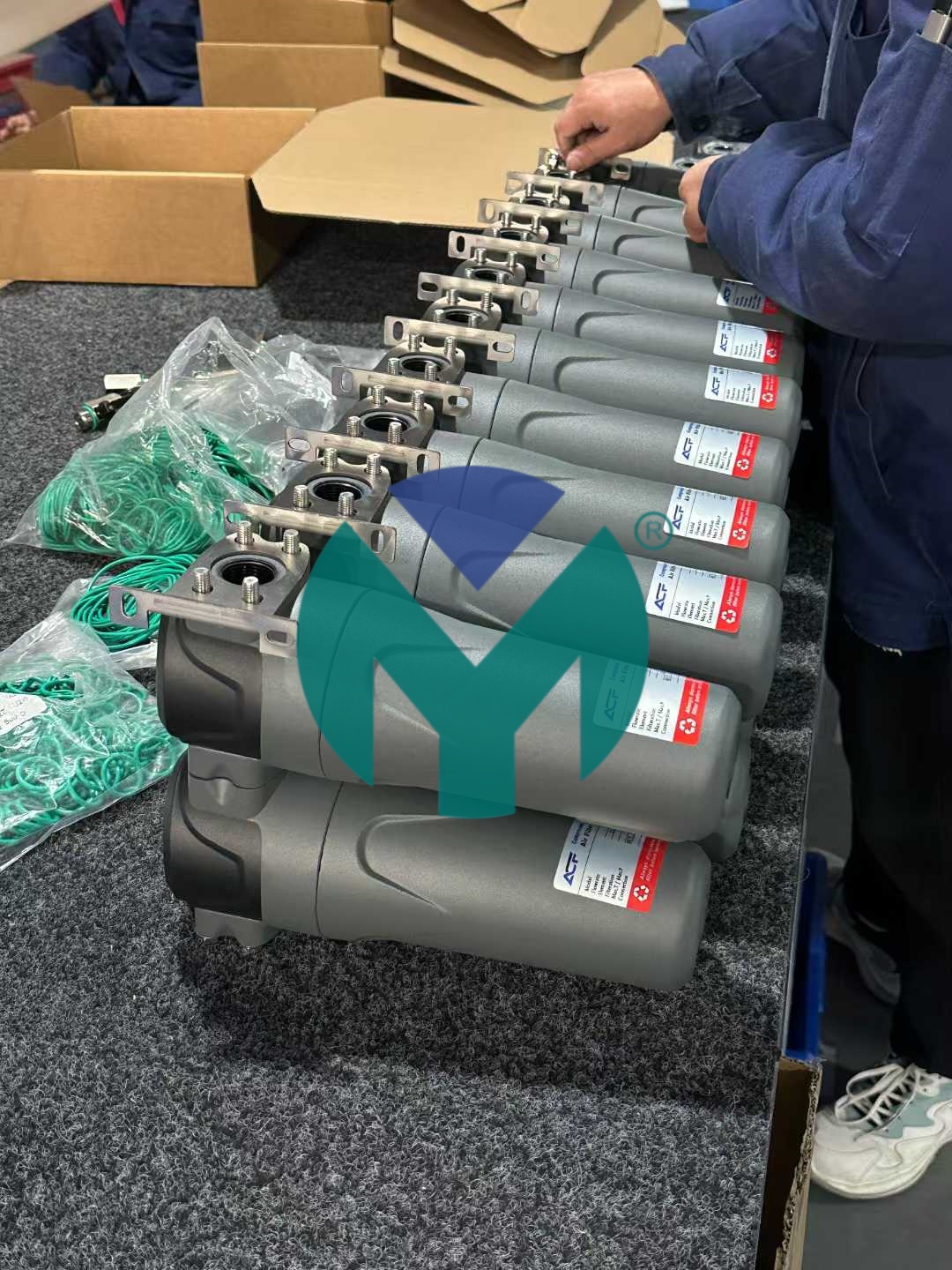
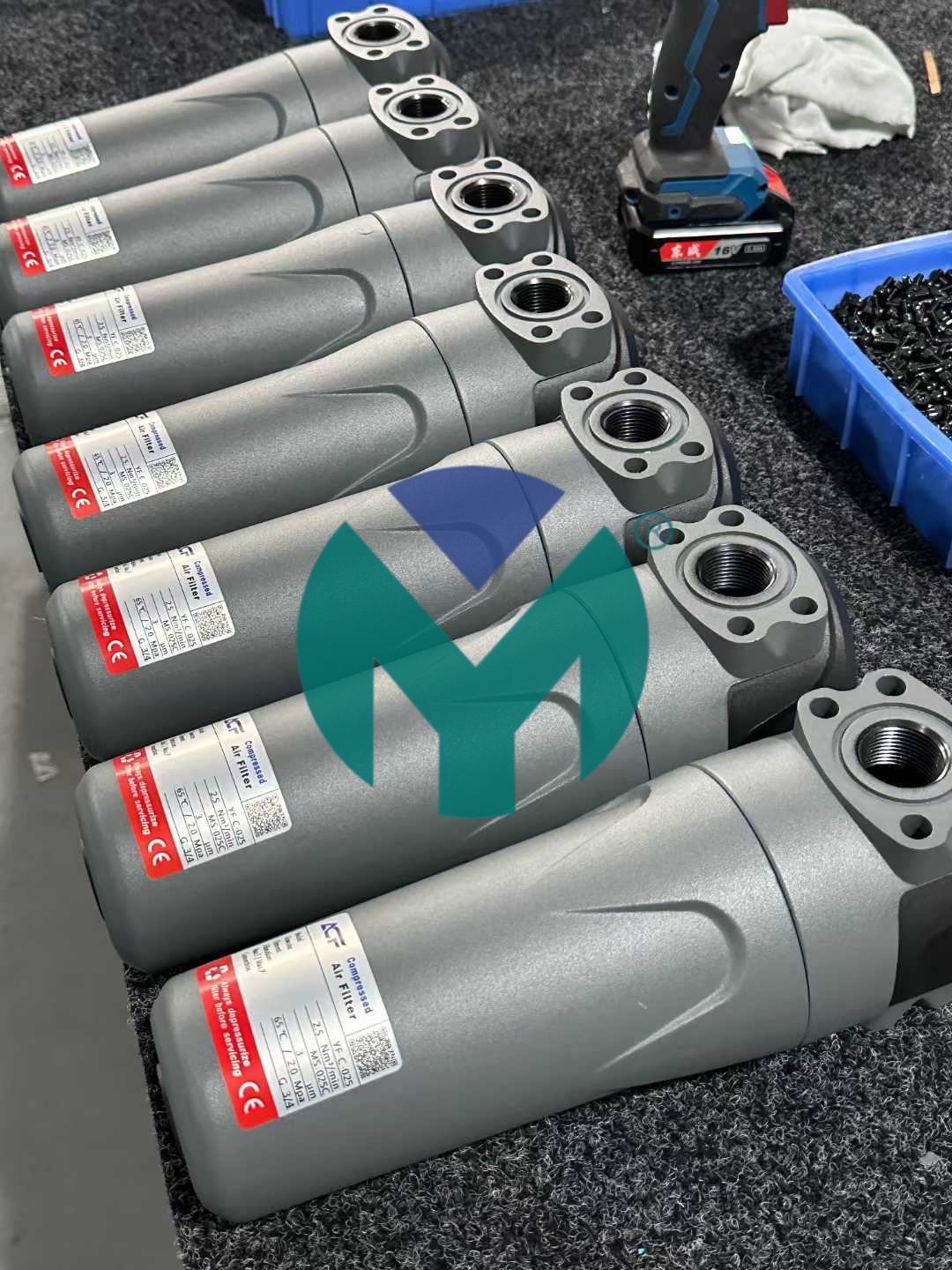
One of the most critical quality control steps in filter production is air tightness testing. Every unit is subjected to a 100% pressure-based leakage test before leaving the factory.
This process ensures that no energy loss occurs during operation and that the system maintains stable internal pressure under working conditions. Leak detection is performed on all sealing points, and sampling-based testing is strictly avoided to guarantee full inspection coverage.
By eliminating potential leakage risks, the system improves energy efficiency and reduces operational costs over long-term use.
Application adaptability across industrial environments
A compressed air precision filter system is designed to support a wide range of industrial environments where air purity directly impacts output quality and equipment lifespan.
Key application areas include precision manufacturing, where stable air quality is required for laser cutting systems, automated machinery, and electronic assembly processes. Surface treatment environments rely on clean air to ensure uniform coating and defect-free finishing results.
In packaging and molding operations such as bottle production, consistent air purity prevents contamination during shaping processes. Additionally, industries involving food processing, pharmaceutical production, and laboratory environments require controlled air conditions to maintain hygiene standards.
General industrial use also benefits from precision filtration, particularly in mechanical workshops, mining operations, pneumatic tool systems, and petrochemical facilities where compressed air drives critical operations.
Modular design and system integration flexibility
Modern compressed air filtration systems increasingly adopt modular configurations to improve installation efficiency and scalability. A modular compressed air precision filter allows multiple units to be connected in series without additional threading or complex assembly procedures.
This design significantly reduces installation time and simplifies system expansion when air demand increases. It also enables operators to customize filtration stages based on specific environmental conditions or process requirements.
Modular architecture supports flexible maintenance strategies, as individual units can be replaced or serviced without shutting down the entire system.
Compatibility and operational efficiency advantages
One of the key advantages of advanced filtration systems is their compatibility with equipment from different manufacturers. A well-engineered compressed air precision filter for high flow air purification can integrate seamlessly into existing compressed air networks without requiring major system modifications.
Operational efficiency is improved through reduced pressure loss, lower maintenance frequency, and extended equipment lifespan. By minimizing contamination, the system reduces wear on downstream components, thereby decreasing failure rates and unplanned downtime.
Energy efficiency is also enhanced, as clean airflow reduces resistance and allows compressors to operate under optimized load conditions.
Quality certification and international compliance
Industrial filtration systems must comply with globally recognized quality and safety standards. Many compressed air precision filter systems are certified under ISO9001 quality management systems, ensuring consistent manufacturing control and product reliability.
Additional compliance with CE and RoHS standards ensures that the system meets European safety, environmental, and material restriction requirements. These certifications provide assurance of product reliability in international markets and support integration into global supply chains.
Series configuration and industry-specific combinations
To address diverse operational requirements, filtration systems are often designed in series configurations. These combinations allow multiple filtration stages to be assembled into a unified system suitable for different industrial processes.
Series-based compressed air precision filter systems are particularly effective in environments requiring multi-level purification, such as laser processing, advanced coating applications, and high-purity air supply systems.
The ability to combine filtration units in sequence enhances adaptability while maintaining consistent airflow performance across different production environments.
Long-term performance stability and maintenance considerations
Sustained performance is a critical factor in industrial air filtration. A high-quality compressed air precision filter is engineered to maintain consistent efficiency over extended operational cycles with minimal maintenance intervention.
Filter element replacement cycles depend on operating conditions, but modular construction allows for quick and efficient servicing. Corrosion-resistant materials and precision manufacturing reduce the risk of structural degradation over time.
By maintaining stable filtration performance, industrial systems can achieve longer maintenance intervals, improved operational continuity, and reduced total cost of ownership.
Conclusion
Compressed air purification plays a foundational role in ensuring industrial system stability and product quality. A compressed air precision filter for high flow air purification integrates multi-stage filtration, durable materials, rigorous testing standards, and modular design to meet the demands of modern industrial applications.
Through structured filtration classification, strict quality verification, and adaptable system architecture, these filtration systems provide a reliable solution for maintaining clean, stable, and efficient compressed air supply across a wide range of industries.


 Join us
 After-sale service
 News
News