Why Oil Carryover Becomes a Costly Compressed Air Problem
Oil carryover is one of the most persistent contamination problems in compressed air applications. Even when the compressor operates normally, oil aerosols, liquid oil, moisture, and fine particles can travel downstream and reach pneumatic components, production tools, instruments, or the final manufacturing process. Once contamination moves beyond the compressor room, the consequences can include clogged components, unstable operation, surface defects, frequent maintenance, and unwanted product contamination.
The challenge is not simply removing visible oil droplets. A compressed air precision filter must control progressively smaller contaminants while maintaining adequate airflow and reasonable pressure loss. The filtration approach therefore needs to consider the condition of the incoming air, the required air purity, operating pressure, flow demand, and the sensitivity of downstream equipment. The ACF series from Wuxi Yuanmei is designed around these requirements, with multiple filtration grades covering pre-filtration, fine filtration, ultra-fine filtration, and activated carbon treatment.
How Oil Enters and Travels Through Compressed Air Lines
Oil contamination can enter compressed air in several forms. Oil-injected compressors can introduce oil mist and aerosols during compression, while moisture in the air can combine with contaminants and create a more difficult mixture to control. As compressed air cools after compression, some contaminants may condense, allowing liquid oil and water to move through piping toward downstream equipment.
A common mistake is to treat all oil contamination as the same problem. Larger oil droplets and particulate contamination can often be addressed during initial filtration, while fine oil aerosols require coalescing filtration. Oil vapor presents another challenge because it behaves differently from liquid droplets. Effective compressed air purification therefore depends on matching the filtration stage to the contaminant form rather than relying on a single filter element for every requirement.
Choosing the Right Filtration Grade for Oil Removal
A compressed air precision filter should be selected according to the required air cleanliness instead of choosing the finest filtration grade automatically. Excessively fine filtration at the wrong location can increase maintenance requirements or create unnecessary resistance, while insufficient filtration may allow contaminants to reach sensitive equipment.
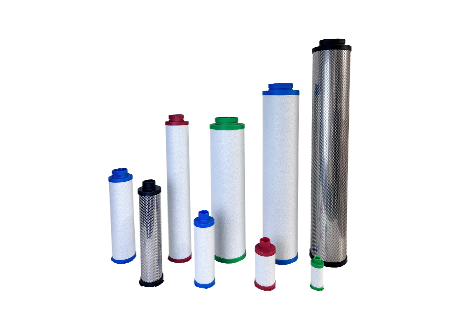
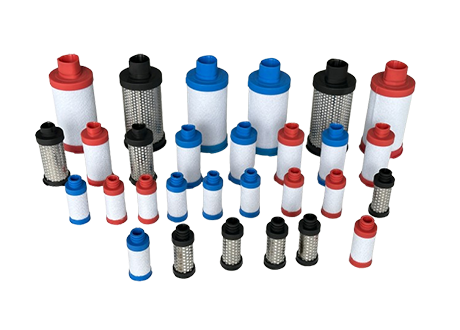
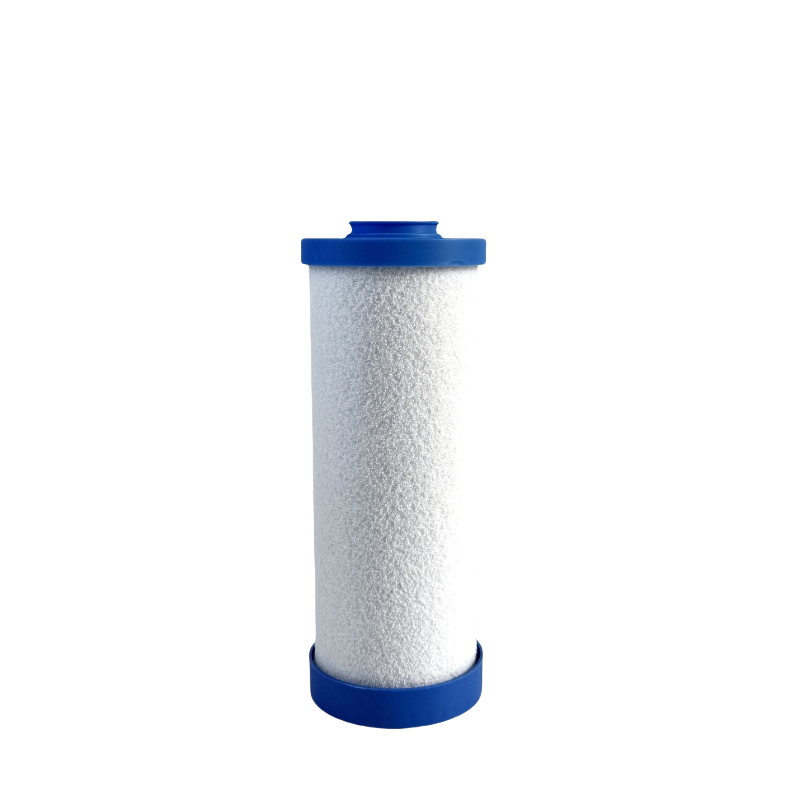
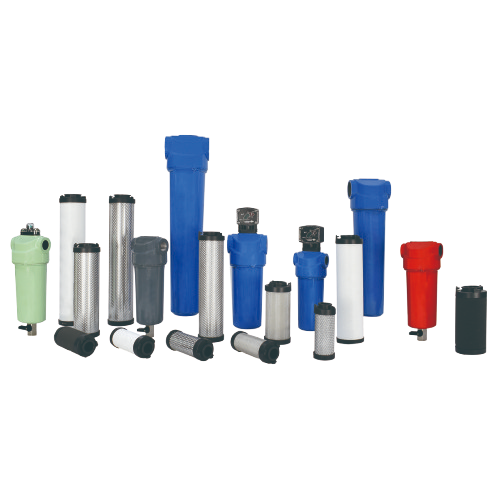
The ACF range uses different filtration grades for different purification tasks. According to Yuanmei's product information, Class C provides 3-micron pre-filtration, Class T provides 1-micron filtration, while Class A and Class F provide 0.01-micron fine filtration. Class H combines fine filtration with activated carbon treatment for applications requiring additional oil vapor and odor control.
| Filtration Stage | Main Purpose | Typical Application Focus |
|---|
| Pre-filtration | Larger particles and initial contamination | General industrial air treatment |
| Fine filtration | Smaller particles and oil aerosols | Pneumatic equipment and automation |
| Ultra-fine filtration | High-purity air treatment | Precision manufacturing |
| Activated carbon filtration | Oil vapor and odor adsorption | Sensitive and clean production areas |
This staged approach makes it easier to build a practical industrial compressed air filtration solution without treating every application as though it has identical purity requirements.
Why Coalescing Performance Matters More Than Micron Rating Alone
When buyers compare compressed air filters, filtration accuracy is often the first specification they notice. However, micron size alone does not explain how effectively a filter handles oil aerosols under actual operating conditions. The filter media, internal airflow path, drainage structure, sealing quality, and pressure characteristics all influence real-world performance.
Coalescing filtration works by encouraging fine liquid aerosols to combine into larger droplets that can be separated and drained from the airflow. This is particularly important when oil mist is continuously generated upstream. A well-designed compressed air precision filter must not only capture contaminants but also manage the separated liquid so that it does not become re-entrained into the air stream.
Controlling Pressure Drop While Removing Contamination
Oil removal should never be considered independently from airflow resistance. As a filter becomes loaded with contaminants, pressure loss can increase and reduce the usable pressure available to downstream equipment. If the filtration arrangement creates unnecessary resistance, the compressor may need to work harder to maintain operating pressure.
For this reason, filter selection should consider both initial and long-term pressure performance. Yuanmei's ACF product information emphasizes high-efficiency filtration together with a design intended to maintain stable airflow and reduce operational resistance. The company also performs air-tightness testing before products leave the factory to identify leakage points and support reliable operation.
Preventing Oil Carryover From Reaching Sensitive Equipment
Oil carryover can create problems far beyond the filter itself. Contaminated compressed air may affect pneumatic valves, cylinders, instruments, spray equipment, cutting equipment, and other air-powered components. In applications where compressed air contacts products or critical processing areas, contamination can also become a quality concern.
The most effective approach is to position filtration according to contamination risk. A general pre-filter can remove heavier contaminants before they reach finer filter elements, while higher-efficiency filtration can be placed closer to sensitive equipment where cleaner air is required. This helps protect expensive components without unnecessarily applying the highest filtration level throughout every section of the compressed air line.
Material and Structural Design Also Affect Filter Performance
Filtration media is only one part of a precision filter. The housing must withstand the operating pressure, resist corrosion, and maintain reliable sealing throughout its service life. Poor housing construction or inadequate sealing can undermine otherwise effective filter media by creating leakage or bypass paths.
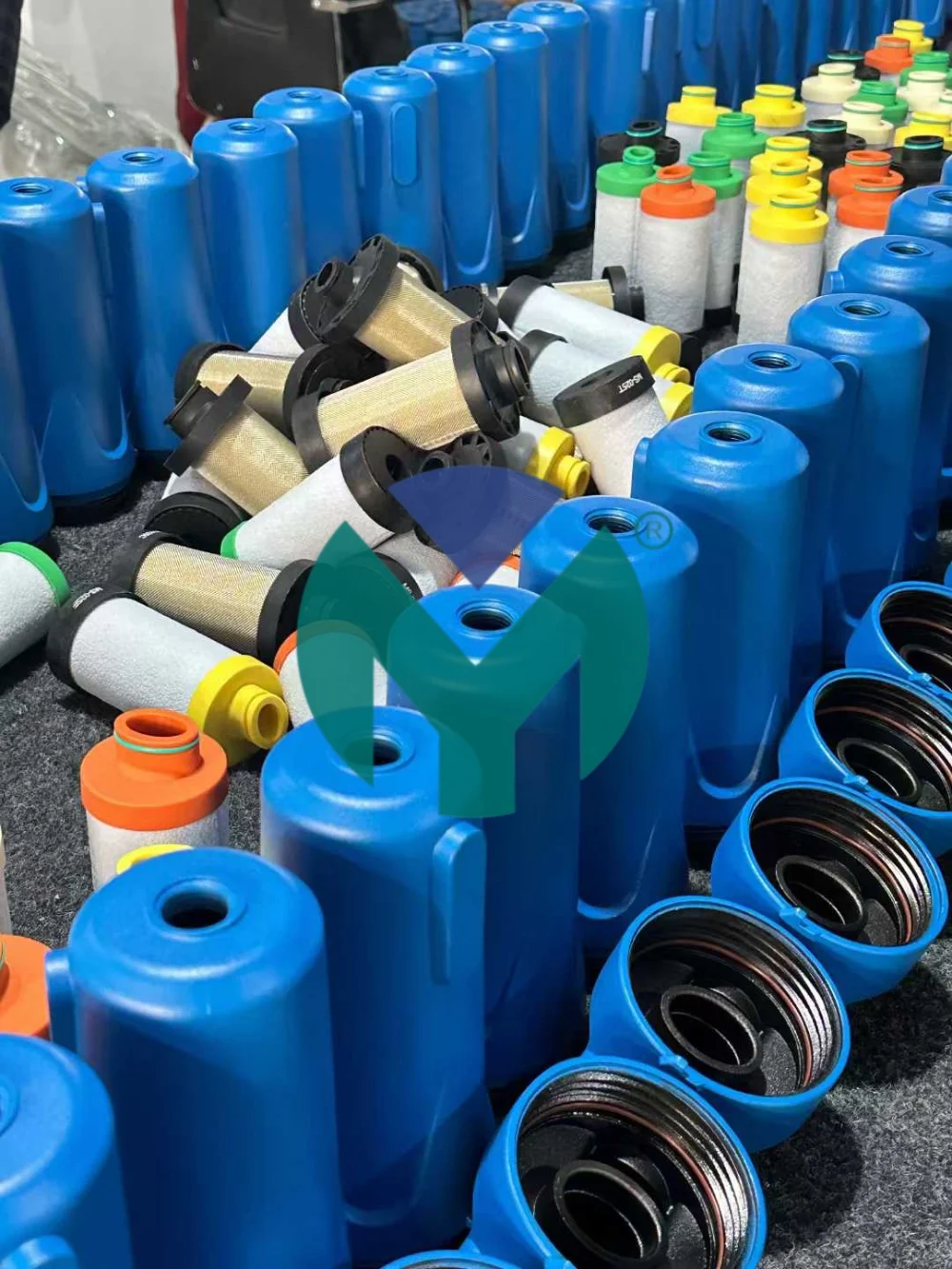
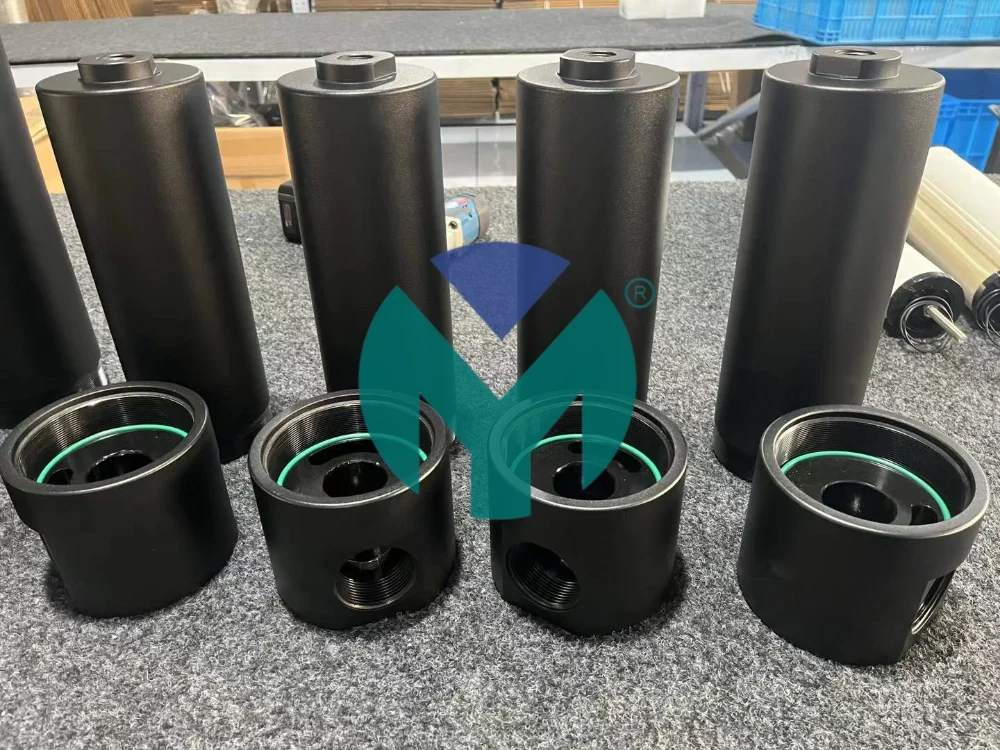
The ACF series uses aluminum alloy filter housings with corrosion-resistant surface treatment and is designed for convenient installation and long service life. Its modular construction also allows different filtration stages to be combined for applications with different air quality requirements.
Matching Air Purity With the Actual Production Requirement
Not every factory requires the same compressed air quality. General pneumatic tools may tolerate a different contamination level from laser cutting, pharmaceutical processing, electronics production, or food and beverage applications. Selecting filtration according to the actual point of use avoids both under-filtration and unnecessary over-filtration.
Yuanmei identifies applications including precision manufacturing, laser cutting, electronics, spraying, bottle blowing, food and beverage, pharmaceutical production, laboratories, mechanical processing, mining, and pneumatic tools. Its product range is intended to accommodate these different air treatment requirements through multiple filtration grades and configurations.
A Practical Selection Checklist for Industrial Buyers
Before purchasing a compressed air precision filter, procurement teams should evaluate several factors rather than comparing price alone. The first consideration is the required air purity and the type of contamination that must be removed. The second is the operating pressure and actual air flow, since an unsuitable filter can create excessive resistance or insufficient capacity.
The installation environment should also be considered. Temperature, humidity, corrosion exposure, maintenance accessibility, and available space can influence the appropriate housing and filter configuration. Finally, buyers should evaluate filter element replacement, drainage, sealing, testing, and long-term operating costs. This broader approach helps prevent a common purchasing problem where a filter appears economical initially but becomes expensive because of frequent replacement or excessive pressure loss.
Why Precision Filtration Is a Long-Term Cost Decision
The purchase price of a compressed air filter represents only one part of its total cost. A filter that provides consistent contaminant removal, manageable pressure loss, reliable sealing, and convenient maintenance can contribute to more stable downstream operation. Conversely, poor filtration can transfer costs to pneumatic component replacement, production interruptions, cleaning, rejected products, and unplanned maintenance.
For industrial buyers, the better question is therefore not simply whether a filter can remove oil. The more useful question is whether the compressed air precision filter can control oil carryover consistently while maintaining suitable airflow and supporting the required air quality. This perspective makes filtration selection a performance decision rather than a basic component purchase.
Frequently Asked Questions
What does a compressed air precision filter remove?
Depending on the filtration grade, a precision filter can target particles, oil aerosols, moisture-related contaminants, and other impurities. Activated carbon filtration can provide additional adsorption of oil vapor and odors when the application requires deeper purification.
Why does oil carryover occur after installing a filter?
Oil carryover can result from unsuitable filtration, overloaded filter media, incorrect filter placement, poor drainage, excessive flow, or contamination that requires a different treatment stage. Selecting filtration according to the contaminant type and air purity requirement is essential.
How should I choose a compressed air precision filter?
Start with the required air quality, operating pressure, flow rate, contaminant type, installation environment, and maintenance requirements. The filtration grade should then be selected according to the actual downstream application rather than simply choosing the smallest advertised micron rating.
Can different filtration grades be combined?
Yes. The ACF series is designed for modular combinations, allowing multiple filtration stages to be arranged for different purification requirements. This can provide a more practical approach when both general contamination control and higher-purity point-of-use air are required.
Why is pressure drop important when selecting an air filter?
Pressure drop directly affects the pressure available to downstream equipment and can influence compressor operating costs. A suitable filter should provide the required contaminant removal without creating unnecessary resistance as the filter operates and accumulates contaminants.


 Join us
 After-sale service
 News
News