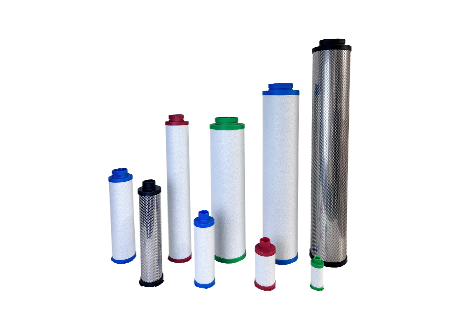
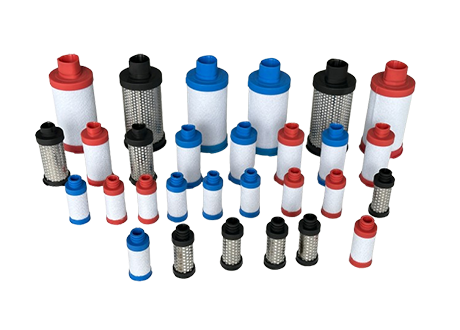
High-flow compressed air networks place different demands on filtration than small pneumatic circuits. When a production facility handles large volumes of compressed air, the industrial compressed air filter must remove contaminants efficiently without creating excessive resistance to airflow. A filter that performs well at a low flow rate may become inefficient when exposed to continuous high-volume operation, particularly when pressure drop increases as the filter element accumulates oil, water, and solid particles.
For this reason, high-flow filtration should be considered as part of the overall compressed air treatment process rather than as an isolated component. Flow capacity, filtration efficiency, pressure rating, housing construction, condensate management, element loading, and maintenance access all influence long-term performance. Wuxi Yuanmei develops compressed air filtration solutions around these requirements, with product categories covering precision filtration, high-pressure applications, gas-water separation, and stainless steel filtration for demanding industrial environments.
Why High Flow Changes Filter Design Requirements
The volume of air passing through a filter directly affects how the filtration media and internal flow path behave. As flow increases, poorly designed passages can create turbulence and unnecessary resistance. This may increase the pressure difference between the inlet and outlet, forcing compressors to work harder to maintain the required downstream pressure.
A properly engineered industrial compressed air filter therefore needs sufficient filtration area and a carefully controlled internal flow path. The objective is not simply to capture smaller particles. The filter must maintain stable airflow while controlling solid particles, oil aerosols, liquid contaminants, and other impurities that can enter compressed air distribution lines.
High-flow applications also require attention to the relationship between rated flow and actual operating conditions. Selecting a filter solely according to pipe diameter can result in an unsuitable configuration. Engineers should consider peak air demand, average flow, operating pressure, inlet temperature, contaminant loading, and the required compressed air quality before determining the appropriate filtration capacity.
Key Design Factors for Industrial Air Filtration
The design of high flow compressed air filter involves several interconnected factors. Filtration precision is important, but it should be evaluated together with pressure drop, flow distribution, element capacity, and service requirements.
| Design factor | Why it matters in high-flow applications |
|---|
| Filtration area | Supports higher airflow and reduces excessive media loading |
| Internal flow path | Helps control turbulence and unnecessary pressure loss |
| Filter media | Determines particle and aerosol separation performance |
| Housing material | Influences pressure resistance and corrosion protection |
| Drainage | Removes separated liquids and protects downstream equipment |
| Element capacity | Affects replacement intervals and maintenance frequency |
| Connection design | Ensures compatibility with the compressed air pipeline |
| Pressure rating | Provides a suitable safety margin for operating conditions |
A balanced design prevents one performance target from compromising another. Extremely fine filtration, for example, can increase resistance if the filtration area and media structure are not appropriately matched to the required airflow. High-flow filter design must therefore consider the complete relationship between air volume, contamination loading, filtration efficiency, and pressure loss.
Managing Pressure Drop Without Restricting Airflow
Pressure drop is one of the most important considerations when selecting an industrial air filter for high-volume production. Every filter introduces some resistance as compressed air passes through the housing and filtration media. However, excessive resistance can reduce available pressure downstream and increase compressor energy consumption.
The solution is not simply to choose the largest possible filter. A suitable configuration should provide adequate flow capacity while maintaining an efficient internal passage. The condition of the filter element also matters. As contaminants accumulate, resistance can gradually increase, making differential pressure monitoring an important part of maintenance planning.
Wuxi Yuanmei highlights low-pressure-drop flow-path design as an important part of its filtration technology. Its compressed air filtration solutions are developed to balance separation efficiency with airflow performance rather than treating filtration precision as the only design objective.
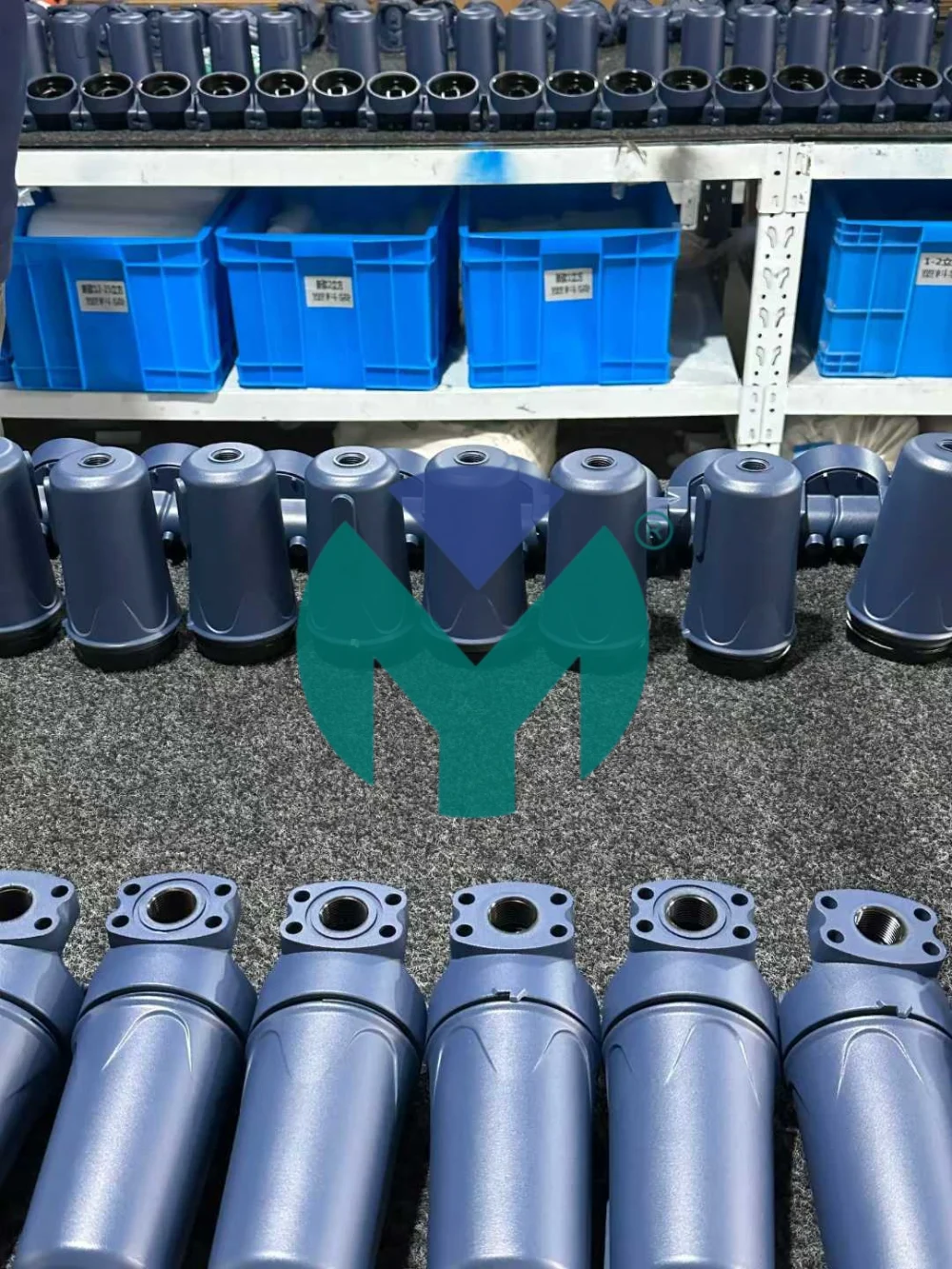
Multi-Stage Filtration for Better Contaminant Control
High-flow compressed air systems often require more than one filtration stage because contaminants have different physical characteristics. A pre-filter can remove larger particles and liquid contaminants before the air reaches finer filtration media. Subsequent stages can address smaller particles and oil aerosols, while activated carbon filtration can be used when oil vapor and odor control are required.
This staged approach distributes the contaminant load across different filtration levels. Instead of forcing one element to capture every type of impurity, each stage performs a defined function. It can help protect downstream fine filters and maintain more consistent performance throughout the filtration train.
Typical filtration requirements can include 3 μm pre-filtration, 1 μm fine filtration, 0.01 μm high-efficiency filtration, and activated carbon adsorption, depending on the required compressed air quality. Wuxi Yuanmei's filtration portfolio follows this graded approach for different industrial air treatment requirements.
Housing Materials and Structural Durability
The housing of industrial compressed air filter must withstand continuous pressure while maintaining reliable sealing over long operating periods. Material selection becomes particularly important where equipment is exposed to moisture, temperature variation, chemicals, or demanding cleaning conditions.
Aluminum alloy construction can provide a useful combination of strength, weight, and corrosion protection for many industrial compressed air applications. Surface treatment can further protect the housing from environmental exposure. For applications requiring higher corrosion resistance or hygienic construction, stainless steel filtration equipment may be more appropriate.
Wuxi Yuanmei offers both aluminum-alloy precision filtration equipment and stainless steel filtration solutions, allowing filtration construction to be matched to different operating environments. Its stainless steel range is intended for applications where material compatibility, cleanliness, and resistance to corrosive conditions are important considerations.
Condensate Separation and Drainage
Liquid water and oil are common contaminants in compressed air networks, especially after compression and cooling. If separated condensate remains inside a filter housing, it can increase element loading and create additional resistance. Effective drainage is therefore an essential part of compressed air filtration rather than an optional accessory.
A high-flow filtration arrangement should allow separated liquids to move away from the filtration media and leave the housing efficiently. Drainage design should also minimize areas where contaminants can accumulate. For continuous industrial operation, automatic drainage can reduce manual intervention and help maintain stable filtration conditions.
Gas-water separation can also be used before precision filtration to reduce the liquid load reaching downstream filter elements. This approach is particularly useful where the compressed air contains significant quantities of water or oil condensate.
Choosing Filter Capacity for Continuous Production
Selecting an industrial compressed air filter for high flow requires more than matching the filter to the nominal pipeline size. The actual air demand should be evaluated across the production cycle. Average consumption, peak demand, compressor output, operating pressure, and future expansion should all be considered.
Oversizing can provide additional capacity but may increase equipment cost and installation space. Undersizing, on the other hand, can create excessive pressure drop and shorten element life. A practical design should provide enough capacity for normal operation while allowing reasonable headroom for fluctuations in demand.
For large compressed air networks, flange connections and higher-capacity filtration arrangements can simplify integration into main air lines. Connection standards should also be confirmed before procurement because regional pipeline specifications may differ.
Filter Element Life and Maintenance Planning
Filter performance changes as the element collects contaminants. Even when filtration efficiency remains acceptable, increasing differential pressure can indicate that the element is becoming loaded. Regular inspection and replacement based on operating conditions can help prevent unnecessary energy losses and maintain stable air quality.
Maintenance planning should consider differential pressure, operating hours, contaminant concentration, air quality requirements, and production conditions rather than relying on a fixed replacement interval alone. Replacement elements should also match the filtration grade and application requirements of the installed filter.
For facilities operating several filtration stages, a documented maintenance schedule makes it easier to identify which stage requires attention. This reduces the risk of replacing elements too early while avoiding excessive operation with heavily loaded media.
Supporting Different Industrial Air Quality Requirements
Not every production process requires the same compressed air quality. General pneumatic equipment may tolerate a different contamination level from food processing, pharmaceutical production, electronics manufacturing, or precision automation.
This is why an industrial compressed air filter supplier should evaluate the required air quality before selecting filtration precision. ISO 8573-1 provides a framework for specifying compressed air quality according to particles, water, and oil. Filtration should therefore be selected according to the required cleanliness level rather than simply choosing the finest available filter.
Applications involving sensitive processes may require fine particle removal and very low residual oil levels. Other applications may place greater emphasis on condensate removal, corrosion resistance, or high-pressure operation. Matching the filtration architecture to the actual process requirement helps avoid unnecessary filtration costs while maintaining the required air quality.
Engineering Considerations for High Flow Systems
A well-designed high-flow filtration arrangement should be evaluated as part of the complete compressed air network. Pipe diameter, installation position, upstream contamination, downstream equipment, pressure requirements, and maintenance access can all affect the final result.
Filter placement is particularly important. Installing suitable separation and pre-filtration upstream can reduce the contaminant burden on finer elements. Downstream filtration can then focus on achieving the required final air quality. This staged arrangement creates a more predictable filtration process and can simplify maintenance.
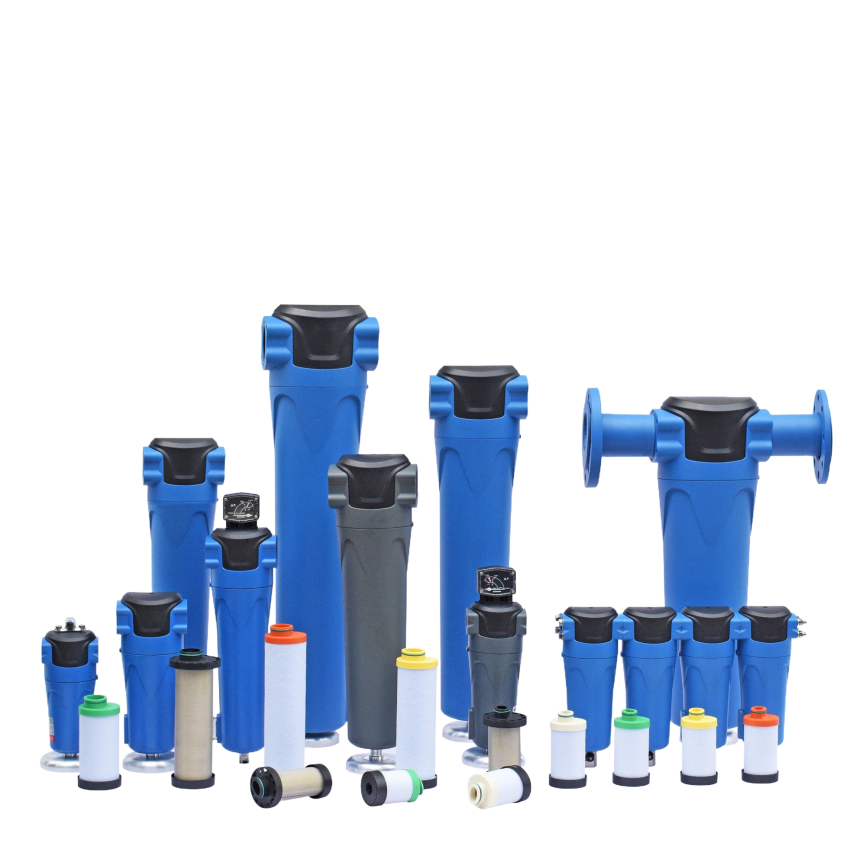
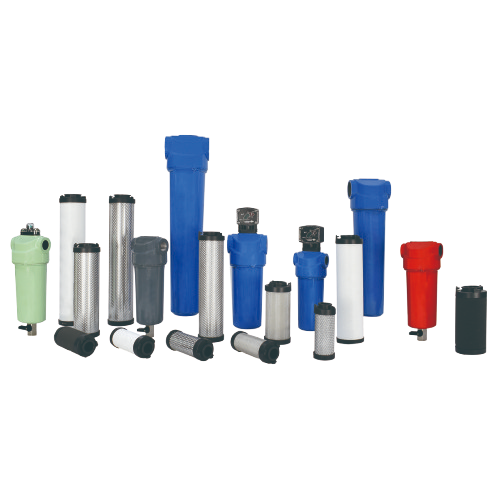
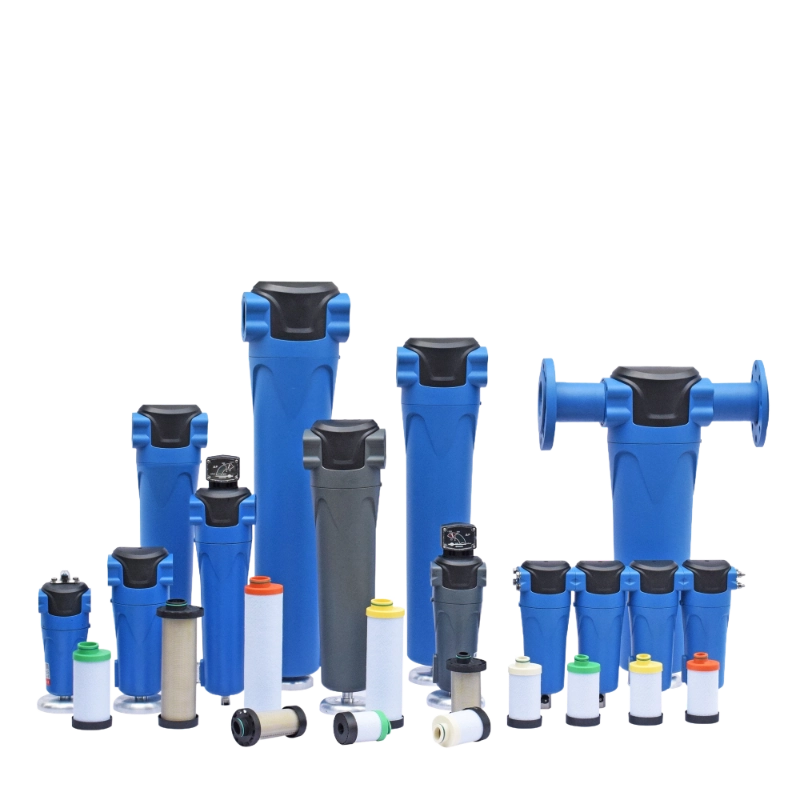
Wuxi Yuanmei's product portfolio includes precision filters, high-pressure filters, gas-water separators, replacement elements, and stainless steel filtration products, supporting different filtration configurations rather than relying on one universal filter design.
Why Low Pressure Drop Matters to Operating Cost
Compressed air is an energy-intensive utility, so filtration efficiency should always be considered together with energy consumption. A filter that captures contaminants effectively but creates unnecessary resistance can increase the pressure required from the compressor.
This makes low pressure drop compressed air filtration an important long-term consideration. The objective is to maintain the required air cleanliness while allowing sufficient airflow through the filtration media. Efficient internal geometry, appropriate media selection, adequate filtration area, and timely element replacement all contribute to controlling resistance.
For high-flow installations operating for many hours each day, even a relatively small pressure difference can become significant over a long operating period. Filter selection should therefore consider total operating conditions rather than purchase cost alone.
Selecting an Industrial Filtration Partner
A suitable supplier should be able to provide more than a filter housing and replacement element. Technical support should cover flow requirements, filtration grades, pressure conditions, connection standards, material selection, installation, and maintenance.
Wuxi Yuanmei has focused on compressed air purification and filtration since 2016 and provides precision filtration products alongside high-pressure, stainless steel, and separation solutions. The company reports ISO 9001 certification and testing capabilities covering filtration performance, pressure resistance, pressure drop, and related product characteristics.
For international industrial buyers, documentation is equally important. Product drawings, technical specifications, material information, test reports, and appropriate conformity documentation can simplify engineering review and procurement. These documents also make it easier to compare different filtration solutions using consistent technical criteria.
FAQ
What is an industrial compressed air filter used for?
An industrial compressed air filter removes contaminants such as solid particles, oil aerosols, liquid water, and, where required, oil vapor from compressed air. Different filtration stages can be combined according to the required air quality.
How should a filter be selected for high airflow?
Selection should consider actual and peak airflow, operating pressure, filtration requirement, contaminant loading, connection size, temperature, and acceptable pressure drop. Pipeline diameter alone is not enough to determine the correct filtration capacity.
Why is pressure drop important?
Pressure drop represents resistance to airflow through the filter. Excessive resistance can reduce downstream pressure and increase compressor energy demand, making pressure-drop control an important consideration for continuous high-flow operation.
Is one filter enough for industrial compressed air?
Not always. A multi-stage arrangement can provide better contaminant management because different filtration stages can target different particle sizes, liquid contaminants, oil aerosols, and oil vapor.
What materials are used for industrial air filter housings?
Aluminum alloy is widely used for many industrial compressed air filtration applications because of its strength and relatively low weight. Stainless steel can be selected where greater corrosion resistance, cleanliness, or hygienic construction is required.
How does maintenance affect filter performance?
As the filter element captures contaminants, its resistance can increase. Monitoring differential pressure and replacing elements when required helps maintain airflow, filtration performance, and efficient operation.
Conclusion
High-flow compressed air filtration requires a balance between air volume, filtration efficiency, pressure drop, structural strength, condensate management, and maintenance requirements. The most effective approach is to design filtration around the complete operating environment rather than selecting equipment solely by nominal pipe size or filtration precision.
For industrial facilities requiring stable compressed air quality at substantial airflow rates, Wuxi Yuanmei provides a range of filtration technologies covering precision separation, liquid removal, high-pressure applications, and corrosion-resistant filtration. A carefully engineered industrial compressed air filter can protect downstream equipment, maintain cleaner production air, control pressure losses, and support more predictable long-term operation.



 Join us
 After-sale service
 News
News