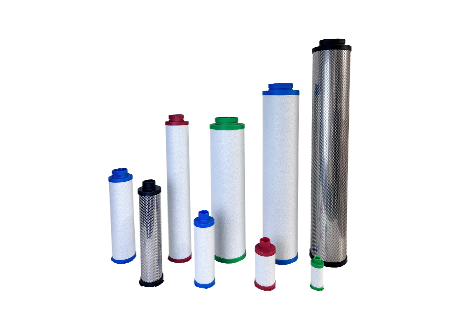
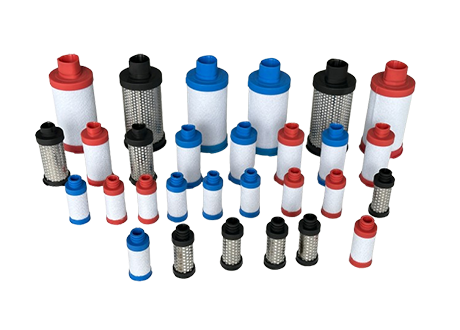
Why Moisture and Oil Carryover Remain Critical Air Quality Problems
Compressed air can carry more contamination than operators expect. Moisture, oil mist, liquid water, and fine particles may travel through pipelines and reach pneumatic equipment or production processes. When conventional filtration is unable to control these contaminants effectively, pressure instability, corrosion, product contamination, and premature component wear can gradually increase operating costs.
A properly selected stainless steel compressed air filter provides a practical way to improve air cleanliness while addressing demanding filtration conditions. For applications where compressed air must remain clean, dry, and low in residual oil, filtration performance should be considered together with housing material, pressure loss, connection design, and maintenance requirements.
How Oil Carryover and Moisture Affect Compressed Air Quality
Oil carryover is often associated with the compressor, but the problem does not necessarily stop at the compressor outlet. Oil aerosols and vapors can move downstream and contaminate valves, instruments, packaging equipment, or finished products. Moisture creates another layer of risk, especially when compressed air cools inside pipelines and condensation forms at low points.
The combination of oil and water can accelerate corrosion and reduce the service life of downstream components. In food processing, pharmaceutical production, electronics, and other contamination-sensitive applications, even small amounts of residual oil or moisture can create quality concerns. This makes effective compressed air oil and moisture filtration an important part of air treatment planning.
Stainless Steel Construction for Demanding Air Filtration
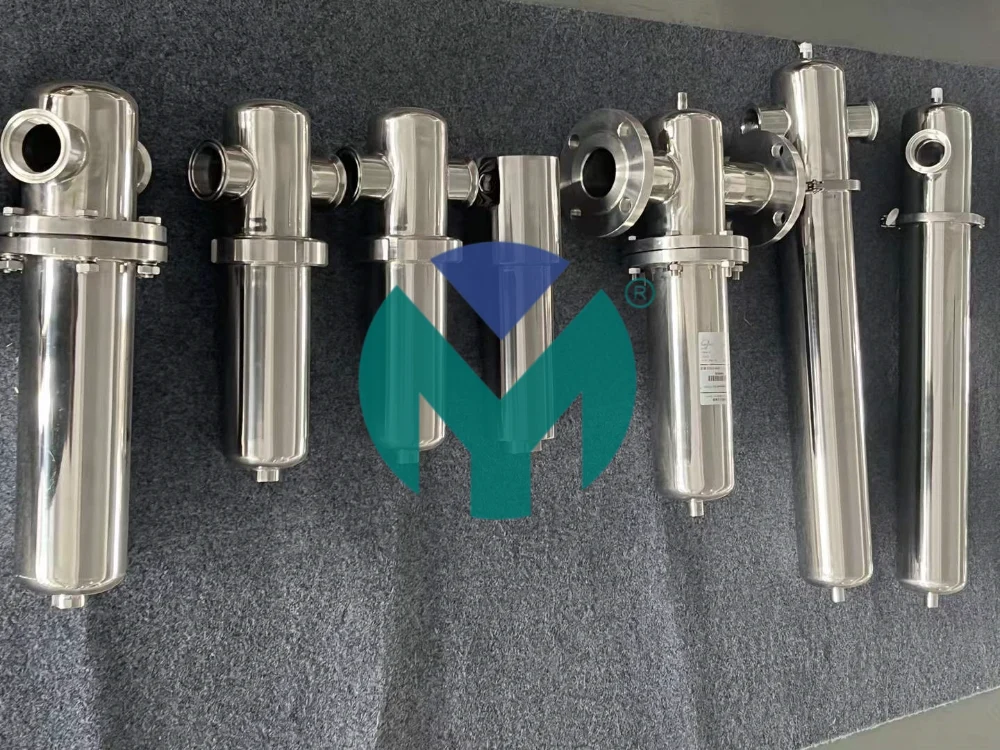
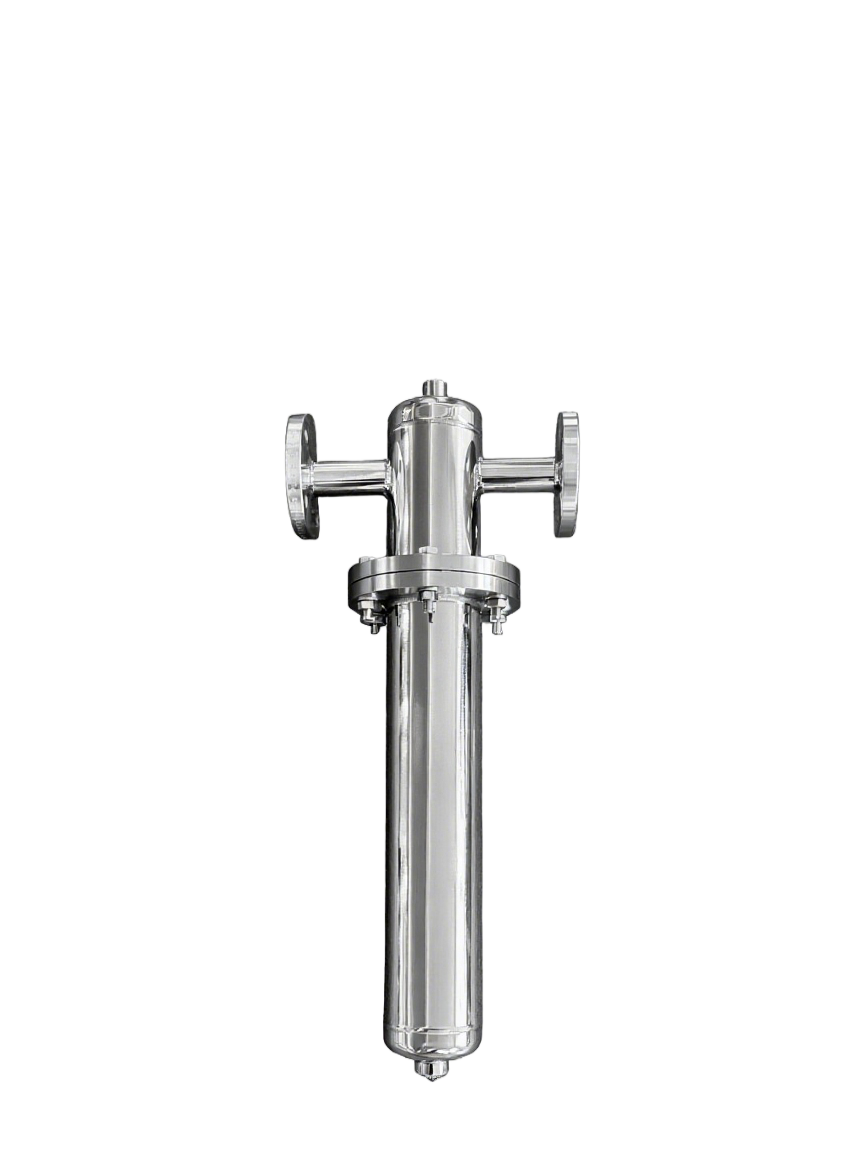
Material selection becomes increasingly important when filtration equipment operates in humid, corrosive, or hygiene-sensitive environments. A stainless steel compressed air filter made with SUS304 or SUS316 construction offers strong corrosion resistance while reducing concerns associated with surface rust and secondary contamination. Yuanmei's stainless steel filter housings use polished internal and external surfaces, with surface roughness reaching Ra ≤ 0.3 μm for the threaded stainless steel range.
This construction is particularly relevant for industries where cleanability and material durability matter. Stainless steel filtration can support demanding compressed air applications in food and beverage, pharmaceutical, semiconductor, chemical, and cosmetic manufacturing, where ordinary housing materials may not provide the desired level of corrosion resistance or hygiene.
Choosing Filtration Precision for Oil and Moisture Control
Not every compressed air application requires the same filtration grade. A practical filtration arrangement should match the contaminant type and required air quality rather than simply selecting the finest available filter.
| Filtration Grade | Typical Precision | Residual Oil |
|---|
| C | 3 μm | 5 ppm |
| T | 1 μm | 1 ppm |
| A | 0.01 μm | 0.01 ppm |
| F | 0.01 μm | 0.001 ppm |
| H | 0.01 μm | 0.003 ppm |
The available grades allow users to address different stages of compressed air treatment, from particle and oil mist removal to activated carbon treatment for oil vapor and odor. For applications requiring sterile air, dedicated sterile filtration options are also available.
Reduce Pressure Loss While Maintaining Filtration Performance
High filtration efficiency should not come at the expense of excessive pressure loss. When airflow passes through a poorly designed filter, unnecessary resistance can increase compressor workload and operating costs. This is why low pressure drop compressed air filtration should be considered during equipment selection.
Yuanmei focuses on optimized internal airflow and folded filter media to balance filtration efficiency with airflow performance. The threaded stainless steel range supports working pressure up to 1.0 MPa, with flow capacities covering different compressed air requirements. Standard G-thread connections also make the units suitable for compact pipeline installations.
Threaded Connections for Compact Pipeline Installation
Space limitations are common around production equipment, branch pipelines, and point-of-use air connections. A threaded design can provide a compact alternative where large flange connections are unnecessary. The stainless steel range uses G-thread connections from G1 to G2, supporting straightforward integration into appropriately sized air pipelines.
For procurement teams, connection compatibility should be checked alongside flow capacity, operating pressure, filtration grade, and available installation space. Selecting these elements together helps avoid unnecessary pressure restrictions or difficult maintenance access after installation.
Where High-Purity Air Filtration Matters Most
Clean compressed air is particularly important when air comes into contact with products, packaging, instruments, or sensitive manufacturing processes. Pharmaceutical and food processing facilities may require strict control of oil and particulate contamination, while semiconductor and electronics production can demand much tighter air cleanliness.
Stainless steel construction also makes these filters suitable for applications where corrosion resistance and hygienic design are important. With filtration precision reaching 0.01 μm and residual oil levels as low as 0.001 ppm for applicable grades, the range can address demanding high-purity compressed air filtration requirements.
Selecting the Right Stainless Steel Air Filter
Before purchasing a stainless steel air filter, engineers should evaluate several operating factors rather than focusing on filtration precision alone. Flow rate, pressure, contaminant concentration, required residual oil level, connection size, material compatibility, and maintenance conditions all influence the appropriate configuration.
Yuanmei provides multiple filtration grades and stainless steel material options for different industrial requirements. Its in-house compressed air testing laboratory also supports evaluation of residual oil, particle concentration, dew point, pressure drop, and related air quality indicators.
FAQ
Can a stainless steel compressed air filter remove oil carryover?
Yes. Appropriate filtration grades can remove oil aerosols and fine contaminants, while activated carbon filtration can target oil vapor and odor. The required grade depends on the desired compressed air quality.
Does filtration remove moisture from compressed air?
Filtration can separate liquid water and moisture-related contaminants, but a filter should not be treated as a complete substitute for dedicated air drying equipment where a specific pressure dew point is required.
Why choose stainless steel for compressed air filtration?
SUS304 and SUS316 stainless steel provide corrosion resistance and support hygienic applications. Polished surfaces can also help reduce contamination retention in demanding production environments.
What should be checked before selecting a filter?
Flow rate, working pressure, filtration grade, residual oil requirement, connection size, material compatibility, pressure drop, and maintenance access should all be evaluated before selection.



 Join us
 After-sale service
 News
News