Why Oil Vapor Is a Critical Compressed Air Contaminant
Compressed air is widely used for pneumatic equipment, production tools, automation, process operations, and contamination-sensitive manufacturing. Although compressed air may appear clean after passing through a conventional filter, it can still contain extremely fine oil aerosols, oil vapor, hydrocarbons, moisture, and other contaminants. These substances can travel through compressed air pipelines and eventually reach downstream equipment or production processes.
Oil vapor is particularly challenging because it behaves differently from solid particles and liquid contaminants. A conventional particulate filter can capture suspended particles, while a coalescing filter can separate many liquid oil droplets and aerosols. However, gaseous oil molecules can remain in the compressed air stream after these stages. This is where an activated carbon compressed air filter becomes an important part of the air purification process.
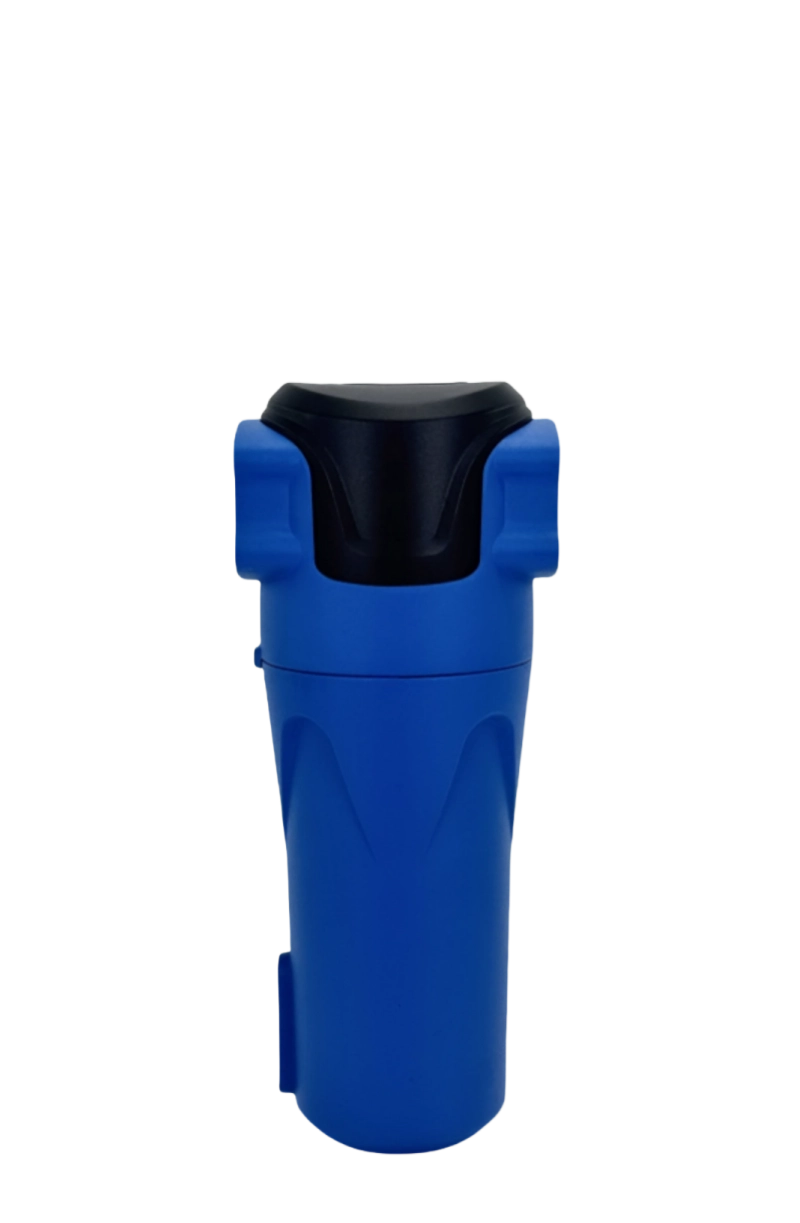
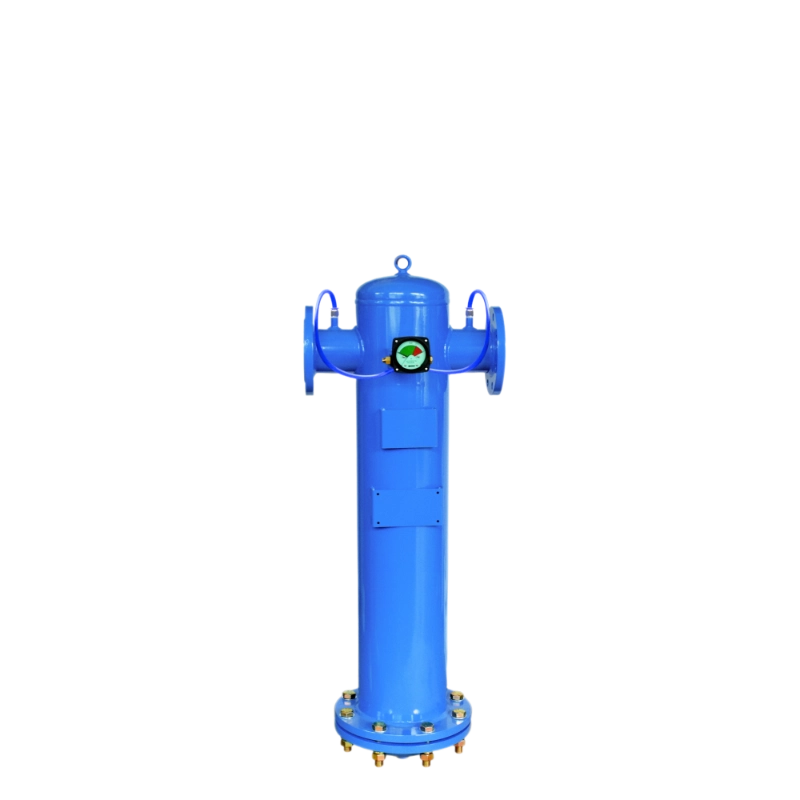
By using highly porous activated carbon as an adsorption medium, this type of filter is designed to reduce residual oil vapor and hydrocarbon-based contaminants. It provides an additional purification stage for applications where ordinary compressed air filtration does not provide the required level of cleanliness.
How Activated Carbon Adsorption Works
Activated carbon filtration is based on adsorption rather than simple mechanical separation. Activated carbon contains a highly porous structure with a large internal surface area. When compressed air passes through the carbon media, oil vapor and certain hydrocarbon molecules interact with the carbon surface and become retained within its pores.
This process is different from particle filtration. A particle filter works by physically preventing solid particles or liquid droplets from passing through the filter media, while activated carbon captures specific gaseous contaminants through surface adsorption. The difference is important when designing compressed air treatment for applications where residual oil vapor is a concern.
The effectiveness of an oil vapor removal filter for compressed air depends on several operating conditions. Air temperature, oil concentration, airflow velocity, pressure, humidity, and the condition of the carbon media can all influence adsorption performance. Correct filtration design therefore requires more than selecting a filter according to pipe size alone.
Why Conventional Compressed Air Filters May Not Remove Oil Vapor
Compressed air contamination normally includes several different forms of pollutants. Solid particles may come from the compressor intake or pipeline, condensed water can form as compressed air cools, and lubricating oil may enter the air stream during compression. These contaminants do not behave in the same way and therefore require different treatment methods.
Precision filtration is highly effective for removing fine particles and oil aerosols, but it is not designed to capture every gaseous hydrocarbon contaminant. Even after liquid oil has been separated, a small amount of oil vapor may remain in the air stream. If the final application requires cleaner or higher-purity compressed air, relying exclusively on mechanical filtration may leave an important contamination gap.
An activated carbon compressed air filter for oil vapor removal addresses this gap by adding an adsorption stage after appropriate upstream filtration. The result is a more comprehensive approach to compressed air purification, with different filtration stages assigned to different contaminant types.
A Multi-Stage Approach to Compressed Air Purification
Activated carbon filtration performs best when the air entering the carbon stage has already been treated for bulk contaminants. Large particles, liquid water, and excessive oil aerosols can place unnecessary loading on the adsorption media and shorten its effective service life.
A practical compressed air treatment arrangement may therefore include several filtration stages. A water separator can remove larger quantities of liquid moisture, while precision or coalescing filtration can reduce fine particles and oil aerosols. The activated carbon stage can then focus primarily on residual oil vapor and gaseous hydrocarbon contaminants.
| Contaminant | Primary Treatment | Main Purpose |
|---|
| Large particles | Pre-filtration | Protect downstream equipment |
| Condensed water | Water separation | Reduce liquid moisture |
| Fine particles | Precision filtration | Improve air cleanliness |
| Oil aerosols | Coalescing filtration | Reduce liquid oil contamination |
| Oil vapor | Activated carbon adsorption | Reduce gaseous hydrocarbons |
This staged arrangement avoids placing excessive responsibility on a single filtration technology. Instead, each stage handles the contamination it is designed to address, helping improve overall compressed air quality.
Applications That Require Oil Vapor Control
The importance of oil vapor removal depends on how compressed air is used. General-purpose pneumatic equipment may tolerate a certain level of contamination, while production processes involving direct product contact, precision components, or sensitive equipment can require significantly cleaner air.
In food and beverage manufacturing, compressed air may be used for conveying, packaging, filling, cleaning, and process operations. Where compressed air can come into contact with products or packaging, controlling hydrocarbon contamination becomes an important consideration.
Pharmaceutical and medical manufacturing places similarly strict demands on compressed air cleanliness. Oil vapor, odors, particles, and moisture may interfere with controlled production environments or create unwanted contamination risks. An activated carbon filtration stage can therefore form part of a broader compressed air purification strategy.
Electronics and precision manufacturing can also benefit from cleaner compressed air. Fine contamination may affect sensitive surfaces, instruments, components, or production processes. For these applications, activated carbon air filtration provides a way to address gaseous contaminants that cannot be adequately controlled through particle filtration alone.
Activated Carbon Filtration for High-Purity Compressed Air
High-purity compressed air is not defined by a single filtration technology. Instead, it depends on controlling different contaminant categories according to the requirements of the final application. Particle concentration, water content, oil aerosols, and oil vapor may all need to be considered.
An activated carbon compressed air filter is particularly relevant when the required air quality includes low residual hydrocarbon content. It can be incorporated into a broader purification process designed around the final point of use.
For applications with strict air quality requirements, buyers should evaluate the complete filtration arrangement rather than focusing only on the activated carbon stage. Correct upstream filtration, suitable installation conditions, appropriate airflow, and regular maintenance all contribute to stable performance.
Factors to Consider When Selecting an Activated Carbon Air Filter
Choosing an activated carbon filter for compressed air requires consideration of both the air source and the final application. Airflow is one of the first factors to evaluate because the filter must accommodate the required volume without creating unnecessary pressure loss.
Operating pressure and temperature are also important. Higher temperatures can influence adsorption behavior and may affect the service life of the carbon media. Similarly, the amount and type of oil entering the filtration stage can significantly affect adsorption capacity.
The required air purity should also be established before choosing filtration equipment. A workshop using compressed air for general pneumatic tools may have different requirements from a pharmaceutical, food-processing, electronics, or laboratory application. Selecting filtration based only on nominal flow capacity can therefore lead to an unsuitable solution.
| Selection Factor | Why It Matters |
|---|
| Airflow | Determines required filtration capacity |
| Operating pressure | Affects filter construction and performance |
| Air temperature | Influences adsorption behavior |
| Oil concentration | Determines carbon loading |
| Humidity | Can influence adsorption performance |
| Required air purity | Defines the necessary treatment level |
| Installation location | Affects accessibility and maintenance |
| Maintenance access | Supports timely media replacement |
Pressure Drop and Energy Considerations
Pressure drop is an important factor in any compressed air filtration application. As air passes through a filter, resistance is created by the filter media and internal flow path. Excessive pressure drop can increase the workload on the compressor and reduce the pressure available to downstream equipment.
For this reason, an industrial compressed air filter should be selected according to actual airflow requirements rather than simply choosing the smallest available unit. Proper sizing can help maintain an appropriate balance between filtration performance and airflow resistance.
Filter condition also affects pressure drop over time. Accumulated particles, oil contamination, or saturated filtration media can increase resistance. Regular inspection and maintenance are therefore important not only for maintaining air quality but also for supporting efficient compressed air operation.
The Importance of Correct Installation
Even a high-quality activated carbon compressed air filter can perform poorly if it is incorrectly installed. The filter should be positioned according to the intended treatment sequence, with suitable upstream filtration used to protect the carbon media from excessive liquid and particulate loading.
Pipeline design also matters. Poorly arranged piping, unnecessary pressure losses, inadequate drainage, or contamination in downstream sections can undermine the benefits of compressed air purification. The filtration equipment should therefore be considered as part of the complete compressed air treatment arrangement.
Installation should also allow sufficient access for inspection and replacement. Activated carbon media has a finite adsorption capacity, so maintenance personnel need to be able to evaluate the filter condition and replace the media or filter element when required.
Activated Carbon Filter Maintenance and Service Life
Activated carbon does not continue adsorbing contaminants indefinitely. As the available adsorption sites become occupied, the ability of the carbon media to retain additional oil vapor gradually decreases. This process is commonly associated with media saturation.
The service life of an activated carbon filter depends on the concentration of contaminants, airflow volume, operating temperature, humidity, compressor type, and required outlet air quality. There is therefore no single replacement interval suitable for every installation.
A sensible maintenance program should consider operating conditions, pressure drop, manufacturer's recommendations, and the importance of outlet air quality. In applications where contamination control is critical, relying only on visual inspection may not be sufficient. Planned maintenance provides a more dependable way to maintain filtration performance.
Why Activated Carbon Is Useful for Oil Vapor Removal
The main advantage of activated carbon technology is its ability to address gaseous contaminants that are difficult to remove through conventional mechanical filtration. It complements particulate and coalescing filtration rather than replacing them.
For compressed air applications where oil vapor, hydrocarbon contamination, or unwanted odors are concerns, activated carbon adsorption provides an additional purification mechanism. When properly integrated with upstream filtration, it can help produce cleaner air for processes with higher purity requirements.
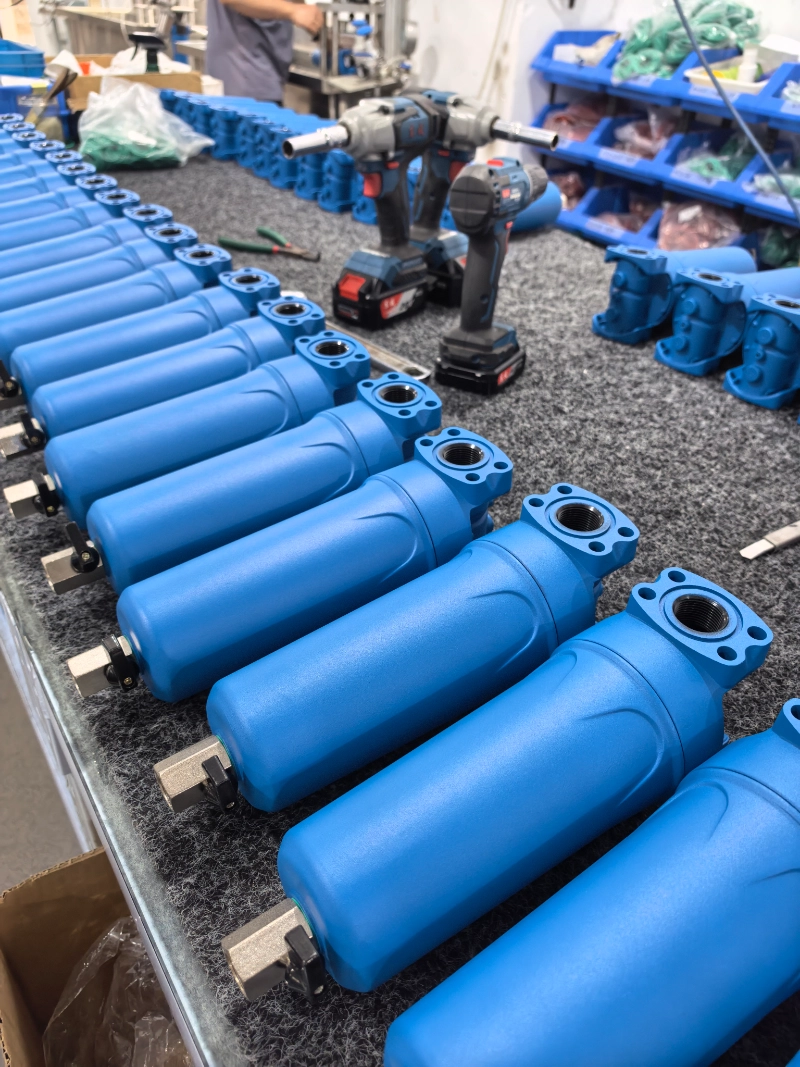
Wuxi Yuanmei provides compressed air filtration and purification equipment for industrial applications with different air quality requirements. Its product approach covers filtration technologies intended to address particles, moisture, oil aerosols, and other compressed air contaminants. This allows customers to select filtration stages according to the actual contamination profile and end-use requirements.
Comparing Mechanical and Activated Carbon Filtration
Mechanical filtration and activated carbon adsorption should not be viewed as competing technologies. Their functions are different, and combining them can provide more complete compressed air treatment.
Mechanical filters are primarily concerned with physical contaminants such as particles, liquid water, and oil aerosols. Activated carbon filtration focuses on gaseous contaminants that can remain after these substances have been removed.
Understanding this distinction can prevent incorrect product selection. If the primary problem is liquid water, a water separator is more appropriate. If fine particles are the concern, precision filtration is required. If residual oil vapor remains a concern after upstream treatment, an activated carbon compressed air filter becomes a logical additional stage.
Improving Compressed Air Quality at the Point of Use
Compressed air quality can change between the compressor outlet and the final point of use. Contamination may accumulate inside pipelines, storage vessels, valves, fittings, and other components. Therefore, air treatment should be evaluated according to where compressed air is consumed, not only where it is generated.
Point-of-use filtration can provide an additional level of protection for sensitive applications. An activated carbon filter positioned appropriately within the compressed air distribution arrangement can help control residual oil vapor closer to the equipment or process requiring cleaner air.
This approach is particularly useful when different production areas have different air quality requirements. Not every compressed air outlet necessarily needs the same treatment level, so filtration can be selected according to actual process requirements.
Building a More Effective Oil Vapor Removal Strategy
Successful oil vapor control begins with identifying the source and concentration of contamination. Lubricated compressors can introduce oil into compressed air, while operating temperature and compressor condition can influence the amount of contamination entering the filtration process.
The next step is to establish the required outlet air quality. Once the target is clear, appropriate upstream and downstream filtration can be selected. This prevents over-reliance on activated carbon and helps ensure that each filtration stage performs its intended function.
A well-planned compressed air purification solution should therefore consider filtration sequence, airflow, pressure, temperature, moisture, oil loading, maintenance requirements, and final application. This comprehensive approach is more effective than selecting a filter solely according to product name or connection size.
Frequently Asked Questions
What is an activated carbon compressed air filter used for?
An activated carbon compressed air filter is primarily used to reduce residual oil vapor, hydrocarbon contaminants, and certain odors from compressed air. It is normally used as part of a multi-stage air purification arrangement.
Can activated carbon remove liquid oil from compressed air?
Activated carbon is primarily intended for gaseous contaminants rather than large quantities of liquid oil. Liquid oil and oil aerosols should normally be reduced by suitable upstream separation and coalescing filtration before air reaches the carbon media.
Does an activated carbon filter replace a precision filter?
No. Precision filtration and activated carbon adsorption perform different functions. Precision filters remove particles and fine aerosols, while activated carbon is used mainly for gaseous oil vapor and hydrocarbon contamination.
Where is activated carbon compressed air filtration commonly used?
It is commonly considered for applications requiring cleaner compressed air, including food and beverage processing, pharmaceutical production, electronics manufacturing, precision manufacturing, laboratories, packaging, and other contamination-sensitive operations.
How often should activated carbon filter elements be replaced?
Replacement frequency depends on airflow, oil concentration, temperature, humidity, compressor conditions, and required outlet air quality. Following manufacturer recommendations and monitoring operating conditions is more reliable than using one fixed replacement period.
Does moisture affect activated carbon filtration?
Yes. Excessive moisture can influence adsorption behavior and reduce the effective performance of some carbon media. Appropriate upstream water separation and compressed air drying can therefore help protect the carbon filtration stage.
How can pressure drop be controlled?
Correct filter sizing, appropriate airflow capacity, regular maintenance, and timely replacement of contaminated filtration media can help control pressure drop. The filtration arrangement should provide sufficient capacity for actual operating conditions.
Is activated carbon filtration suitable for high-purity compressed air?
It can be an important part of high-purity compressed air treatment when oil vapor and hydrocarbon contamination need to be controlled. The required purification level should determine the complete filtration arrangement rather than relying on activated carbon alone.
What should buyers consider before purchasing an oil vapor filter?
Important considerations include airflow, operating pressure, temperature, oil concentration, humidity, required air purity, installation conditions, maintenance access, and the filtration stages installed upstream. Matching these factors to the final application helps achieve more consistent performance.
Conclusion
Oil vapor represents a different type of compressed air contamination and requires a filtration technology capable of addressing gaseous hydrocarbons. An activated carbon compressed air filter provides an adsorption-based treatment stage that complements particle, water, and oil-aerosol filtration.
For industrial users, the most effective approach is to evaluate the entire compressed air purification process rather than selecting a single filter in isolation. Proper pre-filtration, correct sizing, suitable installation, controlled operating conditions, and regular maintenance all contribute to reliable oil vapor removal.
With experience in compressed air filtration and purification equipment, Wuxi Yuanmei supports industrial users seeking practical solutions for cleaner compressed air. By matching filtration technology with the actual contamination profile and application requirements, manufacturers can establish a more dependable approach to compressed air quality control.


 Join us
 After-sale service
 News
News