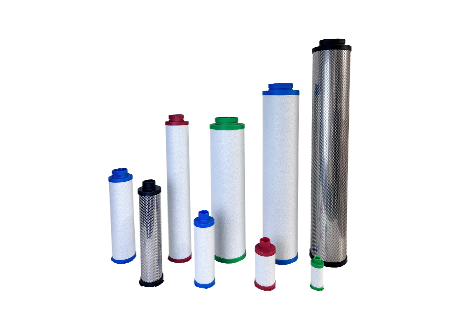
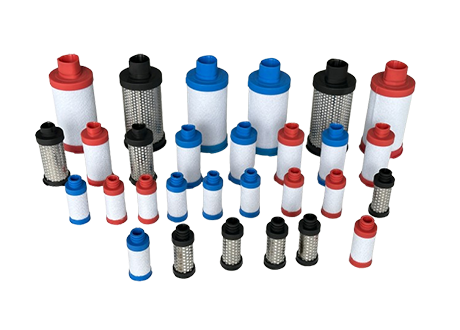
In modern industrial manufacturing, compressed air is often referred to as the “fourth utility,” alongside electricity, water, and gas. However, unlike other utilities, compressed air is highly energy-intensive and extremely sensitive to system losses. Among all factors influencing energy consumption, pressure drop across the filtration system is one of the most overlooked yet critical issues. In this blog post, YUANMEI, as high quality precision compressed air filter manufacturer, will share the energy saving ACF filter for factory compressed air system pressure drop reduction.
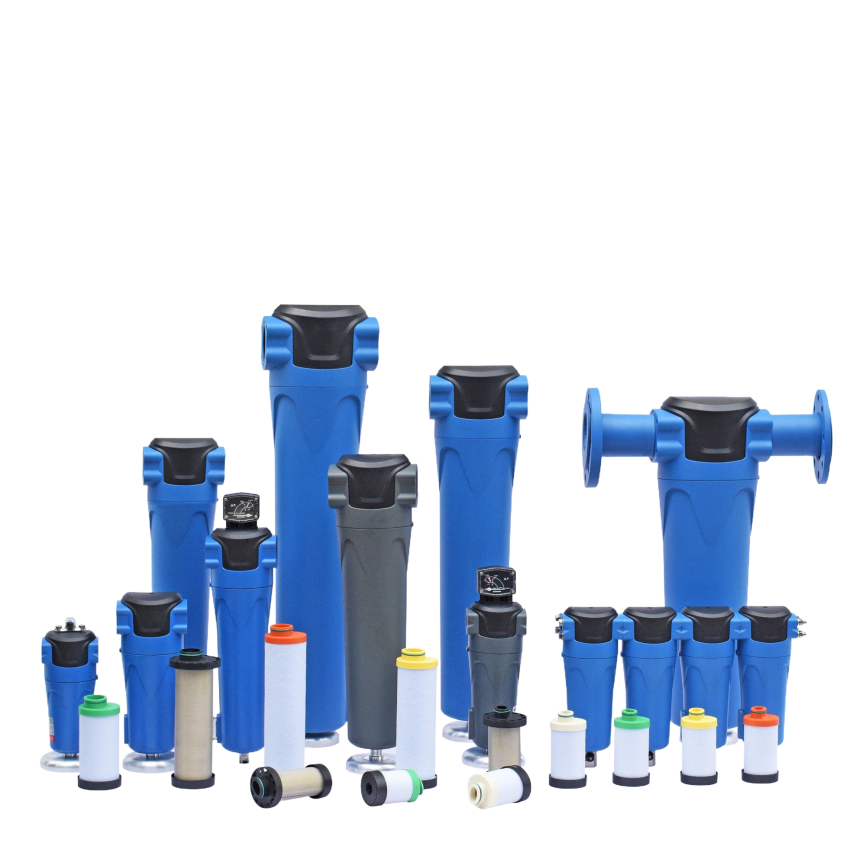
Energy Saving ACF Filter in Industrial Compressed Air Architecture
In a typical factory compressed air network, air passes through multiple treatment stages, including pre-filtration, oil removal, fine filtration, and terminal polishing. Each stage introduces resistance, and the cumulative effect directly increases compressor load.
An energy saving ACF filter system is designed to minimize unnecessary airflow resistance while maintaining high filtration efficiency. Unlike conventional filter structures that prioritize density at the cost of flow resistance, ACF filtration architecture focuses on balancing separation efficiency and aerodynamic optimization.
The key design objective is not only to remove oil mist, moisture, and particulates, but also to maintain a stable low differential pressure across the entire service life of the filter element.
Pressure Drop Reduction Technology in ACF Filtration Systems
Pressure drop is a direct indicator of energy loss in compressed air systems. When pressure drop increases, compressors must work harder to maintain output pressure, leading to higher energy consumption and reduced system efficiency.
The pressure drop reduction technology used in ACF filter systems is built on three fundamental engineering principles:
1. Optimized Flow Channel Geometry for Stable Air Dynamics
The internal flow path of the filter is designed to reduce turbulence and avoid sudden directional changes. Smooth transition zones allow compressed air to pass evenly through the filtration media, reducing localized velocity spikes that typically cause pressure loss.
This structural optimization significantly improves long-term pressure stability in factory compressed air system filtration networks.
2. Multi-Layer Gradient Filtration Structure
Instead of relying on a single dense filtration layer, ACF filter technology uses a gradient fiber structure that distributes particle capture across multiple layers.
Outer layer: pre-separation of large droplets and particles
Middle layer: coalescing filtration for oil mist aggregation
Inner layer: fine particulate interception with controlled resistance
This layered architecture reduces clogging speed and slows down pressure rise over time.
3. Low Resistance Fiber Media Engineering
The filter media uses high-performance borosilicate fiber combined with structured microfiber support layers. This material combination ensures:
High porosity with controlled pore distribution
Stable airflow permeability under continuous operation
Resistance to deformation under high pressure conditions
As a result, the energy saving ACF filter maintains lower differential pressure compared to conventional polyester or cellulose-based filter elements.
Factory Compressed Air System Energy Loss Mechanisms
To understand the importance of pressure drop reduction technology, it is necessary to analyze where energy loss originates in industrial air systems.
Distribution Loss Across Filtration Stages
Every filtration stage introduces resistance. When multiple filters are installed in series, even small individual pressure drops accumulate into significant system-wide energy loss.
Compressor Load Amplification
A small increase in downstream pressure demand forces compressors to operate at higher output levels. This results in exponential energy consumption increase rather than linear growth.
Filter Saturation Acceleration
When filtration media is not optimized for flow efficiency, contamination accumulation occurs unevenly, accelerating blockage and causing rapid pressure rise.
Energy saving ACF filter systems are specifically engineered to slow down these degradation mechanisms.
ACF Filter Element Structure and Pressure Stability Design
The internal structure of an ACF filter element is a critical determinant of long-term pressure performance.
High-Efficiency Coalescing Layer Design
The coalescing layer captures fine oil mist and forces micro-droplets to merge into larger particles, which are then separated by gravity. This process reduces the need for excessive airflow penetration through dense media.
Support Mesh Reinforcement for Flow Consistency
A precision-engineered support mesh maintains structural integrity under high differential pressure conditions. This prevents media collapse, which is a common cause of sudden pressure spikes in conventional filters.
Controlled Drainage Architecture
Efficient drainage is essential for preventing secondary re-entrainment of liquids into the airflow. The ACF filter system incorporates a structured drainage pathway that ensures continuous removal of separated condensate without disturbing airflow stability.
Energy Saving Impact in Industrial Compressed Air Networks
The integration of energy saving ACF filter systems into factory compressed air networks results in measurable improvements in operational efficiency.
Reduction of Compressor Energy Consumption
Lower pressure drop directly reduces compressor workload. In continuous production environments, this translates into significant cumulative energy savings over time.
Extended Maintenance Cycles
Stable filtration performance reduces the frequency of filter replacement. By slowing down pressure increase rates, maintenance intervals become more predictable and cost-efficient.
Improved System Pressure Stability
Consistent pressure output across the network enhances the performance of pneumatic tools, automation systems, and precision manufacturing equipment.
ISO 8573 Compressed Air Quality Integration in Filtration Design
Modern industrial filtration systems must align with international air quality standards to ensure compatibility across industries.
The energy saving ACF filter design aligns with ISO 8573 requirements, which define:
By maintaining compliance with these standards while minimizing pressure loss, ACF filtration systems achieve a balance between purity and efficiency.
Material Engineering for Low Pressure Drop Filtration
Material selection plays a decisive role in filtration efficiency and energy performance.
Borosilicate Fiber Media Advantages
Borosilicate fiber offers:
Multi-Layer Composite Fiber System
The combination of fiberglass support layers and polyester drainage layers ensures that airflow is distributed evenly, preventing localized resistance buildup.
Surface Treatment and Anti-Clogging Design
Advanced surface engineering reduces particle adhesion, slowing down contamination accumulation and maintaining stable airflow permeability.
Industrial Applications of Energy Saving ACF Filter Systems
Energy saving ACF filter technology is widely applied across multiple high-demand industrial environments, including:
Laser cutting compressed air systems requiring stable oil-free airflow
Electronics manufacturing with strict particulate control requirements
Food processing facilities requiring hygienic compressed air standards
Sandblasting and surface treatment systems with high dust loads
Precision instrumentation requiring consistent pneumatic stability
In all these environments, pressure drop reduction directly correlates with production stability and cost efficiency.
System-Level Optimization in Compressed Air Networks
Beyond individual filter design, system-level integration is essential for maximizing energy efficiency.
Balanced Filtration Stage Configuration
Proper distribution of filtration load across stages prevents overburdening a single filter element, ensuring uniform pressure drop distribution.
Monitoring and Differential Pressure Control
Continuous monitoring of pressure differential allows early detection of system inefficiencies before they escalate into energy losses.
Airflow Path Engineering in Factory Layouts
Optimized pipeline design reduces unnecessary bends and resistance points, complementing the performance of energy saving ACF filters.
Long-Term Efficiency Strategy for Industrial Air Systems
Sustainable energy savings in compressed air systems require a combination of:
Low resistance filtration design
Stable airflow architecture
Predictive maintenance strategy
High-performance filter media selection
Energy saving ACF filter technology serves as a core component in this strategy by addressing one of the most critical inefficiency sources: pressure drop.
Conclusion
Energy saving ACF filter technology for factory compressed air system pressure drop reduction represents a critical advancement in industrial air treatment engineering. By combining optimized flow dynamics, multi-layer filtration architecture, and high-performance fiber media, modern ACF systems significantly reduce energy consumption while maintaining strict air purity standards.
In high-demand industrial environments where compressed air is essential to production continuity, controlling pressure drop is not only a technical requirement but a strategic approach to energy efficiency, operational stability, and long-term cost reduction.


 Join us
 After-sale service
 News
News