Compressed air quality has become an important purchasing consideration for manufacturers that depend on clean, stable air for production. Oil aerosols, water droplets, particles, and other contaminants can affect pneumatic equipment, product quality, and downstream air treatment performance. For this reason, choosing a compressed air filter manufacturer should involve more than comparing filter prices or basic filtration ratings. Buyers need to consider filtration accuracy, pressure loss, material quality, testing capability, certification alignment, maintenance requirements, and long-term technical support.
For industries such as food processing, pharmaceuticals, electronics, semiconductor manufacturing, chemicals, and laser cutting, ISO 8573-1 provides an important reference for defining compressed air cleanliness. A qualified filtration supplier should therefore be able to explain how its products contribute to the required air-quality class and provide technical information that supports equipment selection. Yuanmei focuses on precision compressed air purification and develops filtration products for industrial applications where controlled air quality and dependable operation are essential.
Why ISO 8573-1 Matters When Choosing Filter Manufacturer
ISO 8573-1 classifies compressed air according to contaminants including particles, water, and oil. The standard gives manufacturers and end users a common language for specifying the cleanliness required at different points of production. Instead of selecting a filter based only on nominal micron ratings, engineers can evaluate whether the complete filtration arrangement is suitable for the required air-quality target.
A capable compressed air filter manufacturer should understand that filtration performance depends on more than filter media alone. Airflow, inlet conditions, pressure, temperature, contaminant loading, drainage, sealing, and pressure drop all influence actual performance. This is particularly important when users require high-purity compressed air, because an inappropriate filtration configuration may increase operating costs or fail to maintain the desired air quality.
Yuanmei develops precision filtration solutions with filtration grades covering different contamination-control requirements. Its filtration technology combines cyclonic separation, interception, collision separation, and coalescing filtration, allowing different contaminants to be addressed through appropriate filtration stages rather than relying on a single filtration mechanism.
Precision Filtration Requires More Than Small Micron Rating
A common purchasing mistake is to treat filtration precision as the only measure of filter quality. A lower micron value may indicate finer particle capture, but it does not automatically mean that a filter is the best choice for every compressed air application. Excessive filtration resistance can increase compressor energy demand, while unsuitable filter media may shorten service life under heavy contamination.
A professional industrial filtration supplier should therefore balance particle removal, oil aerosol separation, service life, and airflow resistance. Yuanmei precision filters can achieve filtration precision down to 0.01 μm, while selected filtration grades are designed for high-efficiency oil removal and demanding compressed air purification requirements.
For buyers searching for a 0.01 micron compressed air filter manufacturer, the more useful question is how the stated filtration accuracy is achieved and maintained under operating conditions. Filter construction, media quality, sealing design, drainage performance, and quality inspection all contribute to the final result.
Low Pressure Drop Is Closely Linked to Operating Cost
Compressed air is an energy-intensive utility, which makes pressure loss an important factor when selecting filtration equipment. As a filter becomes loaded with contaminants, airflow resistance can increase. If the pressure drop becomes excessive, the compressor may need to operate at a higher pressure to compensate for the loss, increasing energy consumption.
For this reason, a low pressure drop compressed air filter manufacturer should pay attention to airflow distribution, filter media structure, housing design, and contaminant-holding capacity. Efficient filtration is not simply about capturing more contaminants; it is also about maintaining sufficient airflow with controlled resistance throughout the service period.
Yuanmei emphasizes low-resistance filtration design for industrial compressed air treatment. This approach helps users consider filtration from a total operating-cost perspective rather than evaluating the initial purchase price alone.
Material Selection Supports Long-Term Filtration Performance
The operating environment can significantly affect the durability of compressed air filters. Moisture, oil, chemicals, temperature changes, and pressure fluctuations may place additional demands on filter housings and internal components. Stainless steel construction is therefore particularly valuable in applications where corrosion resistance, hygiene, and long service life are important.
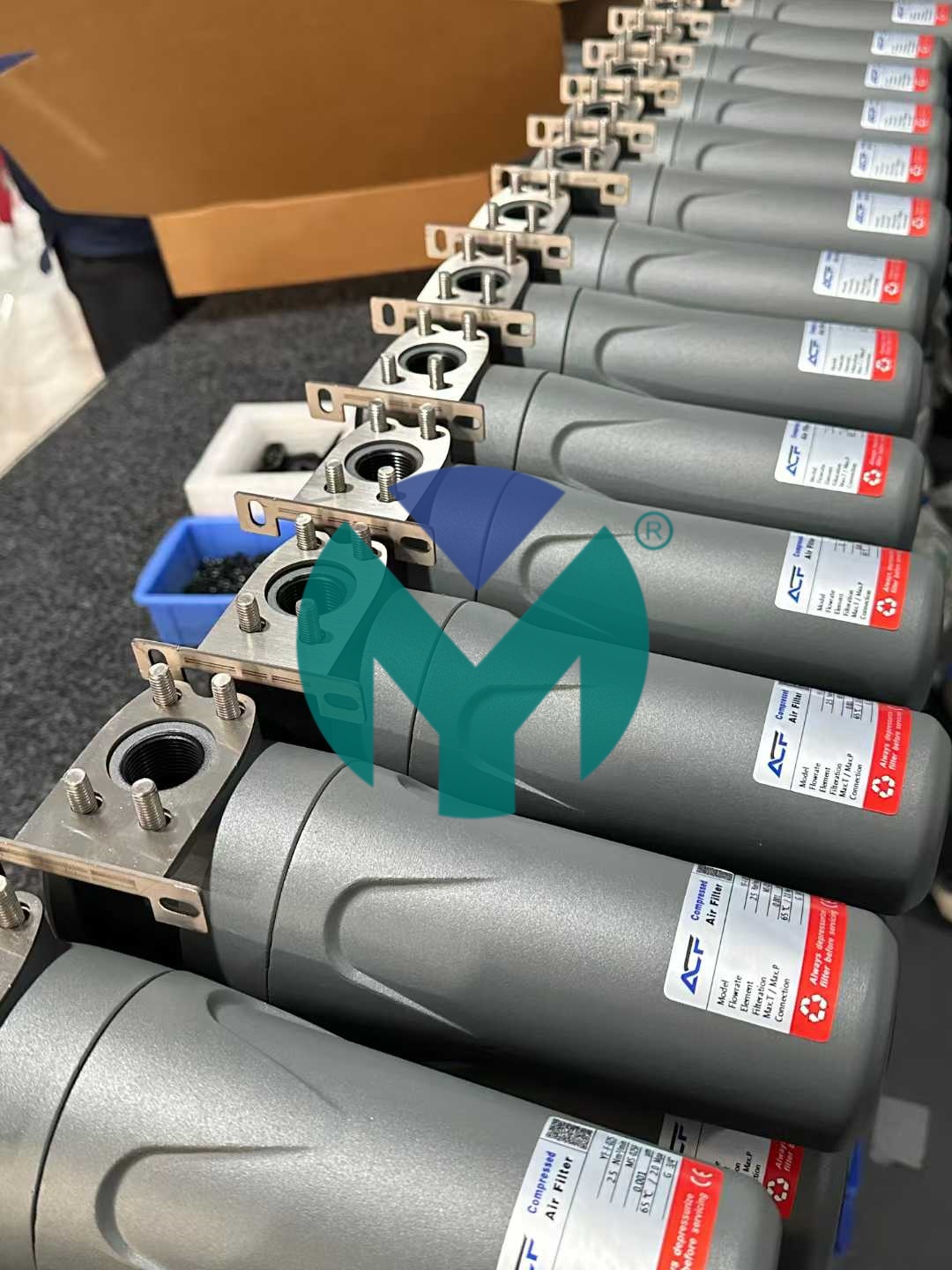
Yuanmei provides stainless steel filtration solutions using SUS304 and SUS316 materials for applications requiring stronger corrosion resistance and improved surface hygiene. For food, pharmaceutical, chemical, and other demanding industries, appropriate surface treatment can also make cleaning and contamination control easier.
Material selection should always be considered together with operating pressure, temperature, airflow, contaminant type, and required air quality. A knowledgeable manufacturer can help buyers select a suitable configuration rather than recommending the same filtration arrangement for every application.
How a Manufacturer Supports ISO 8573-1 Filtration Goals
Certification and standards should not be treated simply as marketing labels. When purchasing precision compressed air filtration equipment, buyers should ask what testing is available and whether the supplier can provide technical documentation for filtration performance.
Yuanmei operates an ACF compressed air testing laboratory equipped for residual oil analysis, particle counting, and dew point measurement. Such testing capabilities allow filtration performance to be evaluated through measurable indicators instead of relying exclusively on theoretical specifications.
The company maintains quality management practices aligned with ISO 9001:2015 and environmental management certification under ISO 14001:2015. Its products also include CE and RoHS-related compliance for applicable markets. For international buyers, this combination of manufacturing control, product testing, and certification documentation can simplify supplier evaluation.
| Evaluation Area | What Buyers Should Check |
|---|
| Air cleanliness | ISO 8573-1 requirements and target class |
| Filtration precision | Particle removal capability and applicable grade |
| Oil control | Residual oil performance and test data |
| Pressure loss | Initial and operating pressure drop |
| Materials | Housing and filter media suitability |
| Quality control | Factory inspection and performance verification |
| Documentation | Certificates, technical data, and test records |
Selecting the Right Industrial Filtration Partner
The right industrial compressed air filter manufacturer should be capable of supporting the complete filtration decision, from preliminary air-quality requirements to product selection and replacement planning. This is especially important for international buyers operating different compressor capacities, dryers, pipelines, and pneumatic equipment.
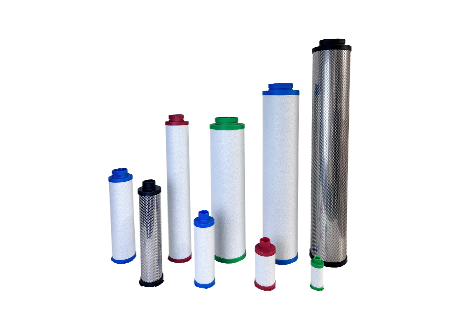
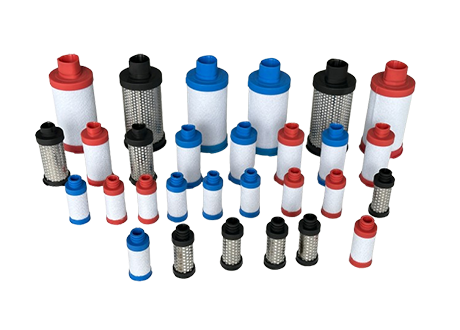
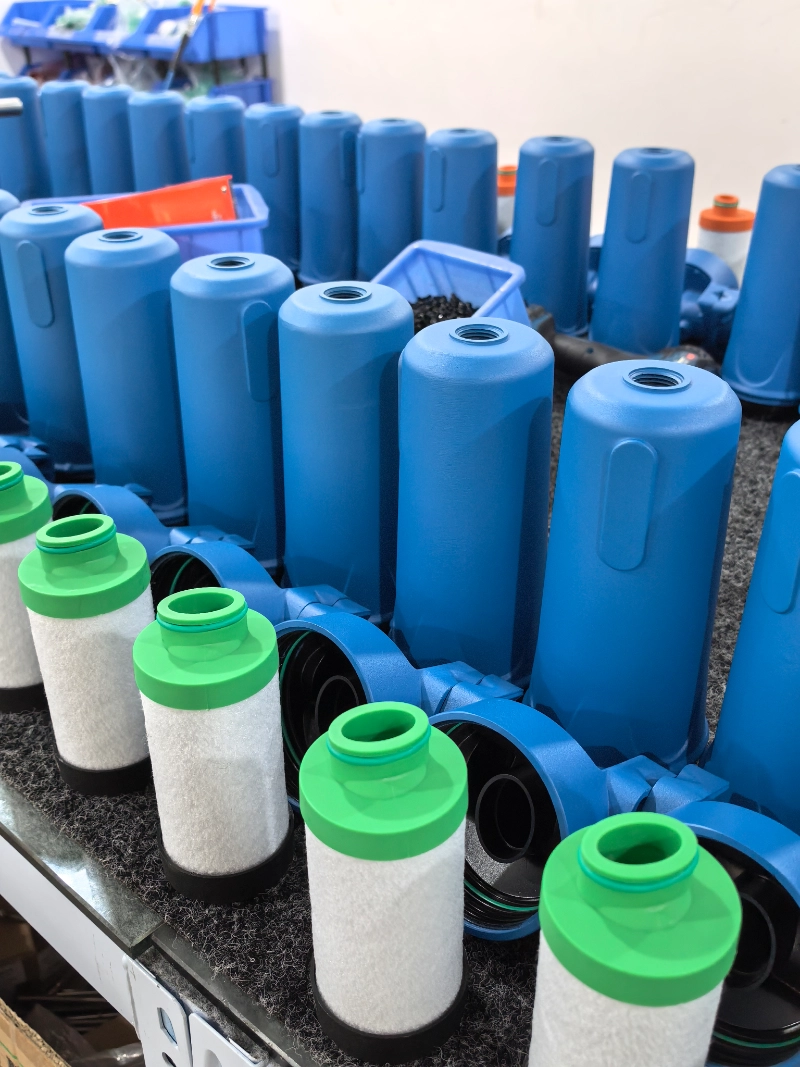
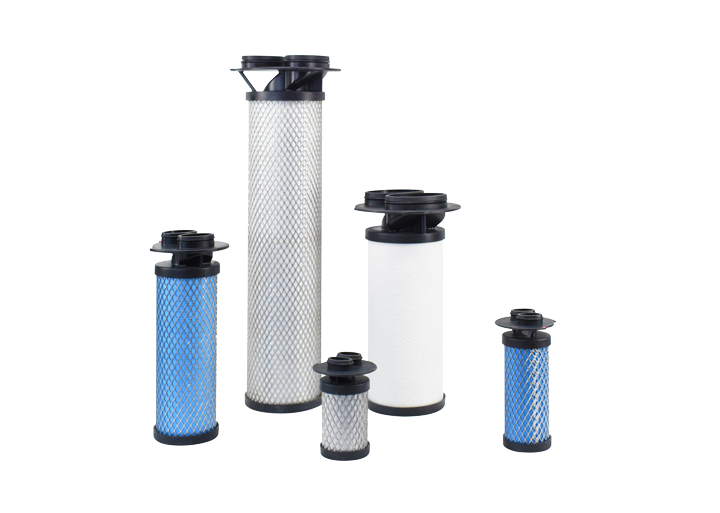
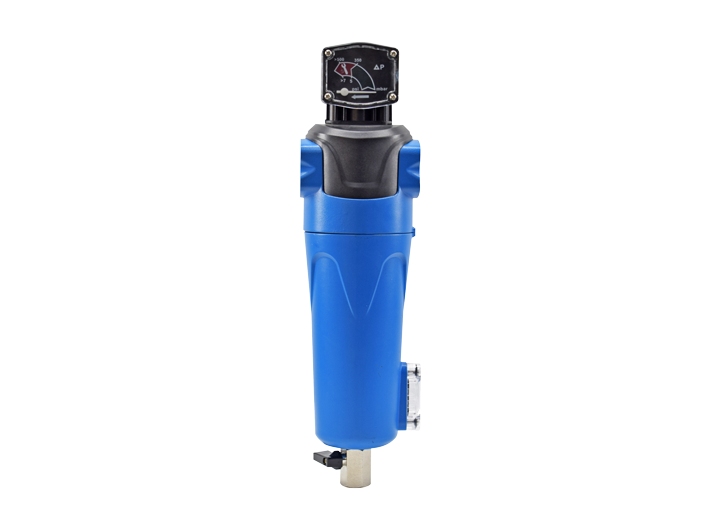
Yuanmei's product portfolio covers precision compressed air filters, stainless steel filtration equipment, high-pressure filtration solutions, gas-water separation equipment, and replacement filter elements. This broader product capability allows filtration requirements to be addressed according to application conditions rather than forcing every customer into a single product category.
For overseas customers, supplier responsiveness is another important consideration. Technical communication, product customization, replacement element availability, documentation, and after-sales support can all affect the long-term value of filtration equipment. A manufacturer that understands these requirements can provide greater practical support throughout the purchasing and maintenance cycle.
What to Ask Before Buying Compressed Air Filter
Before selecting a supplier, engineers and purchasing teams should prepare several basic operating requirements. These include required airflow, working pressure, inlet temperature, contaminant type, desired ISO 8573-1 air quality class, installation environment, and acceptable pressure loss.
It is also useful to ask whether the manufacturer can provide filtration performance data, material documentation, inspection records, and suitable replacement elements. For applications involving food, pharmaceutical production, electronics, or other contamination-sensitive processes, buyers should additionally review material compatibility, surface finish, hygiene requirements, and relevant compliance documentation.
A supplier should be able to explain why a particular filtration grade is appropriate, rather than simply recommending the finest available filter. This technical approach can prevent unnecessary filtration costs while ensuring that the compressed air quality remains suitable for the production process.
Why Yuanmei Is a Practical Choice for International Buyers
Yuanmei combines compressed air purification research, manufacturing, testing, and technical support within one supplier framework. Its precision filtration products are designed for applications where controlled particulate and oil contamination are important, while its stainless steel solutions address environments requiring corrosion resistance and higher hygiene standards.
For companies comparing a compressed air filter manufacturer for ISO 8573-1 compliance, Yuanmei provides a combination of precision filtration technology, testing infrastructure, quality certifications, and international supply experience. The focus is not simply on producing a filter with a specified micron rating, but on developing filtration equipment that balances air cleanliness, pressure loss, durability, and maintenance requirements.
FAQ
What is ISO 8573-1 used for?
ISO 8573-1 is used to classify compressed air cleanliness according to contaminants such as particles, water, and oil. It helps users define the air quality required for specific industrial processes.
Why is pressure drop important in compressed air filtration?
Pressure drop affects the energy required to deliver compressed air. A filter with controlled resistance can help reduce unnecessary operating losses while maintaining the required level of contamination removal.
What filtration precision can industrial compressed air filters achieve?
Depending on the filtration grade and application, precision compressed air filters can achieve filtration levels down to 0.01 μm. The appropriate grade should be selected according to the required air-quality target and operating conditions.
What should I look for in a compressed air filter manufacturer?
Consider filtration performance, ISO 8573-1 knowledge, testing capability, material quality, pressure-drop characteristics, certification documentation, replacement element availability, customization capability, and after-sales technical support.
Can Yuanmei provide customized compressed air filtration solutions?
Yes. Yuanmei provides industrial filtration products for different airflow, pressure, material, air-quality, and application requirements, supporting customized filtration solutions for international industrial customers.



 Join us
 After-sale service
 News
News