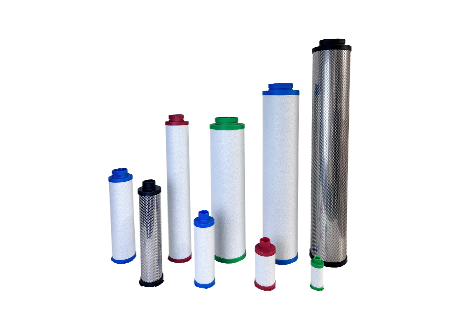
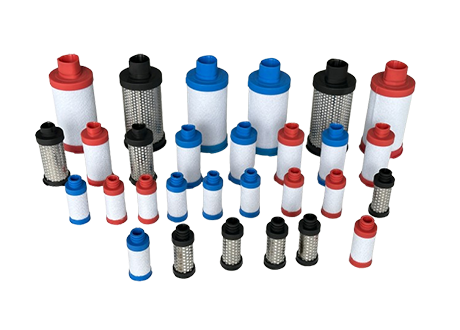
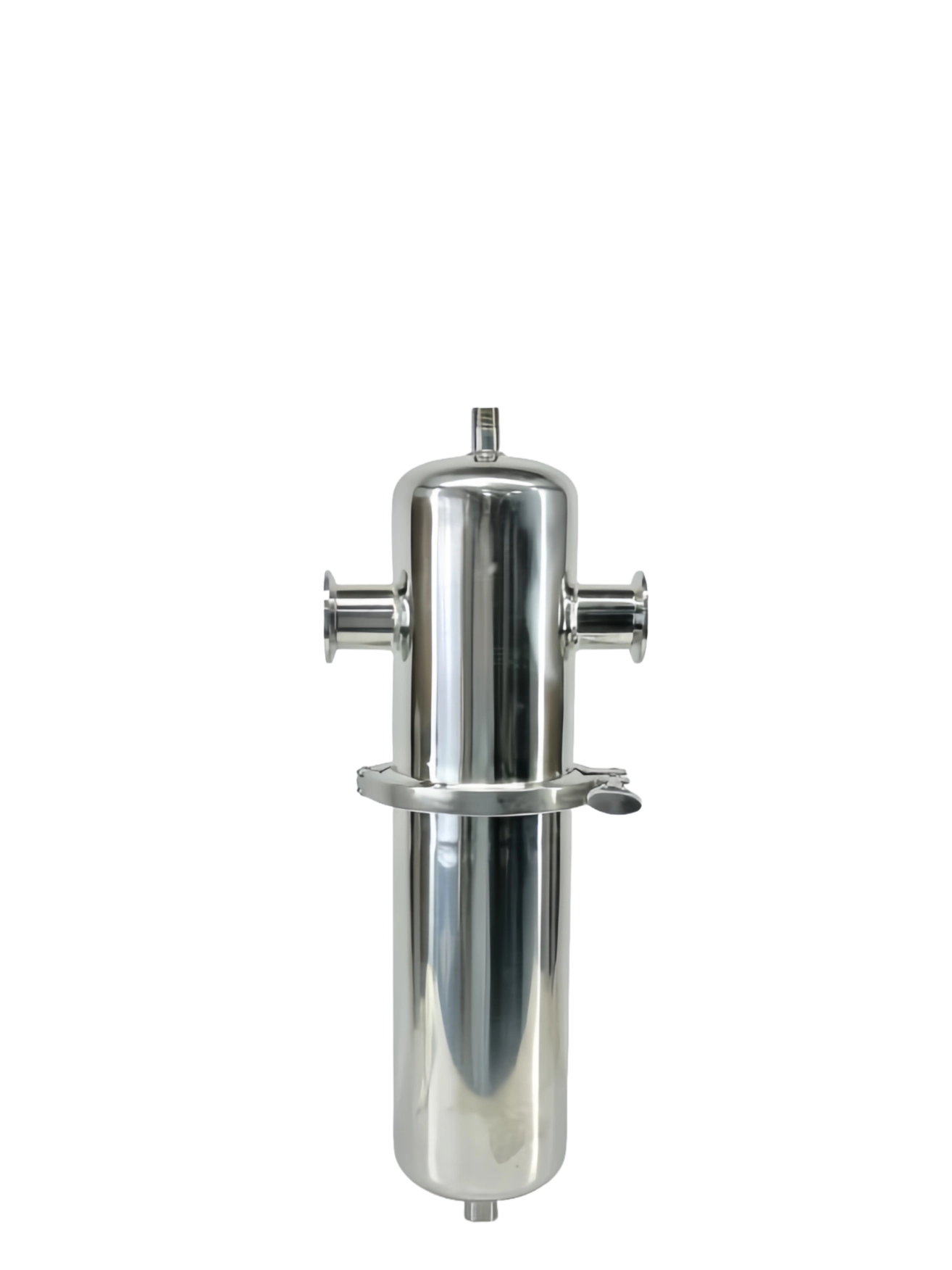
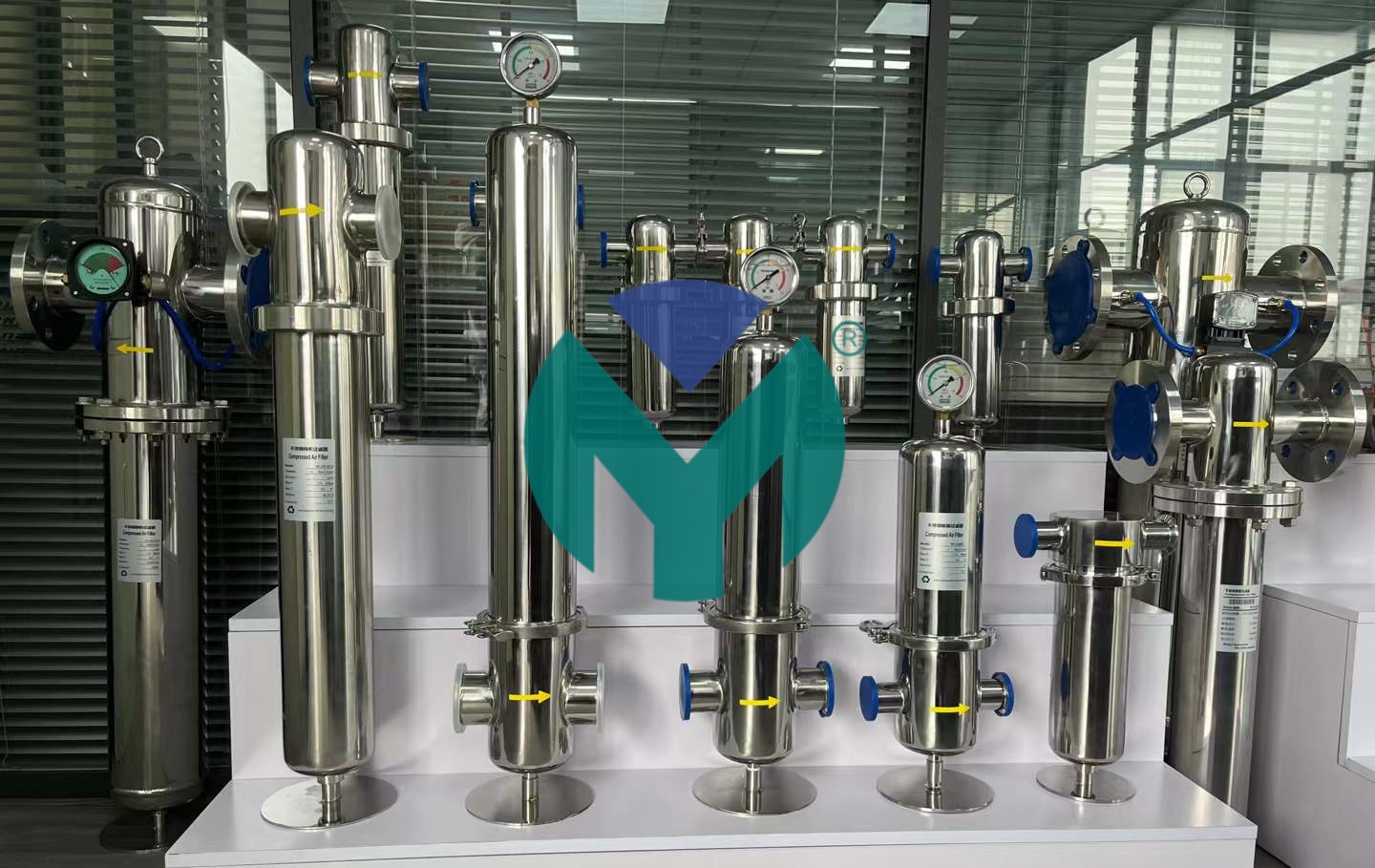
A stainless steel compressed air filter for industrial pneumatic system applications is engineered to deliver controlled air purity in environments where contamination tolerance is extremely low. In regulated production fields such as pharmaceuticals, semiconductors, and food chemical processing, compressed air is not only a utility but also a critical process medium directly influencing product safety and manufacturing compliance.
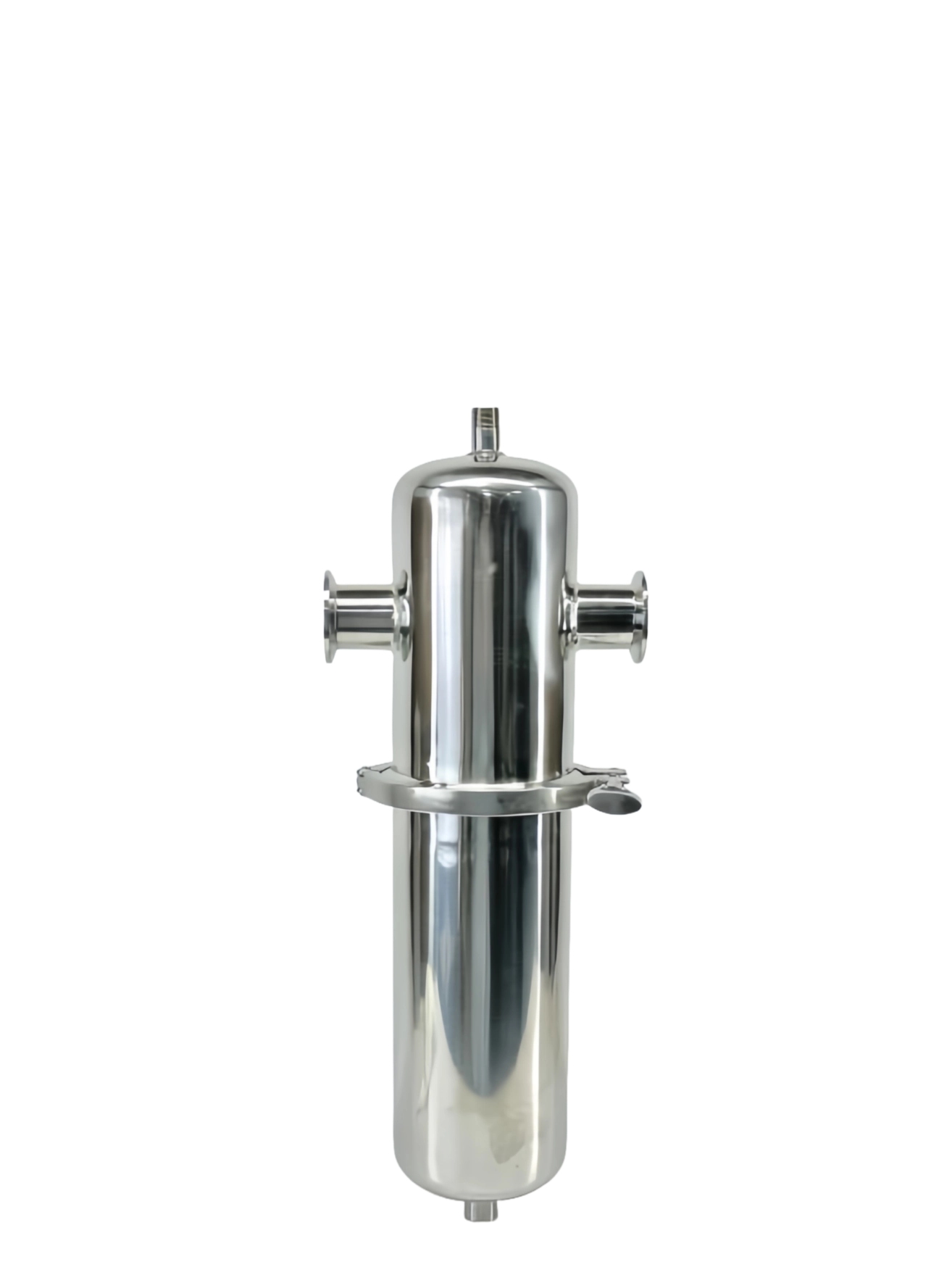
The system is typically constructed from stainless steel grades SUS304 or SUS316, selected for their corrosion resistance, structural stability, and compatibility with sterilization environments. The internal and external surfaces are polished to a high sanitary finish, reaching Ra 0.3 in critical flow zones to minimize particle adhesion and microbial retention. This structural design ensures that airflow remains stable while reducing the risk of contamination buildup over long operational cycles.
In this blog post, Yuanmei as high precision air filter for compressed air line exporter, will share the role of stainless steel compressed air filter for industrial pneumatic system.
Material Engineering in Stainless Steel Compressed Air Filter Housing Systems
The stainless steel compressed air filter housing for industrial pneumatic system use is built using SUS304 and SUS316 stainless steel, both widely recognized for their resistance to oxidation, chemical exposure, and repeated sterilization cycles.
The polished internal surface, typically controlled within Ra ≤ 0.6μm for housing structures and Ra 0.3 for critical flow contact surfaces, plays a direct role in maintaining hygiene stability. Smooth surface engineering reduces the adhesion of bacteria, aerosols, and oil mist residues, which are common challenges in compressed air distribution networks.
The shell structure is designed for high mechanical strength and pressure stability, ensuring consistent operation under fluctuating pneumatic loads. This makes the system suitable for high-demand industrial air networks where pressure variation and continuous flow operation are standard conditions.
High Efficiency Filtration Element Structure in Stainless Steel Compressed Air Filter Units
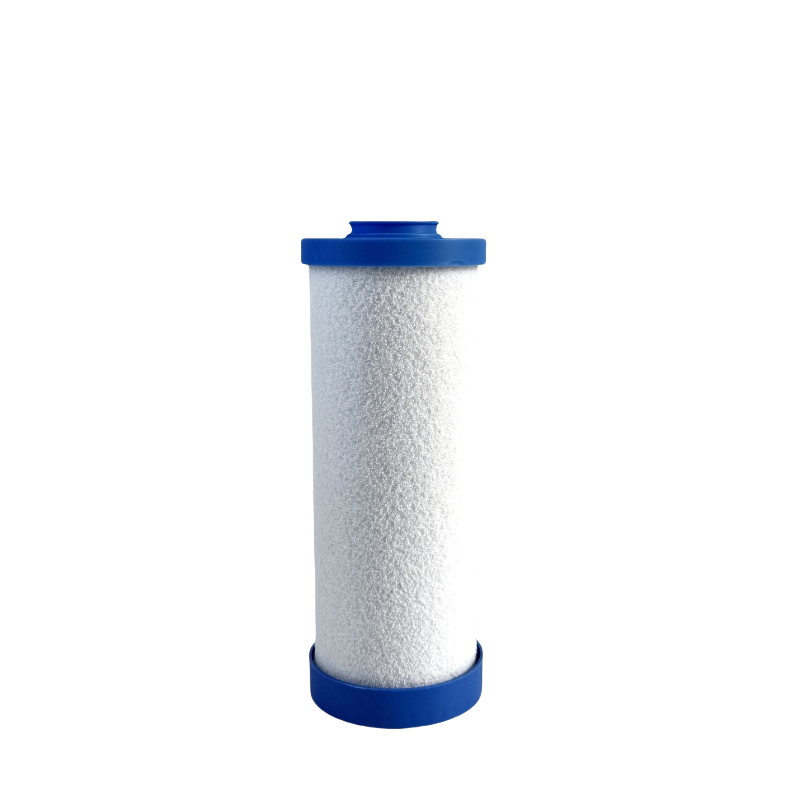
At the core of the stainless steel compressed air filter for industrial pneumatic system performance is a multi-stage filtration architecture. The filter element integrates high-efficiency precision filtration media designed to capture submicron particles and microbial contaminants.
A key component is the hydrophobic and sterile PTFE membrane folded structure. Polytetrafluoroethylene (PTFE) is selected due to its chemical inertness, thermal stability, and resistance to moisture penetration. The hydrophobic nature ensures that condensed water and aerosols do not compromise filtration integrity.
The pleated membrane configuration increases filtration surface area while maintaining low airflow resistance. This design improves dust-holding capacity and extends operational life without sacrificing filtration accuracy. The system is capable of achieving an absolute filtration rating of 0.01μm, ensuring consistent removal of microorganisms and ultrafine particles from compressed air streams.
Sterilization Performance in Stainless Steel Compressed Air Filter for Industrial Systems
Sterilization capability is a defining feature of stainless steel compressed air filter systems used in regulated industrial environments. The PTFE membrane structure is designed to withstand repeated high-temperature sterilization cycles, including online steam-in-place (SIP) processes.
The filter element maintains structural integrity under elevated thermal conditions up to approximately 125°C, allowing continuous sterilization without degradation of filtration efficiency. This supports production environments where aseptic air quality must be maintained without system disassembly.
Sterilization performance is validated through 100% DOP integrity testing, ensuring that every filter element meets strict aerosol penetration control standards. The logarithmic removal value of ≥6 (equivalent to 99.9999% efficiency) confirms the system’s ability to eliminate bacteria, bacteriophages, and airborne microorganisms in compressed air applications.
Certification Compliance of Stainless Steel Compressed Air Filter Systems
Regulatory compliance is a central requirement in the design and application of stainless steel compressed air filter for industrial pneumatic system installations. The materials used in both housing and filtration media comply with internationally recognized safety and hygiene standards.
The filter materials are tested under SGS certification protocols, confirming compliance with food-grade and pharmaceutical-grade requirements. This ensures traceability and material safety validation for global industrial deployment.
In addition, the system materials conform to FDA 21 CFR 177.2600 and USP Class VI standards, which are widely referenced in pharmaceutical and biomedical manufacturing environments. These certifications confirm biocompatibility and suitability for contact with sensitive production environments.
Manufacturing design and process compliance extend to cGMP, GMP, and ISO 14644 cleanroom classification requirements, ensuring that the filter system can be integrated into controlled environments without violating contamination control protocols.
Filtration Accuracy and Microbial Removal in Industrial Pneumatic Systems
The stainless steel compressed air filter for industrial pneumatic system applications is designed for absolute filtration precision. With a filtration accuracy of 0.01μm, the system targets the removal of fine aerosols, oil mist residues, and microbial contaminants commonly found in compressed air networks.
The filtration mechanism is based on depth interception and surface retention, combined with electrostatic and hydrophobic separation effects from the PTFE membrane. This multi-mechanism approach ensures stable performance even under variable flow conditions.
A key performance indicator is the logarithmic reduction value of ≥6, which indicates a near-complete removal of biological contaminants. This level of filtration is critical in environments where compressed air may directly or indirectly contact product surfaces or sterile processing zones.
Structural Integrity and Pressure Stability of Stainless Steel Compressed Air Filter Units
Structural integrity is essential for maintaining long-term performance in stainless steel compressed air filter systems used in industrial pneumatic networks. The stainless steel housing is engineered to withstand both internal pressure fluctuations and external mechanical stress.
Sanitary chuck connection interfaces are used to ensure stable sealing and easy integration into modular piping systems. PTFE sealing components provide chemical resistance and thermal stability, maintaining airtight performance even during sterilization cycles.
The combination of rigid stainless steel construction and precision sealing technology ensures that the filtration system maintains operational stability under continuous industrial use, minimizing leakage risk and maintaining air purity consistency.
Energy Efficiency and Pressure Drop Control in Stainless Steel Compressed Air Filter Design
Energy efficiency is a significant factor in industrial compressed air systems, where pressure loss directly impacts operational cost. The stainless steel compressed air filter for industrial pneumatic system applications is designed with low pressure drop architecture.
The optimized internal flow channel reduces turbulence and minimizes resistance across the filtration media. This results in lower energy consumption from compressors, contributing to overall system efficiency improvements.
The high-efficiency PTFE membrane structure maintains airflow capacity while reducing clogging rates, which further stabilizes pressure performance over time. Reduced maintenance frequency also contributes to lower total cost of ownership in long-term industrial operation.
Long Service Life and Maintenance Characteristics of Stainless Steel Compressed Air Filter Systems
Service life optimization is achieved through material durability, filtration stability, and structural resilience. The stainless steel compressed air filter system is designed for extended operational cycles with minimal performance degradation.
The combination of hydrophobic PTFE membranes and corrosion-resistant stainless steel housing significantly reduces replacement frequency. This not only decreases maintenance downtime but also minimizes waste disposal costs associated with consumable filter elements.
Bubble point testing and filter integrity inspection services ensure that each unit maintains consistent performance standards throughout its lifecycle. This quality control approach supports predictable maintenance scheduling and stable system operation.
Technical Characteristics of Stainless Steel Compressed Air Filter for Industrial Pneumatic System
The technical configuration of the stainless steel compressed air filter system integrates multiple engineering features designed for industrial reliability:
The filter medium consists of imported hydrophobic PTFE membrane reinforced with multi-layer structural support, ensuring mechanical stability under pressure fluctuations.
The housing is constructed from 304/316L stainless steel with BA or EP grade polishing, maintaining high cleanliness standards and corrosion resistance.
Sealing elements are made from PTFE, providing resistance to heat, chemicals, and repeated sterilization cycles.
The interface system adopts sanitary-grade chuck connections, ensuring compatibility with clean piping systems and reducing installation contamination risks.
The maximum operating temperature reaches approximately 125°C, enabling compatibility with online steam sterilization processes used in sterile manufacturing environments.
System Integration Role of Stainless Steel Compressed Air Filter in Industrial Pneumatic Networks
In industrial pneumatic systems, filtration is not an isolated function but an integrated part of air quality management architecture. The stainless steel compressed air filter operates as a final barrier in multi-stage air treatment systems, ensuring that downstream equipment receives clean, dry, and sterile air.
Its role extends across multiple layers of industrial air processing, including particulate removal, microbial control, and moisture resistance. This makes it an essential component in controlled manufacturing environments where air purity directly impacts process stability and product safety.
The integration of precision filtration, sterile membrane technology, and stainless steel structural engineering defines its position as a critical infrastructure component in modern industrial pneumatic system design.


 Join us
 After-sale service
 News
News